
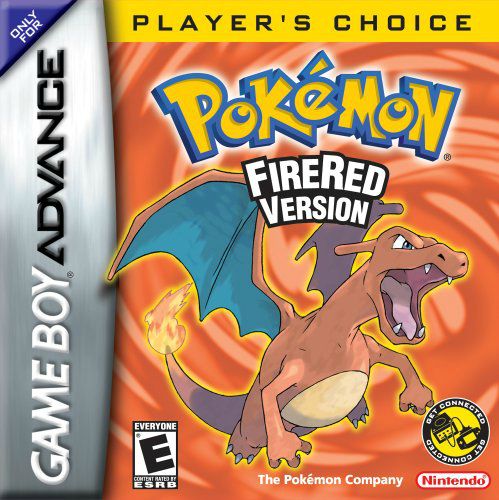
Are you in a hurry to get to Deoxys in the Switch version of FRLG? Don’t worry, I’ve got a suggestion for a team to get you there!
The best way to enjoy these classics would be to play through with pokemon that you like. But if you’re the kind of person who would like to speed through the game with the most practical options, then this guide was made to help you.
The best team for a quick playthrough of FRLG would be a core of two Pokémon which have great synergy, and either can defeat many opponents.
While some players may find it strange to not play through with a team of 6 battlers, the core of two works as well as it does because of how EXP distribution works in old Pokémon games. Where EXP allocation is strict, that EXP that you get from battles spreads far more generously among two battlers than among four or six.
It’s better to have two battlers that can carry you through the game than to have six that struggle.
The rest of the Pokémon are for utility purposes, but the team leaves room for up to two of your favorites that you might insist on having, such as Raichu, if you like that one.

The choice of starter would be Squirtle. The reason why it’s a practical choice is because it does well against early opponents until you have the core team assembled. And once you do, it can still provide mobility in the long-term because it has access to HMs such as Surf, Strength, and Rock Smash.
Just be warned that if you pick a different starter, you’ll have to seek out different Pokémon that can learn these TMs.

At the outset, catch a weak pokemon on Route 1, and don’t level it. Just leave it in a box until you’ve defeated five trainers on Nugget Road. There will be a sixth before you cross. Rather than face him right away, first box your entire team except for this pokemon, then buy things at the PokeMart until you’re nearly out of money. Then, with only your weak pokemon in your party, repeatedly face that last trainer on Nugget Road, and repeatedly lose. Each time you do, you’ll get another Nugget from him.
I suggest going at this at least 32 times, with 48 to be safe. The reason being, once you get to Celadon City, you can straight up buy the coins you need to buy some TMs at the Game Corner. The important ones being Thunderbolt and Ice Beam, with Flamethrower being helpful.
Once you’re done, get your normal team back out, and get back to beating the guy. Depending on how long you’ve been going at it, you can get a lot of money, as each Nugget sells for 5000 pokedollars each. You might spend the rest of the game loaded.

On Route 3, you can catch a Spearow. There are other routes where you can catch a Spearow. The main point is getting one to trade for a Farfetch’d in Vermillion City. It’s purpose on this team isn’t for battling. It can learn Cut and Fly, making it easier to travel about.

Clefairy can be found in Mt. Moon. As soon as you find it, you can evolve it using a Moon Stone you can find in Mt. Moon.
Clefable is one of the two core Pokémon on this team. For one thing, it has high stats for the point in the game in which you can find it. What’s more, it can learn Mega Punch and/or Mega Kick from the move tutors which can be found just outside Mt. Moon’s exit. But if you prefer to preserve Move Tutor uses, you can skip them. Just know that Clefable might have trouble carrying your team for a little while.
But when you get to Celadon City, things really pick up. If you took advantage of the Nugget Bridge exploit, you may already have the resources to teach Clefable Thunderbolt, Ice Beam, and maybe also Flamethrower. In gen 3, the Bolt/Beam combo provides mostly unresisted coverage, which is why many competitive sets of that era had Thunderbolt and Ice Beam. Including Flamethrower as well is generally overkill, but can take care of the odd Magnemite and such.
Clefable’s main weakness is Fighting moves, but the next Pokémon deals with those.

Abra can be encountered in grass just outside of Nugget Bridge. It only knows Teleport, so the best strategy for catching it might be to throw a ball, and see whether it works. Once you have one, it doesn’t learn moves by itself until it evolves at level 16. But once that happens, Kadabra learns Confusion, and becomes an offensive powerhouse for much of the rest of the game. And it learns better moves by level. Kadabra is fast and hits hard, and might wipe out most opponents that you face before they can even make a move. Just be warned that Kadabra can’t take it as well as it can dish it out, especially when it comes to physical moves. That aside, it can easily carry your team. If the opponent is a Poison type or a Fighting type, Kadabra is likely to just wipe it out.
If you can do a trade then trade-back, you can evolve Kadabra to Alakazam. While Kadabra can get you through the game just fine, Alakazam works basically the same, but with higher stats.
So, there you have it! The battling core of Clefable and Kadabra, with Farfetch’d helping with mobility, can get you through FRLG easily. There are two other spaces on the team, which you can fill up with other Pokémon you like.
Here are some popular choices, and why they work well:
Nidoking can be obtained early with a Moon Stone. Because you can find two Moon Stones at Mt. Moon, there need not be a conflict between both these early-game bruisers. The difference is, Clefable becomes more useful at about the same point that Nidoking’s usefulness starts to diminish.
Jynx can be obtained by trading a Poliwhirl at Cerulean City, and is relatively strong and can learn Ice Punch early on.
Lapras has great bulk and can learn diverse moves. The catch is that it comes late in the game at a somewhat low level. So if you play Lapras, it’s gotta catch up.
Starmie has great typing, is fast, and can learn many moves. Its pre-evolved form, Staryu, is in LeafGreen and not FireRed. Thus, FireRed players who don’t trade would miss out on this one.
Zapdos can be obtained at a high level with a trip to and through the Power Plant. It’s very strong, but be careful, because it’s weak to Ice moves that Water types often have.
So, is it worth it?
That depends on your perspective. Deoxys doesn’t change forms in gen 3 the way it does in later generations. Instead, its form depends on the version it’s in. In FireRed, Deoxys has super-high attack stats and speed, but paper-thin defenses, to the point that a weak move might easily beat it. In LeafGreen, its stats are more balanced, but tends more towards its defenses.
If you’re looking for post-game Pokémon that are strong and tough, then it might be better to go for the Lugia and Ho-oh that are on Navel Rock. And, of course, the Mewtwo that’s in Cerulean Cave.







 Magnetricity