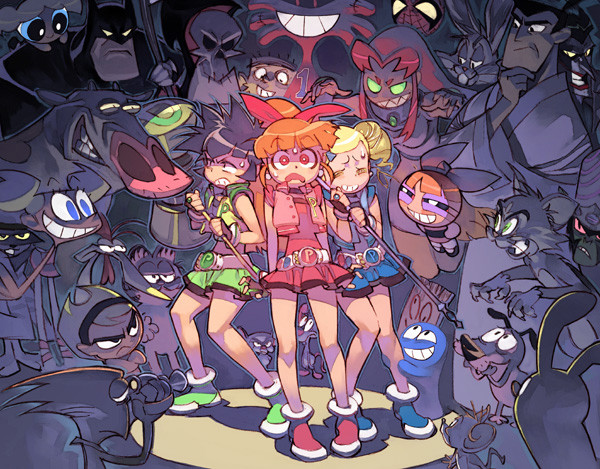
A huge leak has hit Cartoon Network, and even now, people are sifting through it.
But one thing I’d like to bring attention to is that that the leaks contain internal materials related to Demashita! Powerpuff Girls Z, and apparently would’ve localized under the same name.
That’s right, there was an anime adaptation of the Powerpuff Girls. It debuted in Japan in 2006 on their own Cartoon Network, and it even had some anime stars working on it, including Emiri Katou as Hyper Blossom, and Ryusei Nakao as Kare (Him), who previously had voiced Frieza from Dragonball Z! What’s more, the henshin sequences in Powerpuff Girls Z (PPGZ) were planned out by the same talent as the ones who did the henshin sequences in Sailor Moon (a big deal, considering that these took up a bit of screen time). So they really brought on the star power for this one. And appropriately so, considering that PPGZ was intended to commemorate 50 years of Toei Animation.
PPGZ was originally announced in 2005, and here were some of the public promotional materials:
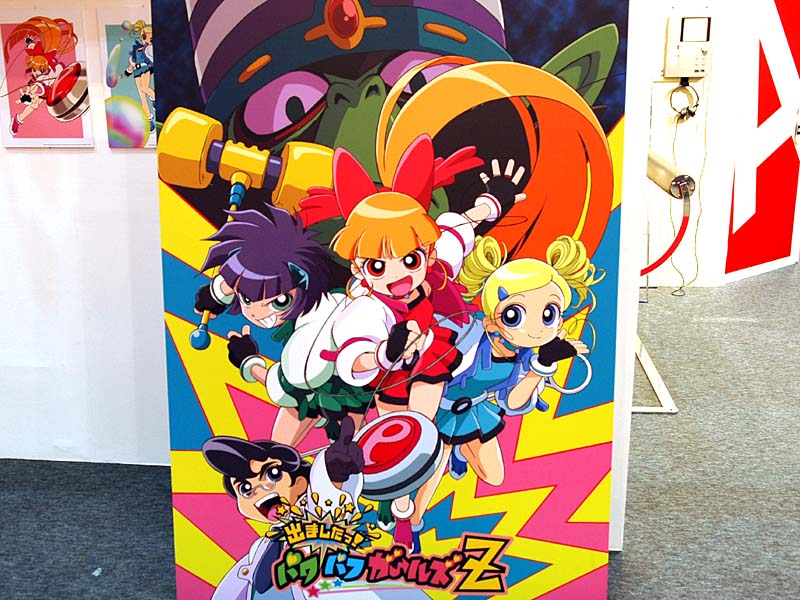
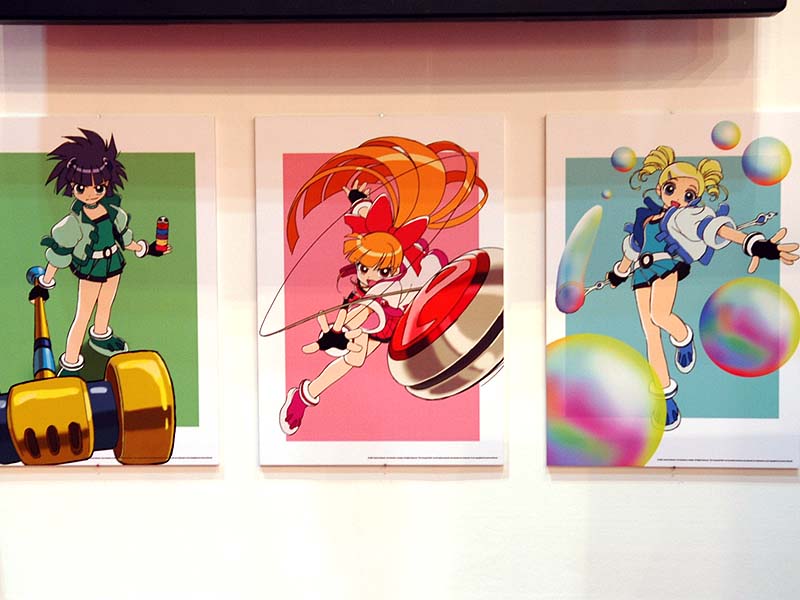
These characters look much different from the ones that ended up going into PPGZ. This is because it was originally planned for the girls to be High School students, rather than the Middle School students that they ended up becoming.
However, a lot of people suspected that it was a joke. Mostly because the studio went quiet on the projects for months afterwards. It didn’t help that the announcement was made on April 1st.
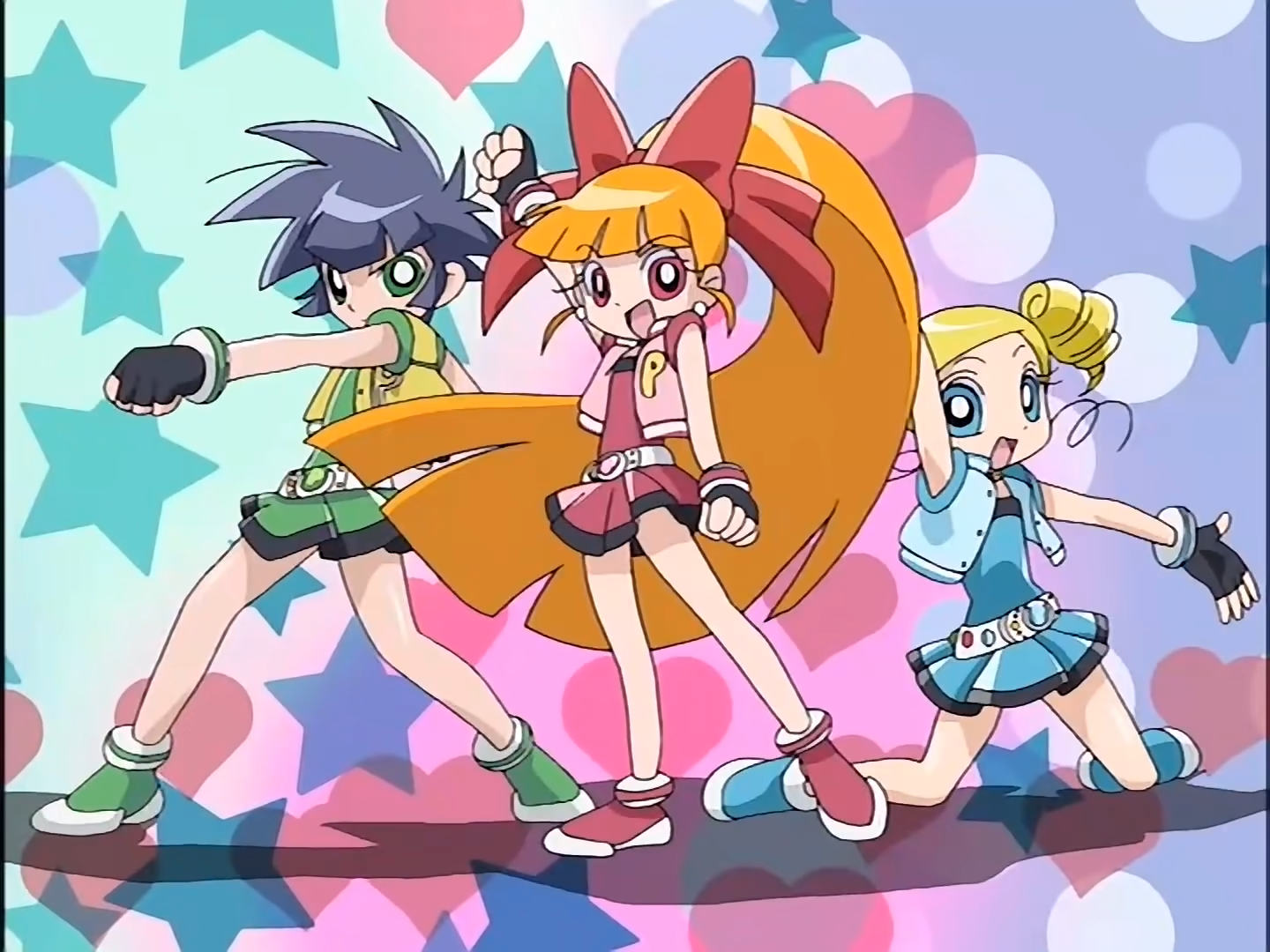
PPGZ made its debut on July 1, 2006, to mixed reception. The debut episode showed as the girls, who already had their superpowers, rescued kindergarten students from Mojo Jojo, who wanted to steal their snacks, or whatever. There was an ice cream break at some point, for whatever reason, which told us the viewer what the characters favorite ice cream flavors are, as if we cared. After this, the anime began telling us the girls’ origin story. In this adaptation, the three girls themselves are ordinary girls, named Momoko Akatsutsumi, Miyako Goutokuji, and Kaoru Matusbara. They gained the ability to transform into the Power Puff Girls Z after being hit by beams of light that were emitted when Professor Utonium destroyed an iceberg with a beam. However, the light beams also turned ordinary people in the setting of Tokyo City into monsters. So, PPGZ was a majou shoujo (magical girl) anime, except that one of the catchphrases of the anime was, “It’s not magic! It’s science!”
For those who stuck with the show, the episodes were basically hit-or-miss. There were long stretches of time in which episodes seemed to alternate between hit or miss, on a weekly basis. The anime wasn’t exceptionally good, but it was still enjoyable for its quirkiness.
As the recent leaks show, the anime was being prepared for a US release. It would’ve been appropriate, as the original Powerpuff Girls did originate in the States. There was even an English version which aired in places like Australia, so it’s not like there wasn’t a complete localized version, ready to go.
From what little I’ve seen of the English version (one episode), I think people would’ve been happier watching the Japanese version with subtitles. 2007 was the time of the initial anime boom in the west, but cringy localization efforts were still rampant.
But even though a localized version was ready to go, Cartoon Network didn’t air it in the US. And that’s disappointing, because I think that it would’ve been enjoyed, in spite of its flaws. But it seems like Cartoon Network would rather air a bunch of insipid Scooby Doo movies that nobody cares about.
People can speculate as to why Cartoon Network didn’t air PPGZ, even though it was ready to go. But I think there’s an aspect to this matter that isn’t being considered.
In the mid-2000s, anime was huge in the States. One would think that, because of this, CN would air an anime adaptation of what was one of their biggest hits. But, they didn’t. Because, when it comes down to it, CN didn’t much like anime. Sure, they had a Toonami programming block. But it’s easy to understand this block when you know that it acted as a sort of containment, and stuck to the mostly safe stuff. Stuff such as Sailor Moon, Card Captor Sakura (albeit briefly), Naruto, and heavily edited versions of One Piece and Dragonball Z. While these are hit anime, purists largely turned their noses up at them, a big reason being that they know what localization has done to these anime. At the time, unedited anime almost felt like contraband.
The fact is, western media companies like having control. And because anime is made all the way over in Japan, Cartoon Network had no control over its content.
Have you ever wished that you could make your own cartoon? If you’re an American, it’s probably not going to happen, unless you sign over creative control to whatever studio that will be producing it. Then, after that point, the studio will pretty much write your cartoon for you. And if you disagree with whatever it is that they decide to do with your characters, then they’ll probably just give you the boot, then either cancel your cartoon, or continue writing it in ways that are against your own wishes.
But in Japan, this problem is almost non-existent. In Japan, any creative work must be according to the wishes of the artist if it’s to be considered valid.
Some of the most successful anime are adaptations of manga (comics) that were highly successful. In that sense, the script is already written, and any adaptation is considered valid inasmuch as it’s consistent with the source material. The will of the artist is already expressed, and any animation studio that’s worth working with is going to produce an anime adaptation that’s consistent with the manga. And throughout the creative process, the author is the one who makes creative decisions.
There have been exceptions, but they usually don’t go well. A famous example was Dragonball GT, which was Toei’s attempt to fill in a certain number of remaining episodes after Dragonball Z had already concluded, so they attempted to come up with a story, themselves. Dragonball GT was universally panned, and since Dragonball Super was started, Dragonball author Akira Toriyama declared GT to be non-canon.
Ideally, the author should remain in creative control of his work. It’s the author’s vision, and the author should have the final say.
But CN doesn’t respect that, at all. They want to be the ones in control. If you’ve created characters that they want to air on TV, they want to take them right from you, to do with as they please.
To give you an idea of why you shouldn’t want that, here’s an example of the kind of dreck they already pinch out:
A lot has changed in the last couple decades. Now that ordinary people have creative tools at home, and the means to reach a potentially unlimited audience, people are finding out that we don’t need Cartoon Network for entertainment. Like many other media outlets, CN now has to compete with abundant, unlimited, and free.
If I wanted to write a comic, or make a cartoon, I can just do it. It would be some work, but it’s easier than it’s even been to do. And when I’m done, all I’d have to do is uploaded it, and let you either read or watch it. I don’t have to run it by any publisher, because the publisher would be me.
What’s more, Japanese producers no longer have to run anime through the likes of CN to get it to us. Through official outlets, it’s available for us to watch. And there’s nothing that CN can to do stop us from watching it.
And better still, it comes with no dubious agenda. Japanese anime is made for entertainment, not to push politics. Entertainment should be entertaining.
While I could leave it at that, I’ve got an opportunity to bring up something you might have tried to forget. There was a 2016 remake of the Powerpuff Girls.
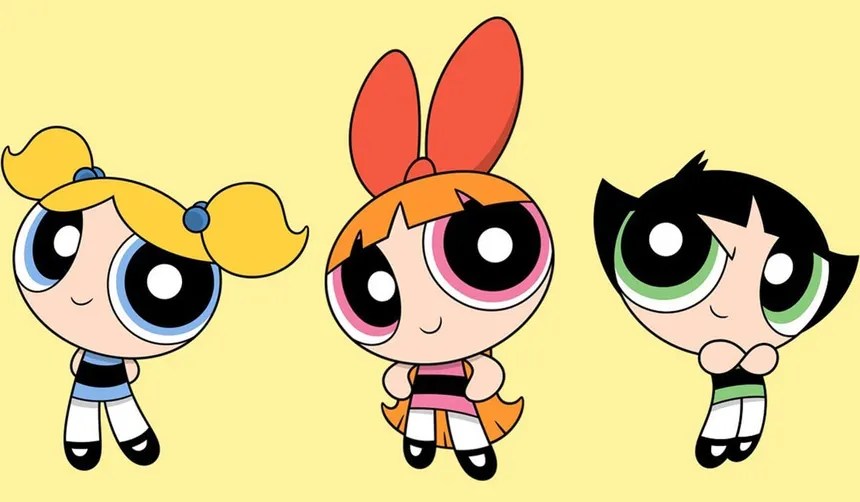
They would’ve been better off just airing the PPGZ anime.