Category Archives: Video games

Made In Abyss: Binary Star Falling Into Darkness Walkthrough Part 2: Fundamentals of Cave Raiding

Back to Walkthrough Menu

Back to Part 1: Introduction

Made In Abyss: Binary Star Falling Into Darkness is a survival game that is mission driven, and the player is given plenty of freedom at the outset of the main campaign to explore the game’s main setting, the Abyss, and in most cases, the player can explore the Abyss autonomously.

This chapter is intended to present the player with some basic principles that would make their expeditions into the Abyss easier. These are some general pointers that increase the likelihood of a successful expedition, that being one in which your potato kid lives.

First, don’t go picking fights that you don’t have to. In most action adventure games, you can reasonably expect to beat most bad guys that you encounter. In Made In Abyss, you’re usually better off avoiding any primeval creatures that you don’t need to fight. If fighting it doesn’t count towards a mission, and its potential drops aren’t needed, you’re usually better off conserving health and energy. Besides, some of the primeval creatures that you encounter are far beyond what the typical player’s abilities would be at the point that they encounter them. There can be exceptions for hunting for food, but you’d generally avoid something that can easily overpower you as far as that goes.

Think about it: if you were to spend a few days in the woods, would you think it a good idea to take a hatchet and attempt to fight some wild bears? The more sensible thing would be to avoid the bears. This game is kind of like that, except you do get strong enough to fight the stronger primeval creatures at some point.

For each whistle rank, there’s usually one or two armor sets that I can recommend. One might be a light armor set that doesn’t offer much protection, and the other might be heavier but offers much better protection. Which one you bring will depend on the kind of expedition that you plan for. One is where you plan on bringing back lots of relics, in which case you want to bring the light armor set and go somewhat easy on supplies, and the other expedition is where you expect to do some fighting, and you’re probably better off bringing plenty of food and healing supplies, too. Whatever set of armor you’re not wearing, you’re generally better off keeping in the chest at the orphanage, or it’s likely to just weigh you down. Also, some armor sets can be purchased from the Caravan Fleet rather than the typical Supply Shop, so it’s not a bad idea to check on each of the shops as you rank up. Considering that buying and upgrading two armor sets per rank can get resource-intensive, you’re better off just going with the armor set that goes best with your style.

When you return to the surface, you completely heal, and your weapon durability completely refills. Take advantage of this by keeping a few different weapons, keeping an eye on their durability, and switching to something else when one weapon is on the verge of breaking. This is a very cost-efficient approach when weapons and upgraded weapons get quite expensive or resource-intensive.

Now, for the items that I recommend bringing on most expeditions. There is some variation based on your objectives, but these are the basics. As mentioned above, it’s usually to your benefit to bring a few different weapons with you, such as different varieties of pickax, bow, or machete. You usually want to go with one of each, except for maybe a stack of the cheapest kind, which you wouldn’t mind breaking and moving on to another in the stack. The exception would be a more combat-centered expedition, where it might be a better idea to bring more of the heavier, harder-hitting weapons.

Speaking of, the weapons I recommend most are pickax and bow. You can go with machete instead of pickax, if you prefer, as they are pretty similar in battle. There is a gun, but it’s inaccurate unless you’re close to your target, and it’s usually not worth using until late-game. You can change your mind as to what weapon you specialize in, but you’ll probably want to increase your level so you have more points to spend on skills.

If you’re bringing a projectile weapon, be sure to bring ammunition, or it won’t do much for you. You can craft your ammunition, but it’s generally easier to just buy them. If you bring a bow, I recommend Blue Poison Arrows when available, as some large primeval creatures can be poisoned, which makes for some cheese tactics. If you bring a gun, Explosive Bullets are great for damage output, but are available later in the game.

Bring salt with you. And plenty of it. It’s light (only 5g per count), and is an ingredient in many simple recipes. If you’re in a tough spot and low on food, you’ll often be able to save your expedition if you can kill some easy game and prepare it with salt. Keep in mind that you won’t be able to make a dish unless you already learned the recipe.

And while we’re talking ingredients, Bird Egg is an ingredient for Boiled Egg or Crumbled Boiled Egg. Of the two, Crumbled Boiled Egg is much better. Carry plenty of these on you, they’re great for their weight, and the ingredients are common. Not only do they restore your health, they also fill your tummy up, making expeditions last longer.

In addition, you’ll want a little food that’ll give you a boost in energy (the blue food icon). This will come in handy in circumstances in which you’re stuck on a wall and on the verge of running out of energy. Cooked Insect is perhaps the easiest one to access, but you might get other food items as a reward for completing quests before you learn the recipe to make them yourself.

There are a few medicinal items that can come in handy in a bad spot, so it’s not a bad idea to bring at least one or two each of Red Antidote, Blue Antidote, Paralysis Antidote, and Bandage. You might not use them very often, but they’re light. Generally, it’s better to have and not need, than to need and not have.

Ropes, and to a lesser extent, some Pitons. From what I can determine, there’s no functional difference between Self-Made Ropes and the ones that you can buy at the store, so there’s no huge reason to turn your nose up at the ones that you make yourself. But if money isn’t an issue, you’re generally better off with store-bought, because they’re a bit lighter. You won’t need the pitons as often, but it’s not a bad idea to have at least a couple in your kit. On some runs, such as much of the second and fourth layers, you could use a lot of rope.

At least one fishing rod, and a little of each bait that’s available. Considering that it’s easy to find bait near fishing spots, you probably don’t need to go overboard buying bait, unless you plan on doing something like setting an expedition aside to focus down on fishing. In any case, the bait is light weight. Just mind the durability of your fishing rod; you might need more than one if you plan on fishing heavily.

If you want, you can get some charms to help reduce the likelihood of poisoning or injury, which you can buy from the Caravan Fleet. These items can be equipped to sets of armor that are slotted for them. Later in the game, you’ll find other items that you can equip instead, such as replica White Whistles or certain relics. To unequip these, go to the Status screen, and under Clothing, highlight the charm, then press the button indicated for Remove on the screen.

Monocular, and later, Telescope. These can also be purchased from the Caravan Fleet. If you plan on filling out notebook entries, you should bring one of these with you. But if you don’t care, then it’s not necessary.

Usually at least one Mail Balloon. If things go sideways, you’ll be relying on Auto-Saves, or you can just resume from the journal at the Orphanage. Mail Balloons allow you to save during an expedition, with some limitations (you’re not in immediate danger, and there’s open air in your general vicinity). You can craft these from broken mail balloons that you find, so it might not be completely necessary to buy these.

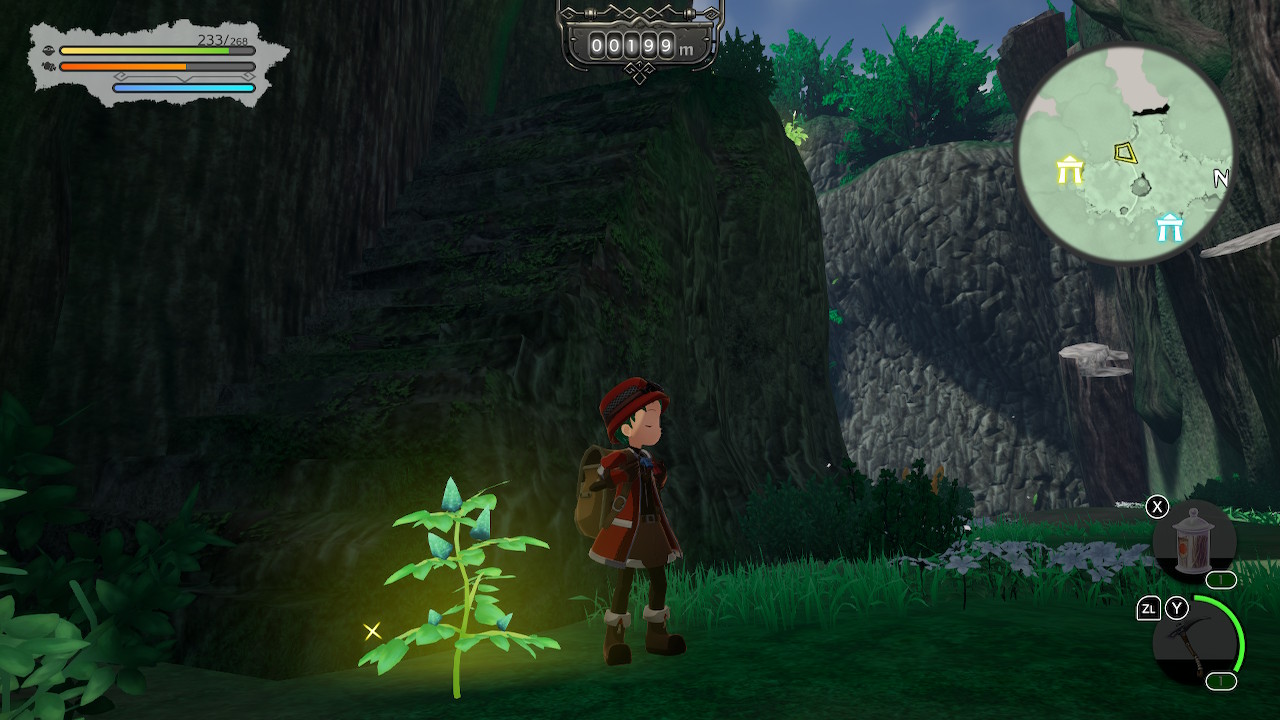
When cave raiding, it’s the red, sparkling deposits that you usually want, since they’re more likely to have valuable relics. You can hear these “sparkle” when close by, which is tethered to Environmental Volume in the options. Some players turn the BGM volume off or down to make it easier to hear this.

In Binary Star, if you fail to plan, you plan to fail. Here are a few more pointers that can help your potato kid survive their expeditions, or otherwise thrive:

Frequently go to the guild headquarters and accept every quest that’s there. You have no reason not to. Actions such as gathering as conditions for competing quests only count after you’ve accepted those quests. You can gain plenty of EXP and money from quests, so go accept those quests.

Most relics that you find don’t do anything for you in their current state, but can net you piles of EXP and money for turning them in to Relic Appraisal. It’s not a bad idea to trunk five to ten of each relic, which can come in handy when you get the option to craft relic armor pieces and weapons, and some quests require that you turn in certain relics. Yeah, they threaten to string up those who keep relics for themselves, but from what I can tell, they don’t actually follow through on this threat in Binary Star, so go ahead and stash some relics. Each layer has a different set of relics to uncover, so by the end of the game, you’ll have quite an inventory.

Between expeditions, Kiyui might ask for a shiny stone. Only the blue and yellow stones will make him happy. If you give him what he wants, he’ll give you a piece of material at random from a small pool (such as Limber Scales and Shellfish Shell). It’s not a bad idea to stock up on these stones so you can keep returning to him for more materials, if you want such materials. What he gives is random, and it can be otherwise hard to find Limber Scales in the early game, when you might want them to upgrade armor, so it’s not a bad idea to save-scum for the material that you’re after.

As you level up, you’ll get more points to spend on the Skills tab. Under Battle, focus mainly on Dodge and whatever weapons you plan on focusing on, ignoring the ones that you’re not bothering with. If you spend points on Gun, but don’t use any guns, those points won’t be doing anything for you.

As for the Cave Raid tab, these are pretty much all non-negotiable. You want them all. Backpack is best, as it allows you to carry more gear, Climb is great because it means you get better at climbing, which is a huge part of the game. You want all the Gather options, as soon as they’re available. These abilities are not translated well, but what there is to know is that most of them double the amount you pickup, first of what you gather, one makes it harder for fish to get away (not a big deal), then pickups from fauna and fish, and finally things that you mine, such as relics. To double pick-ups is a real game-changer, so go for these as soon as they’re available. But when it comes down to it, each of the Cave Raid abilities are great.

Then there’s Craft. For some reason, Box is included among the Craft skills. If you’re running out of trunk space, then go with Box. The ability to cook meals is great, but a lot of the recipes are kind of redundant. You’ll generally be fine going up to Smoked Dishes in the Meal section. But Items are high priority if you’re wanting to make Relic Armor sets. Bow and Bullet isn’t a big deal, because you can just buy Ammo.

You might be okay not upgrading armor for much of the game. In many cases, such as the 3rd, 4th, and 5th Layers, crafting armor beyond what you can buy at the store may be overpreparing for bosses that aren’t all that hard, and upgraded armor usually becomes obsolete when you rank up.

To Part 3: Red Whistle

Made In Abyss: Binary Star Falling Into Darkness Walkthrough Part 1: Introduction

Back to Walkthrough Menu

Made In Abyss
Binary Star Falling Into Darkness

Version 1.1

Walkthrough by Raizen

This is my first ever walkthrough, and I’m open to criticism.

As far as my experience goes: On Switch, I’ve played four different save files to the end, one of which to the level cap, one of which on a different profile. I’ve played the PSN and Steam versions to the end. Altogether, I’ve beaten this game six times. I have obtained all achievements and trophies in the Steam and PSN versions.

While there are spoilers in this guide, to find them, one must advance to the appropriate part of the guide that corresponds to that part of the game.

This guide focuses on the main campaign, Deep In Abyss. It does not focus on the short, Riko-centered Hello Abyss mode, which is optional as of version 1.0.3 of the game.

This guide is current as of Ver. 1.0.3 of Made In Abyss: Binary Star Falling Into Darkness. Some aspects of this guide may become obsolete if the software were to be patched.

Version History:

Version 1.0 – 29 Dec 2023

  • Initial version published.

Version 1.1 – 1 Sep 2025

  • Updated with a discovery about the bosses, that they didn’t need to be scanned to be added to the notebook
  • Added a method for unequipping charms from armor in Part 2 of this guide
  • Added Part 9, Achievements and Other Random Things

Spelling, grammatical, and various minor updates may be made to this guide without being noted in the Version History.

To Part 2: Fundamentals of Cave Raiding

Matt Walsh Is Problematic

It goes without saying that liking someone doesn’t mean agreeing with everything that they have to say. When it comes to trans activism, Matt Walsh usually hits it out of the park.

But when it comes to culture as relates to entertainment, he usually lets out some pretty bad takes.

There are various degrees of out-of-touch. Not paying attention to politics is not the same as not watching TV, which is not the same as not following culture.

But then there’s the absolute extreme: saying that anime is demonic, that video games destroy kids minds, and that grownups should not watch cartoons.

It’s those kinds of takes that make me appreciate just how cool my dad really was. He knew that a person’s entertainment doesn’t make them who they are, which probably has something to do with why I have a similar perspective. But even if that wasn’t the case, I’d like to think that I’d have been able to figure that out on my own.

In a world where entertainment is being corrupted in an attempt to fit it in an agenda, it’s hopeless to think we can fight back by withdrawing ourselves and our children from the culture. That’s just not realistic. It’s vastly superior to instead teach our children that entertainment can be enjoyed, but not be the primary influence of their worldview. And, at the same time, we can work to take back culture while contributing to it.

That’s how we win: Not by running from battles, but by participating in them.

It should be obvious how stupid it is to paint anime with one broad stroke by saying the whole of it is demonic, because there are many, many different anime out there with many different genres. Some anime out there is great for children, because they’d be intended for them. Some anime is geared towards adults, and is intelligently written by writers who take their audiences seriously. Of course, some of it is really weird and of limited appeal. But the great thing about anime is that there’s something for everyone.

And really, conservatives should be getting behind anime, because Japan is a conservative society, which doesn’t have western leftist ideals, and whose entertainment options are free from woke influence.

In spite of this, there are some on the fringe who are attempting to make the case that anime is pedophilia, using fringe examples that are not mainstream in obvious acts of the cherry-picking fallacy.

I’m going to let you in on a little secret. Lean in close, because this is totes a secretly-secret secret. Are you listening? Okay…

Child abuse is illegal in Japan. In fact, it’s illegal anywhere that Sharia is not the law of the land. The existence of drawings which may be protected as free expression does not indicate the legality of the acts depicted.

Something similar can be said about video games. In fact, I don’t view them as simulations, even if that’s what some of them are going for. I view them as games.

I don’t play Grand Theft Auto. But if I did, I’d know that playing it doesn’t make me a carjacker. Similarly, playing Cooking Mama doesn’t make me a chef, playing Guitar Hero doesn’t make me a rockstar, playing Cave Story doesn’t make me an android, and playing The Legend of Zelda doesn’t make me a legendary hero. They’re games. That’s all they are. Even the ones that I play don’t inform my worldview, because I can tell the difference between fantasy and reality.

Matt Walsh is also of the opinion that men should not own plushes. He probably never heard about Fumos. But he did make an exception in the case of his own merch, a plush of Johnny the Walrus.

Sample of Johnny the Walrus taken from Amazon.

It’s obvious that Matt Walsh is proud of Johnny the Walrus. But let’s be serious here, how many kids are going around saying “Yay, I love Johnny the Walrus!”?

Probably exactly none of them.

And I shudder to think that Johnny the Walrus is the only entertainment option for Matt Walsh’s poor kids. Even The Adventures of Lil’ Chad looks better than this sub-DeviantArt tripe. Is this really what Matt Walsh thinks will build culture?

Conservatives have been pretty good about getting behind anime as a non-woke alternative to the ESG-influenced garbage that we’ve been seeing out of Disney and western comics lately. If companies like Disney want our business back, the companies should return to the values held by Americans, and most of the world, for that matter. The woke movement as we see it today is a product of algorithmic manipulation, and is a misrepresentation of the values that people actually hold.

But as for the fringe group who views anime as “brain waves coming from Japan”, they’re little more than the Satanic Panic from the 80’s, but with a few word-swaps. But this time around, they’re not going to amount to anything, because their language alienates and their vilification is easy to see through.

If that’s the kind of thing Matt Walsh is getting behind, then Matt Walsh is limiting his audience. And it’s obviously very important to him, considering that that’s how he measures his success as compared to other content creators, like The Quartering.

What is your philosophy as a content creator? Is it to maintain your integrity, even if it means having limited appeal? Or is it to maximize profits by maximizing your audience, saying whatever you have to to get there? For a while, it seemed as though Matt was doing the former. But if he’s going to boast of the size of his following compared to creators like The Quartering, then that’s harder to say definitively, isn’t it?

Of course, if someone is trying to rack up shock views by feeding into a Neo-Satanic Panic, then a larger viewership doesn’t seem like an accomplishment in which one can take true pride.

Matt Walsh does pretty well when it comes to confronting the extreme elements of the trans movement. But when it comes to most other things, he would do well to keep his mouth shut.

New York City Teacher Does TikTok Presentation About Sexualities of Nintendo Characters, Says She Was Only Kidding

What New York calls an educator.

There’s a teacher in New York by the name of Remy Elliott (certified as Jeremy William Elliott) who decided that it would be a good idea to do a video on her TikTok account in which she assigned various gender identities to Nintendo characters, such as Mario and Princess Peach.

According to her TikTok presentation, “Mario came out so long ago most people forgot”. Not only that, she claimed that Luigi is demisexual, Princess Daisy is bisexual and polyamorous, Toad is ready to come out as a trans-girl, and Yoshi completed transition to a male, complete with breast-removal surgery that left no scars.

As I read about this, it became apparent to me that the presentation was a joke, which was something that Remy did assert. But even so, to make a presentation like this when representing your school district as an educator seems like an insanely bad move.

But just in case you doubt where this piece of work stands in the culture war, Remy claims to have a trans flag, a bisexual flag, and a non-binary flag on her desk at her work, which would be at school. She did this to show just how accepting she was of these things.

The only reservation she had concerning what she shared with her students concerned her polyamory, because that “is not in the conversation”. But she did confer with administrators, who agreed that it would be appropriate with her to speak with students about her relationships.

I disagree. A teacher’s job is to teach, preferably on the topic of the class in question. It’s certainly no place for any educator to bring up personal matters, especially not personal matters of a sexual nature, and certainly not with students who are still minors. What’s even more vexing is that the school district’s administration, after hearing of Remy’s polyamory, approved the teacher to speak of it, rather than immediately shooting it down for the repugnant idea that it was, or at least recognizing the potential for controversy and bad press.

She said: ‘This is not a conversation that conservatives are having at all. They’ve decided… like, you can’t do this at all, there’s no place for it. 

So, now we know what a depraved half-wit does when she ignores any voice of reason. She’ll upload a presentation to TikTok which bullshits about the sexual identities of Nintendo characters.

‘And that just shows such a lack of thought and care. They’re not understanding of the people. They’re children as people and where they’re at.’

And, no surprise, she’s of a mind that determines that it’s ageist to say that it’s wrong to introduce sexual deviancy to children.

Notice how she’s registered under the name “Jeremy William Elliott”? She is actually a he.

So yeah, we have yet another case of a man identifying as a woman, likely in an attempt to make it easier to approach children about sexual matters.

She added: ‘It’s also strange to point out that they have genders and sexualities, as being a cisgender heterosexual man is in fact a gender and sexual orientation.’

How he arrived at the conclusion does not follow. The fact that Mario is apparently straight does not make it unusual to talk about the genders and sexualities of Nintendo characters. In fact, there are some cases where mature, adult fans may prefer to speculate about this topic, to the end of coming to a better understanding of the characters in question. Putting aside, of course, the fact that the characters in question are seldom, if ever, sexualized in the official materials. What makes the matter unusual in Remy’s case is that he wished to publicly have the conversation as an educator, with dozens of ninth-graders presumably involved.

‘As part of my DOE employment, despite being primarily hired as an English Teacher, teaching our established and vetted sex education curriculum was not only something I was hired for, it was something I was trained and qualified in.’

That was a shitty move on the DOE’s part. After all, Remy can’t be counted on to present the sexualities of Nintendo characters in good faith. I’ve been a Nintendo fan for decades, so I can take issue with many of the claims that Remy makes.

For one thing, Mario and Luigi are evidently straight. This is presumably one of the reasons behind why they go after princesses Peach and Daisy. They want some of that vertical smile. For Toad to transition to a girl would be redundant for his franchise, because his sister Toadette is already a character in those games. Then there’s Remy’s assertion that Yoshi had “top surgery”. Yoshi is a reptile. Reptiles don’t have mammaries.

She added that she only ever spoke of her personal life ‘within reasonable limits.’ 

It’s great to know that Remy is willing to draw the line somewhere, even if that line should have been placed well before telling minors that Princess Daisy is “hella bisexual”. But, who knows? Maybe Remy will do another installment where she points at Samus Aran as being trans, and Link as being a closet fairy. Yoshio Sakamoto and Shigeru Miyamoto don’t seem to be in any hurry to represent the perversity of the moment, so perhaps Remy will step forward to help them out?

Review: Made In Abyss: Binary Star Falling Into Darkness

Developer: Chime Corporation
Publisher: Spike Chunsoft
Genre: Action RPG
Rating: Mature
Platform:
 Nintendo Switch, PS4, PC

There isn’t usually much expectation that a video game based on a manga or anime would hold up when compared to the original source material. But when considering how beloved Akihito Tsukushi’s Made In Abyss is, one can hold out hope that the developer and publisher would understand just how important it is to the fanbase to do justice with Made In Abyss: Binary Star Falling Into Darkness.

While one may consider it a pleasant surprise when a game is released months ahead of schedule, if you’ve been following the game industry long enough to develop a little cynicism, you’d see it as a sign that the publisher decided to rush it, perhaps because funds were starting to run a little low. Or, as was likely the case with Binary Star, Spike Chunsoft wanted to rush the game to market while the recently-aired second season of the Made In Abyss anime is still fresh in the memories of viewers, and the game is in a better position to profit off the popularity of the license.

That’s not to say that Binary Star was a bad game. The skeleton of a highly ambitious project is there: great worldbuilding, an intriguing story, well-fleshed-out characters, and great potential for treasure-hunting mechanics. Of course, it’s easy to point out that these are owed to the source material, and that the follow-through would be in the efforts of the game developers. And that’s where things start to falter.

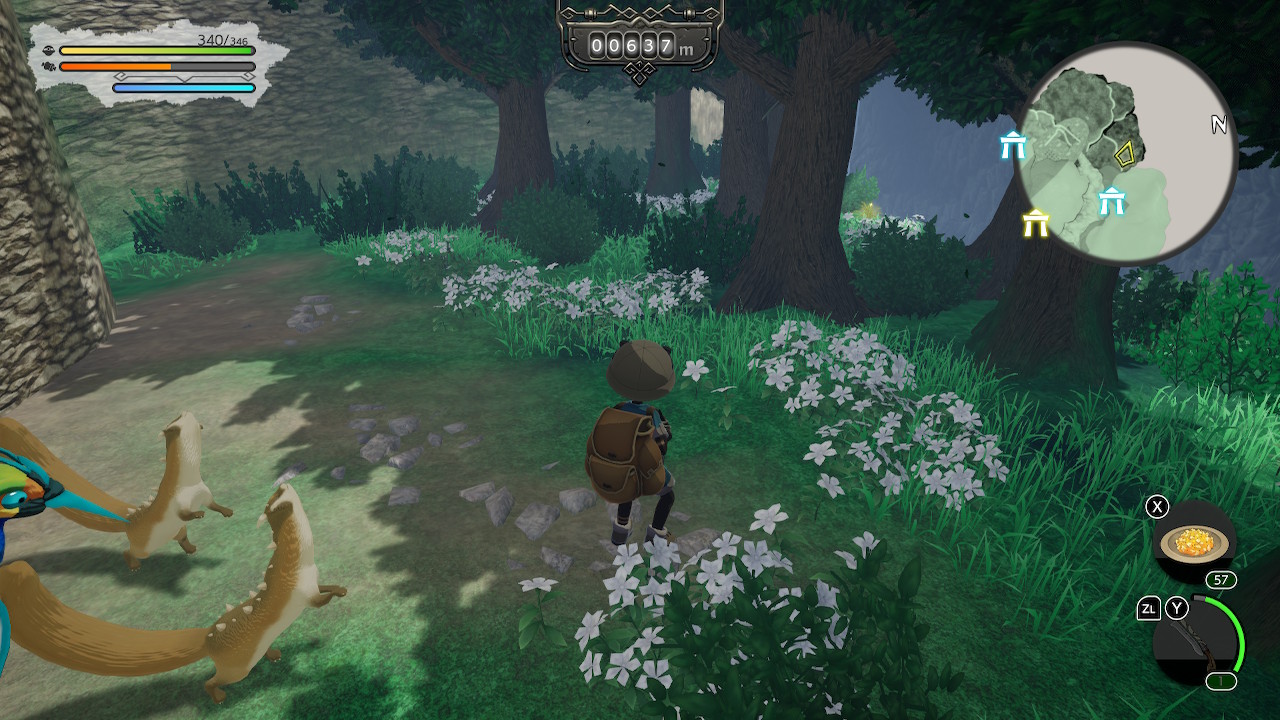
This game would be a blast if it weren’t for a few bad design choices that could have easily been decided against. The most notorious of which would be the repeatedly-spawning enemies. Normally, when a game character is placed in a sprawling, expansive environment, the player’s tendency is to take a minute or two to bask in the beauty of the scenery they are presented with. But don’t take too long doing that in Binary Star, because when you enter a new area, a timer ticks down, and when enough time passes, enemies start spawning. And they’ll usually teleport into existence right behind you, as though the game itself has a problem with you just wanting to chill.

If this sounds like it might be an annoyance to you, you might want to go for the Steam version. Some clever players have developed a mod which prevents enemies from spawning in such a way. Otherwise, you might end up getting triggered at the sight of ferrets.

I get the idea that the game makers had a hard time deciding whether to closely follow Riko’s adventure from the manga, or give players a new, customizable main character to go on his/her own adventure. To the credit of the game makers, they decided on including both. However, it’s obvious that the meat of the game is in the new main character’s campaign, while Riko’s story (which only includes her adventures up to the second layer) acts as a kind of tutorial that’s a few hours long.

Unfortunately, to get to the better part of the game, to complete the tutorial first is mandatory. And as far as tutorials go, it doesn’t really work that great. Riko and Reg are likely to annoy you as they repeat the same lines over and over again while traipsing about in the Abyss. It won’t take long for you to get used to the fact that Reg “senses something” when he and Riko are in no immediate danger.

This is one game that isn’t to be judged by the first few hours.

While I’m complaining, I can also point out that the “strains of ascending” are a huge inconvenience. I know that it’s a huge part of the worldbuilding in Made In Abyss, but from a game mechanics perspective, it’s likely to bust your groove when you want to, you know, go up.

Let’s take a moment to appreciate the irony that some twisted jerk built a staircase in a place where the very act of ascending causes people to barf.

But as much as I can think of to complain about, I found myself enjoying Binary Star quite a lot, especially when I got to the point when I could play the main campaign. That was when I could finally create and name my own customizable character, and have him interact with the other characters in Made In Abyss. And the execution was compelling and addictive enough that I eventually developed a forbearance concerning the game’s shortcomings.

The story follows a child who joins Belchero orphanage alongside a group of other kids. At that point, it’s been months since Riko departed into the abyss in a quest to find her mother, and since then, the other children began to speak of her as a legend. You might have noticed a dark undertone in the reasoning for training orphans to mine in the abyss, as there’d be fewer people who would miss them in the event that an expedition turns tragic.

If you see tendrils bordering the screen, you might want to wait a few seconds to acclimate. If your character barfs, he/she can get hungry again in a hurry.

The action in the game takes place in the Abyss, where you’ll have to make careful judgements as to what dangers to brave and how far you’ll go, considering that at the end of an expedition, you’d have to make a return trip. As you journey, there are many things to account for, such as what supplies you brought, what healing items and food you brought, and the weight of the treasures you find, considering that there’s a limit to how much you can carry before your character is slowed.

In addition to the HP bar, you’ll also have a hunger bar, which decrements with time. Hunger is something to account for when making longer trips, as when the hunger bar is depleted, your character becomes helpless. There’s also an energy bar, which depletes when the character takes an action. However, it’ll completely restore when the character stands still for a few seconds, as long as the character is not starving. However, it doesn’t recover on its own when climbing a rock face, which places a limit on how much you can climb at a time.

It’s possible to cheese some of the more dangerous primeval creatures, if you’re patient.

There are also status conditions to watch for, such as two different kinds of poison. There are also arm injuries, which temporarily limits the actions you can take with your arms, and leg injuries, which temporarily decreases mobility. Special items heal these conditions in a hurry, which is great, because some of them can be a serious problem when a dangerous monster is upon you!

While the game isn’t heavy on delivering the tension, there’s still a sense that things can go horribly wrong, even from just a moment of poor judgement. Just slipping on a rock face can result in your character falling to their death. It seems that this game’s M rating is largely owed to how grisly some of the possible deaths are. In some cases, it seems a little gratuitous, but it’s not as though the Made In Abyss series was made for kids.

Evil ferrets.

Made In Abyss is one game where if you fail to plan, you plan to fail. While in Orth, you can plan for runs into the Abyss, with shops for replenishing your equipment, food, and medicine. There’s also a facility for selling off relics that you find for money. You also have access to your room, where there’s a chest where you can decide what to take with you. There are also many armor items, but many of the more effective ones add significantly to your weight allotment. It’s a judgement call as to whether it’s worthwhile to settle for a particular armor set, or upgrade for a set that might be worth the weight it adds to your gear.

It bears pointing out that your character doesn’t gain EXP directly from beating enemies, you mainly get those from selling relics and completing quests. Thus, it’s usually better to avoid dangerous primeval creatures unless you need their drops or you have some other reason for fighting them.

It’s generally better to pick a cap with a lamp, even if it’s not the highest-defense option.

As the story progresses, more main missions open up, the completion of which can lead to the player growing in rank, such as from Red Whistle to Blue Whistle. Growing in ranks grants access to more skills, which can then be unlocked with points that players accrue by leveling up. Some of these skills are quite significant, and can increase the number of items that can be crafted, and improve other skills, such as mobility when climbing or dodging, or even increase the bag’s weight capacity.

It’s a bit of an indulgence, but there is some enjoyment to be had in having your own customizable character interact with characters from Made In Abyss. You can even give your character heterochromia, if stereotypical OCs are more your thing. And like stereotypical OCs, you can proceed to have them befriend just about every established character in the series that appears in this game. Having said that, there are at least a couple established characters which, if I were to see them while walking down the street, I’d cross to the other side of the street.

There are a few boss characters, but with a few exceptions, they’re some pretty simple battles that can be cheesed. But this doesn’t bother me, as the boss battles aren’t really the main point of this game. Once you’ve completed all the boss battles and most of the game’s major objectives, you’ll come to a steep drop-off in reason to continue playing. Sure, you could continue to take on missions and develop White Whistle skills, but there isn’t much at that point to do with those skills.

While spawning enemies can be annoying, you can use them to your advantage. They can become a great source of food and other drops.

This is one game that can be pointed to as being highly ambitious, and having a lot of potential just from the source material, and while there are some redeeming qualities, the whole deal is held back by an apparent rush to an early release date, and some poor design choices that could have easily not been made.

I think an appropriate score for Made In Abyss: Binary Star Falling Into Darkness would be 6.5 out of 10.

This might be one race to the bottom that you could get behind.

UPDATE: Literally, update. Among the changes in version 1.0.3, you can skip the Hello Abyss mode and go right into Deep In Abyss mode, which is where the meat of the game is. That’s great for players who might lose their patience with the initially-mandatory pseudo-tutorial mode.

But that’s not all, they also changed the system that spawned in minor enemies when you spend enough time in one area. Not by eliminating that mechanic entirely, as I might have preferred, but by making it take more time for the enemies to spawn in. I gave the game another try, and I noticed that it took much longer to get attacked by evil ferrets.

It seems the developers at Chime were aware of gamers’ biggest complaints, and they addressed them. That’s great for those who are still on the fence on whether to give Binary Star a try. But the update came weeks after I already completed all the game’s major objectives, so they wouldn’t make that much of a difference for me unless I decide I want to give this game another go.

Missing a better initial experience with a game that ends up getting an update is one of the ways that the game industry, in its current form, would punish a gamer who rushes through a new release like a freak.

Review: Pokémon Scarlet and Violet

Developer: GameFreak
Publisher: Nintendo, The Pokémon Company
Genre: Turn-based RPG
Rating: Everyone
Platform:
 Nintendo Switch

I wanted to put off writing a review for this game. I was awaiting the hypothetical update that would take care of the performance issues. After all, once the problems were patched, any review that stated them as being the main problem would quickly grow obsolete. But the only notable update that came (aside from the day one patch) took care of a fun glitch that actually benefitted players. So, it looks like this game is going to continue to stand as being too ambitious for the dated Nvidia Tegra X1 chip. Either that, or the game devs were in a hurry to push something out for a strategic release date.

For most games, performance issues are enough to kill them. But oddly, in the case of Pokémon Scarlet and Violet, that’s not the case. Somehow, the game manages to be so awesome that it overcomes the performance issues, which mainly have to do with dropped frames. Which would mainly be an issue for those who insist that their games be completely realistic, which is not much of an expectation when it comes to the Pokémon series.

Scarlet and Violet are GameFreak’s first attempt at an open-world experience for the Pokémon franchise. As one might expect, it doesn’t so much change open-world games as it does change the way Pokémon is played. Considering what we’ve been seeing out of Pokémon Legends: Arceus and Pokémon Sword/Shield, the series has been tending in that direction. Finally, the franchise has made a committed attempt at an open-world game, and it does not disappoint.

It’s a welcome change, as most Pokémon games up to this point have been strongly formulaic. Sure, some of the old tropes remain, such as that you still choose from three types for your starter, and there are still 8 gym badges to collect as part of a League challenge. However, the League challenge is only one of three main story routes, and the three culminate in a finale story, and in the case of the non-League stories, the writers really told some moving tales.

It starts out with the main character about to start his first day at an academy (the name of which varies on which version you’re playing). The academy director and a new rival direct you towards the academy, but there’s a diversion which involves the main character meeting a new legendary Pokémon, which serves as your ride Pokémon throughout the game. At the academy, you meet a bunch of new characters that will be relevant to you during the three branching stories.

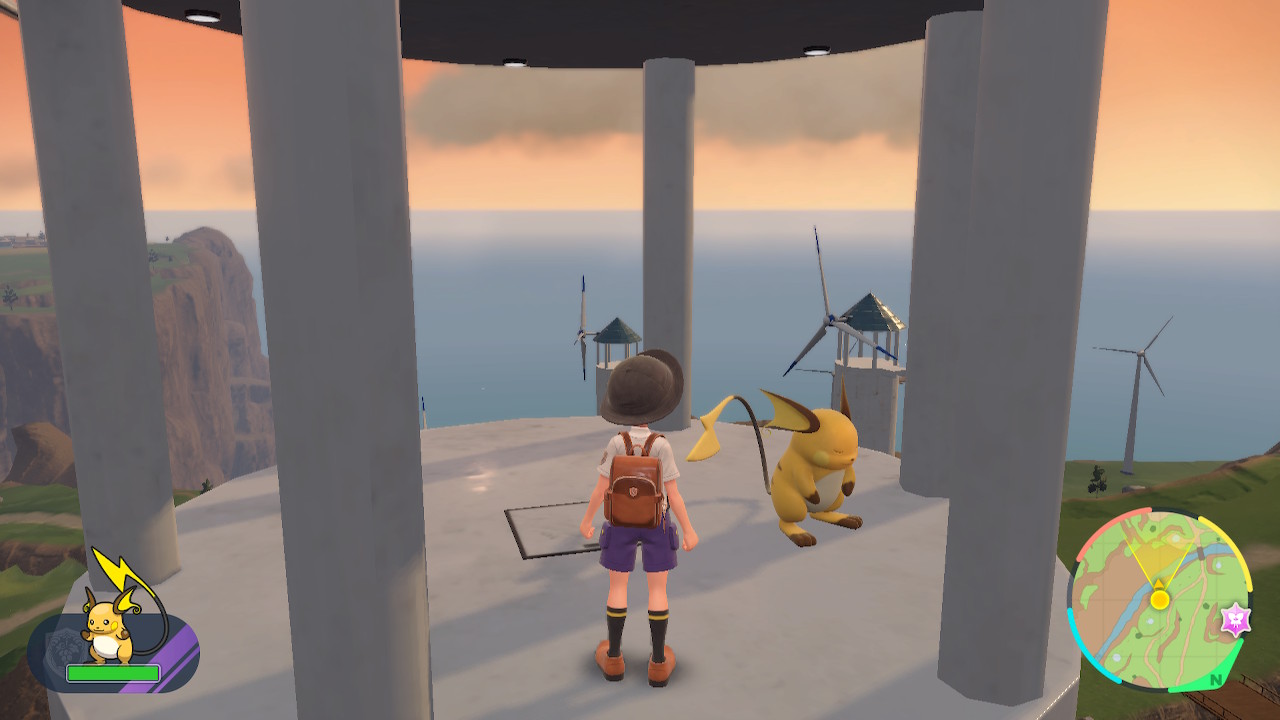
Then, you’re set loose on the Paldea region, where you can take on any challenge that you want (aside from the central Great Crater, which remains off-limits until near the end). The region of Paldea is open to you, and you’re not compelled to go in any one direction. Any of the three main stories can be taken on in any order you wish, and you can put any of the three on hold at any time, either to further another storyline, or to run about and attempt to catch the Pokémon you set your sights on. Personally, I recommend prioritizing taking on the titans, since that path rewards you by increasing your mobility, enabling you to further appreciate your freedom to move about through the Paldea region.

As far as I know, the game doesn’t explicitly spell out a recommended order for its objectives. You can take on the gyms in any order you want, you can take on the Team Star bases in any order you want, and you can take on the titans in any order you want. Just be warned that the levels of most opponents don’t scale based on your progress level, so it’s possible to wander too far and end up overwhelmed by gym leaders you weren’t prepared for. But this also allows for players to, in a sense, set their own difficulties by pushing themselves as far as they care to at the game’s outset.

The core Pokémon games are, at their hearts, turn-based RPGs. Thankfully, this core aspect remains intact in the series’ conversion to an open-world experience. The overworld switches seamlessly to battle scenes by showing the battles as taking place in the overworld environment, in a manner reminiscent to Pokémon Legends: Arceus. However, Scarlet and Violet differ from Legends in that wild Pokémon battles are 1v1 affairs, with other wild Pokémon in the area looking on as spectators, which is a nice touch!

A new and welcome feature is the Let’s Go mechanic, where you can send your own lead Pokémon into the overworld, and it’ll passively seek out wild Pokémon to battle, and defeat them. It’s a relatively fast way to level up your own Pokémon, putting aside that EXP points are decreased when you battle with this method. But considering that you wouldn’t be constantly switching between overworld mode and the battle scene constantly, this may still be a fast way to level up your team. Also, your Let’s Go Pokémon won’t beat up shiny Pokémon with this method. Shiny hunters, rejoice! Just be warned that this style of battling doesn’t trigger evolution, so you might want to level up the old-fashioned way at some point to trigger evolution to occur.

As fans have come to expect with each new generation of Pokémon since X and Y, Scarlet and Violet introduce a new game mechanic that makes battles in Scarlet and Violet distinct, as compared to battles in other games in the franchise: Terrastilization. It’s an act which causes Pokémon to take on a crystalline appearance. The Pokémon will change its type mid-battle, and its moves gain a boost in power, depending on the type it takes on. It’s a neat little gimmick that adds spectacle to in-game battles, and is certainly something to account for for competitive players participating in competitions that allow for it.

Aside from competitive battles, much of Scarlet and Violet’s post-game content seems to hinge on Tera Raid battles. You can find some easier ones during the main playthrough, but you’ll eventually have access to five-star raids, which pose a serious challenge to players who intend to solo them. Afterwards, players can access six-star raids, which are a lot more challenging than the raid dens in Sword/Shield. In many cases, it’ll take a team of players with specific Pokémon and specific builds to be more likely to win.

The soundtrack, by the way, is the best in the series. No question. Whether it’s the upbeat gym leader tune which is almost as good as the gym leader tune in Sword/Shield, the atmospheric environmental tunes that switches to an alternate track when mounting the ride Pokémon, the recurring leitmotif, and the bangin’ battle themes that play during a few key battles, it’s various degrees of excellent. Toby Fox’s presence may be controversial, but it’s plain that he’s a positive asset, and Pokémon’s music direction benefits huge from his input.

The game isn’t without flaws, but those mainly come down to performance issues, which make it evident that the game was rushed. Yet, this is one case where the good greatly overtakes the bad, to the point that the issues with performance are actually easy to overlook, even if they do sometimes take one out of the experience.

I suppose another complaint that one can think of is that there isn’t much of a postgame for those who aren’t terribly interested in Tera Raid battles. Because, those aside, there aren’t many post-game battles that are much of a challenge. That’s a problem that might be resolved through a future DLC package, which would be great for those who are patient and willing to spend more.

But as for the game as it is, I feel like I definitely got my money’s worth. If it weren’t for the technical issues, it wouldn’t seem out of place in the running for distinctions such as Game of the Year.

But as they are right now, Pokémon Scarlet and Violet are deserving of high recommendations, and a score of 9.5 out of 10.

But if you’re a fan of the Pokémon series, you probably already bought it. Great choice.

Bulbagarden Founder Posits Theory That New Gym Leader Is Trans and Non-Binary, Gets Debunked Less Than 24 Hours Later

It seems like with every new major media release, someone from the questionable sexuality community will come forward with speculation (often stated as fact and foregone conclusion) that a character depicted represents their favorite flavor of sexuality.

As Bounding Into Comics points out, this time around, the speculator is Liam Pomfret, the founder of Bulbagarden, who posits his theory that the newly-revealed gym leader in Pokémon Scarlet and Violet, Iono, is non-binary and transgender.

Here is the promo video featuring Iono:

Upon what is Liam basing his theory? The initially ambiguous use of pronouns, and her choice of hair dye:

Image from Bounding Into Comics

One would expect the use of such flimsy inferences from an undiagnosed schizophrenic who believes that their TV is communicating secret messages specifically for them, not a Doctor of Philosophy. Our education system is fucked, isn’t it?

Because he was tripping over himself to find trans representation in a Japanese game marketed towards anyone in the family, he looked at the soft blue and pink hair (kinda looks lavender to me) and immediately thought of the trans kid flag, rather than the recurring red/blue coloration of Pokémon’s flagship games, Scarlet and Violet included.

Less than 24 hours later, Nintendo dropped supplemental promotional material concerning Iono. It’s the kind of thing that looks like it would have been released simultaneously with the promotional video that originally featured Iono, so maybe it was hastily thrown together after the fact.

The promo specifies Iono as having the feminine pronoun of “her”. Iono is female. Because we’ve already established that speculation is fun, maybe Nintendo threw this out there because they knew what Liam Pomfret was saying, and were all like “Nope. We’re not having that.”

If “Bulbagarden” sounds familiar, then you’ve been following along back when I pointed out how inappropriate it was that they used their Pokémon fan platform to soapbox about an immigration policy that they blamed on Trump (the problem was actually Obama’s fault, and Trump resolved the matter through an executive order).

This was Bulbagarden’s forum header at the time:

Fucking creepy.

And a fantastic opportunity to warn parents out there that there are some predatory actors in fan communities who use their positions in their respective communities to pressure younger members. Oftentimes, their activities involve performing “favors” over video chat. Of course, there are many ways that bad people can take advantage of children online.

That PSA aside, it can also be pointed out that there is a certain obsession with pointing to Japan’s status as a relatively advanced, orderly, and peaceful society. Oftentimes, someone on the radical left will attempt to glom onto a form of Japanese media, in a sad attempt to make the case that the Japanese are actually just like them.

What these attempts overlook is how Japan as a society got to be as advanced as it is. Japan is a heavily structured and stratified society that favors family, career, merit, and respect. To further reduce that, Japan is conservative. In fact, it’s one of the most conservative societies in the world.

Sometimes, a weeaboo pops up who thinks of Japan as being their kind of society, probably because they got ideas as to what it’s like from anime and manga. The fact is, Japan is a society of norms. If you move to Japan, you’re expected to conform to the norms. If you don’t want to, then you don’t belong in Japan. It’s as simple as that.

Red light districts aside, Japan is an advanced, peaceful, and orderly society. If your thinking is different from theirs, that might have a lot to do with it.

Iono is pretty far from the first character from Japanese media to have gotten this kind of attention. It wasn’t long ago that Shiver from Splatoon 3 came under scrutiny as possibly non-binary, but it turned out she was female. Nanachi from Made In Abyss is a frequent target of this, because author Akihito Tsukushi prefers to leave Nanachi’s sex as unknown. Or, more famously, there’s Bridget from Guilty Gear, who is male.

That’s not to say that there are no “non-binary” characters in Japanese media. However, such characters are seldom portrayed as sympathetic. But why would they, when there is something obviously wrong with their thinking?

Iono is merely a character in a work of fiction. She’s just made up, therefore nothing about her has any bearing on the reality of any matter. It doesn’t matter whether she represents anything, except maybe in the deluded thinking of those who lack the ability to parse reality without the assistance of a fictional construct. If this describes you, then you need to seek help. And get over yourself, while you’re at it.

Was the Crystal Onix Early To Terrastallizing?

When the Dynamax phenomenon was first revealed in a trailer for Pokémon Sword and Shield, some players recalled that certain oversized Pokémon had already appeared in the first season of the anime. First was a Dragonite just a few episodes in, then a Tentacruel a few episodes after that. Later, we’d see more in the appearance of giant Alakazam, Gengar, and Jigglypuff.

While it’s not likely that a connection between the appearance of these Pokémon and the implementation of a new gameplay mechanic decades later was intended as of the time of their first appearance in the anime, it’s still fun to think that they might have factored into the thinking of Game Freak as they developed Sword and Shield.

But with the upcoming Pokémon Scarlet and Violet games, there is a new mechanic, called “terrastallization”. This makes a Pokémon take on a crystalline appearance, as well as gain a new type.

As tantalizing as it may seem, there actually is precedence for such an occurrence in the anime, decades prior. To see it, we’d have to go back to the Orange Islands. The Pokémon I’m referring to would be the Crystal Onix.

In the early days of Pokémon, the Crystal Onix captured the imaginations of fans everywhere. Not just for its dazzling appearance, but also for the fact that it seemed to resist the Water types that would normally lay an Onix out flat, but was weak to Fire moves, which they usually resisted.

As it so happens, terrastallization doesn’t just change a Pokémon’s appearance, it also changes its type to whatever Tera type that the individual Pokémon has. Based on the evidence provided, we can determine the type of the Crystal Onix, as there is only one type that resists Water but is weak to Fire, and that type is Grass!

It’s interesting to think that decades prior to the implementation of terrastallization in a main Pokémon game, there was already a similar concept shown in the anime. But what do you think? Does this look like a coincidence to you? Or might the Crystal Onix have been in Game Freak’s consideration as they were developing Pokémon Scarlet and Violet?

A New Trailer for Pokemon Scarlet and Violet Just Dropped. Here’s What I Think.

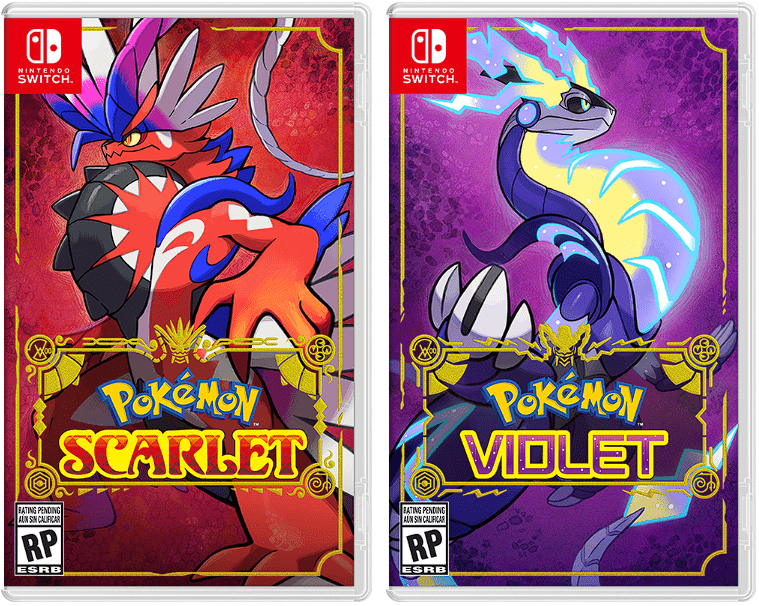
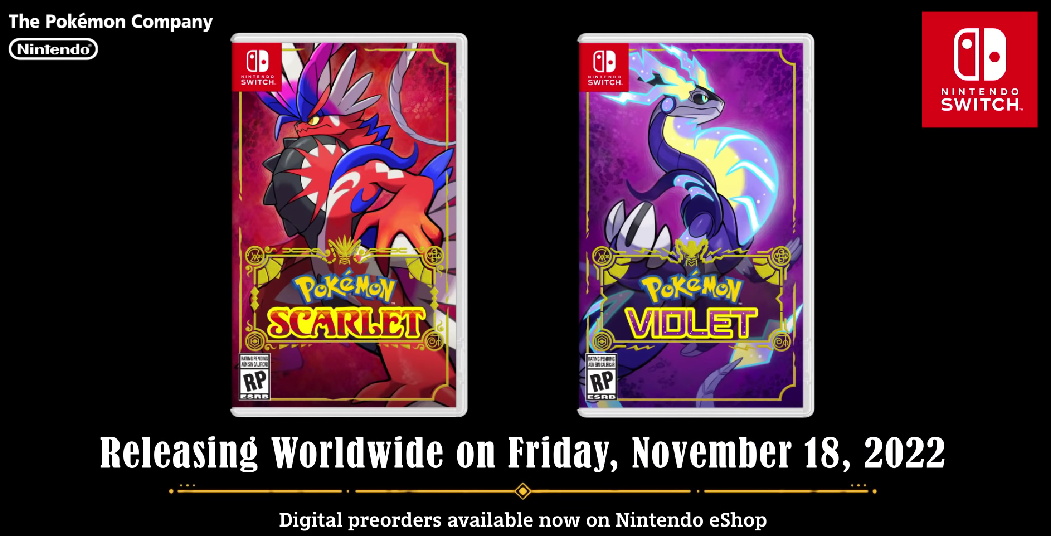
As the graphic above taken from the latest promo trailer shows, Pokémon Scarlet and Violet are have gotten cover arts, and are available for preorder on Nintendo’s eShop, which is great for those who have already made their minds up.

But as for the promo itself, here it is:

Okay, honest opinion: I’m somewhat underwhelmed. Don’t get me wrong, I’m still looking forward to the next games. It’s that this trailer didn’t get me as excited as the first one. However, it seems my opinion isn’t the popular opinion, as typical Pokémon fans seem to be gushing over the newest promo spot. It does have it’s great qualities.

For one thing, I might be imagining it, but the character models look a lot better, particularly the outfits. I remember that the models for the Pokémon themselves looked great in the first trailer. Also, it’s great to see more natural movements for the human characters.

Speaking of human characters, we have two new professors. They both seem pretty cool, and they seem to have different themes: one is a cave woman, and the other wears a futuristic getup. Also, is that calculus on their dry-erase boards?

The trailer shows 4 different player characters taking off in different directions, showing that as many as 4 players can interact in the same field at a time. This also shows that there will be plenty of customization options for physical features such as skin tone, hair style, and hair color. There are also a handful of clothing options, but I’m still not impressed with them. Something like a studded jacket or round shades would be cool.

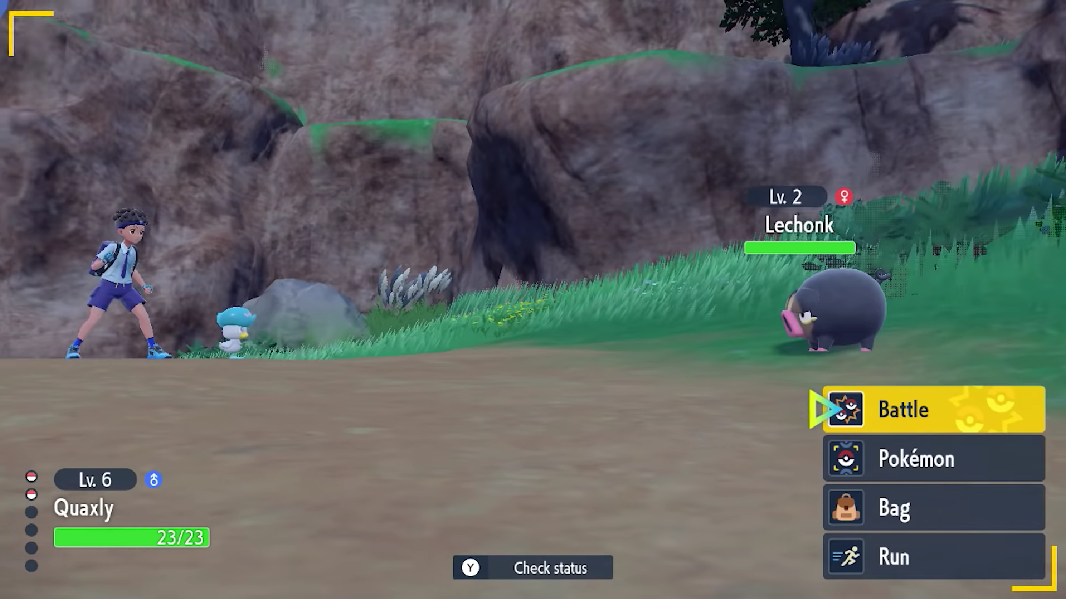
The trailer also showed a few new Pokémon, including a pig-like critter named Lechonk, a new Pikachu look-alike named Pawmi, and an adorable little olive named Smoliv. Of the three, I think I like Smoliv more. Maybe because olives are tasty.

The trailer briefly shows a battle scene with the typical options. Apparently, the battles are going to be turn-based, but it’s not clear whether it’s traditional turn-based RPG fare like Pokémon has traditionally done, or something more akin to Pokémon Legends: Arceus. Between the two, I don’t have much of a preference, though Pokémon’s traditional battle formula is pretty well-tested, while the one in Pokémon Legends: Arceus still seems experimental.

After that, we see some trainers running about in environments populated by Pokémon. The environments are great as far as something stylized goes, but certain features might still need work. After all, as we’ve already seen, Pokémon fans can get pretty picky about how well the trees are detailed!

But then, we see the perspective speed along some environments, as though to take us to see some far-off features. If you would have guessed that we’d get to see some new legendaries, you’d be right:

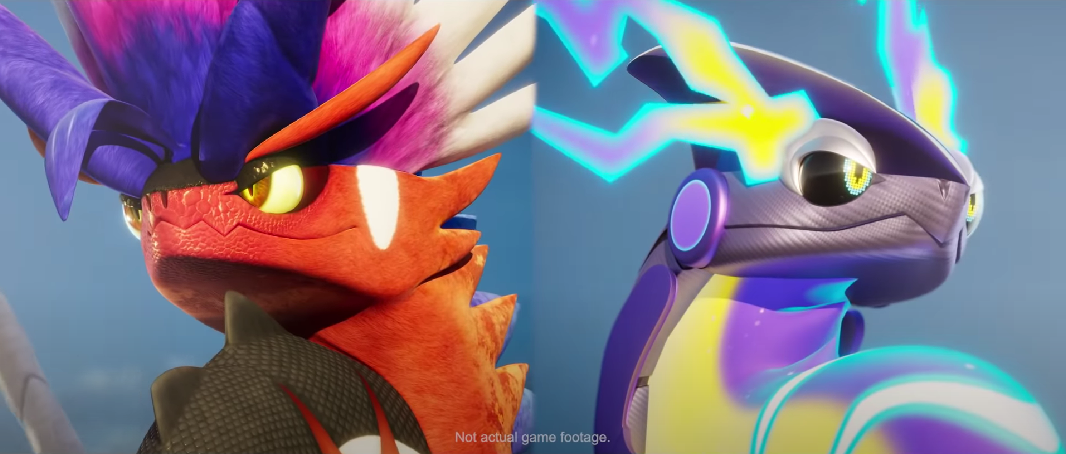
The new mascot legendaries are named Koraidon (the scarlet one) and Miraidon (the violet one). Apparently the themes of these games are past and future.

The models for these Pokémon are pretty well-textured. Also, check out Miraidon’s eyes.

Overall, it’s not a bad trailer. I was a bit underwhelmed, but that’s just me. I suppose it’s only natural that a second trailer for a Pokémon game would reveal more about the region, lore, and characters, and save the nerdy stuff like gameplay elements for another time.

However, those gameplay elements do matter. It’s going to make a big difference, especially to competitive players, whether elements from previous games such as Dynamax, Mega Evolution, or Z-Moves make a return. So far, we haven’t seen a sign of any of that, or of a new battle mechanic.

But I suppose that a Pokémon game that allows for free exploration rather than confinement to linear routes might be a sufficient selling point for me. After all, I’ve been wanting to see this in a traditional Pokémon game for a long time, and Pokémon Legends: Arceus nearly pulled it off.

But as far as the community as a whole is concerned, it seems that GameFreak has done a great job with this new trailer. Here’s looking forward to the next one.

Review: Z.H.P.: Unlosing Ranger vs. Darkdeath Evilman

Developer: Nippon Ichi Software
Genre: SRPG, Dungeon Crawler
Rating: Teen
Platforms:
PlayStation Portable, Nintendo Switch (bundle), Steam

(Spoiler-free review)

Nippon Ichi Software (NIS) has just dropped another one of their classics, this time a dungeon-crawler that made its debut on PSP: Z.H.P.: Unlosing Ranger vs. Darkdeath Evilman (ZHP).

The original release on PSP didn’t get the attention that it deserved, which had to do with the fact that it didn’t get a lot of marketing behind it. That and that NIS was still a relatively-obscure game company. There’s also that SRPGs aren’t very popular outside of Japan. Also, it was originally released within days of a major sports game. And there’s the fact that the American localizer, NISA, only shipped one copy to each retailer.

The original release had a lot to go up against. However, the game itself has a lot of heart, and it’s now available on multiple platforms. By the looks of it, what NIS was thinking for this game was “straight port”. Which is fine, as the original game holds up well since its original release. But those who prefer crisp graphics in their anime-style games might by taken out of the action by the aliasing.

ZHP begins with a hero, the Absolute Victory Unlosing Ranger, on the way to save the Super Baby from Darkdeath Evilman, to save the world in so doing.

Except, the Unlosing Ranger gets struck by a car on the way to the final battle, and dies. But in his final act, he hands his morphing belt to a random passerby, passing on the torch of the Unlosing Ranger to someone who will fight on his behalf!

But to the shock and dismay of the onlooking world, the new Unlosing Ranger loses the battle, and is ejected far away! When he comes to, he finds himself in a strange world, where a girl begins coaching him for a rematch!

Over the course of the game, the main character (whom you can name) makes repeated attempts at the final boss, but as he repeatedly fails, he takes on progressively more difficult dungeons to train. As he does so, he ends up solving problems for people on earth, as the bizarro earth that he finds himself on is connected to his own earth.

Many of the game’s so-called “final battles” are actually mostly scripted. The main action in ZHP takes place in the stages, which function as dungeons would in classic dungeon crawler RPGs, with each dungeon having their own bosses.

When the main character leaves a dungeon for any reason (win or lose), he reverts back to level one. Which may seem like lost progress, but as this occurs, he gains stored levels, which increases his stats when he’s at level one. As he levels up in dungeons, his stat increases are based on his level one stats, so the game encourages the player to become “king of level one”. For this and other reasons, a failed dungeon run isn’t always a total loss, and the game encourages stuck players to keep trying, even if things don’t seem so well for the poor main character.

Be warned, as this is one of those dungeon crawlers that features the concept of “perma-death”, where your game saves as you enter dungeons, so if you turn the game off because your current run isn’t going well, you lose equipment that you brought with you! What’s more, if a dungeon run ends in failure, you lose what you find! There’s a facility that can be obtained and upgraded that can reduce the penalties, however.

It’s because of this that I find it hard to recommend the PSP version. At one point, I got discouraged from continuing when the battery cut out for a brief instant, which was enough to cost me some powerful equipment. Now that this game is available on some more dependable hardware, I think it may be worth giving another shot!

Speaking of, the Steam version might be the better of the versions available, by reason of the fact that you can buy it as a standalone game. The Switch version is available as part of a pricey bundle. It’s a sweet deal if you’re interested in the classic RPG Makai Kingdom. But if you’re not, then you’re probably better off going with the Steam version.

Like many other NIS games, you’re capable of getting your character to level 9999, with stats in the millions! But because the boost lasts until you clear a dungeon, you’d mainly want to go for it if the dungeon would otherwise give you trouble.

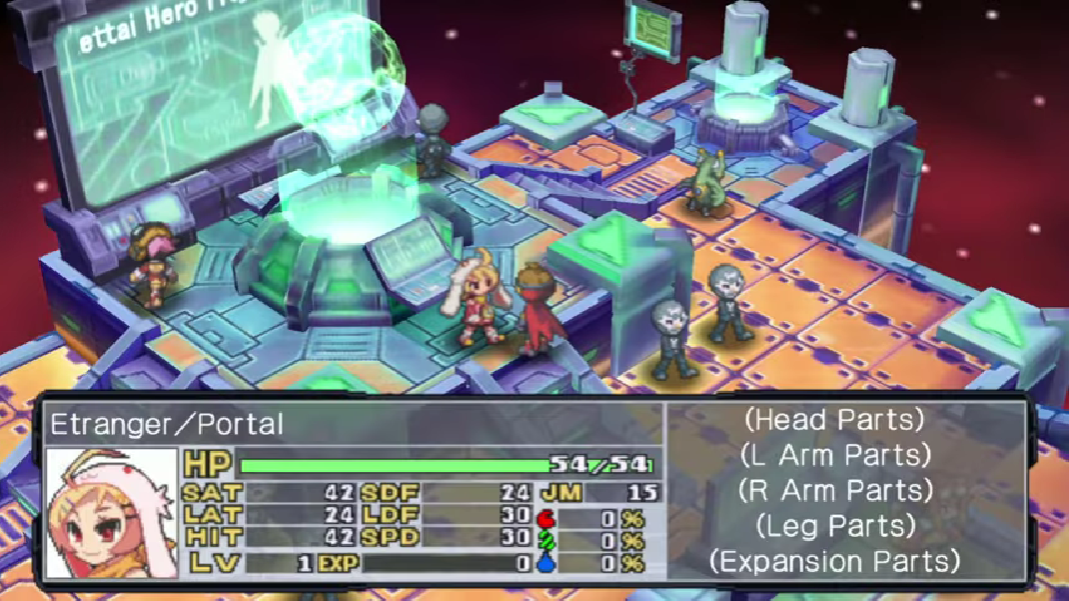
While there is only one playable character, there are many, many customization options that make that one character seem like plenty. For one thing, there are numerous equips that change the hero’s appearance and grant him new abilities. There are also unlockable costumes which can effect his resistances. There’s even a body modification facility, which plays a huge role in stat optimization.

In dungeons, you progress floor-by-floor by finding the stairs on each floor, which leads to the next floor. You’ll find pick-ups about, but there are also enemies to watch out for. Shocker, right? When you engage them, you can go blow-for-blow against them, or use special attacks.

This sounds like simple fare, but there are things to watch out for. For one thing, the main character steadily expends energy, which occurs at an increased rate depending on his actions. Items can replenish this energy, and it’s not a bad idea to take such items with you into dungeons, because you cannot count on reliably finding more, due to how the dungeon floors are randomized. Also, equipped items can wear out with use, with wear represented as a percentage on the HUD. Their effectiveness can decline as they wear down, but there is a facility that can repair them. One valuable item is headwear that passively conserves energy.

At this point, you probably got the idea that this game is for the nerds. That sounds about right.

Another of the game’s highlights is the story, which is packed with humor. It can also get a bit preachy at times, in a way that it “hits different”, and may even hit a bit close to home for some players. I could say more about it, but spoilers. I’ll point out that much of the humor and dramatic elements are at the main character’s expense. The guy fights an uphill battle to get some respect.

For the NIS fans out there, yes, Asagi Asagiri is in this game. But that’s not much of a surprise, now is it? If you get the Switch bundle, you can also see Asagi’s NIS debut in Makai Kingdom, so you can see just how hard the poor girl fell from her starting point. By the point ZHP was originally released, she wasn’t taking things very well.

My opinion is that if you’re into JRPGs, SRPGs, or are just into Disgaea, ZHP is worth giving a chance. It’s definitely one of the finer RPGs from NIS’s catalog of classics.

For those who like skipping ahead to the score, here you go: Z.H.P.: Unlosing Ranger Vs. Darkdeath Evilman gets a score of 8 out of 10.

There are multiple endings that can be accessed by playing through the game at least once. Replaying through story stages many times doesn’t appeal to me, so I didn’t much bother with that. However, there is a lot of content outside the main story, and there are extra dungeons for players who might appreciate a challenge. This adds replay value to this game, and does a lot to make it worth the price of admission.

That’s the great thing about this style of game for those who would find it interesting: they’re usually packed with value. And ZHP certainly is.