I’m going to go ahead and be a voice of reason when it comes to the whole James Gunn debacle so far (as things are still developing, more facts can come to light, and my position can change). As you might have heard, James made some tweets a few years back wherein he made some jokes about pedophilia. These tweets somehow didn’t surface until it became clear that he wouldn’t toe the line for the social justice narrative.
Disney has subsequently fired James, which ended his role as director of the Guardians of the Galaxy series, considering that the nature of the jokes didn’t fall in line with Disney’s family-friendly image. This would be the same Disney that recently picked up a sci-fi series depicting dismemberment and decapitation with laser swords and mysteriously strangling people from across the room, but I digress.
Fans then started pressuring Disney to bring James Gunn back, saying that while his jokes were crass, he was exercising his constitutionally-protected freedom of expression. Whether a company fires someone for their conduct outside of work doesn’t have much to do with freedom of expression, but I suspect that the fans are motivated by the possibility that without Gunn, the Guardians movies are finished.
Shortly afterwards, some images surfaced of Gunn having posed in a photo-op during a “pedophilia-themed” party. As you could imagine, the reactionaries went ballistic. By now, they’ll have already given themselves strokes from how violently they spazzed out, making sure that we know how much they hate pedophiles, saying things like:
“Pedophiles are totally awful! I’m glad I’m not a pedophile! Did I mention that I’m not a pedophile, today?!”
What reasonable people want to know is, how is it that the idea for a pedophile-themed party was pitched, a bunch of people agreed to it, and it somehow came and went without causing an uproar?
The answer is, it didn’t. It wasn’t a pedophile party. It was an anti-pedophile party.
The party in question was themed after the hit TV show, To Catch a Predator, which featured Chris Hansen. On the program, Hansen and members of law enforcement used chat rooms to arrange meetings with pedophiles who were led to believe that they were meeting up with children. It was redneck entertainment in the same sense as Cops and America’s Most Wanted, except easier to admit to watching. And it’s fun to watch again and again, even if the premise doesn’t change much from entrapping creepy, debased men who thought that they were getting this:
But instead got this:
A party based on that? Still sounds like a count-me-out kinda dealie, but I can see how someone might find that amusing. And it’s certainly far less outrageous than what people have been imagining against James Gunn since those party pictures came out. And it so happens that their imaginations hard-railed to the most negative possible implications that there could have been, like an op amp with a vicious slew rate.
In today’s connected world, a lie can travel around the world many times in the time it takes for the truth to get its shoes on. That being the case, let’s be at least a little careful with the facts. If you react without considering the information available, you’ll likely end up being a part of the problem.
While we’re at it, can we all just stop randomly accusing people of being the worst thing we can possibly imagine? A person isn’t a horrible criminal just because you think they’re kind of weird. The real problem is that you’re a peevish misanthrope.
It’s pedophiles today, but back in the nineties, if someone wanted to make someone else seem like a horrible criminal, they’d call them a psychopathic mass-murderer. We all know how reasonable it is to expect to find a serial killer walking down the street, instead of in a jail cell, right? And in the eighties, it was satanists. Yes, satanists.
It’s amazing how many people there are that know how to read, write, speak, and listen, but they find it hard to think.
Sometimes, you’re in the mood for a hamburger. This can happen when a McDonald’s is convenient, and you might just overlook the fact that it’s McDonald’s, and proceed to satisfy your hamburger craving.
However, sometimes this craving happens in the morning. And when that’s the case, have fun trying to get a hamburger at McDonald’s, because that’s when they have their breakfast menu going.
Who goes to McDonald’s for breakfast? Their breakfast items are gross, and any time I’ve tried them, they’ve left a sour feeling in my stomach, as though my body was telling me I’ve made a mistake. Egg McMuffins? Gross. Sausage Egg McMuffins? Grosser. They also offer bacon in their breakfast items, because orangutans love powering that stuff down their throats with a zero-minded focus.
Considering how foul the McDonald’s breakfast menu is, ignoring it is easy. The problem is, when they have their breakfast menu going, they don’t make hamburgers. So if it’s a hamburger you want, you’d have to wait.
What’s McDonald’s most famous for? Hamburgers. At one point, they’d put something like “N million hamburgers sold” on their signs. Around the time that number reached the hundreds of millions, they just changed the signs to read millions and millions sold.
Oh, hold on. The number is actually billions. My mistake.
Unbelievable.
How many hamburgers did they sell by saying “No, it’s too early in the morning. Come back when we want to make them.” I don’t know, but I suspect that the answer is close to zero.
Maybe the real problem here is that when I want a hamburger, I sometimes actually consider McDonald’s. I can do better, so why don’t I?
I recently got a new pair of shoes. By the time I got home, I realized that I made a big mistake. I got a pair of shoes that digs into the back of my heels.
The shoes were my own size, so I didn’t make any mistake there. The shoes, while padded, still dug into the back of my heel. The shoes really did seem okay before I bought it, but its heel actually curves inward, so it digs into the achilles tendon more and more with every painful step. Eventually, the pain seems to wear off. But when I went to take my shoes off, I found blood spots on both my socks. Gross! It stung to peel them off.
Sometimes, you think you can save money by buying a cheap pair of shoes. But if you make the mistake of buying the ones that chew your heels, you find yourself buying Band-Aids and Neosporin to try to reverse the damage, and by the time you buy some of those expensive pads for your shoes, you didn’t really save money at all, did you?
The people who design these shoes have to know what they’re doing. It’s hard to imagine making shoes that damage heels any way except on purpose. After all, isn’t it easier to sew up something linearly rather than curved inward? What did these guys think they were doing when they designed these shoes with a feature that couldn’t be anything except uncomfortable?
These kinds of shoes should be banned. Why should it be considered an acceptable risk to buy a pair of shoes that have the potential of causing physical harm to the consumer? Why should the shelves at a shoe store be a minefield of misery?
It’s probably some conspiracy designed to get us to buy more shoes. After all, if we accidentally buy a terrible pair of shoes, the designers of heel-eaters might actually be banking on us not bothering to make a return, just spending more money on yet another pair of shoes. And in my case, it might actually work. I just want to get the same kind of shoes I got a few months back, and set some firecrackers off inside the heel-eaters I accidentally purchased. If I get to have some fun watching it blow up, it’s not a waste of money.
As most people do, I face a number of challenges in my day-to-day life. These include succeeding at my job and also managing my finances so that I’ll have enough money to pay the rent month-to-month while still having enough to eat. If, on top of the challenges of typical life, one were to be exposed to the issues facing society as a whole through social media and corporate information outlets, it’s easy to develop a bleak outlook of the world.
Because of this, it’s understandable that a person would want to unwind with some entertainment. This escapism to idealized worlds of fantasy can be just what a person needs to help them forget, at least for a short time, the problems that that person and society as a whole faces, and in some cases permit them to retain some sanity.
It can be quite distressing when the entertainment media outlets that a person chooses can start taking up issues and causes, and in so doing, become yet another polarizing voice in a divisive political landscape. When this is the case, a person’s choice of escapism ceases to be a means of escape, and oftentimes, this leads to a person finding another source of entertainment altogether. After all, if a product that a person purchases ceases to serve its essential purpose, it can be discarded and a replacement sought out.
The observation of this phenomenon has led to the popularization of the phrase, “Get woke, go broke“.
What it means to get woke is to experience an awakening in awareness of issues and causes, usually from a left-wing perspective (those on the right tend to prefer the expression “red pill”). What it means to go broke is self-explanatory; it suggests that there’s a price to pay in using one’s position to further an agenda.
There is a wrong setting to soapbox.
The entertainment industry is one such wrong setting, and the industry itself is having a pretty hard time learning that lesson. In fact, facing correction in this regard, it would seem as though the entertainment media are digging their heels in, though it’s not really benefiting them to do so. There are many examples to pick from.
The film industry has decided to pander to intersectionality. Superficially, the idea is to provide a voice to oppressed groups such as women, minorities, and the sexually non-conforming. This has the appearance of “standing up for the little guy”, but is devious in that it is used as a means to come away with a moral victory in the event that a movie doesn’t do so well. If a movie does well, it’s a victory for oppressed minorities. If a movie fails, it’s because those who didn’t go see it are racists, misogynists, or homophobes.
It should be obvious why such an approach doesn’t work. For one thing, even if you can find someone else to blame for your movie failing, your movie still fails. Shifting the blame doesn’t change that. Worse still, turning against the public can result in the public turning against you.
Since going to Disney, Star Wars decided to take on intersectional pandering. Since this became the case, the Star Wars fandom has gotten quite scary. They’re so sick of what Star Wars is becoming, that they are actually wishing failure on the more recent Star Wars films. This includes the new Solo movie, which they declared a blackout on. Since then, the Solo movie failed at the box office, and Star Wars fans are actually celebrating this. While it seems like Kathleen Kennedy is close to being dismissed as the person in charge of Star Wars, if that’s the case, Disney is being quiet about it, perhaps because they want to deny the Star Wars fandom its victory.
The Star Wars brand and its fans have turned on each other, and it’s an ugly sight. It’s especially difficult for those who just want to enjoy Star Wars without getting into the fight.
The comic industry has pandered to intersectionality for a long time, so it shouldn’t be the least bit controversial to say that they have. What’s really interesting is that independent publishers that refuse to toe the line are gaining in popularity, and comic book shops that have long since sided with intersectionality have no idea what to do about them. In some cases, they’ve even turned away paying customers just for wanting their products. The author of a rising star comic series called “Jawbreakers” has voiced his disagreement with the mainstream narrative, and his comic is being sought out by sympathetic comic readers, even though his political opinions aren’t being expressed in his comics. Another comic gaining in popularity as a result of the consumer uprising would be Cyberfrog, which amazingly raised over $300,000.00 through crowdfunding!
The comics industry should never have ramrodded a political narrative into their products to begin with, but since they’ve decided to, it’s nice to see that consumers have strongly expressed what they really wanted by throwing huge piles of money at the alternatives. It’s sad that a divide occurred between the comics industry and its consumers, and it could have been prevented with the understanding of the principle that there is a wrong place and time to soapbox.
Thankfully, The Pokemon Company has remained politically uninvolved. That’s great for me, because Pokemon has long been one of my favorite games, and it would be sad to see the company co-opted by a rather vocal and short-sighted minority.
Not everyone in the Pokemon community is the same way, as indicated by Bulbagarden’s Twitter feed:
The events at the US-Mexico border being referred to are the arrest of people who have entered the United States illegally (instead of through proper channels), and the decision was made not to take their children to jail along with them. The corporate media, tripping over itself as usual to make Trump look like Hitler, is making this out to be Trump tearing families apart.
I decided to check out the thread on Bulbagarden forums, and the virtue signalling hits you right away on the forum header:
Yes, Bulbagarden wants every child that visits their forum for Pokemon discussion to know that they can embrace their sexuality. Anyone see a problem, here?
As you would expect, the OP uses hyperbolic language to describe what they perceive as happening. Whether an intentional leftist shill or some unwitting pawn in a larger game, the outcome is just the same.
What I find particularly condescending is the following statement in the Twitter post:
We would like to stress that, for us, this is not a matter of politics but of basic human rights and decency.
In saying that they don’t see it as being about politics, but about basic human rights and decency, you’re not allowed to disagree with them without being a horrible human being, and if you don’t watch yourself, they might sic Antifa on you.
If it’s not about politics, why did the forum post encourage us to contact members of the House of Representatives or the Senate? Believe it or not, people don’t see politics as just some game where the parties are likened to some stupid sports teams. We know that politics are ideologically driven, which is why it matters so much that the people who are voted into office have their heads on straight. When it comes to matters where legislation offensive to human decency is enforced, the people who can make the biggest difference the fastest are elected officials.
Thankfully, the very first reply to this thread shows that someone on Bulbagarden forums is thinking:
There’s my point. A community about Pokemon is no place for politics. At best, it’s off-topic. At worst, it’s divisive, and could tear the community apart regardless of how convinced you are of the nobility of the cause. When it comes down to it, a Pokemon community is where a person goes to get away from the world’s problems, not where moderation abuses their positions to push their own agendas. If the community is no longer a place that serves its purpose, people will go somewhere else for a community that does.
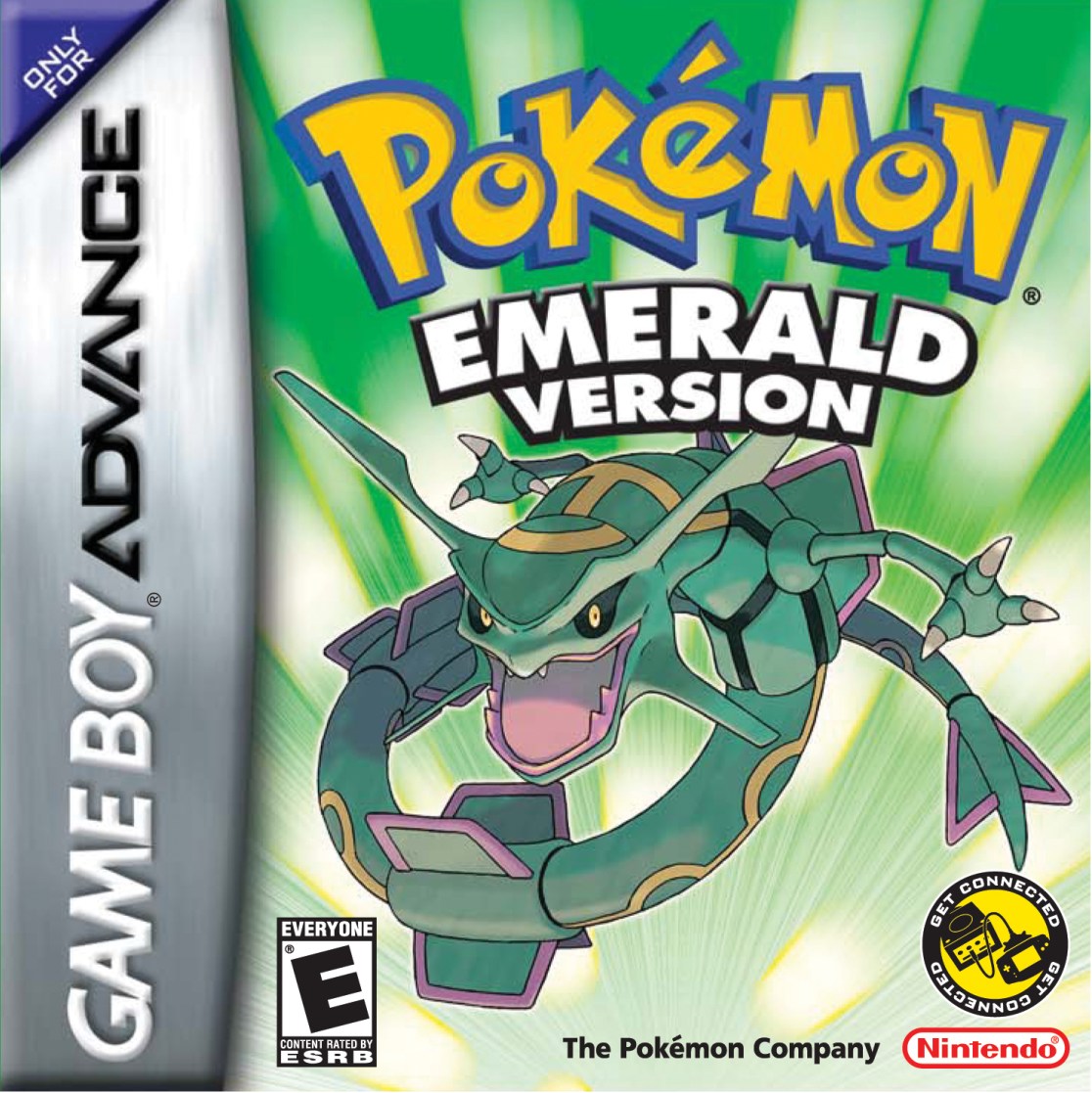
Pokemon Emerald is one of the best Pokemon games, and is the definitive GBA Pokemon game. It’s not just called “Emerald”, it’s a true gem in the GBA library. There is nothing wrong with taking one’s time playing through Emerald and appreciating what this game has to offer.
However, this guide is for the man-on-a-mission; the one who seeks out the fastest and most practical way to play through the game. To help such players out, I’ve put together a team building guide for getting through Emerald quickly.
This guide is different from most team building guides that I’ve seen. Many in-game team building guides focus on making a balanced team of 6 battlers, suggesting that players keep all 6 throughout the game. These guides are flawed in that experience values tend to distribute better among fewer pokemon, and by late game, players would have been better off with 2 to 4 higher-level battlers than a full team of 6 pokemon that can’t quite hack it.
Another flaw with those teams is that they seldom consider HM users, leaving players that try them with the task of backtracking to either catch HM users or access PC boxes as they come across roadblocks.
Such guides also suggest keeping every teammate on their team for the rest of the game. While the authors do take care to select teammates that carry their weight for the rest of the game, sometimes, that’s not the most practical way to go about things. Sometimes, you have to box a pokemon that’s no longer carrying its weight, or once you have a pokemon that better serves its purpose.
What this guide gives you are suggestions that are designed to get you through the game. A core of battlers will be considered with the intent of covering the challenges you’d reasonably face in a playthrough, and suggesting HM users to give you maximum mobility.
With that, let’s get this team building guide underway:
The first pokemon on your team would be your starter. It was close, as each of the Hoenn starters are pretty good. But for this game, the best starter would be Mudkip. Mudkip has an advantage at the first gym, so things are easy for it when getting started. But it gets even better when it evolves to Marshtomp. As a combination Water/Ground type, its only weakness is Grass. It’s a double weakness, but Grass attacks are infrequent. With its ground typing, it’s great against the third gym. It’s final form, Swampert, is kind of slow. However, its offensive and defensive stats are great, and Swampert has access to strong Water, Ground, and Rock attacks, giving this pokemon some great coverage against many opponents.
Surprised? So am I. But Taillow actually is an effective early-game pokemon. Its defensive stats are really low, which is something to be careful about. But it’s very fast and has a pretty good Attack stat, so it can hit pretty hard with Wing Attack, which it learns at level 13. Taillow evolves to Swellow at level 22, which results in an even greater boost to its Attack and Speed. Taillow does a great job of making sure that an opposing Grass type isn’t an auto-loss, which is really important considering your rival will eventually face you with Grovyle. What’s more, Taillow will have an advantage in the second gym. Taillow will eventually be replaced with another pokemon, but it’s great at its job until then.
Zigzagoon is a decent HM user. It can be taught Cut, Surf, and Rock Smash. Of those three, you’re likely to use Cut soon after catching it (after getting the first badge), and it can use Rock Smash when you need a pokemon that can use it. Surf comes much later in the game, but by then, you’ll have other pokemon that can learn it. Zigzagoon has a gimmicky use: some players like to try to get a few of them with the Pickup ability and benefit from the items it might pick up after battles. The Pickup item list is different in Emerald, and is influenced by the Pickup pokemon’s level, but it’s still a nice ability that could pay for itself before long. Later, on Route 119, you’ll be able to find Zigzagoon and Linoone that have levels in the 20s, which makes it easier to obtain better items. Unused space in your party can be put to use to obtain items.
A fan favorite, and a pretty good choice. But I had a tough time adding Ralts to this list because it’s encounter rate is so low (4% on Route 102), and is pretty weak at first. However, Ralts has an advantage against the second gym, and evolves into a pretty good Psychic type. Ralts and it’s family learn strong Psychic moves by level, as well as Calm Mind, and it can learn Thunderbolt from a TM for decent coverage. Abra is a good pokemon of the same type, but Kadabra has to be traded to get Alakazam, which might not be an option. Therefore, the nod goes to Ralts. Ralts is not necessary for this playthrough, but you can go with it if the thought of going with just your starter and a Flying type for a while bothers you.
In Dewford Town, next to the gym is a fisherman who gives you an Old Rod. It also happens that it’s right there in Dewford Town that you could fish up a Tentacool with that very same rod. Tentacool is an awesome HM user in that between Tentacool and Tropius (which you can catch later) all 8 HMs can be learned, granting you full mobility while freeing up the rest of your team to teach whatever moves you please. Tentacool’s HM selection is Cut, Surf, Waterfall, and Dive. Most of those moves come much later in the game, but when the time comes to use them, Tentacool is an awesome choice to teach them to.
Also, while you’re in Dewford Town, you’ll obtain TM 47. I suggest saving that for the pokemon that I suggest next.
When you make it to Route 119, Skarmory will be available to capture. Skarmory replaces Swellow, so you’ll be boxing Swellow for another team member. There are a few caveats to this choice worth mentioning. Some players would prefer holding onto Swellow because it’s faster and has a comparable Attack stat. Also, it can take a while to find a Skarmory, since it has only a 5% rate of encounter on Route 119. What’s more, Skarmory levels up slower than Swellow, and when you find Skarmory, it will likely be underleveled compared to the rest of your team.
So, why is Skarmory worth the trouble? Because it pairs excellently with Swampert. Swampert is weak to Grass, while Skarmory resists Grass moves for days. Skarmory is weak to Electric and Fire, two move types that don’t really bother Swampert. Swampert and Skarmory make an excellent tag team which rocks when played well. What’s more, Skarmory benefits well from the bounty of resistances that its Steel typing offers, and thanks to its flying type, it’s immune to the Ground moves that would normally plague Steel types.
You find Skarmory at level 16, and it comes with Peck and Swift, which are so-so attacks, and it doesn’t learn a decent offensive move by level until it learns Air Cutter at level 29. That’s why it’s a great idea to use TM 47 to teach Skarmory Steel Wing, so it has a decent Steel move. It’s also a good choice for Fly (the HM) or Aerial Ace (TM 40). Skarmory may take more EXP to level up, but experience splits pretty well between it and only one or two other teammates. If you can be picky about the ability, in-game Skarmory does pretty well with the Keen Eye ability, which makes life easier against opponents that like lowering Accuracy.
On Route 119, Tropius appears 9% of the time, which isn’t too bad. Once you have it, you’ll have a pokemon that can learn all the HMs that Tentacool doesn’t. Tropius, along with Tentacool, will be your team’s dedicated HM users. With them, you’ll be set as far as HM users goes. You can do something similar by pairing Tropius with Gyarados, but Gyarados is a bit more challenging to obtain.
It’s also on Route 119 that you can find higher-leveled Zigzagoon or Linoone for better Pickup yields, if you’re interested.
You get an opportunity to battle and catch Rayquaza after it resolves the Kyogre/Groudon dispute, and it can be found at the top of Sky Pillar, where you already met it. You’ll have seven badges at this point, so you’ll have almost beat the game. But having Rayquaza on your team ensures that you shred the rest of your way through. The only potential problem for Rayquaza would be Ice moves used by Juan, Glacia, and Wallace. But Rayquaza is so strong, they might not stand a chance, anyway.
Rayquaza comes at level 70, has superhigh stats, and already has team-wrecking moves without having to use a TM on it. But if you do teach it TMs, you’ll find that Rayquaza can learn many different types of moves. It’s a one-pokemon army. Just a few levels after catching it, Rayquaza learns Hyper Beam, which is great if your team needed a wave motion gun.
Rayquaza doesn’t have to replace any team member, but it’s so strong that it might make the rest of your team seem obsolete. The trick is catching the thing. Without resorting to using the Master Ball, catching Rayquaza is a tall order.
But what about…
Pokemon Emerald is packed with great pokemon, so picking out just a few for a team is challenging. Here are a few that didn’t quite make this team, but are still great pokemon.
Torchic – It evolves to a pokemon with great stats and typing, has a great movepool, and does well against several gyms. The nod went to Mudkip because it evolves to a pokemon with just one weakness that doesn’t come up often and is easily covered by another teammate. Also, Blaziken has several weaknesses, relatively low defenses, and its Speed, though higher, is just okay.
Aron – Great defensive typing in Rock/Steel and an awesome Defense stat means that the many Normal moves that you see in-game, especially early on, will hardly leave a dent. However, Aron and family doesn’t take strong Special attacks very well, especially from Water types.
Abra – Needs to be traded to evolve to its final form. If that’s an option, Abra’s a great alternative to Ralts. However, Gardevoir can learn Thunderbolt, while Alakazam would have to settle for Shock Wave.
Miscellaneous other great pokemon such as Lotad or Shroomish – Making this list wasn’t easy, and neither was excluding pokemon that really aren’t bad. Hoenn has a lot of great pokemon. If you’d rather use a pokemon that didn’t make the team, it’s your call. It’s not like Emerald is especially hard. Personally, I wouldn’t be surprised if I saw a lot of disagreement with the choices, here. It goes to show how balanced the Ruby/Sapphire/Emerald games are that there are so many choices that work well. Unlike Crystal, where if you get an Abra with elemental punches, it could take you through nearly every opponent you face.
What team would you use to get through Pokemon Emerald?
It’s been over a week since Nintendo announced the next main Pokemon games which will be for Nintendo Switch. I think that’s enough time to consider what we’ve been presented with, pondering the implications for the Pokemon series and allowing the information to gel in our minds.
Here’s the trailer for those who haven’t seen it yet:
While one might imagine that I’d be among the most critical of a Kanto retread or of the mechanical changes that the trailer showed us, I’m actually quite optimistic about the new games, and I’m looking forward to them.
I think it’s obvious that GameFreak is looking to make a game that is appealing to as many people as possible. It’s a safe move, but it comes at the risk of alienating a few who might miss some of the game mechanics that they were familiar with for a long time, or who might have wanted a new region to run around in with fresh pokemon.
First, of the fact that this is a Kanto retread, I would have been skeptical of the idea of another Pokemon game that tread through Kanto. After all, as I’ve pointed out already, about one-third of all Pokemon games have included the Kanto setting, so it’s easy to make the case that this setting is over-represented. In fact, I’ve only just last week continued playing my eShop copy of Pokemon Crystal, which I left off after having beat the champion, right before the journey would have continued with the Kanto region. I’ve been through the region so many times, so going through it again kind of seemed like a chore.
However, I would have been in favor of a Kanto retread if GameFreak had some ideas that would make the experience more interesting. By the looks of it, they certainly have! I would have liked seeing what Kanto would have looked like with 3D models, which is just what they did.
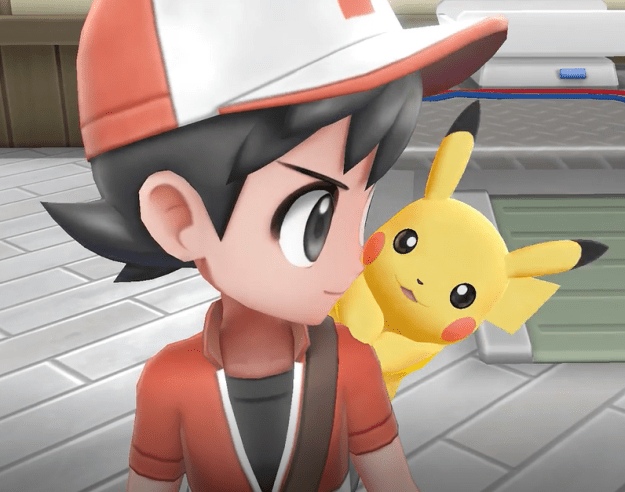
Another point of contention among the fans would be the art direction. I know that some might not be fond of the idea of returning to a deformed chibi art style for Pokemon Let’s Go, considering that we’ve had more proportioned characters in Pokemon Sun and Moon. However, the art style in Sun and Moon was very much the exception. Overworld characters were done in the chibi style in nearly all Pokemon games, so it’s very much appropriate that Let’s Go uses this style. It’s certainly the style that was used in the Pokemon Yellow game that these games are based off of, which makes it even more appropriate.
What a Pokemon game looks like.
Another point of discussion is the Pokemon Go style capture mechanics. This is a bit of a risky move, as the wild pokemon battle has been a series mainstay since the very beginning. However, it’s a move that simplifies the game and makes it more approachable to casual gamers, particularly ones familiar with Pokemon Go.
This is a bit of a tangent, but it’s something I’ve been thinking about, and this seems like an appropriate place to bring it up: I find it kind of funny when someone complains about a major game mechanic change in a new installment in a franchise, saying that it somehow makes the game less hardcore.
Fast Fact: There are no hardcore games. Hardcore is a designation of a person who plays video games, and is not a category of the games themselves.
Hardcore gamers play the same games that the rest of us play, including the casuals. What makes hardcore gamers different is that they play these games consummately, putting a large amount of play time into their games, and they tend to play their games until the point that they beat them, possibly much more.
While one can point out that the average hardcore gamer spends more on games than your typical gamer, non-hardcore gamers make up the overwhelming majority of gamers, so it stands to reason that ordinary gamers make a majority of game purchases. This being the case, what point would there be for game companies to pander to the hardcore audience, especially if they’re going to play the games anyway by virtue of the fact that they’re hardcore?
Returning to the main point, Pokemon Go capture mechanics aren’t anything that players aren’t already familiar with, considering just how many people out there are familiar with Pokemon Go. This site lists several statistics for Pokemon Go as of just last month, with the following being the main ones I want to bring to your attention:
Daily active players: 5 million (amazing for a game nearly two years old)
Number of active users: 65 million (this number alone exceeds the total sales of any generation of Pokemon games)
Number of downloads: 800 million (about 1/10th of the world’s population)
Total revenue for Pokemon Go: $1.2 billion (from a business perspective, this game is doing something very, very right)
So, who exactly is being alienated by the new Pokemon Go style capture mechanics? Pokemon Go is familiar to just about everyone with a smart phone, and the capture mechanics are just about everything there is to that game.
That doesn’t mean that there aren’t concerns. After all, in times past, one could level grind off of wild pokemon. That can still be done if your party still gained experience points off of pokemon captured. But for late game level grinding, nothing beats going up against the Elite Four. Trainer’s pokemon give more experience for battles, so they’re a better choice for level grinding.
The two-player co-op seems like an interesting idea, but the challenge might be to find another player to give it a go. There are several people in my family who play Pokemon, so it wouldn’t be much problem for me to find someone else who plays. But not everyone is in the same situation as me. There are players out there that don’t know many people who play the game, so they’re likely to have a far harder time giving the mode a try. One thing they could do is try to incentivize playing the mode with some strong rewards for players that try it, but that would risk making players that have a hard time finding other people to play with feeling further excluded. There’s the obvious fact that you can 2v1 some in-game opponents, which doesn’t seem like a fair fight, but it can help players overcome some tough opponents.
Now for my favorite feature: there are no more random battles. Wild pokemon appear on the overworld, and you can see the identity of the pokemon as it wanders about. If you want to try to capture it, you walk up to it.
YES!!!11
This is something that I’ve wanted to see in a Pokemon game since the very beginning! And they did it! They actually did! Finally, trips through caves are no longer a chore! No frequent interruptions when you have to travel through grass! You can avoid the pokemon you’re not interested in if you’re looking for a certain kind! Everything is right with this!
I don’t know a single person who is just fine with being annoyed by random Zubats every few steps in a cave, so I think that just about everyone is okay with this change. Let’s move on.
Another neat new feature is the Pokeball Plus controller. It’s a bit of a gimmick, but it seems okay. It can work as an optional controller for playing Pokemon Let’s Go, and can add more authenticity to the experience when doing the Pokeball throw. It’s also notable in that it can act as a Pokemon Go Plus device when used with Pokemon Go. I don’t imagine I’d be getting much out of this, and I’d think that anyone with an Apple Watch would have preferred using the Pokemon Go watch app over using Pokemon Go Plus. It’s gimmicky, not really necessary, but I might still give it a try.
What I’d like to see is how creative the modding community gets in making custom pokeballs with the Pokeball Plus.
Paint me.
The next games are supposed to have a transfer compatibility with Pokemon Go. The transfer process seems to be one-way from Pokemon Go to Pokemon Let’s Go. There are some interesting implications to this.
One of which would be that completing the Kanto pokedex will be a snap if you’ve already made huge progress in Pokemon Go. It’s better news still if you’ve managed to obtain Mew in Pokemon Go, since it means that you’re going to have the rarest Kanto pokemon on day one. But I do wonder whether the stats would be recalculated when transferred. I managed to get a Mew that is statistically flawless in Pokemon Go, so if the stats would change, I’d be a little hesitant to send it over.
So then, if the transfer process is one way, would that mean that Pokemon Go might at some point be phased out? I doubt it would happen any time soon, considering that, as shown above, Pokemon Go still has a huge player base, and still makes huge money.
What’s more, would this also mean that Johto or Hoenn pokemon might be in Let’s Go, considering that these pokemon are available in Pokemon Go?
So far, there hasn’t been any word about compatibility with Pokemon Bank or any Gen 7 game. Does this mean that Pokemon is undergoing a hard reboot, and all the old pokemon are going to be stuck in the past? If so, that might not be too bad a thing. After all, online trading from 4th to 7th gen has been plagued with hacked pokemon, and preventing them from being traded up might keep them from continuing to influence the game. Nintendo has been doing a lot more to discourage cheating, such as banning players that do it from using Nintendo network services. Obviously there’s cheating in Pokemon Go, but we’ve been seeing bans there, too.
Another roadblock for cheaters would be the fact that Switch will have paid online features. A paid online feature would act as a deterrent to those who would take the experience less seriously and might drag it down for the rest of us. What’s more, it would ensure that everyone using the feature will have invested something into it, so they’d have a financial loss as a penalty for breaking the rules. Putting the online service behind a paywall might be what it takes to filter out those that misuse it, and bannings can take care of the rest of the undesirables.
The pokemon-following thing has also made a comeback, which has been absent since gen 4. It does include the option to ride pokemon, which might be a variant of the ride mechanic in gen 7. How this will be implemented is something I’m interested in knowing, as I wasn’t a big fan of HMs in most Pokemon games, which forced players to keep certain pokemon in their party and dedicate moveslots to ensure that progress isn’t impeded by roadblocks.
But even if there are still HMs, it won’t be a big deal, since players now get a PC box that they can access whether they’re in a Pokemon Center or not. I’ve wanted to see a feature like that for a long time, so it’s great to see it finally happen!
The end of the trailer mentions a special pokemon that you’ll meet in Pokemon Go after having connected with Let’s Go. It’s already confirmed that this will be a new pokemon, and is not the Alolan Exeggutor that became available right after the trailer was shown. That would mean that there will be one new pokemon in these new games. But would Let’s Go be a 7th generation game, or 8th generation? Are we getting to the point that the generation designations are arbitrary?
And speaking of Alolan pokemon, those will be in Let’s Go, as well. I don’t know how they’ll be implemented, but I suspect that they might be available in certain areas in the game. The previous remakes for the 1st gen games, FireRed and LeafGreen, included extra areas called the Sevii Islands. If those islands function like the Alola region as far as Alola variants are concerned, that would answer the question of how they could implement these variants in future games.
That’s what I think of these games so far. More information will be available next week, when they’ll be playable at E3. But at this point, I’m really looking forward to them, and they might just be the change that the Pokemon series has needed for a long time.
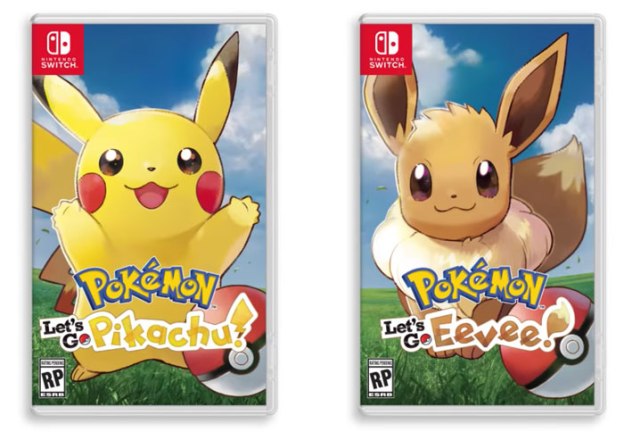
If you’re planning on getting physical copies, you might have a difficult time of it by the time November comes around. As of this writing, Amazon has already sold out of preorders for the Let’s Go Pikachu version. I’ll more likely get a digital download, which I’ve been doing for most Switch games up to this point. I might get both versions, and which one I get first will likely be decided by version exclusives.
Have you ever met someone who went all out to try to impress you, but they missed something completely obvious to everyone around them? It’s likely that you met the kind of person I’m talking about; it’s the guy who memorizes facts that he learned from listicle sites and YouTube countdown videos, but something is off about him which indicates a crippling lack of self-awareness, like bad hygiene.
What I’m getting at is that you should comb your hair. If you expect me to accept that you’ve become a great intellect but can’t be bothered to spend a moment each day combing your hair, what I’m really taking away from it is that you have some misplaced priorities.
As I see it, the main people who are excused from having to comb their hair are:
Bald people. If you don’t have hair, you don’t have to comb it.
People with buzz cuts. It’s a low-maintenance hair style, and combing it doesn’t make a difference.
Cavemen. Cavemen make it their business to look unkempt. This sounds awesome, until you realize that cavemen don’t have video games, the internet, or smart phones.
If you have the hair of a caveman, what you’re telling the world is that you want to live like one. Living like a caveman sucks, so naturally, you’d want to avoid regressing into one. I like technology, so I don’t want to live like a caveman. I also avoid looking like a caveman so I’m not mistaken for one. If you actually do like science like so many kids pretend to, then you should want to avoid looking like someone who doesn’t.
I once met a kid who was in such a hurry to convince everyone that he’s super smart, but his hair looked like a tornado hit a loom. Nice try kid, but your hair prevents me from taking you seriously. Have you seen yourself in a mirror lately?
This thing has better hair.
The kid had a head that seemed huge, not because his head was significantly bigger than usual, but because the rest of his body was scrawny. On top of that, his hair was such a mess that it only added to the illusion of volume. He’d stand to benefit from combing it, even if his first time would take a while.
He’d end up looking like a cult member, but at least he wouldn’t look like a total wreck. And that brings me to my next peeve. Combing your hair is a step in the right direction, but men are expected to get a haircut more than once a year. Whether it’s done by you, a stylist, or even your mom, getting your hair done as needed shows that you care about the rest of us enough to not drag down the atmosphere with your gross head-mop.
Don’t think that just because you’re ignoring it, the rest of us will, too. We laugh at your hair, whether you know it or not.
By now, you’ve probably heard about the recently-announced Thundercats reboot, Thundercats Roar. If you first heard about it from me, I’m sorry. And if you grew up on the first Thundercats cartoon, I’m sorry again for what happened to it.
I did not edit this.
Seeing this travesty spurred me into making a list of the five worst revisions in the history of media, because this kind of thing really isn’t anything new. It’s a little early for Thundercats Roar to make the list, but I suspect that it would easily make an updated list of the six worst revisions in the history of media.
#5 The Legend of Zelda: The Wind Waker
The year 2000 was among the most optimistic in the history of video games. At that point, we already had Sega’s Dreamcast, and it was in that year that Sony would release its PS2. Even Microsoft wanted to get into console gaming, which it eventually would with its Xbox system. Naturally, everyone was waiting to see what Nintendo would bring, and when they revealed their Gamecube at Spaceworld 2000, they didn’t disappoint. Not only did they show their system, they also showed a short montage of game clips to demonstrate what their system was capable of.
If you’re wondering what Spaceworld was, that was Nintendo’s own tradeshow where they marketed their own upcoming products.
You can watch the demo for yourself here, but just be warned that you might want to have your volume down:
It might not look like much by today’s standards, but at the time, it was proof that the future of gaming was going to be bright. What caught everyone’s attention in particular was this gem:
At that time, I was only just starting to get into Zelda. But if that’s what The Legend of Zelda was going to look like on Gamecube, then as far as I was concerned, Nintendo had more than earned my money. I knew that I had to get a Gamecube on launch day so I’d be ready to play that game hardcore. And that’s exactly what I did.
Then, the following Spaceworld, Nintendo showed gameplay footage for Zelda on Gamecube. And it looked substantially different compared to what we had been shown the previous year. Substantially different.
Photo from IGN, as though the watermark didn’t already say it.
When I first saw how The Wind Waker was going to look, I thought someone was playing a joke on me. But then, when I found out that this was how the next Zelda was really going to look, I felt betrayed.
After a little while, I decided that I was going to give it a chance. As it turned out, The Wind Waker was a pretty good game. In fact, it was among the best in the series. Too bad most gamers wouldn’t know, considering that humans are pretty superficial creatures. But can you really blame them for thinking something was going to be low quality because it looked low quality?
Nintendo really shot themselves in the foot with The Wind Waker’s artistic direction, considering that The Legend of Zelda was one game that people were looking forward to playing on Gamecube, and people had a certain image that they associated with The Legend of Zelda. Tampering with an established work can have the effect of alienating an established base, and companies can’t really count on being able to replace the existing fanbase with a new one. But, for that matter, why would they want to?
People buy Nintendo systems to play the games Nintendo makes. And if Nintendo stops taking their own products seriously, then gamers move on to something else. The radical artistic direction of The Wind Waker came at a terrible time for Nintendo, as it came early enough in the Gamecube’s life cycle that many gamers were still on the fence as to whether to buy one. Many gamers jumped ship in response to seeing how Nintendo was treating The Legend of Zelda, effectively turning that time in gaming into one where just about everyone and their dog owned a PS2.
Eventually, Gamecube would see a Zelda game in the style that gamers were familiar with in Twilight Princess, but by that time, the damage had been done. Sometimes, all that’s needed to make a successful game console isn’t to have the most capable hardware, but for your greatest competitor to make the biggest misstep with their own product.
#4 SD Gundam Force
If you know about anime and somehow don’t know about Gundam, please tell me how you did it. Gundam is one of the most popular and well-known anime in history, and certainly the most famous of giant mecha anime. Numerous spinoffs came about due to Gundam’s influence, even if it was far from the first mecha anime.
Awesome.
In fact, mecha anime were huge in Japan during WW2, when the appeal of overcoming a powerful adversary while piloting a giant machine was easy to understand. When the Gundam franchise rose to prominence, it would come to bear some massive cultural significance. Even American audiences were captivated by Gundam.
It certainly helped that Gundam was appealing on so many levels. It had the fantastic elements of space battles with giant robots, but it also had well-developed human characters and excellently-written story arcs with commentary on the costs of war.
So, what’s the most appropriate way to celebrate the 25th anniversary of an anime known for mature themes and taking its audience seriously? How about some cheap chibi CG slapstick?
If you thought that that’s a terrible idea, you’re not alone. I did too. But it’s not like anyone behind SD Gundam Force so much cared what anyone who liked anime thought of their show as much as they acted on the understanding that they had millions of die-hard fans that would buy anything they pumped out with the Gundam name, even if the product was rectal waft.
Twenty-five years of a space opera with giant robots and mature themes? Make way for some boy in a suburb and his robot friend. I know that the Japanese are in love with cute stuff, but there are some things that you just don’t mess with.
I’d have more to say about this show, but I was never really seriously into Gundam. That this show aired when I was considering it likely had something to do with that.
#3 Toonami: TOM 4.0
The Toonami programming block may not have been a show or a video game per se, but it was still pretty cool because it had its own host with a backstory. Originally, Toonami was hosted by Moltar, a former villain from Space Ghost. Eventually, Moltar would hand Toonami off to TOM, who would host the programming block from then on.
I thought TOM was pretty cool. He, along with SARA, ran the Absolution, a space vessel from which the Toonami block was broadcast. TOM immediately appealed to me, considering that it was one of my childhood dreams to broadcast my own pirate radio station (though the legality of going about it may have been a prohibiting factor). Not only that, I appreciated his somewhat sardonic tone and emphasis on heroism, which made him a dynamic and interesting character.
While the Toonami block mainly focused on anime, TOM sometimes reviewed video games. While it might not have been the main focus of Toonami, TOM’s interest in video games did flesh out his character in a way that worked surprisingly well. By indicating his preferences and how they extended beyond his career, the character of TOM became more relatable.
And it gets better, still. Not content to just sit down and throw his commentary out there, he sometimes had interactive adventures that viewers can influence the outcome of by participating in online games, as was the case for a “total immersion event” called “The Intruder”, which actually saw the destruction of part of the Absolution, and of the old TOM, necessitating his transfer to a new body.
That’s right, fan participation had a lasting effect on the history of TOM and Toonami, and it was entirely possible for participants to goof it up and have TOM pay the price. We had an effect on TOM’s character, and it made the stakes of these total immersion events even higher.
So, imagine how excited I was to learn in 2007 that TOM was going to undergo another redesign, independent of any total immersion event. Each revision of TOM became cooler than the last, and the same could be said of SARA and the Absolution. But it wasn’t until it aired that I found out what would become of TOM:
I wasn’t happy.
I could tell you what’s wrong with this picture, but you see it. TOM’s mysterious appeal was taken away by removing his helmet. For some reason, his neck was a couple wire harness tubes that came out of his two shoulders, and somehow supported the weight of his head. Also, everything else about the new TOM looked ridiculous.
Worse yet, we didn’t get any back story about why TOM looked like this. That’s just how he showed up one day, with SARA gone, the Absolution gone, with a bunch of weird robots broadcasting from the surface of some planet. Being left to fill in the blanks, I would have guessed that TOM had an epic battle against an evil vacuum cleaner that sucked out coolness, and TOM lost pretty hard.
Fans referred to this new TOM as TOM 4.0, but it was my guess that this was how TOM looked in the distant past, meaning this new TOM wouldn’t supercede TOM 3.0 in the in-universe narrative. It was my own head-canon for his appearance, which was what I could manage without any official explanation. He was also referred to as Thomas the Tank Engine.
Even sadder still, this TOM 4.0 was the one that gave us the send-off when the Toonami block finally came to an end. TOM’s farewell speech was moving…
…To the point that I was willing to remember him for being the hero he was before, not the caricature he ended up becoming.
Eventually, Cartoon Network did make things right by bringing TOM back as TOM 3.5 on Adult Swim, and we’re currently up to TOM 5.0 on a resurrected Toonami. And it’s great to have him back.
Let the good times roll.
#2 Metroid Prime Federation Force
The Metroid franchise has historically had an excellent image. For years, the main character Samus wouldn’t so much as make a cameo appearance in a game that wasn’t excellent. In fact, the Metroid franchise is a great case study in building on the original source material. The first game was called “Metroid”, which was short for “Metro Android”, so a player could have assumed that the game was about a robot navigating an abandoned subway system. So imagine the surprise of players around the world when it was discovered that Samus was actually a woman in a power suit.
Sex discrimination in video games means choosing to play as a strong woman.
When you think of strong, independent women in video games, who do you think of first? Many gamers say Lara Croft, but Lara is about as fanservicey as it gets. On the other hand, you see Samus kicking butt, and because she wears a full-body power suit, her appearance won’t be a distraction and her deeds speak for her.
When we found out that Metroid would be a first-person shooter made by an American company (Retro Studios), we were skeptical. But not only did Metroid Prime turn out great, it went beyond expectations.
Things started to go downhill when Nintendo teamed up with Team Ninja to deliver Metroid: Other M. Other M did a lot to flesh out the character of Samus, and what we discovered was that our imaginations were far kinder to Samus than those who wrote for her. Not only that, Other M was plagued by a number of flaws. While it was okay for a video game, it was far below what many of us considered a Metroid game. Nintendo blamed Team Ninja for how the game turned out, and Team Ninja blamed Nintendo. In any case, it seemed like Nintendo thought that players weren’t interested in a new Metroid game, because we wouldn’t see another for a while.
And when we did, we thought that Nintendo lost their minds.
And, without question, I was right to be upset. After all, when the Metroid franchise has been built a certain way and with a certain image, that’s what an experienced Metroid player comes to expect from it. Metroid games starred Samus as the main character, who independently explored alien landscapes and space stations, and found that the titular metroids were somehow involved.
So then, interested in a Metroid game where Samus is put aside? No? Well, how about if it starred some faceless, personality-free Federation troopers? Still no? Well how about if we make it a mission-based affair with emphasis on multiplayer, because we all know how well that worked out for Metroid Prime 2? Still not interested? Well how about we make it a low-polygon atrocity done in the chibi art style? Why does it seem like you’re having a stroke?
I honestly have no idea how Metroid Prime Federation Force made it all the way to production without having the vast majority of the people involved calling it a stupid idea that totally should never have been considered, or how it happened to a franchise that is otherwise known for exceptional quality. What I do know is that the game was intended to stoke interest in the upcoming Metroid Prime 4.
If anyone from Nintendo is reading this, I hope you’ve discovered by now that this is not how you do it.
Finding this game’s connection to Metroid Prime 4 can’t be done unless players make it all the way to a secret ending, where Sylux sneaks onto a Federation facility and hatches a Metroid egg. We didn’t need an entire game to build up to that, and that game didn’t have to be terrible.
Now you don’t have to play the game.
Eventually, I decided to give this game a try, several months after it was released, after finding it on clearance at Gamestop. Even going in with lowered expectations, I was still disappointed. It’s almost as though the developers knew that everyone decided that they were going to hate their game before it was even released, and they gave up trying.
That would have been a pretty solid choice if it came with the decision not to release the game at all. But they did, and it stands as a stain on one of the finest franchises in gaming.
We got this far on the list. But before getting to number one, let’s get some dishonorable mentions out of the way.
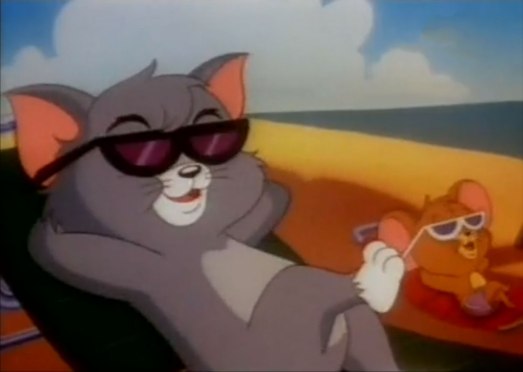
Dishonorable mention: Tom & Jerry Kids Show
The original Tom and Jerry was intended for kids already, so one can wonder what the idea was behind making the Tom & Jerry Kids Show. Until you realize that this show was born in a marketing meeting in an attempt to make an old franchise appeal to a younger audience, replacing an audience that was seen as losing interest in it.
Here’s an idea for cartoon execs: If you think kids aren’t interested in Tom and Jerry anymore, just make a different cartoon.
Dishonorable Mention: A Pup Named Scooby-Doo
Another attempt at revising an old franchise to make it more palatable for a younger audience. The biggest problem in this case was that Scooby-Doo was never interesting.
Okay, we’re on to number one. You probably already know what it is.
#1 Teen Titans Go!
I admit that when Teen Titans aired on Cartoon Network in the mid-2000s, I was a bit skeptical. I saw its artistic direction as being a little odd. But when I gave it a chance, it grew on me. Not only did these superheroes kick some butt, as you would expect, but seeing how these character’s personalities interacted with each other when they weren’t fighting conveyed strong characterization which made the action scenes seem like there was even more at stake.
What a great cartoon looks like.
The balance of conflict, drama, and levity was just right. The result was one of the best superhero shows that I’ve ever seen, right up there with Batman: the Animated Series. If you haven’t seen the Teen Titans cartoon from the mid-2000s, you’re missing out!
When fans found out that the Teen Titans were making a comeback, they were excited. Then they found out what they were doing with them.
Someone out there got rich by ruining your favorite brand.
Heh, that’s a good one. Now, show us the real one.
Wait… That’s the real Teen Titans Go? That’s what they’re really going with? How… How did this happen?
The team behind Teen Titans Go is fully aware that legions of Teen Titans fans hate the product that they produce. While you’d imagine that this would be followed by profuse apologies, it’s instead the explanation for numerous episodes that take passive-aggressive jabs towards fans of the previous Teen Titans show. When you criticize them, you’re only adding fuel to the dumpster fire.
Contrary to our own better judgement, Teen Titans Go actually became Cartoon Network’s highest-rated cartoon. This would seem an anomaly until you realize that CN pretty much dumped Teen Titans Go onto every available time slot in the US, and ran frequent marathons of it. This might seem counterproductive, but the low production values of TTG indicates low production cost, which makes it low risk programming that benefits from the strength of brand recognition. Which also does a lot to explain the new Thundercats cartoon.
You can complain to CN, but it’s not going to do any good. Cartoon Network isn’t going to care what you think unless you buy their toys. What’s that? You don’t want to reward mediocrity? Then you’re not the target audience.
And who is the target audience? Kids. And that’s a problem. Cartoon Network is feeding into the notion that it’s acceptable to present children with inferior products. While this is used as an excuse to coast along with a minimum of effort, it backfires in the long run by the principle that you reap what you sow.
Children weaned on inferior products think it’s acceptable to produce inferior products. For examples, look up children’s artwork.
Bad children’s artwork (from Pixshark.com)
Have you ever seen children’s artwork that actually looked good? Me neither. And there’s a reason why this happens: because children have a terrible cultural frame of reference. They see adults producing terrible artwork, so they think it’s okay for their own artwork to be terrible, as well.
Bad grown-up artwork, presented unedited
Cartoonists, step it up. If children are drawing better than you, it’s time to consider doing something else for a living.
As a prominent Switch hacker called “Shiny Quagsire” just found out, Nintendo has begun rolling out bans for those who hack the Nintendo Switch. What the bans come down to is removing the most significant online components of the affected consoles. While banned consoles can still update their games and access news channels, they may not access Nintendo’s eShop or access any online component in games or participate in social media through them.
Ouch.
Shiny Quagsire thought he could circumvent the ban by using a different Switch console, and entered his Nintendo Network account credentials. However, the ban was extended to his second console, as the Nintendo Network account associated with his hacking activity was banned, meaning he can no longer use the account to purchase any new games.
Wow, it’s almost as though Nintendo doesn’t want anyone hacking their consoles or using them to play pirated software.
Here is what the ban message looks like, as shared by Shiny Quagsire himself:
The notice contained an invitation to contact Nintendo’s customer support, which Shiny Quagsire did. This was the reply that he got back:
TL;DR: “You’re the kind of person we don’t want using the online component of our system, so we don’t regret banning you at all. Please refer to the EULA where you agreed that if you hack your system or put pirated games on it, you’d be aware that we could totally wreck your system (though, this time, we merely settled for disabling the funnest online components).”
It’s kind of amusing how resigned to the outcome that Shiny Quagsire turned out to be, as though this wasn’t the worst of all possible outcomes, especially if pirated software were involved.
Personally, I think that the prospect of hacking Switches seems pretty awesome, provided that a person isn’t doing anything illegal. If a person can hack a Switch to get Linux running on it, that’s pretty awesome.
What grinds my gears is hacking software to give one’s self an unfair advantage in online multiplayer games. As I see it, if a person spent $60 on a game to participate in the online experience, hacking to give one’s self an advantage in online play takes something of value from the other players. A prime example of this would be the Global Trade Station (GTS) in the more recent Pokemon games. In the Diamond and Pearl days, the GTS was flooded with pokemon with request criteria that was impossible to fulfill, and players were doing this to take advantage of an exploit that could duplicate their pokemon. Because players would often leave their pokemon up for trade, the GTS came to be filled with pokemon that remained until they were automatically removed.
Things are even worse in online FPS games where a person could activate a hack that could make their character invincible so that no one else can do anything about them. There are many other exploits as well, and they each have the effect of ruining the online experience of the game in question, and game companies should care about this because it damages the reputation of the game franchise as well as the game company itself.
Considering this, it’s great that Nintendo is doing something about cheaters and hackers, because it means a better experience for the rest of us. When I see people getting banned that actually deserve it, it makes me not regret buying a Nintendo Switch at all.
I know that some in the hacking community may take issue with my assessment. What I’d have to say would depend on what you’ve been doing with your game system:
If you use your system to play pirated games, you have no reason to be upset. If you steal your games to begin with, why do you want to access the eShop? Besides, just be glad Nintendo didn’t notify the FBI (though, if they did, you might end up getting a visit).
If you cheat at games and want to play them online, Nintendo was right to ban you. If that’s how it happened, then I find the outcome refreshing. If you upload an entitled tantrum to YouTube, I might find it and get a laugh out of it.
If you hack your Switch just for fun, it’s unfortunate that you got banned. But, if you were smart enough to hack your Switch, you should have been aware of a banning as a possible outcome.
Have you ever tried to convince a cheater in Pokemon that cheating was wrong and that they shouldn’t do it? I have, and you’d be impressed at their capacity to avoid acknowledging the obvious. After a while, I just stopped attempting to reason with them and left it to Nintendo to deal with them appropriately.
For those who are planning on hacking the upcoming Pokemon games for Nintendo Switch, this latest round of bans is your warning shot. Even if you avoided getting sniped this time around, the latest bannings are like that bullet that whizzes right by your head, perhaps taking out a few hairs as it goes, as if to say, “Rethink taking another step forward.” And if Nintendo is going to start charging to use their online services, it’s only expected of them to clear out anyone that’s going to subtract from the experience.
I know that there might be some cheaters reading this that would be triggered by it. If you’re one of them, just get over yourself. You’re not the only person who plays games online, and the rest of us want you off. When you get banned, we get what we want. End of story.
There have been rumors of a Kanto reboot for the upcoming Pokemon game on Nintendo Switch. At first, I wasn’t very fond of the idea, but the more I think about it, the more it seems like it might actually be a great idea.
It’s true that there would be a nostalgic element to it, which is pretty obvious. While Kanto may have been done pretty heavily in Pokemon, it’s been a long while since the Kanto region appeared in a Pokemon game. It last appeared in a 4th gen game as a post game area, and it hasn’t been a central focus since 3rd gen, and right now, we’re moving on to the 8th gen. Therefore, while Kanto may be heavily represented, it hasn’t been overplayed in recent times. There might be some merit to returning to the region if there were some way to represent it that hasn’t been done in a long time.
A recent interview revealed that there was a pokemon that was scrapped before the release of Pokemon Red and Green, which was intended as an evolution to Raichu. It would have been called Gorochu, and it would have had fangs and horns. Not only that, it got into the original design concept for Pikachu, which was originally intended to be a squirrel pokemon that resembled a daifuku bun with ears.
Sometimes, game developers share their thought processes for character designs after a game is released. But this information comes so far after the release of the original games and is so specific to their iconic mascot, there might just be something to their decision to share it, especially considering just how tight-lipped they’ve been about characters that didn’t make it into the game.
If GameFreak were to make a new Pokemon game rebooting the Kanto region, what’s an obvious way to make it interesting? By using ideas that were considered for the original game, but might not have made it. There are quite a few elements that were considered for the original games that didn’t make it to the final version, and here are just a few we know about:
There were originally intended to be as many as 190 pokemon in the original games. When Red and Green were released, they had only 151 of those pokemon, with some of those pokemon included in the Gold and Silver versions, and we know of Gorochu as a pokemon that hasn’t been included in a game, yet.
There was originally intended to be a plotline putting trainers that were kind to their pokemon against the ones that were harsh. The harsh trainers carried whips on them. While the plotline wasn’t included, the sprite art for some characters in the final games still depicted them with whips, including Tamers, Team Rocket, and even the gym leader Sabrina.
Early art revealed a slightly different roster of gym leaders, with a young boy being pictured before Brock, and Giovanni being excluded from the roster. This boy may have been the original gym leader of Viridian City.
Data for Pokemon Red and Green contained trainer data for Professor Oak that wasn’t used in the final version of the game. His pokemon were top-tier, and their levels were high, suggesting that he may have been available to battle right after the champion. In the final games, he does appear in the champion room, but not as a trainer you can battle.
On top of this, there are new regions and game mechanics that can be used to make the game more interesting. In terms of gameplay mechanics, mega evolutions and Z moves are already a part of the more recent games. For new areas to explore, the last Kanto remakes included new areas called the Sevii Islands. Not only that, there’s the fact that Johto is located right next to Kanto that can make it a convenient inclusion.
Considering all this, there is certainly plenty that GameFreak can do with a Kanto reboot that would keep it interesting. The nostalgic elements would appeal to those who remember the original games, and might even draw some old players back in. The inclusion of elements that weren’t a part of the original games would guarantee that everyone playing the game would have something new to do.
Of course, it’s possible that the upcoming Pokemon game for Switch won’t be a reboot. It seems sensible for a new Pokemon game on new hardware to offer a new region with new pokemon, as has always been the case until now. One way or the other, it might not be a bad idea to avoid getting one’s hopes up for a certain outcome. Whatever it is that GameFreak ends up doing, they’d likely do it after carefully considering how they could give us the most interesting experience.
Having said that, Gorochu sounds like an interesting concept.


 Unbelievable.











 What a Pokemon game looks like.
 Paint me.
 Give it a try.
 This thing has better hair.
 I did not edit this.
 Photo from IGN, as though the watermark didn’t already say it.
 Awesome.


 Let the good times roll.
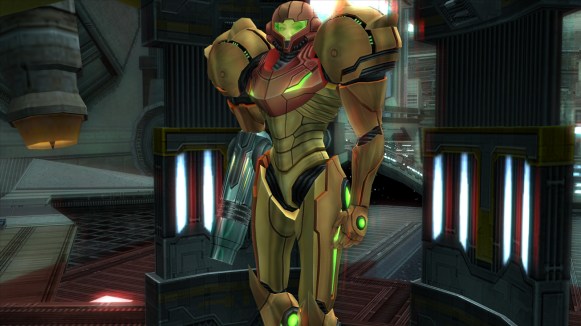 Sex discrimination in video games means choosing to play as a strong woman.

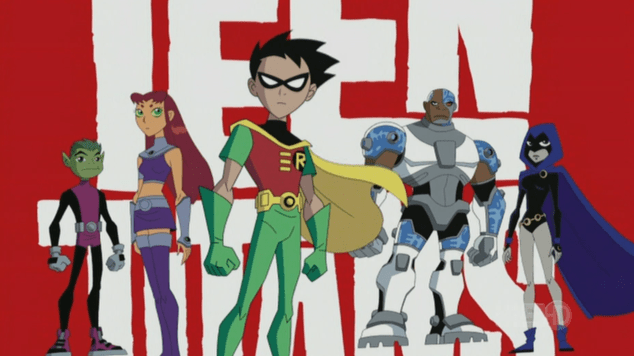 What a great cartoon looks like.
 Someone out there got rich by ruining your favorite brand.
 Bad grown-up artwork, presented unedited


