Nintendo Switched Something They Shouldn’t Have, Then Things Went Wrong

To get right to it, something is going wrong with attempts to play Super Smash Bros. Ultimate online using Switch 2 systems.

The problem might occur when a player attempts to use one character in specific: the Mii Fighter.

In SSBU, the Mii Fighter is a customizable character. In fact, you can use a Mii that is associated with your Nintendo account. This gives the character a personal element.

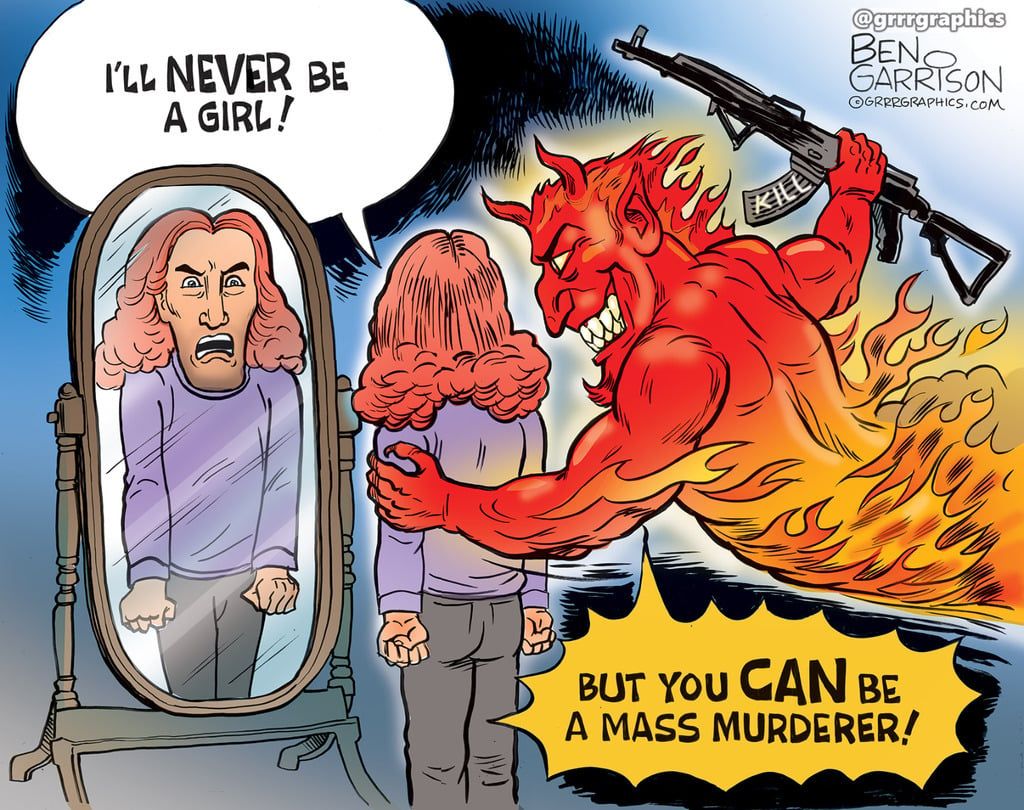
So, what’s the problem? When a player with a Switch 2 attempts to use a Mii Fighter in an online match, the match might immediately end. Why? I’m not sure, but it might have to do with a change to the customization options for the Mii avatars so players can no longer choose a gender for them.

Nintendo has given a provisional solution to the issue to players: by asking players to refrain from using the Mii Fighter in online matches.

Perhaps Nintendo is working on a patch. It’s hard to imagine that they’d want to leave things as they are.

As I see it, if the problem is with the change to the Mii customization option, that’s the problem to address, preferably by reverting to allowing for the option to pick between male and female. The issue shouldn’t be with Super Smash Bros. Ultimate, considering that it worked online just fine on Switch prior to the launch of Switch 2.

If messing with the gender choices of the avatars is what’s causing the issue, it sounds like another example of messing with something that shouldn’t have been messed with, resulting in undesirable consequences.

Recent attempts to blur the distinctions between the sexes in competitive sports comes to mind.

Harro! I herd u liek sammich!

It doesn’t happen consistently, but we now have another instance of someone being caught in the process of doing something incredibly stupid being saved from herself. In this case, we have the picture above, that of Greta Thunberg having lived to see the day that an Israeli soldier handed her a turkey sandwich.

What preceded this: In a publicity stunt, Greta set out on a yacht for the Gaza strip with a negligible aid package, all in an effort to show solidarity with Palestinians.

What nearly happened: Greta wasn’t wearing a burka, so she likely could have lost some blood and became the focal point in another case study in the tragedy of thinking that certain values are universal. Her best hope of surviving or avoiding being held hostage would have come with Hamas having already informed the Palestinians who would have found her that her stunt was way too valuable as propaganda.

What’s currently happening: Israel is to show Greta unedited video footage of the Oct. 7 2023 terror attack on Israel, effectively showing Greta what already happened to other people, and what nearly happened to her.

What’s going to happen: I don’t know. I can’t see the future. The best I could do is guess. If Greta is sufficiently intelligent, she’ll learn a few things about what she’s been defending. There’d probably still be some copycat out for a cynic’s quest.

But as for Greta, the right people aren’t always going to be around to save her from herself, so it’s probably just a matter of time before she ends her career of bullshittery. How it happens is anyone’s guess.

Why are so many social media influencers fake?

There is a problem in the influencer sphere, and the launch of the Switch 2 has made it clear. I’m not putting a specific influencer on blast, considering that this is a problem that’s not limited to just one. Perhaps you can think of some examples. But what I’m getting at is that many influencers out there, perhaps most, aren’t even real.

If you’ve been following along with the Switch 2, it’s likely that you’ve seen a few influencers find one problem or another with the system. One of them in particular has gone on to say that they wouldn’t even purchase one.

But he did. And not just him, but numerous other influencers who likewise spoke of the hybrid console as though it were the worst console in their lifetime.

Obviously, these people didn’t believe what they said. These people are disingenuous. And the reason why these people act as disingenuously as they do is because they are incentivized by the algorithm.

The fact is that the algorithm tends to promote negativity in its many forms. Did you get recommended a short video of a fistfight that broke out in a bodega? Or a list of mistakes that were made by a multinational corporation? Or did you stare with indignation at a confrontation with an obvious imbalance of power?

That’s the algorithm pushing negativity onto you. But it doesn’t do so for no reason. In fact, the algorithm itself isn’t capable of malice on its own. Putting aside that the algorithm could be used as a tool to further an agenda (and, let’s be honest, we’ve seen plenty of that), the algorithm is like a mirror turned back at us, showing people content that is likely to hold their attention, considering not only the content that an individual has already engaged with, but also in consideration of the tendency of typical human psychology.

To get right down to it, humanity has a negativity problem, with the recommendations from algorithms being a second order effect of this problem. And because of this second order effect, influencers have an incentive to produce negative content, raking in ad revenue for having done so, and contributing to the problem.

There’s a strong chance that your favorite influencer is not real.

And it’s not just about the newest game console. Political streamers also know that there’s money involved, and they want some of it. And to this end, they’ll dehumanize their political opponents with the most pejorative adjectives, flavored with the buzz words that they know will get a response. Not because they believe it, but because they can make a few bucks, and they don’t give a shit who they turn against each other.

There are other kinds of influencers who game the system in this way, but political streamers are among the most notable offenders.

If you want a strong indicator of who’s sincere, it’s likely the people who are swimming against the stream of the algorithms, and against whatever is the prevailing zeitgeist of the agencies who manage online talent as a business. And speaking of, these corporate talent agencies have long been a source of self-censorship in social media. In the V-Tuber space, for example, indie V-Tubers are a better source of sincerety than the corporate ones that have been shackled with the golden handcuffs. Corporate influencers are the ones who have to look over their shoulders to be sure they’re not saying something against the values of their agency or its network of advertisers. And their respective agencies “reward” them by scraping away their revenue. Because who needs ethics when you can just legally steal money from people who actually produce value?

Considering all this, I’ve come to the point of finding forced negativity in social media cringy, especially when it’s obviously coming from a place of incentive rather than sincerety or just humor.

But it’s really only one of many ways that many, many social media personalities are fake.

End Holden Caulfield moment.

Switching Up: My First Impressions of the Switch 2

Nintendo’s Switch 2 has joined the list of things that have gone from urban legend to merchandise. And having spent some time with the new console/handheld hybrid in my hands, I can give a first impression of it.

The TL;DR of it is that it rules, but there’s some room for improvement. And that improvement will come in the form of software which is expected to come at some point in the future.

Nintendo’s latest lotus eater machine is basically the same as their last one, but with significantly improved performance, and some other quirks as well. This is basically what I would have wanted, and the safest move on Nintendo’s part to avoid alienating those who have built digital libraries on the Switch ecosystem.

My impression of the physical dimensions out of the box is that Switch 2 is kind of a big machine, as far as portables go. That means a bigger screen, but it also means slightly decreased portability. I think the Switch 2 has hit the sweet point with respect to screen size and portability. That sweet point would be different if the console/handheld were intended to fit in ones pocket, but for something to be transported in a carrying case, it’s just right. If Nintendo were to make an OLED model a couple years down the line, they’d be doing us a favor by not messing with the size of the device.

After a simple setup, I got into playing an updated version of a game I was really curious to see running on the new hardware, Pokémon Violet, which, along with Scarlet, became the first Pokémon games to run at 60 FPS since Pokémon Emerald on the GBA.

I was jarred by how significant the improvement was. I’m not new to high framerates, but when you’re expecting a certain game to run a certain way as a fact of life, when you see it running super smooth, it’s uncanny. And it’s not just the framerate, navigating the menus is snappy. While I did not measure it, it seems like loading from fast-traveling is a lot faster. Anyone care to confirm?

EDIT: It seems Centro LEAKS has an answer, but without video and with conveniently round numbers:

Then there’s the sheer amount of Pokémon that spawn in, even at a distance. For shiny hunters, this is a massive win. I had no problem finding a shiny Porygon 2 (which I nicknamed Switch 2), simply by leaving the spawn area then returning until I found a shiny one.

The caveat is that the grainy environmental assets still weren’t terribly impressive. But even with that, my current favorite Switch 2 game was an updated version of a game I already had.

The updated version of Pokémon S/V does put a new light on an old leak:

Speaking of updated games, I also played the two open world Zelda games in their Switch 2 form, BotW and TotK. I noticed the improved framerate, which again was uncanny considering my expectations. But because I’ve only played the Switch 2 versions of those games for a few minutes each, my analysis of those games would be far from comprehensive.

Then there’s was the Switch 2 version of Link’s Awakening. I didn’t notice any difference. But hey, it was improved in some way, right?

I also decided to try out a multiplatform, 3rd party game which was on the Switch, Made In Abyss: Binary Star Falling Into Darkness. I was expecting basically the same game, and that’s pretty much what I got. The best I realistically expected was far faster loading of areas when traveling, but the game still didn’t run the same as it does on my PC as far as that goes. I remember that loading on the PC version was nearly instantaneous, which made it my favorite version of Binary Star. It seems we can’t expect overly dramatic improvement from games which weren’t specifically optimized to run on Switch 2.

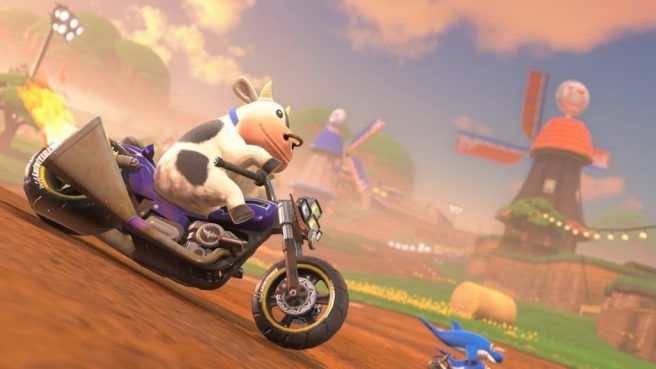
As for my first Switch 2 specific game, I went for Mario Kart World. After my first two grand prix, and some time on the open world, I’m left with a question: Is there a point in which this game is worth its steep price tag?

Nintendo’s strategy of not messing with what works has definitely been put into practice, here. MKW seems nearly identical to MK8, though the new feature of grinding on rails is admittedly pretty cool. There’s some new power-ups, and the races seem to have been mechanically changed to increase the possibility that players who fall behind could catch up, and it doesn’t come off as cheap (though that players that fall behind tend to get the better power-ups isn’t a new convention).

But then there’s the open world, which is supposedly MKW’s main selling point. It has challenges to clear with rewards, and lots of exploration with plenty of off-road. But MKW’s open world doesn’t seem to have a whole lot going on. Maybe we’re not supposed to compare it to the rich experience of TotK, where you can go in with no clear objective, but then get distracted by this, that, and the other thing, and soon have a mental list of things to do. But considering the price point, I think it would have been reasonable to expect some depth.

I appreciate that GameCube games were added to the NSO+, especially considering that the initial collection includes Wind Waker and Soul Calibur, a couple of my favorite games from back when people unironically said “roxor”, which is something that those games certainly did. I’m looking forward to the Genius Sonority Pokémon games, and if they have the capacity to transfer the Pokémon that you catch, that would be even better.

In addition to the console, I scored a Switch 2 Pro Controller. It might become my favorite controller. I’m liking how quiet the controller is. I noticed how, when you fully push the stick in a direction, the sound is dampened. This decreases the potential to distract from the action on the screen, or disturb the people around you.

I was kinda concerned about those programmable buttons on the underside of the controller, but it seems like they’re easy to ignore.

The price of the controller was steep, but if it’s going to be at least as durable as the Switch Pro Controller, it’ll be worth the money.

When a new console launches, it often goes that initial enthusiasm for it hinges largely on the launch library. For GBA, the main day-one system sellers were Castlevania CotM and a Mario 2 remake. Great choices, but more than a few probably went for it anticipating a Pokémon game. GameCube had Luigi’s Mansion and Rogue Squadron. It was rough for a while, but we eventually got SSB Melee and Metroid Prime.

That’s often how it goes with day-one console purchases, in that they start out slow, but become worthwhile with time, as more software becomes available on the platform. But in Switch 2’s case, we have plenty to play on day one, even if much of it is upgraded versions of games that we may already have in our collections. And it was played in such a way to stoke legitimate enthusiasm. What’s more, we know that Donkey Kong Bananza, Metroid Prime 4 and Pokémon Legends Z-A are coming, all in the next few months. But even before then, we do have quite a bit to hold us over, such as Street Fighter, Cyberpunk, and Hogwart’s Legacy. Add this all together, and Switch 2 has a strong day one library and launch window.

And if you’re a digital player, there’s a  benefit to mention: the eShop runs a lot faster. But there’s another that would be significant if a report about it is true. Reportedly, reading from a Micro SD Express card is faster than reading from a game card. Perhaps most might not notice, but it might be a small benefit to digital bros.

EDIT: I found a comparison of bootup of Mario Kart World from internal memory, SD Express, and from the game card. For fast boot up times for games that you intend to play a lot, it seems like keeping a digital version on internal memory is the best choice.

To wind this article down, I’ll go on a very brief tangent about an accessory I didn’t buy: the Switch 2 camera. There doesn’t seem to be much of a point, and it’s hard to picture using it very often. Maybe the cameras would be great for a Mario Kart party. But if you’ve played with family members, it’s usually when you’ve gathered together. If you want to conference with people you know while playing an online game, it’s usually over the phone or Discord. The group chat feature is neat, but I don’t care much for it.

A new console is usually a step forward for what game makers can express. But the Switch was an odd case where it was far more popular than the other consoles of its generation, in spite of being about 2 or 3 generations behind in terms of specs. Compared to the current gen, as far as processing power goes, the Switch 2 is still one generation behind. Yet, it does change the game industry in a sense, in that game companies don’t have to hobble their multiplatform games nearly as much if they want to reach out to a huge portion of the market. Yay, progress!

Still, the Switch was an awesome game system, and definitely an excellent case in the point that gamers care less about their games being polygon-pushers than they do about games being fun.

And at this point, it wouldn’t be at all surprising if the Switch 2 continued Nintendo’s momentum, and continued to prove that point.

Let’s Categorize the Losers Who Hate Anime

To the end of arbitrary categorization, let’s look at various types of people who hate anime, with brief descriptions.

The Hanna-Barbara Boomer

This is the guy who remembers back when cartoons didn’t take their viewers seriously, didn’t bother with things like “character development” and “quality”, and still sees them as being for children, as though children don’t deserve a quality product.

The cartoons that he grew up with were boring and insipid, so it’s no surprise that he grew up to become yet another yutz who produces nothing of value, but still somehow has money. You probably somehow payed for the tech that he uses to fire off his mouth.

When he discovers Family Guy, his head will probably explode.

The MSM Karen

She’s one of the few people left who still listens to the mainstream media, so it’s no surprise when, after first hearing about anime from the MSM, she became convinced that it’s the biggest moral problem facing our country. She’s too closed-minded to listen to any facts to the contrary, which her minuscule brain will interpret as an attack against it.

If confronted with her, you can divert her attention if you were to present her with another documentary on another topic, provided the music is sufficiently creepy/mysterious-sounding, then find an opportunity to escape from this perfume-drenched outrage junkie.

The Baseball Cap

Jocko’s main beef with anime is that it’s complicated, therefore, he perceives it as threatening. And his way of dealing with threatening things is with torches and pitchforks.

The Baseball Cap looks forward to being accepted into college through a sports scholarship or, failing that, getting into the Army, unaware that the Army turns away those with an IQ under 82.

The Eagle Eye

This guy goes out of his way to make sure you know that he hates pedophiles. And because his peanut brain conflates anime with child abuse, he also hates anime and vilifies anyone who watches it.

Like anyone with dreams of being e-famous, he has a podcast that’s listened to by maybe one or two people, just in case you’re interested in the next installment of the series of “have I mentioned that I’m not a pedophile, today?” He also picks on furries. Or pretty much anything, as long as the heat’s off him and whatever the hell it is that he’s into.

The Funko Pop Bookshelf

The face of consoom culture, with the bookshelf to match. He unironically believes that buying Marvel crap makes him a better person, by reason of whatever the hell activist causes that multinational media conglomerates are currently bloviating about.

Like the Baseball Cap above, he’s an idiot. So if you were to get into the social commentary of Gundam or the psychological elements of Girls Last Tour, you’d likely be met with the same thousand-yard-stare that you’d see out of his rows and rows of near-identical Funko Pops.

The Espresso Spiritualist

This chick has the entire “You’re About to Hear Bullshit” starter pack. Power stones? Check. Thick-rimmed glasses? Double-check. Black nail polish? Standard issue. Hardcover copies of dubious spiritual tomes? It’s what the knapsack is for.

She basically believes that the Japanese are trying to hypnotize Americans with brainwaves, and that if you watch anime, you’re funding their efforts. You deal with her the same way as anyone else on this list: by not talking to her.

There you go. There’s others, but these are the kinds that are less likely to comprehend how embarrassing their viewpoints really are, increasing the likelihood that these are the ones that you’ll encounter.

Frieren: From Mortality To Morality

I’ve been seeing Frieren come up from time to time. A friend recently recommended it to me, so I decided to make some time to watch the anime.

Two days and 22 episodes in, I think I can say I get the general premise, and can comment on the controversy surrounding it.

First thing to point out is that Frieren: Beyond Journey’s End is a work of fiction. Because I recognize it as such, it doesn’t inform my morality. If a work of fiction were to attempt to teach a moral lesson, it could teach any lesson that the author might want it to, and the scenario could be written to present it in a favorable light, regardless of what the reality of the matter might be if a person were to attempt to put it into practice.

Entertainment is supposed to be entertaining, and that’s all it has to do to justify its existence. The idea that entertainment must have a moral value is generally propagated by busybodies who don’t trust other people to think for themselves. If children are taught that entertainment is merely to entertain and not to inform moral perspectives, they could watch shows like South Park and Family Guy and still become a moral child (though those probably might not be your first entertainment choices for your child). It’s not a bad idea to instill the proper perspective to prepare them for the inevitability that they’ll come across these shows, or shows like them.

Otherwise, if your child comes across a cartoon that extols the virtues of pushing old people into mud instead of helping them across the street, there’s no telling how they’ll take it. There’s no substitute for proper parenting.

As obvious as this is, lazy parenting that failed to instill a proper perspective on entertainment has resulted in a new generation of busybodies that have become everyone else’s problem.

Based on this framing, you might guess that Frieren is Ren and Stimpy on PEDs. Nope. Frieren is about life, mortality, and friendship from the perspective of a person who, being an elf, would be likely to outlive the humans around her by many centuries. While the story takes place after another story has already concluded, it still succeeds in conveying a compelling and beautiful narrative, which is at times exciting.

So, what’s the problem?

The problem is, some people are taking issue with the portrayal of a fantastic race, called “demons”, as being evil.

For clarity, the demons in Frieren are not the mind manipulating spiritual beings that are often featured in religions, they’re more like the tieflings in Dungeons and Dragons in that they are humanoids with horns. But while the tieflings might be capable of morality on an individual by individual basis, the demons in Frieren are irredeemable psychopaths with no understanding of human desire for friendship or family, and have learned human language to the end of using it to manipulate. Which, concerning the abuse of language, makes them sound like the propagandists in the corporate mainstream information media.

I was aware of the controversy before watching Frieren. But what surprised me was just how little screen time was given to the topic of the morality of demons. The impression that I got was that demon morality was a contrivance designed to convey that Frieren’s original journey was strongly justified.

This is in addition to the antagonists being called demons, and the point was labored that they were incorrigibly wicked and that tragedy was the long-term consequence of any attempt to co-exist with them. Could the point have been more strongly conveyed?

However, for the busybodies, this is just the problem. Because as they see it, fantastic racism is still racism, and they can’t bring themselves to trust the rest of us to think for ourselves. But in coming to the defense of these fantastic psychopaths, these same busybodies are showing that they’re just the kind of people who, if they were to live in Frieren’s fantastic setting, would fall for the demon’s honeyed words.

At this point, you might have guessed that it’s primarily leftists who are raising an issue with Frieren. Yep. It’s leftists again.

And, right on brand, they want everything, including every form of entertainment, to bend the knee to their worldview, even anime and manga. Because when it comes to cultists, the usefulness of anything is measured by its utility for propagating the cult’s ideology.

But the problem isn’t just that the left seeks to subvert entertainment and transform it into a vehicle for their worldview. The left is also waging a long war against the traditional morality that derives its principles from natural law. To this end, they seek to undermine basic ethics in favor of a new set of values that is disconnected from reality and ignores the second order consequences of their own unwise behaviors.

It’s part of the reason why the left can’t meme. Memes are shortform communication delivered with an understanding of what’s considered normal, so that humor can be found in a variation from expectations, much like a punchline in a joke. Take the old cat meme, “I can has cheezburger?” For most viewers, the expectation is that a cat can’t employ language, but if it could, its syntax and spelling would likely be poor, as it is in the meme. However, if the meme were to have been presented by a vegan, and thus someone with a left-wing fringe ideology, they might include a disclaimer that they don’t condone the cat’s request, or they might object to even sharing the meme on principle.

Leftist memes tend to be wordy, and there’s a reason for that: the leftist meme is part of a deliberate attempt to redefine normalcy, and to this end, they don’t want there to be any possibility that the meme could be misinterpreted, especially in a way that may defeat their ideology.

The verbosity it would take to redefine expectations does not lend itself to shortform content. But it also reveals something about leftists: that their ideology is more important to them than whether you’re amused or entertained.

When you know this, it’s easy to see why leftists have a problem with Frieren. The rest of us have basic understandings about morality which don’t need continual reiterating. Among the points we consider axiomatic: Immorality is corrosive to families, communities, societies, and nations. Some cultures are incompatible with other cultures. There are people who make it difficult to live peacefully.

If you understand these things, then the way that Frieren handles the demons in its world shouldn’t challenge you. However, leftists feel threatened by Frieren, because the narrative of Frieren supposes a morality that hasn’t imbibed on a toxic dose of outgroup empathy.

Frieren has frequently been accused of saying that coexistence with certain people is impossible. The following panel is often pointed to, which is probably the most controversial in the manga:

It has often been said that Frieren said that you can’t live with certain people. The words she used are different in the panel above, but they carry the same implication.

For clarity, here’s the surrounding context (being manga, panels and word bubbles are ordered from right to left):

While Frieren might not have used the phrase “coexistence with certain people is impossible”, it’s plain to see that this is a sentiment that she would hold, and she illustrated this while addressing a demon who was okay with sacrificing lives in an attempt at coexistence, showing that those lives were less meaningful to him than his endeavor.

However noble the demon’s stated endeavor may have sounded, it’s undermined by his inability to comprehend the value of life. It’s the old “making an omelet by breaking a few eggs” line of reasoning.

But however one might interpret Frieren’s words, it remains that the Frieren manga and anime are works of fiction. Any lesson, moral, or social statement that they make, whether expedient or not, should be viewed in that light.

After all, the main point of entertainment is to be entertaining. If leftists had their way with it, entertainment would be turned into propaganda.

And that’s one of many reasons why they must be resisted.

Guy attempts to destroy fertility clinic, fails hard.

The next time you think that you’re a failure, you can take comfort in knowing that you haven’t failed as hard at the person that we’re laughing at, today.

That would be Guy Edward Bartkus, the suspect in the Saturday Palm Springs attempted bombing of a fertility clinic.

Guy believed that life wasn’t worth living, for himself or anyone else, probably because he was grounded when he wanted to attend a concert, or something about as mundane.

Guy had extreme nihilistic beliefs consistent with some anti-natalist cult. If you’re wondering what anti-natalism is, it’s the belief that life is so intrinsically painful that its considered immoral to bring more people into the world.

Guy took his beliefs to extremes, and attempted to destroy a fertility clinic with a car bomb. But he botched his efforts. Hard.

For one thing, he attempted to live-stream the bombing, but failed to properly set it up. When you see the kind of people who spout off their own naive ideas on how to run a society on social media, that puts Guy’s level of ineptitude into perspective.

Second, while his car detonated, he failed to kill anyone else nearby, and none of the embryos in the clinic were damaged. So, he failed in his endeavor.

Third, his own charred remains were found outside the car. This suggests an attempt to escape, which failed. As much as Guy hated life, he apparently attempted to spare his own, but failed.

If you wonder what I mean when I say “he rolled a zero”, that’s a D&D colloquialism. In that game, checks are often performed with a 20-sided die, with possible outcomes being the range of natural numbers from 1 to 20. Because a zero is impossible to roll without penalties, rolling a zero implies a disastrous failure that seems like it’s outside the range of possibilities.

Guy Edward Bartkus rolled a zero. Three times in a row.

He desired an infinite universe that’s devoid of life. But the only life he succeeded in ending is his own.

Also, his microbiome and whatever parasites which required his continued life to survive. Which was a bummer for them.

Look, it’s normal to feel sad from time to time. But there’s nothing wrong with enjoying the things that you like. For example, plushies. Also, grownup drinks.

While some of the things that you like might end up in a landfill one day, there’s nothing wrong with enjoying them in the time being.

But as for life, philosophers through the ages have struggled to understand it. I think it’s a valid question why some 25-year-old would claim to have it figured out, and conclude that there’s no purpose.

Through basic observation, it should be evident that life experiences the universe. Each life is a different vantage point through which the universe is experienced. One of the functions of life is the creation of new vantage points. If a person sees this, and still insists that there’s no purpose, they’re just not willing to see it.

But there are people out there who reject the universe as they see it because it has pain, or it doesn’t appeal to their sensibilities. For example, some object to the consumption of life by other life, which humans do to live. It’s best to come to peace with the universe as it is, which can come by appreciating that life went into your own sustenance.

As for what’s beyond this life, that’s something we can’t humanly perceive at this time. But I think it makes intuitive sense that there would be a continuity of life, even if in a different form, considering that if the universe were to continue onward, the continued existence of life would be needed for it to be experienced. And if the universe is not experienced, then it truly becomes pointless!

So, life is precious and valuable, even if only for its capacity to experience the universe.

Anti-natalists are wrong, and it’s a matter of basic observation.

UPDATE: It was brought to my attention that Guy was a vegan. Which would mean that he had yet another left wing fringe ideology, though not as much on the fringe as anti-natalism.

I don’t know for certain which ideology acted as a gateway to the other in Guy’s case, but either way seems plausible: perhaps he embraced anti-natalism in the interest of reducing suffering, then determined that veganism would be a natural choice by the same reasoning, or perhaps veganism was the pipeline to anti-natalist extremism, expedited by mental decline by reason of nutrient deficiency.

In either case, it seems like it’s a fringe leftist yet again, and I’m getting sick of it.

Joe Biden Diagnosed With Cancer

People need to stop getting cancer. A cure would be nice.

On Sunday, it was made public that former president Joe Biden has been diagnosed with cancer. It’s a prostate cancer which has metastatized to his bones, which isn’t great, but it’s the kind that responds to hormone therapy, so it’s manageable, and the outlook is generally positive.

As I would have it, he would make a full recovery immediately, and so to everyone who has cancer. I might not have agreed with everything he has ever said or done, but I don’t wish illness on him.

However, the diagnosis did raise some eyebrows, as the variety of prostate cancer that Biden has is the kind that takes years, often the better part of a decade, to metastatize, and can be detected early with a simple blood test.

This brings up two possibilities. The first being that the White House physicians that gave Biden his routine physicals are astoundingly incompetent for their position. After all, about one in eight men are diagnosed with prostate cancer, especially as they age, so it’s definitely reasonable to screen for the disease for a man in his eighties, such as Joe Biden, as part of a periodic blood test.

The other is that White House physicians were complicit in the plot to conceal Biden’s physical and mental state, which are highly relevant considering the position he was holding. And that was probably the case.

In light of this, people recalled a speech in which Biden admitted to having cancer. At the time, it was assumed that Biden was referring to a minor form of skin cancer which is usually not a huge threat. However, people are floating now that Biden may have been aware of his prostate cancer, but forgot to keep it under wraps.

What I find interesting is that, early on in the Biden presidency, shortly after Russia began its invasion of Ukraine, the propaganda arm of the establishment was pushing speculation that Vladimir Putin, the president of Russia, had a secret cancer diagnosis, and was dying.

Naturally, nobody believed state media as they said this. But considering that an old strategem in disinformation is accusing your opponent of what you yourself are doing, an old story has picked up some new optics.

But at this point, it’s already well-known that Biden has been carefully propped up over the course of nearly his entire administration, until the point that his health couldn’t be concealed any further, at which point leftists either pretended to be surprised, or that they weren’t party to the cover-up.

All this instead of, you know, just leaving a poor man to retire with cocktail in hand, after about five decades of accomplishing nothing on Capitol Hill (which is kinda preferable, things considered).

Regardless of the circumstances involved, I wish Biden well, and a speedy recovery.

Skeptic Officer Pushes Man Out Of Wheelchair, Arrests Him For Home Invasion

I think we can agree that when a public servant carries out their duties, they generally get a pass. But when the servant is put in a position of power over other people, there’s much more on them to not act like a colossal smeghead.

Let’s have a look at one way a person could fail catastrophically in that regard: The officer who attempted to arrest a paralyzed man over an allegation that he kicked in a door.

You’ll likely find it evident what was wrong. But that’s assuming a typical level of intellect. The arresting officer was a special kind of savant who knows that skepticism is a sign of intellect, so he decided to take it to a whole other level.

When he met the man who was falsely accused, a man who was in a wheelchair, he called him out, saying that his alleged paralysis was a ruse.

Here he is, the arresting officer, Markenley Bolette:

This is the officer who wouldn’t extend the benefit of the doubt to a paralyzed man, who he knocked out of his wheelchair as he arrested him, insisting that he had to have somehow kicked in a door, then get into an altercation with a resident before somehow making a getaway on foot.

Before we jump to the conclusion that Bolette had already herped every last derp that was available on the market, then hocked them on eBay at scalper prices, let’s turn a look to the woman who made the complaint. Katherine Jensen had previously dated the accused, though it had been decades since the two last saw each other.

There are many reasons why you don’t date crazy. Among them being that there’s no telling how long she’ll stew over old wrongs and decide to get revenge in the most characteristically crazy way possible: with a bullshit allegation.

I don’t know why the relationship ended, but considering the facts surrounding this case, I think it’s reasonable to suspect that it was her fault.

For a bit more irony, let’s consider the name of the accused: Charles Read. For the arresting officer, the name Read probably triggered repressed memories of his time in the education system, when those judgemental teachers insisted that he develop a particular skill as a requirement for a middle school education.

To drive the point home that officer Bolette is something special, he insisted that Read’s paralysis was a ruse as he apparently sought assistance on how to proceed with the arrest, and another officer had to lay out for him just why it was unreasonable to expect a paralyzed man to invade a home. By kicking a door in. Then attempting to strangle its resident. Then make a getaway on foot.

I used to think that stupid people were harmless. They’d do stuff like lose track of how much is in their food stamp account before going to the store, or pour energy drinks into their lawnmowers, or leave their clothes to sit in a washer for days to find them crusted in mildew. They naturally harvest the consequences of their own unwise behaviors.

But I see now that I was wrong. Stupid people have a corrosive effect on the world around them. They’re the ones who nearly cause vehicular homicides because they pull out at intersections, assuming that other motorists also have a stop sign. They’re the ones who hot box in their apartments, creating the risk that their neighbors fail drug tests. Also, Hamas supporters.

Their effect is more corrosive still when they’re put into a position of power over other people.

I know that this is a bit of an old story, at this point. But that doesn’t mean that anyone should think it’s safe from my scrutiny. There may be a statute of limitations for crimes, but there is no statute of limitations for having the stupid.

Verizon leaves the sinking DEI ship of fools.

It’s yet another bad day for the losing side. Verizon is now ending it’s DEI programs.

From Brendan Carr on X:

When he said “effective immediately”, he wasn’t kidding. Feast your eyes on the dessicated husk of their All of Us page:

I was gonna drink anyway, but now I can call it a celebration.

Human resources, training, everything down to hiring goals. It’s a complete gutting. And with no hesitation.

This is huge because Verizon is a major telecom company. People are more connected today than they’ve ever been, and smartphones are a major reason for this. Because Verizon is a major mobile service provider, they had a lot of potential to propagate the kind of woke ideology that’s permeated the West Coast, where much of the tech world is headquartered. Through the tech giants, much of Coastal Californian culture could be easily exported to the rest of the world, and it seemed to have even reached as far as to poison Europe’s political climate.

However, pushback has been increasing in recent years. And now, even tech giants such as Verizon are starting to see that something is wrong.

It’s obvious that Verizon has changed course due to the potential for pushback from the FCC. It’s a fact of life: people and corporations act based on incentive. It was venture capital and the perceived desires of investors, among other reasons, that motivated companies to embrace DEI, even though it’s not expedient to effectively running a company.

As apparent as it is now that DEI programs are toxic and discriminatory, remember that there are people out there who have incentivized it. And while it’s apparent that they’ve lost much of their ability to incentivize their bad ideas, diligence is needed to ensure that they don’t return to damage society again, especially considering how extensive the damage was that they had already done.