Author Archives: Raizen

It happened again.

If anyone tries telling you that you don’t need a gun, there’s something that you can show them to let them know that they’re wrong.

They’re the same people who try telling you that, in the event that you’re robbed, you should just surrender, so that everyone involved (including the criminal) gets to live to see another day.

Show them this. And if they turn their nose up at a link to Fox News, then you can know that, in their case, it’s just a matter of time.

You don’t surrender because they might literally set you on fire.

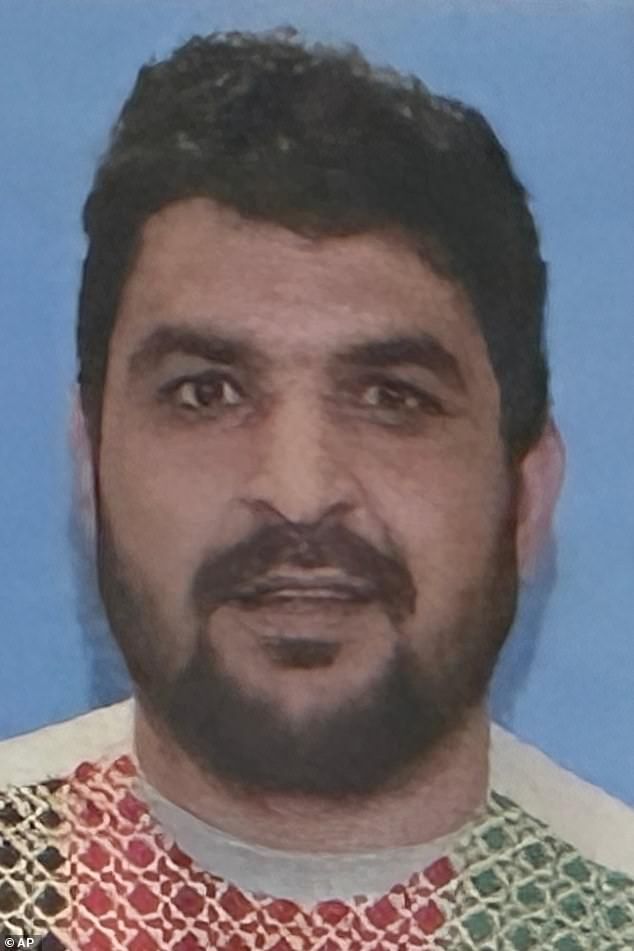
This is 50-year-old Lawrence Reed, who probably quit his day job as a facial contortionist so he could lean into his extensive criminal career, which involves 49 previous arrests, and 8 felony convictions, only two of which he served prison time for.

Apparently, he had the idea that his 50th arrest had to be something special, so he chased down a 26-year-old woman at a subway station and lit her on fire.

Behind every career criminal that remained free after over a half-dozen felony convictions, there’s an absolutely worthless judge who gave him every chance to prove that society would’ve been better off without him.

In case you missed it, here’s Judge Molina-Gonzalez literally bragging about being a diversity hire:

One might get the idea that left-wing judges keep releasing dangerous offenders because they hate their victims, but that’s not true. These judges love victims so much, that they keep making more of them.

In all seriousness though, if you’re a judge and someone comes before you with their Nth felony, you have to ask whether they brought their toothbrush. And if you’re not comfortable with that, then what are you doing being a judge?

If this whole sordid affair sounds familiar, then your memory doesn’t suck. It was only about 3 months prior that Decarlos Brown, who had benefited from the revolving door of left-wing justice 14 times prior, thought that 23-year-old Ukrainian refugee Iryna Zarutska was reading his mind through happy magical technology that was somehow implanted into him, so he killed her shortly after she sat down in front of him. And this particular incident took place on a moving train.

Mercy is not always a virtue. Sometimes, it can be misplaced. If this is something that you cannot accept, then perhaps you can’t be a judge, because your idea of justice would be dangerous to society.

It’s outrageous crimes like this that get people creative when it comes to punishments. But I’m more interested in seeing reforms that would benefit society in the long-run.

For one thing, we need to create a disincentive for judges to repeatedly release dangerous offenders. If they took a hit to their pay any time someone they release goes on to become a dangerous offender, that may suffice. Because even if they don’t understand justice, they do comprehend their own personal incentives. And to that end, if judges want to fail at their jobs, then they can get hit right in the pocketbook. And after a certain number of failures, they’d just lose their positions as judges.

Another thing we can do is make prisons into places where people don’t want to be. Believe it or not, some people like it there, and become so accustomed to it that they don’t know how to live on the outside. And that’s a problem, because such people sometimes just commit more offenses, knowing that in prison, they have some amount of comfort that they can look forward to, and all their basic needs would be met without having to work for them.

Consider Japanese prisons: You’d have to be insane to want to be sent to one of those. Not only are Japanese prisons strictly regimented, the prisoners themselves are not even allowed to speak. Have fun trying to start a prison gang in conditions like that.

If American prisons were like Japanese prisons, people would actually want to stay out of them. Which is actually the point. It’s a punishment, after all; the point is that the prisoner isn’t getting what he wants.

So, this happened again, just three months later. Any guesses as to whether this will happen again in just a few months time? And any guesses as to how much longer this is going to continue, or whether people decide that they’re not going to take it anymore?

CITAP: Muhammad Part 7

Muhammad died slowly, painfully, and miserably.

Also, ironically.

When you think of groups of people who Muhammad disserviced the most, two groups come to mind: women, and the Jewish people. They’d both get their revenge.

Muhammad had committed genocide against multiple Jewish tribes and settlements. Many men were killed, children enslaved, and women became sex slaves.

One female Jewish survivor was tasked with preparing a meal for Muhammad.

I’m going to admit that being a megalomaniac is outside my area of expertise. But I think it’s pretty obvious that you’re not supposed to trust your professed enemies to prepare food for you, especially after you give them plenty of reason to hate your guts.

Because bad things could happen to your guts. Bad things.

Also, I think that that thought goes together well with the common sense advice that you don’t upset the person who cooks for you.

So, a Jewish woman who saw her community ravaged, her husband probably killed, and her children probably taken away from her, has a poison on hand, and an opportunity to prepare a meal for the person who destroyed her entire life. And she knows just what cut of lamb that he likes best.

And it’s an opportunity that she took.

Muhammad and his friends began feasting. One of them didn’t begin until he saw Muhammad begin, because he trusted him. As with so many others, his trust was misplaced.

When Muhammad tasted something funny, he demanded that everyone stop eating, saying that the food told him that it was poisoned.

This would have been more impressive if the food would have told him that before he started eating it.

Muhammad had the chef called in, and asked her to explain herself. Her explanation was that, if he were a prophet, the poison would have killed him, but if he were a king, then her people would have been rid of him.

Ready for a surprise? Muhammad forgave her. Yes, really. Except, not really. When one of Muhammad’s men, who also ate from the same meal, had died, Muhammad rescinded his forgiveness, and had the woman put to death.

But ultimately, the poison would kill Muhammad. But it took years for it to happen. And as the poison worked away at Muhammad’s system, he was in worsening pain by reason of the complications.

Some might point out that it probably wasn’t the poison that killed him. Some attribute his death to a fever. But Muhammad himself attributed his worsening condition to the poison.

It’s the inclination of Muslims to believe their prophet. But if they do that, they admit that their prophet was killed by a Jewish woman. Or they can decide not to, but why stop there when they can disbelieve many of his other ridiculous claims?

In the ancient world, it was considered humiliating for a man to be killed by a woman. Because of this, it might be difficult for Muslims to accept the way that their own prophet died. But would they disbelieve the claim made by their own prophet?

Because of this, Muhammad’s death puts Muslims in a difficult spot. They could accept the humiliating way Muhammad died because he said that that’s how he died, accepting this humiliation as an indelible feature of their religion, or they could disbelieve him, and risk losing their status as Muslims.

Over the course of years, Muhammad’s condition got worse. He was in such pain that he required the help of two men to carry him about.

Speaking of his pain, Muhammad complained that it felt like his aorta had been severed. This is interesting, because Muhammad had previously said that if he was lying, then his aorta would be severed. While it’s possible that he meant this as a colloquialism for a great amount of pain, there’s still a lot of potential in that phrase to be interpreted in a way that’s disfavorable to Muhammad.

But is that really needed considering that he was a false prophet, traitor, oath breaker, rapist, child molester, torturer, and on, and on…

Muhammad turned to folk remedies, such as cumin, to no avail.

In his desperation, Muhammad turned to blowing on knots. This was a form of sorcery where a knot was formed which represented one’s illness, and the act of undoing it by blowing it undone has been said by practitioners to cure the illness. As you might expect, it didn’t work.

Practicing sorcery is a huge no-no. It’s been forbidden by Abrahamic religions. Even Islam forbids it. But Muhammad practiced sorcery by blowing on knots. He was supposed to be Islam’s greatest prophet (an easy hurtle to clear, considering that he was Islam’s only prophet). Was he disqualified by his own religion? More than he already was?

But then, Muhammad claimed to have another visit from the angel, Gabriel. According to Muhammad, Gabriel told him that he wouldn’t die. We know how reliable Muhammad’s visions are, don’t we?

Muhammad would die days later. At his request, he would die in the company of his favorite wife, Aisha.

Muhammad didn’t anticipate his death, so he didn’t appoint a successor. He likely realized that if he did, the successor would have a motivation to assassinate him. And Muhammad probably didn’t care what would become of his empire after his own death.

In the days to come, those close to Muhammad would jockey for control of the caliphate, a battle that would continue in the centuries to come in the form of the Sunni/Shia divide. It’s a divide that’s so bitter that some Muslims consider one another infidels. Part of the reason why Islam hasn’t spread further than it could have is because Muslims have been divided against themselves.

One might imagine that Muhammad would go to heaven in his own religion. But in reality, Muhammad was unsure of his own salvation. And he didn’t die in battle, meaning that he wouldn’t have gotten the special 72 virgins treatment.

This is the reason why Muslims frequently append Muhammad’s name with the phrase “peace be upon him”. Even though he was supposed to be his religion’s greatest (actually, only) prophet, his religion might have still condemned him to hell.

In Christianity, there’s more than one kind of salvation, and they are provided for mankind. One is a spiritual salvation, preserving us from the eternal punishment for our sins, and another is a physical salvation, where the Messiah intervenes in a future time to prevent humanity from destroying itself. Both forms of salvation are undeserved. And considering the kinds of ideologies, including religions, that humans have invented, we definitely need a savior.

The legacy of Muhammad has been a legacy of terror, violence, and bloodshed, overlaid with suffocating legalism and mind-numbing ritual. If you’ve learned a few things about Muhammad, you’ve learned that he’s not worth believing in, and that the religion that he invented is the way it is because of him.

Muhammad was truly one of history’s worst people.

Back to Part 6

CITAP: Muhammad Part 6

Before getting to how Muhammad died, let’s briefly get into how he lived.

When it comes to the religion that he taught, imagine rules that eliminate the graces of human life, alongside rituals and superstitions that sound like they were born from the mind of the worst case of OCD in the universe. Then, you’d have the general idea.

While the prohibition on pork was an idea that he took from the Jews, what’s really unusual is his prohibition on music, dogs, alcoholic beverages, and much more.

He also prohibited playing chess, comparing playing chess to dipping one’s own hand in pigs blood. I suspect that he’s not a huge fan of games of strategy.

Muhammad also practiced many superstitions. Among these was the belief that if a person has a bad dream, it won’t harm them if they spit on one side of the bed. Another is the belief that Satan might steal silverware if it’s not covered up at night.

They’re not all hokey folk practices, though. Some of them are bad health advice. For example, Muhammad taught that water cannot be contaminated. Using this as an excuse, Muhammad and his men drank from a pool of water that he knew had the corpse of a donkey in it.

On another occasion, after washing in a small pool of water, he was informed that a woman washed involving menstrual fluid in it, and he insisted that it was fine.

Again, Muhammad taught that water cannot be contaminated.

He also believed that if a fly fell into your drink, you should push it until it’s completely submerged, reasoning that one of it’s wings contains a disease, and the other one the antidote for it.

Muhammad seemed to like entertaining his men with tall tales involving historical figures, whether or not he understood them. Sometimes, this would involve persons in the Judeo-Christian Scriptures.

Among these was King Saul, who he portrayed in a positive light, even though the Scriptures portrayed him mostly negatively. Famously, Saul mistreated David before David  became King.

He also told stories about Jesus, though it’s evident that he lifted stories from the gnostic gospels. And he told a story about Nimrod, saying that he strengthened a couple eagles by making them drink beer, then used them to fly into the sky.

There’s a reason why you want to be familiar with the Scriptures: there’s no telling when you might encounter a madman who calls himself a prophet mentioned in the Scriptures, though he himself hasn’t read a word of it.

Outside the Scriptures, Muhammad said that Alexander the Great was a Muslim, and he ventured so far to the west that he found the place where the sun set, in a giant mud pit surrounded by a city inhabited by extraterrestrials.

Now’s not a bad time to point out that Muhammad didn’t have a strong understanding of cosmology. For example, he said that the “smudges” on the moon were the result of Satan dragging his wings across it. I guess if he were here today, he might have claimed that Nimrod was on an Apollo mission.

The hadiths get into unnecessary detail about Muhammad’s married life. He had many wives and sex slaves at a time, and there was only one of him, so one could only imagine the adventures that were his home life.

In one instance, a couple of his wives pleaded with him for intimate attention, rather than the sex slave he wanted to give attention to. This resulted in a convenient revelation which, to the surprise of precisely no one, favored Muhammad and what he wanted to do.

Muhammad also had relations with a servant of one of his wives. That wife caught him, and afterwards, he promised not to have relations with the same servant again. But he did, with a revelation that, once again, favored him and what he wanted to do.

Muhammad discovered that his wives had a tradition of giving gifts to the one whose turn it was with Muhammad. Muhammad then discovered that Aisha, his child bride, got the most of any of them. Knowing this, Muhammad decided to take turns with Aisha more often.

Speaking of, Aisha liked to take dolls with her when it was her turn. Being that she was a child, it’s understandable that she’d have those. But in Muhammad’s legalistic mind, dolls were a form of idolatry. In spite of this, Muhammad allowed her to bring those with her.

Well, whaddaya know? He actually does have a soft spot.

Muhammad also had ideas on how to run a society. He taught that one’s children should receive an equal inheritance, except for females, who would receive half as much. That one caveat aside, this sounds egalitarian, so it might appeal to people who don’t understand second order consequences. But there’s a problem with this.

In Sharia, upon the death of a business owner, the business would have to be liquidated, laying off the entire staff in the process, and the contributions of the large business to the economy would be no more. Worse yet, large businesses tend to be owned by high status men with lots of children, making it less realistic that the children would pool the liquidated assets together to restart the business.

In most non-Sharia societies, the business could just be passed on to another person, often the owner’s firstborn, so its operations and its contributions to the economy could continue. This avoids the problems that would be caused by Muhammad’s silly approach.

Muhammad also taught that the testimony of a woman is less than the testimony of a man in a court of law. Depending on the verse, it could take the testimony of two or four women to equal a man’s testimony.

One of Muhammad’s favorite teachings is his famous “Day of Doom” prophecy, in which numerous cataclysms would take place, which he said would be bad news for non-Muslims specifically.

Muhammad claimed that the Day of Doom would occur within 500 years of his own life. For him, this probably seemed safe. After all, he knew he would not live to see his own prophecy’s failure. Therefore, by the time anyone might have otherwise called him out on it, he’ll have already died rich.

But for Muslims today, there’s a huge problem. Muhammad died in the year 632 AD. More than 500 years have passed since then, and Muhammad’s Day of Doom never happened. This is true whether we’re talking about solar years, used by most of the world, or lunar years without intercalary months, as the Islamic world does.

Muhammad was a failure in many ways. But in failing in his biggest prophecy, Muhammad would fail his own followers in the far future. Considering the nature of his failure, it’s a wonder why Islam still has any followers.

Also of note was the fact that Muhammad believed that he had sorcery cast upon him. This sorcery, according to Muhammad, was the reason why he sometimes thought he did something, such as having relations with one of his wives, when he didn’t. Realistically, such a delusion is consistent with dementia.

That Muhammad would have been affected by sorcery at all would cast doubts on his claim to be a prophet. Even if sorcery was something that would really work, I’d have imagined that a prophet would have a protection from it. Yet, Muhammad claimed to be the greatest prophet. And he blamed sorcery for his memory issues.

If Muhammad was a prophet, one might ask whether he performed miracles. If he was the greatest prophet, as he claimed, then one might think that he performed some great miracles.

He didn’t. Not only did Muhammad not perform miracles, he informed people that he wouldn’t perform miracles. He didn’t heal people, and he didn’t raise the dead. His men did the opposite of these things, with physical means.

He claimed to receive revelations and see visions, then demanded that other people take his word for it, but didn’t perform miracles.

Among these professed visions was Muhammad’s so-called “night vision”. Muhammad claimed to have literally visited the Temple in Jerusalem during the night, then ascended into heaven to meet people mentioned in the Bible.

It’s obvious that he made the whole thing up. But he didn’t seem aware that, at the time, there was no temple in Jerusalem, and there hasn’t been one there since the first century AD.

Aisha, being more wise than Muhammad, begged him to not share his “night vision”. Which is understandable, but she night have been shocked at how many Muslims have believed it.

Muhammad’s bogus night vision is the justification that Muslims today use for claiming the Temple Mount for their Dome of the Rock.

While Muhammad’s life had many examples of foolishness, it’s not a life that would go on forever. Death would come for him, and while he fought to resist, it was a fight that he couldn’t possibly win.

Back to Part 5

To Part 7

CITAP: Muhammad Part 5

If all land belongs to Allah, as Muslims claim, why does he need humans to do his dirty work to claim it?

The answer is obvious: Allah is just a rock idol in the middle of the desert. He can’t even act as a paperweight unless someone were to first lift him up.

As stupid as Muhammad was, he did comprehend Allah’s impotence. Thus, he knew that he wouldn’t get very far with his religion unless he could motivate men to fanaticism.

Thus, Muhammad developed a two-pronged approach. First, if his men conquered, his men got spoils of war, with Muhammad usually claiming one-fifth for himself. But if his men died while in battle to further Islam, they would be granted an express ticket into heaven, and they’d be granted a heavenly brothel of 72 virgins in addition to the usual heavenly reward.

The Islamic heaven also has music and wine, which is interesting considering that those are among the many things that Muhammad’s religion forbids on earth. Kind of makes me wonder whether the Islamic heaven also has bacon and beer.

The Islamic heaven obviously sounds more carnal than spiritual, but it does motivate carnally-minded half-wits to go out to battle to further Islam. Though that Muslims themselves want a way out of their own religion’s suffocating strictures, mind-numbing ritual, and ridiculous legalism probably has something to do with it.

When you understand this, you know why Muslims are so fanatical about spreading their religion. As they see it, they get something even if they die trying.

And so it was with the first Muslims. With Medina now under Muhammad’s control, Islam’s expansionist push can gain serious traction.

Basically, any nearby city that Muhammad could conquer, he did. And he considered caravans to be fair game.

Interestingly, he would make a peace treaty with the Meccans, a few years after his flight from there. But it was a treaty that he would eventually break. As part of the treaty, Muhammad would put aside his prophet status in his dealings with the town. As we’ve already seen with the Satanic Verses incident, Muhammad was certainly willing to put aside significant aspects of his identity if it meant he stood to benefit.

One of the towns that he did attack was Khaybar, which was not at war with the Muslims. The Muslims snuck up on them and took the town by surprise. Like with the Banu Qurayza, many of the men were slaughtered and women, boys and girls were taken as slaves. However, Muhammad allowed some of them to live as long as they payed tribute.

And I’m sure that many Muslims today claim that they were done a favor, just by being kept alive.

If you border anything Islamic, you have to stay alert. There’s an expression: The Islamic world has bloody borders.

If you have any doubt that Muhammad was motivated by money, consider that a Khaybar treasurer was tortured because he was suspected of hiding treasure from Muslims. Muslims set a fire on his chest until he confessed, and said where the treasure was hidden. He was then beheaded and his wife was raped by one of Muhammad’s men. Then the woman was immediately made to marry the monster himself.

Never lose a war against Muslims. Being killed by them is better than being captured by them, and to die is better than seeing the kind of world they want to bring about.

Muhammad played fast and loose with his treaty with the Meccans, especiallywhen he wanted a pretext to attack them. This came when a tribe allied with the Meccans attacked a tribe allied with the Medinans. So, in he marched, treating his hometown as he did others.

With Mecca under Muhammad’s control, he set out to destroy all the rock idols of the Kaaba, except for the black stone that represented his god. Because in Muhammad’s book, idolatry is bad, except for the idolatry he considered halal. Also, he would ban anyone who wasn’t Muslim from Mecca, a ban which Muslims honor to this day.

As Muhammad gained more power for himself, he required less justification for attacking neighboring towns and cities, and just attacked them to expand his growing empire. Many of those attacked simply converted in an effort to avoid Muhammad’s wrath.

Muhammad also had people assassinated if they criticized or satirized Muhammad. If there’s one thing a tyrant hates, it’s being satirized. That’s because that’s their weakness. A tyrant inspires fear in an effort to control people. If they are ridiculed, the fear goes away, and the control along with it. European kings understood this, which was why they preferred not to execute their own jesters, knowing the bad optics that could come from doing so, instead granting them permission to ridicule even the king, if desired.

One person who was assassinated had a nursing child pulled from her right before killing her. Another was killed by multiple Muslims, so Muhammad decided that the one who got the killing blow had to be the one whose blade still had traces of food the victim had previously consumed.

Muhammad reportedly laughed so hard at the account of one assassination that his back teeth could be easily seen, in case you wondered at the kind of thing that he found funny. It’s easy to see why he kept company with assassins rather than jesters.

However, Muhammad faced financial problems. It seems as though the funds raised from conquered non-Muslims, such as in Khaybar, were far greater than the relatively small tax collected from Muslims.

What would Muhammad do? Go out conquering, that’s what. But having become the undisputed king of Arabia in about a decade, where would he go?

Muhammad set his sights on the Byzantines and the Persians. He sent out notices that they convert to Islam, or else. They pretty much declined, so the Muslims attacked them.

One could almost pity them. It’s as though they had no idea what else they could do.

However, because the civilizations just outside Arabia were far more developed, they did a much better job at repeling the Islamic invaders. The invasions of the surrounding cultures would be measured in centuries, rather than days, weeks, or years.

Islam would provide a strategy: send wave after wave of young men, who would die in the meat grinder of war in all the time it would take to conquer.

That sounds like a bad strategy, and it is. But the Islamic world could feed into it.

Fecundism describes the practice of encouraging high birth rates, usually to the end of increasing political influence held by ethnic groups, but it can be used for other purposes.

The high birth rates among Muslims is due to a discouraging of birth control, and also due to polygamy.

Where polygamy is practiced, it heavily favors high-status males. In Islam, men are permitted up to four wives. Assuming the most affluent 25% of men marry 100% of women, that would mean that three-quarters of the men wouldn’t know a day of marriage.

But Islam tells them about a way out: die in battle furthering Islam, for 72 heavenly virgins. Considering that their religion doesn’t give them any earthly hope, this is quite a motivation.

And if 75% of the male population were to be wiped out in war, they’d be quickly replaced as the surviving 25% continually impregnate their multiple wives.

It’s been estimated that, due to the prevalence of polygamy, two-thirds of all men who have ever lived have never married. Not only would Islam have been a significant contributor to this statistic, it also means that many of those men lived brief, heavily-indoctrinated lives which ended in a violent and sustained push to expand the worst religion to have ever been imagined.

Back to Part 4

To Part 6

CITAP: Muhammad Part 4

Though Muhammad was a traitor, the Meccans didn’t pursue him into Medina. Once he was out of town, they were no longer concerned with him. This was a mistake.

This was about the time that the themes of Muhammad’s religion became about warfare. The physical variety.

Muhammad’s exile was at about the time that Muhammad began referring to his god primarily as “Allah”, where he seemed to prefer “Al Rahman”, the name of the Hanif god, during his initial preaching in Mecca.

To aquire wealth, Muhammad would have his men raid Meccan caravans. These caravans were initially defenseless, so the raiders encountered little resistance. But in time, caravans started getting more evasive.

Eventually, the caravans would primarily run during the observance of Ramadan. The idea was that, because absolutely no violence was permitted during the month-long celebration, then caravans could pass by Medina without fear.

Except some of Muhammad’s raiders decided to attack a caravan anyway. However, Muhammad inquired of his god, and as his god often did, he provided a revelation that satisfied Muhammad’s personal desire: the booty was considered legit, meaning that raiding on Ramadan was allowed.

Muhammad had committed an immense cultural faux-pas. But as his means of violence increased, fewer people challenged him.

One of the most significant battles in Muhammad’s life was the Battle of Badr, in which Muslims emerged victorious against the Quraysh, damaged their trade routes, and established Muslims as a serious threat against the people who were once Muhammad’s friends and family. Muhammad had risen (descended?) from being a mere traitor to a significant adversary to the kin he had betrayed.

It can be interesting to see Muslims portray the Battle of Badr as glorious, when you know that it was a battle between pirates and merchants.

Medina had three Jewish tribes. Among them, Muhammad and his Muslims were in a minority. It was at Medina that Muhammad had established a pattern that would eventually be followed by Muslims the world over. While they were few in number, they would present themselves as peaceful and conciliatory. But they would also take opportunities to put pressures in place in an effort to make their own religion seem more attractive. As Muslims grew in number, they became increasingly belligerent in their demands. Eventually, enough power would consolidate around Muslims that they could go full mask-off, taking whatever influence and wealth they wanted by force.

Initially, Muhammad would change the qiblah, or direction of prayer, towards Jerusalem, rather than Mecca. He also taught that Christians and Jews could attain salvation by observing their own religions. These acts were intended to make other people less defensive around Muslims. But Muhammad had only said them when it was advantageous for him to do so. Once he had sufficient strength, all pretense of tolerance was discarded.

One of the problems that Muhammad ran into was that the Jews knew their own Scriptures better than he did. So when Muhammad made the claim to be a prophet, it didn’t hold up to scrutiny. There was even a point where Muhammad claimed to be the Jewish messiah. No points for correctly guessing how they responded to that.

Muhammad wasn’t very bright. He initially claimed that the Jewish Scriptures indicated that he was a prophet, and indicated his coming. When the Jews understandably rejected his claim, he then claimed that this teaching was erased from all Scriptures everywhere in the world in a conspiratorial fashion, all in an effort to hamper him.

Muhammad didn’t check his own brain to see whether this new statement contradicted his earlier claim that he was mentioned.

Like many half-wits who fail at reason, Muhammad would turn to threats and violence.

The first Medinan Jewish tribe that Muhammad threatened was the Qaynuqa, who were told to either convert or be driven into exile. After they refused to convert, Muhammad looked for a pretext to go to war with them. This was found when a Jew was accused of harassing a Muslim woman. The Jew was killed by a Muslim, and the Muslim was later killed by a Jew.

The Qaynuqa were forced into exile, leaving their properties in the hands of Muslims. This would greatly increase Muhammad’s influence.

The next tribe Muhammad would target would be the Nadir. But pay attention to how the conflict started, because it tells us a lot about how Muslims think.

First, on Muhammad’s order, some Muslims killed a Nadir Jew named Kaab Al-Ashraf. Muhammad then declared war on the whole Nadir clan, because he feared retaliation against him for the murder he ordered.

Even when a Muslim commits murder, they’ll still look for a way to make themselves the victim.

What’s more, Muhammad was such a fool that he didn’t seem to consider the possible consequences for his call for murder until it was already completed.

To make his call for war seem more divine, Muhammad claimed that an angel appeared to him in a dream and warned him of the retaliation. Whether for lack of skepticism or for spoils of war, the Muslims went to war, bringing the Nadir Jews to surrender, and the survivors were exiled.

After that, there was just one Jewish tribe left in Medina, the Qurayza. And they were like, “We saw what happened to those other guys, and want none of that.” Then they just straight-up surrendered.

Pay attention and learn a valuable lesson: Never surrender to Muslims.

Ever. Their forgiveness is capricious, and their cruelty is legendary.

On the plus side, Muslims today are generally talentless at fighting. This is due in large part to the fact that their religion gives them a reason to die, not a reason to live.

But if you’re up for a reason to never surrender to Muslims, pay attention to what happened to the Qurayza.

Muhammad decided that every adult male in the tribe should be executed. And to divide the men from the boys, they checked each individual male to see whether public hair was growing in.

Yep. They peeked.

Muhammad then had a huge ditch dug, had the men beheaded, then dumped their remains into the ditch.

Everyone who survived became property. Boys were made into slaves. Girls and women were made into sex slaves. This includes widows, some of which were forced to have sex the very night their husbands were executed.

By the way, Muhammad ordered a fifth of the women captured to be added to his personal collection of sex slaves. And, as a reminder, he only had one child, a daughter, in his entire life.

With all opposition eliminated from Medina, Muhammad finally had a city that he fully controlled, to use as his base of operations. And yet, it wasn’t his home. Even his initial base of operations was obtained through invasion. Even at their starting point, Muslims were always the invaders.

There’s an irony that begs to be recognized: that though Muslims love to claim that all land in the world belongs to their god and their prophet, in reality, they can never be anything other than invaders, anywhere they go.

Back to Part 3

To Part 5

CITAP: Muhammad Part 3

As Muhammad gained more followers, his story seemed less like that of a random rambler that you see at a bus station, and more like how matters would play out if that rambler had resources, connections, and a cadre of enablers.

In time, his story would go from concerning to horrifying, and escalate from there.

Though Muhammad gained followers, he was increasingly antagonized by his fellow Quraysh, whose ancestors he has disrespected. It got to the point that they openly antagonized him while he was praying at the Kaaba. Muhammad was so upset by this that he threatened them after he was done praying, then promptly left.

At that point, the Quraysh decided that matters were getting out of hand, so they discussed amongst themselves how they would deal with Muhammad.

What happened after that was an affair that made Muhammad look so bad that Muslims today deal with it by pretending that it didn’t actually happen. This would be the affair that has come to be known as “The Satanic Verses”.

The Quraysh presented Muhammad with a bargain: They would present him with influence, wives, wealth, and treatment for his demons if, and only if, Muhammad would revere Al Lat, Manat, and Al Uzza, the three goddesses that he had previously reviled, for only one year.

Accepting the offer would have amounted to compromising with his professed convictions, in exchange for worldly gain. This would have disqualified Muhammad as a prophet.

The expectation for a prophet would be to reject such a proposal outright. But interestingly, Muhammad thought about it. His hesitation was telling. And whatever his answer would have been, it would have been deliberate, by virtue of the consideration that went into it.

So, consider what it meant when he accepted it. Because he did. After all his talk about being monotheistic, he returned to polytheism, and expressly worshipped the three goddesses he previously described as clothing-challenged. Perhaps their outfits of choice were as Islamic as the burka?

The Quraysh were thrilled, because they wanted peace. However, some of Muhammad’s followers were alienated, because Muhammad went back on his monotheism, after years of being passionate about it. Then, and only then, did Muhammad realize the mistake that he made. So, he broke the treaty that he had previously agreed to.

His excuse was that Satan had cast a spell on his speaking that made him accept the bargain, and subsequently honor the three goddesses. While this is already a ridiculous claim, it has terrible implications for every other teaching that came out of Muhammad’s mouth.

How many prophets have ever made the claim that Satan made them say something? And how many of Muhammad’s other teachings were also Satanic?

Muslims today deal with this scandal by claiming that it was in an “unreliable hadith”, and therefore, they act like it probably didn’t happen. However, this is a very recent notion, in light of the populurization of a novel which brought attention to this incident. Prior to Salman Rushdie, that Muhammad accepted the Quraysh bargain was commonly accepted among Muslims.

But Muhammad actually disqualified himself even worse in light of Islamic teaching. Muhammad himself taught that it was an unforgivable sin to ascribe partners to his own god, Allah. When Muhammad worshipped Allah’s three daughters, he committed a sin that he himself would teach wouldn’t be forgiven. This means that if Islam is true, Muhammad had condemned himself to hell.

That anyone could notice this and still trust Muhammad’s teachings with their salvation is baffling.

In the year 619, Muhammad’s protective uncle, Abu Talib, would die. As he was dying, the Quraysh would approach him for one last attempt to form a treaty with Muhammad through him. The intention was peace. Muhammad would refuse.

Abu Talib protected Muhammad, in spite of all the trouble he caused, though Abu Talib himself wasn’t a Muslim. Muhammad and another Muslim was there as Abu Talib was dying. The Muslim claimed that he heard Abu Talib convert to Islam with his final whispered words. But Muhammad said that because he couldn’t make out what he had said, his conversion didn’t happen, therefore, Abu Talib went to hell.

Such was the respect Muhammad had for the person who did as much as he did to blunt the consequences for Muhammad’s disgraceful behavior.

But there’s a disturbing implication there for Muslims today. If Muhammad had to hear someone’s conversion for it to be accepted, what does that mean for Muslims today? Muhammad is dead, so he couldn’t hear them when they spoke the shahaddah, the expression which a person speaks with sincerity when converting to Islam. Is it impossible for anyone today to become a Muslim?

At around that time, tension was building between Mecca and the nearby city of Medina. With the passing of Abu Talib, Muhammad perceived himself as politically vulnerable.

In light of this, Muhammad decided to try to consolidate political power to himself. By making a treaty with Medina, against his own people, the Meccans. And it was a treaty of war.

Muhammad had committed treason against his own people. What a piece of shit.

When the Meccans discovered this, Muhammad decided that it was time to skip town. To be sure he got away, he left the first person he had converted, Ali, in his own bed as a decoy.

He could have used a bunch of stones as his decoy. But no, he instead used the first person converted by his preaching. Again, what a piece of shit.

Muhammad’s flight to Medina was in 622 AD, which was marked as the first year in the Islamic calendar.

Yep, the Islamic calendar began with despicable acts of treachery and cowardice. What a start that Muhammad’s religion was off to!

But Muhammad wasn’t done. There’s going to be a Part 4.

Back to Part 2

To Part 4

CITAP: Muhammad Part 2

Khadija was certainly a very interesting woman. She was a wealthy businesswoman, which is already unusual for her time and place. But what’s more, she was the wealthiest businesswoman in Arabia during her time. So, it stands to reason that she’d know an opportunity when she saw one.

It would appear that the marriage between Muhammad and Khadija was a happy one, though there was an age difference between them. As Muhammad would demonstrate later, age was just a number to him.

Khadija was wealthy and supportive, a combination of attributes which likely played an important role in Muhammad’s influence in his early years claiming to be a prophet.

Prior to this, Muhammad frequently went to caves to pray, which was probably not unusual. But one day, things would change.

Muhammad had his first vision when he was 40. According to Muhammad, while he was praying in a cave, he was visited by an angel who wrestled him to the ground, sat on his chest, and forced him to read from a scroll. Problem was, Muhammad was illiterate, and therefore couldn’t read. This ordeal occurred two more times, before Muhammad got up and ran from the cave.

Now, does repeatedly wrestling a man to the ground and forcing him to do something that he didn’t know how to do seem angelic? Probably not, so it was understandable that Muhammad was terrified that he might have been demon possessed, and ran home scared out of his mind, and hid under sheets.

It seems obvious that Muhammad fell asleep while praying, and had a nightmare. It’s not unusual for dreams to have elements that are culturally significant to the dreamer, including dreams that are religious in nature for those who are religious. While dreams are not fully understood, they are generally considered to be subconscious representations of one’s subliminal fears and desires. What’s more, the theme of having one’s chest pressed upon is common in those experiencing night terrors.

But would a man in 7th century Arabia be expected to know that? In Muhammad’s case, no. So he thought that he had demons. At a later point, he would assert that it was an angel that he saw, when he claimed to be a prophet and therefore would have something to gain from presenting it as such.

Khadija, being supportive, tried reassuring Muhammad. She got creative about it. One of the things she did was she started stripping and sitting down close to Muhammad, reasoning that if the spirit that Muhammad saw gave the couple privacy, it would be an angel rather than a demon. Thus, as she progressively removed her clothing and drew close to Muhammad, she asked him whether he still saw the spirit. Eventually, at some point during her routine, he said that he no longer saw it.

However, the sight of the elderly woman’s striptease apparently didn’t reassure Muhammad. However, Khadija had one more trick up her sleeve. She would take Muhammad to the only Christian in town, a blind man named Waraqa, for a phony endorsement. Muhammad described his dream to Waraqa, after which, Waraqa told Muhammad that it meant that he would be a great prophet like Moses.

For those unfamiliar with the Bible: Waraqa lied.

I suspect that Khadija had paid or otherwise incentivized Waraqa into making the endorsement. But days after making it, Waraqa died.

There’s a reason why Khadija went to great lengths to reassure her husband: he was suicidal. Since the cave vision, Muhammad had considered suicide, and had nearly attempted it more than once.

It’s not an unusual belief that the Biblical prophets were hesitant about their callings. However, Muhammad really leaned into that. It would be years after the cave vision that he finally started preaching.

When he did, the themes were perdition in the form of hell fire, in an apparent effort to scare up some believers. He would go on and on about the kinds of graphically-described punishments that await those who didn’t become one of his followers.

But while Muhammad had numerous listeners, for a while, he was scant on followers. It was as though people showed up just to hear a schizophrenic man ramble about hell because it amused them.

But Muhammad did have one follower: his own wife, Khadija.

Khadija was likely aware that her husband’s prophethood was all a hoax. After all, it was her who tried to reassure her husband with a visit Waraqa, which may have been a collaborative ruse on their parts. Even if Muhammad’s prophethood originated from the imagination of Waraqa, Khadija likely just went along with it with the businesswoman side of herself seeing the potential profit from a prophet ploy. And because the towns pantheon was a scam that benefitted the Quraysh, it’s easy to see where she would’ve gotten the idea from.

Speaking of, the Quraysh didn’t object to Muhammad’s preaching, even as his monotheism challenged their own polytheism. Mecca was already visited by people from monotheistic religions, so they had an established history of tolerance. Besides, as they saw it, if Muhammad started preaching, that meant more religion in town, which they saw as the town’s main business.

After a while, Muhammad gained a convert, Ali. But his conversation didn’t inspire much confidence, as he was described as having the widest waist in town, and the skinniest legs. Comically unfit.

Initially, Muhammad won followers at a snail’s pace. Rather than appealing to a sense of purpose and value, like many leaders do, Muhammad tried to scare up some followers with graphic descriptions of hell. Normally, threatening people into your religion doesn’t work unless you have force to back it up. But let’s not read that far ahead, just yet.

The Quraysh didn’t like that Muhammad was regularly committing blasphemy against every god in their pantheon except one, but they didn’t seem upset enough to do anything about it. This was odd, considering that one might expect a people, particularly their priests, to get upset that someone was bad-mouthing their religion.

Among Muhammad’s claims was that the three daughters of the pantheon, Al Lat, Manat, and Al Uzza, were black girls. Because Muhammad was racist, he probably saw this as a way to bring them down. He also said that they were clothing-challenged. If he were to take a trip to Greece, he would’ve met a number of people who wouldn’t have cared.

What did upset the Quraysh was Muhammad’s claim that their ancestors were burning in hell because they weren’t Muslims, members of Muhammad’s religion. For the Quraysh, this was intolerable. To make the optics worse, Muhammad himself was Qurayshi. His own disregard for his own ancestors only made him look worse.

But as Muhammad gained more followers, he could afford to become more belligerent. And though his affluent uncle, Abu Talib, disagreed with much of what Muhammad taught, Muhammad nonetheless enjoyed the protection that came with association with him.

It all started with Khadija, an elderly wife who, in comforting her younger husband who had a nightmare, decided to take Muhammad to Waraqa, who gave him a fake endorsement of prophethood. She herself was a bit of an anomaly, a wealthy businesswoman in a male-dominated society. However, she was not long out of the grave, and would therefore not live to see just how many women would be shackled by reason of her own religion, a religion that some have gone as far as to say that she had converted her husband to.

There hasn’t been another woman like her.

Muhammad would certainly miss her. And by “miss”, I mean “replace”. Muhammad would remarry. But his second wife, Sauda, wouldn’t remain to Muhammad’s liking. She got fat. Which Muhammad eventually would too, which his increasing wealth would allow. But that didn’t matter as much to Muhammad as the fact that Sauda was fat.

Sauda agreed to surrender some of her marital privileges in exchange for allowing her to remain married. So yeah, Muhammad threatened to divorce one of his wives because she got fat.

To get a little into Muhammad’s family life, by the time Muhammad died, he had a total of 26 wives, with as many as 11 at a time. This is in excess of the Islamic limit of 4 wives per male, but Muhammad manufactured a special revelation granting himself, and only himself, an exception. This was in addition to the number of sex slaves Muhammad had, which he placed no limit on, for himself or other males.

One might imagine the sheer number of babies that Muhammad had. One. Just one. A daughter by the name of Fatima.

In the ancient world, some considered it an indignity to have only daughters. And worse for Muhammad, it was only one, after having a total of 26 wives.

Some of the indignity that was against Muhammad was self-inflicted, by reason of one of his teachings. While on a raid, Muhammad told his men not to worry about coitus-interruptus as they were going about raping, saying that Allah had already determined every human being who would ever be born. So, does this mean that Allah decided that his favorite prophet only got one child, a daughter?

It’s clear that the problem wasn’t on some collective infertility on the the parts of Muhammad’s wives. It seemed the problem was with Muhammad. He had impotence. And he was so insecure about it that he ordered his wives to wear full-body coverings, fearing that other men might take his wives away.

That’s right: the whole reason why Muslim women cover themselves all over as they go outside was because one insecure man had difficulty getting it up.

Returning to the point in the story where we left off, Sauda was not Muhammad’s favorite wife. That would be Aisha. The one who was 6 years old when Muhammad married her, and was 9 when the marriage was consummated. Because they used lunar years without intercalary months, she may have been slightly younger than that.

Not only did Muhammad enjoy his time with her, he claimed to have received revelations during that time. In which they were engaged in intimacy. That vomiting sound you just heard was probably you.

So far, this series has depicted Muhammad in such a negative light, that you might guess that much of it was made up. But the biographies of Muhammad confirm that he did these very things. But why would the official Islamic materials depict Muhammad so negatively?

Perhaps they were authored by hostile sources.

For centuries, the Islamic materials, including the Quran, were transmitted orally. It wasn’t until after Persia was conquered that they decided to collect all the verbal accounts that made up the life of Muhammad, and his Quran. The Persians were probably a little salty about having been conquered by Muslims, which would have motivated them to present Islam and Mohammed as negatively as they could get away with.

It is foolish to go centuries with the primary form of information retention and transmission being verbal and through memory. To illustrate this point, you might remember the children’s game of telephone. It has children sitting in a semi-circle. Something is whispered into the ear of the child on one end. That child then whispers what they heard into the ear of the next kid. This continues, until the kid on the other end has something whispered to them, after which, the child says what they heard.

Usually, what the child says is far different from what the first child had whispered to them.

Now, imagine that game being played over the course of centuries, over many miles, participated in by many different tribes, before the decision was made to finally compile what was being said in writing.

It’s quite possible that the Muhammad that really was was far different from the Muhammad that Islam teaches about, or simply didn’t exist. If that was the case, then Islam is wrong about Muhammad. But if the Islamic sources are right about Muhammad, then Muhammad was demented. Either one is not great for Islam.

So, who are we criticizing, today? Whether real or imagined, that would be the Muhammad that Muslims believe in. Because that’s the Muhammad whose religion is destroying the world today, and if not fought back against, it will wipe out humanity.

More to come.

Back to Part 1

To Part 3

Criticizing Islam To A Pulp: Muhammad

Normally, when you hear that someone is a child molester, you couldn’t think worse of him.

Such people are among the worst criminals, to the point that even other prisoners can’t stand their company. You might even be skeptical of the claim, because it sounds like the kind of thing a person would say if they wanted to make a person look as bad as possible, in as few words as possible.

But if you were to first hear that a person was a murderer, a rapist, a torturer, committed genocide, practiced sorcery, made many, many false prophecies, committed treason, broke promises, plundered the defenseless, called for assassinations (which were then carried out)…

…And on, and on, and on…

…If you were to finally hear that he was also a child molester, you might say, “Oh, that figures. Considering everything else he did, is that really a surprise?”

The topic of this article was a human being who was so bad, that it makes me wish I could talk to the first human being, Adam, so I could ask him, “Why did you do it? If you didn’t eat that fruit, none of this would have happened.”

The topic would be the only prophet of the Islamic religion: Muhammad.

There is a certain danger that comes with criticizing anything Islamic. It’s not that the limp-wristed simps who carry water for Islam will call you a racist or a bigot. We’re past the point of caring whether anyone calls anyone such things, anyway. The real danger is that Muslims might straight-up try to murder you. Because when you’re not well suited to reason, then violence is probably more your thing.

And yet, it’s got to be done. After all, Islam is not worth believing in, and should therefore be subjected to the ridicule it merits, so the low-IQ among us who might otherwise gravitate towards it would know not to, even if for self-preservation.

Thus, I’m making fun of the only prophet who cared to share that he had erectile dysfunction, not just for having the condition, but also so fewer people might view the floppy rapist as an exemplar of human conduct.

I intend to criticize Islam to a pulp. And what better place to start than the one man around whom the entire religion revolves?

To get started, let’s go back to before he was even born.

To set the stage, Bedouin Arabia was a difficult place to live in. The resources in the Arabian desert were so scarce that people devoted much of their time and energy into surviving, rather than developing artistically, philosophically, or scientifically.

When conflicts broke out, they often resolved by simple reason of the fact that there were few resources for a prolonged conflict. Because the stakes were so high, tribesmen often made decisions which favored their tribes in particular, rather than Arabians in general, which resulted in a certain apathy for outsiders which persists among their descendents today, and among those who practice the religion that arose from their midst.

Surrounding empires had little reason to invade, as the desert’s scant resources wouldn’t have been worth the bloodshed. Thus, the Arabians prior to Islam were not integrated into a larger empire, and thus couldn’t more directly benefit from their developments.

There were a few trade routes going through Arabia. But the land was so hostile that many travelers have opted to make their trips around Arabia, rather than through it.

The people of the desert, the Arabs, were generally polytheistic, and there were numerous pantheons located in populated areas in the desert. Among these cities was Mecca, which housed the Kaaba. Because trade routes intersected by Mecca, it was a popular stop for people of many religions, which would eventually result in Muhammad having access to a lot of material which he would plagiarize.

The Kaaba venerated about 360 deities, the chief of which was the masculine moon deity, Allah. Each of these deities was represented by a rock idol, with Allah’s rock idol being a black stone, which possibly fell from space.

Muhammad would claim that the reason why Allah’s stone was black was because it was touched by menstruating women. If the rock is contaminated, then isn’t it a problem that it’s been touched by many millions of Muslims? Also, it would be bad news for Muslims if that rock became a vector of a contagious disease.

Mecca was inhabited by the Quraysh tribe, among which was Muhammad’s grandfather, who was the custodian of the Kaaba.

One day, he said something stupid. Because he was afraid that he might lose an upcoming battle, he prayed for victory. But in that prayer, he made a promise: that if he won, and if he had a tenth son, he would offer his son as a sacrifice at the Kaaba.

The battle ended in victory, but Muhammad’s granddaddy wouldn’t have to worry about his promise unless he actually had a tenth son.

Which he did. And that son was the one who would help conceive the worst prophet in the history of the universe.

But rather than give up his son, Big Mo’s grandpap sought a way out. And it was decided that arrows would be cast for the boy, until the arrows favored him, with an offering of at least one camel in his place. Each time they were against him, the offering of camels increased. Presumably, the odds of each cast was basically a coin flip, equal chance for each.

Except, the arrows were against the boy, ten times in a row. To get an idea of just how rare this is, try flipping heads on coin flips ten times in a row. Or better yet, don’t. The odds of getting heads ten times in a row is 1 in 1024.

Imagine what it was like to be the boy who was watching in horror as he was condemned to death, over and over again, during a practice which was intended to make it possible to spare his life. He probably thought that Allah wanted him dead.

When the time came to finally slaughter the camels, the priests did nothing to forbid any wild beast from eating them by reason of how many camels were slaughtered.

Muhammad’s granddaddy was so happy that his boy was saved that he married his boy to the daughter of a chief of another tribe. Which was actually kind of a big deal, because such marriages were usually made to strengthen treaties. But because it was an arranged marriage, love probably had little to do with it.

Now that that spectacle is over, the next part is pretty sad. Muhammad had a sucky childhood, which probably went a long way in making him into the asshole he ended up becoming. But we’re talking about a child molester who committed lots of other horrendous crimes, so let’s not trick ourselves into feeling bad for him.

Muhammad never got to meet his dad. While his mother was still carrying him, Muhammad’s dad died while out on a trip. Seems like Allah didn’t do much to keep him alive after the feast of camels.

It seems like being the grandson of the Kaaba’s custodian and the grandson of a tribal chief didn’t count for much in Mecca, because Muhammad’s mom was in such poverty that she put her son up for adoption. And of the batch of kids that Muhammad was a part of, he was the one selected last. And the wet nurse who selected him already had a child, and couldn’t produce enough milk for two children.

Thus, the infant Muhammad had to spend many nights crying himself to sleep in hunger.

Though I’m criticizing Islam to a pulp, it’s not all funny. Believe me, it’s not all funny.

According to Muhammad, a significant event occurred when he was a child while he was out playing with the other children. As he was doing this, he was allegedly visited by a couple angels, who wrestled him to the ground and tore his chest open. This understandably terrified the other children, who ran away screaming to adults that Muhammad had just been murdered.

But these angels were surgeons, and their deal was that Muhammad had a small black speck of malice in his heart, which they had to open him up to get out. And having found it, they sealed the boy back up, leaving only a small mark on his chest.

Apparently, these angelic surgeons didn’t know what they were doing, because according to Muhammad, two more angelic surgeons would visit Muhammad as an adult, and they would perform the same surgery for the same purpose.

Considering the crimes that Muhammad would go on to commit, I’m surprised that Muhammad didn’t sue them for malpractice.

It might not surprise you to find out that it didn’t happen that way. It’s more likely that he had a seizure while out playing. His adoptive wet nurse took Muhammad back to his mother, saying that she believed that Muhammad had a demon, and that she didn’t have the money to care for him if the same thing were to happen again.

Then Muhammad’s mom died while he was a few years old. Which is another one of those things which isn’t funny.

For years, Muhammad would pinball from one relative to another, including a brief stint with an old relative who was so fond of little Muhammad, that he would pet him while they were sitting on his bed. Certainly creepy. But he would soon die too, leaving the boy to move on to the next relative.

To have bounced from one caretaker to another must have been traumatizing for the little boy, especially considering that some of them died. This likely played a huge role in how Muhammad would value interpersonal relationships. And with all the death that surrounded Muhammad, some Meccans might have developed the belief that the boy was cursed.

In time, Muhammad would finally settle into a more permanent abode, with his uncle, Abu Talib.

Under the care of Abu Talib, Muhammad’s life immensely improved. Abu Talib was influential, and relatively affluent. He would train the boy in his camel herding business, which likely resulted in Muhammad being immensely more respected as a contributing member of the community.

When he was 25, Muhammad caught the attention of a wealthy businesswoman by the name of Khadija. She was 15 years his senior, but that didn’t discourage her from becoming Muhammad’s cougar. An intergenerational marriage isn’t necessarily wrong, but it probably played a role in his thinking with his later marriages, with a far greater age difference with at least one of them.

Khadija was afraid that her dad would object. With her marriage to Muhammad hinging on his approval, the couple hatched a plan: to ply Khadija’s dad with alcohol, then have him give his blessing when he was drunk.

It’s kinda odd that the religion which Muhammad would later invent would disallow grown-up drinks, considering that without them, Muhammad would have been cranking it solo.

Because Mecca was situated by a 4-way trade route intersection, Muhammad would have had the opportunity to meet many different people with many different religious ideas that he could later plagiarize. Some would even travel to the Kaaba to worship, even if their respective religions would have prohibited such idolatry. Such hypocrisy likely influenced Muhammad’s perspective on religion. Particularly, whether it would be acceptable to compromise where he stood to benefit.

Perhaps the most profound such meeting would have been with Zayd, a Yemeni whose religion was Hanifism. His ideas probably impressed upon Muhammad more strongly than any other traveler he had seen, as many elements of Zayd’s Hanifism would later make it into Muhammad’s Islam.

If you’ve never heard of Hanifism, here’s a brief rundown: it was a religion that claimed to be Abrahamic, but wasn’t strongly similar to Judaism or Christianity. They probably didn’t even concern themselves much with what the Scriptures may have said. They were monotheistic, honoring a god named Al Rahman. They also tended to be highly judgemental towards those outside their own faith, particularly towards Jews and Christians, who they referred to with phrases similar to “those against whom Al Rahman is indignant” (likely in an attempt to maintain plausible deniability in the event they are called out for it).

In fact, Hanif prayers were often recitals made in rhyming prose, and among them is a prayer repeated several times in one prayer, several times a day. Which, in that sense, sounds exactly like the Islamic prayer.

When Muhammad met Zayd, Muhammad was carrying some meat from an offering he made at the Kaaba. Zayd was hungry, so Muhammad offered him some meat to eat, but Zayd refused upon learning that the meat was previously offered to an idol (which is consistent with Abrahamic religions). Muhammad was impressed by this, and learned about Hanifism from him.

Interestingly, the name that Muhammad would use for his own god when he would later begin his own religion in Mecca was Al Rahman, the name of the Hanif god. It would appear as though when Muhammad made up his own religion, he might have partially converted to Hanifism. It wouldn’t be until his later exile to Medina that Muhammad would primary use the name Allah when referring to his own god.

While Muhammad had acquired religious ideas from many different religious sources, that alone wouldn’t spawn the religious ideology that would condemn billions. However, it was after the chance meeting with the Hanif that would come the spark that would light the fire that would destroy many.

END OF PART ONE.

To Part 2

NYC’s Wham Episode

The financial capital of the world has just elected a Muslim socialist mayor, less than two-and-a-half decades after both World Trade Center towers were destroyed by a bunch of Muslims.

I know that people have a knack for not learning a damned thing, but come the fuck on.

But wow, what an intersection of mass-murdering ideologies, huh? Muslim and socialist, both at the same time. Imagine the aura of death that comes off of that guy.

I thought that it was legally not allowed for a person to hold office in the United States if they identified as a Communist, in the interest of national security. But it seems they can get around this by instead claiming to be socialist, which is basically identical.

The left practicing equivocation? Imagine my shock!

New York City voters, with the help of a huge number of voters who resided in the city for less than ten years, has just voted in Democrat Zohran Mamdani, who in a recent interview avoided condemning the phrase “globalize the intifada”.

If you’re wondering what “the intifada” is, that’s the repeated bombing of mass transportation, and other terror attacks, in Israel. Mamdani avoided directly condemning that, rather than flat out calling the intifada wrong, like any sane man who knows what that is, especially when presented with the prospect of globalizing that bullshit.

So now, the country is split between those who want to speedrun the destruction of western civilization, and those who want to save them from themselves. Or at least save everyone else from them.

To be honest, I’m starting to lose interest in saving stupidity from itself, and am leaning more in favor of rendering the stupid incapable of causing further harm.

One way of going about it is rendering those who receive public assistance in the form of programs like SNAP ineligible to vote for a few years after the last date in which they receive the assistance. But Democrats would get in the way, considering their obvious incentives to keep people on the public dole.

The “more free stuff for losers” vote is huge.

Best thing that can happen over the next few years is for the damage that Mamdani does to NYC is minimal, which is unlikely considering socialism’s extensive track record of causing immense casualties, before New Yorkers decide “we tried, let’s move on to something that actually works”.

But I’m not betting on it, because stupid people avoid learning their lessons with more passion than they avoid AIDS. And because I’ve worked in grocery and retail longer than what’s good for my mental health, I know that there’s a fuck-ton of stupidity out there.

The Imperius Curse

Mad-Eye Moody, a character from Harry Potter, demonstrating the imperius curse in a classroom setting

One of the reasons people like to imagine themselves in a fantasy setting is because they imagine that their understanding of the setting would give them an advantage. They would be fantasizing about being more in control than they would be in the real world.

What they often miss is that the rules of the fantasy world would usually be in addition to the rules of the real world, in any sense that the rules of the fantasy world don’t negate the rules of the real world.

For example, in Harry Potter, the Wizarding world exists in secret, with most normal humans being entirely unaware of the secret society that would exist in their midst. Thus, it’s reasonable to assume that the basic laws of physics and sociology remain intact. And the fact that these rules would remain intact is very relevant, as it would mean that the introduction of a parallel Wizarding society would actually make the world far more complex!

To get right to my point, those who would wish that the wizard world was real might like to imagine that they’d be more successful in such a world, but they generally wouldn’t be. After all, if they would struggle in a world that’s already as complex as it is, why would they do any better if more complexity was added?

Consider the Free Palestine movement, which might seem like an anomaly. How did that happen? Why were so many young people tricked into siding with a known terrorist organization with genocidal aspirations, convinced that they’re fighting against genocide in so doing? On the surface, it doesn’t seem to make any sense.

Considering the changing nature of information media, one might imagine that it would be the responsibility of the public school system to teach students about how to recognize propaganda, deceptive rhetoric, and information warfare on social media. In other words, Defense Against the Dark Arts.

But that’s not happening. But why?

For one thing, the left has long succeeded in co-opting the public education system, which they use to propagandize young people. That on it’s own would render it self-defeating for them to teach children how to recognize propaganda and deceptive rhetoric.

But what’s more, the left also propagandizes young people through social media, which they had sweeping control of until Elon Musk purchased Twitter just recently. Even now, the left still controls much of social media, and heavily trusted information sites such as Wikipedia.

Do you really think that the left is going to teach young people how to defend themselves against propaganda, deceptive rhetoric, and information warfare when they themselves do these very same things to young people? If these people were to teach Defense Against the Dark Arts, they’d just occupy the student’s time with gender theory.

Like in The Deathly Hallows, the Death Eaters are still running many of the major institutions. Would they teach anyone how to defeat them?

As a result, you see many young people today with no defense against information warfare. Thus, when Hamas realized that they can take to social media to convince American children to take up the fight on their behalf, they encountered little to no resistance as they did just that.

And now, the left is divided against itself by reason of their pro-Hamas faction. And the mainstream left doesn’t seem to have a clue what they can do about it. Except maybe employ antisemitic dog whistles in an effort to avoid alienating a substantial portion of their electorate, ignoring the irony that they once accused the right of the same.

Such is the damaging effect of the imperius curse.

There is a problem. But thankfully, there is a solution, and it’s relatively simple: begin to teach people to recognize propaganda, deceptive rhetoric, and information warfare.

The real-life Defense Against the Dark Arts.

Researching propaganda is fun by itself. A fascinating topic would be how Edward Bernays tricked many people into buying products like cigarettes by convincing them that professionals thought it was a good idea.

Learning about deceptive rhetoric would involve learning about the various fallacies that dishonest people hope you’ll ignore. A huge one is equivocation, which the left has wielded to unfortunately great success.

Information warfare would be a broader subject, and would involve learning how people on news media and social media might be trying to manipulate them. It’s important to understand how framing can be used to omit context, changing the potential interpretation of a given piece of media, such as short-form video. Also, knowing that not everyone who speaks your language is from your country helps immensely in avoiding foreign manipulation.

And you’re better off learning about these things, because the people who would put you under mind control do know all about them, and benefit from ignorance to them.

But if the Wizarding world of Harry Potter was real, there would be many young wizards out there who wouldn’t be handling things as well as they might like to imagine.