Author Archives: Raizen

Pokemon vs. Digimon: Why does it matter?

pokemon studying.jpg

A few years ago, I asked the question of which came first, Pokemon or Digimon. After exploring the matter, I shared my findings in a post which eventually came to be the most visited post in this blog.

It didn’t take long for the comment section to light up, with visitors taking sides and some heated exchanges taking place. My referral logs revealed that the post was being discussed elsewhere, such as this DeviantArt entry.

One question that comes up when asking which came first between Pokemon and Digimon is “Why does it matter?” While the question could be easily rephrased as “Who cares?” or “What difference does it make?” and retain much of its intent, it’s plain to see that it matters quite a bit to those who have participated in the discussion. Each person could only answer the question for themselves, as would I, as each person may have differing reasons as to why it matters to them.

One reason that’s evident to me as to why feelings are so strong concerning whether Pokemon or Digimon came first or which one has the better games or anime or characters or what-have-you is that people develop a strong attachment to what’s a source of happiness to them, and when that source of happiness is somehow challenged, people feel inclined to either defend their source of happiness, or go on the offensive against whatever they perceive as challenging it.

This is especially evident when one observes nerd battles in what’s called the “console wars”. People develop a strong attachment to the game console that they play with, particularly the one that they play the most. When that console is challenged, people tend to react strongly. It’s actually surprisingly easy to be drawn into the so-called “console wars” and end up defending your favorite console against the fanboys.

A variation of this phenomenon can be seen when you look at so many people who are passionately against Apple products such as Macbooks and iPhones. If someone considers an Apple product and decides it’s not for them, their solution to this is to simply not buy it. But those who hate Apple with a passion seem to think that they are going to take over the world or something. Sometimes, it can be quite amusing to find a tech reviewer who’s so dead set against Apple that they compare just about everything to their products, such as in this video.

Pokemon and Digimon have fans who tend to play their favorite games extensively, which is why there’s a strong attachment to these games. In fact, there’s a bit of a feedback loop in that players like the games so they play them some more, and as they play them some more, the attachment becomes stronger. And these games happen to be very deep, which enables some involved play.

So, that’s the explanation for why there seems to be a strong reaction. But when it comes down to it, a person is not wrong for liking one game or the other, even if one came before the other or one was inspired by the other. The fact is, both franchises exist, and a person can enjoy a game that they play regardless of anyone else’s opinion of the same game.

That’s why the topic seems to get a strong reaction from others, but what about me? Why did it matter enough to me to demonstrate that Pokemon came before Digimon to make a post about it, and make subsequent posts going into other aspects of the topic?

The answer has more to do with the fans than with the franchises themselves. A sizable portion of the Digimon community strongly insists that it was Digimon that came first, and that Pokemon took inspiration from it. I’m not entirely sure where this idea came from, but I suspect that it has to do with the fact that the Digimon Tamagotchi came to American shores before the Pokemon anime first aired on American TV. As explored in the which came first article, both franchises first appeared in Japan, where Pokemon came long before the first Digimon product appeared, and I authored another article which provided proof that Pokemon was in development as early as 1990.

While the claims that some Digimon fans are making are demonstrably false, I suspect there’s a little more to it. I vaguely recall that there was a magazine from the late ’90s that made the claim that Digimon came first, a claim that may have been subsequently parroted by numerous Digimon fans. I don’t remember for sure what magazine it would have been, but I suspect that it may have been an early issue of Beckett Digimon Collector. Whichever magazine may have irresponsibly made the misleading claim, the apparent response would speak to the tendency of the public to take at face value information issued by a publicated source, even if they themselves may be misinformed. (Does anyone out there have the magazine in question? Help would be appreciated.)

Because I understood the claim that Digimon came first to be false, it didn’t sit well with me. I know that it takes work and creativity to produce something that’s novel, so I find it a bit irksome when a me-too product comes along and, not content to bask in reflected popularity, show disrespect to the original by claiming superiority and even claiming the idea as its own!

In this regard, the issue isn’t with the Digimon IP itself, as it does nothing to disrespect the franchise that inspired it, and is simply another take on an idea that happened to be popular at the time it was conceived. Rather, the issue is with certain Digimon fans who are claiming that Digimon came first and Pokemon stole from it! It’s important to note that it’s not all Digimon fans that make this claim, and I see nothing wrong with enjoying both franchises.

While the Digimon fans that insist that Pokemon stole from Digimon are passionate about their position, it remains that the foundation of their position is a great misunderstanding. The antidote to this misunderstanding is to provide clarity, which can be done by doing honest research into the history of both IPs, and using the information found to make a determination as to which came first. When I did this, I found that it was Pokemon that came first, without a doubt. Using this information, I wrote up an article to publish on my own web space to get the word out.

Another reason it mattered to me is because I care what the truth of a matter is, whether or not it happens to be the accepted consensus of a community. It’s better to be alone in being right than to be wrong with the majority. But in this case, it’s not necessarily the majority that’s wrong, so what gives? Why go as far as I did when it’s just a couple JRPGs that we’re talking about?

It matters because there’s a slippery slope effect when it comes to accepting even a little bit of falsehood. If we’re willing to overlook small falsehoods, this tends to enable us to accept greater falsehoods later on. If we accept a falsehood about a piece of entertainment on the mere reasoning that it’s more comfortable to accept, it becomes easier for us to accept for comfort falsehoods about our careers, society, religion, politics, and numerous other topics wherein the choices can have serious, long-reaching consequences.

Even when we’re talking about games, a false narrative is still a false narrative. It should matter to us what’s true and what’s not. Otherwise, there’s no telling what we could end up accepting at some point down the road. There was a misconception that I saw going around, so I looked into the matter and shared what I learned.

When it comes down to it, the truth matters, regardless of the scale of the issue.

The Worst Pokemon Gen 8 Clickbait Thumbnails on YouTube

They say that you can’t judge a book by it’s cover. It’s an expression that implies that the content of the book’s pages aren’t to be dismissed just because the cover itself isn’t terribly appealing, as an allegory for how a person’s character can be far different from what their appearance may imply. Sometimes, a literary masterpiece is disguised by a drab cover.

But what if the opposite is true? Could a garbage book be cleverly disguised by a cover which describes it as something it’s not?

For YouTube content creators, the thumbnail image is among the most important parts of the video. It doesn’t just identify the video among the sea of videos in someone’s recommendations, it says what your video is really about. Ideally, anyways. In some cases, the thumbnail is flat-out misleading.

Sadly, that’s the kind of crap that the Pokemon community has to deal with, as speculation about the upcoming 8th gen of Pokemon is building, and numerous YouTube content creators are out to fish up as many views as possible so they can benefit financially from the ad revenue.

Therefore, I’ve made a list of the worst clickbait thumbnails that are currently going around on YouTube. Because there are a lot of PokeTubers out there that are obviously motivated by greed, I have a lot to work with.

Eryizo.jpgBy Eryizo

I wonder how Eryizo was able to make a list of the top 5 new pokemon in gen 8 if the grand total of them revealed so far is zero? I don’t know, because I didn’t watch his video, and I’m not planning on it.

Also, his thumbnail will be the first of many on this list that attempts to pass off fan art as a newly-revealed pokemon. When I see thumbnails on YouTube of pokemon I’ve never seen before, the first thing I usually do is check a reputable news site such as Serebii.net to see whether it was revealed there. If so, the news site would be the best source of information for reveals outside of official sources. Then maybe I’d watch someone’s video about it if I were interested in their opinion.

Also, I liked Eryizo at one point, so it’s a shame to see him turn to the dark side.

NGameTheCube.jpgBy NGameTheCube

Hey look, more realistic looking graphics! What could that mean besides that some random guy on YouTube called NGameTheCube found some footage that, for some reason, only he has! Or it could be some fan mockup, which you see just about everywhere. What I want to know is, why did he choose a picture of two pokemon standing around being bored? Pokemon is about battling, so they could at least be facing each other.

Twintendo features needed.jpgBy Twintendo

Would you check out how fresh and exciting this new game on new hardware will be by reusing official art a decade-and-a-half old that’s been doctored with an outfit to an evil team that we’ve already defeated? How new and fresh! Put aside, of course, that this implies yet another Hoenn remake when we’ve had one in the last gen.

Of course, there’s the obvious question of how this person was able to make a list of 5 features in gen 8 when absolutely zero are known to the public so far.

Burlingtone leaked.jpgBy Burlingtone

Burlingtone claims that he gained access to a leaked gameplay trailer for the next Pokemon games. The idea that some rudie poo YouTuber was resourceful enough to abscond with such a valuable resource requires quite a hearty suspension of disbelief. What really seals it is that he says that they’re called the Violet and Rose versions.

Yeah. Violet and Rose. Lame.

Jimmy Tumor lamest looking Eeveelution.jpgBy Jimmy Tumor

One of the easiest templates to use when crafting your own fakemon is to make an Eeveelution, yet another evolved form for Eevee. If you’re already using a template, then a large part of the creative legwork has already been done for you, leaving you with less of an excuse to make something that looks lazy.

While we’re at it, can we just stop idealizing ancient Egypt, already? I know it’s weird and mysterious, but it’s far from the only ancient culture that existed.

Some Northern Guy.jpgBy Some Northern Guy

We don’t know whether the next games will introduce new regional variant pokemon, but the escape clause for this thumbnail is that it doesn’t expressly state that they’re guaranteed to be included, only that that’s the subject. This makes this the thumbnail equivalent of that kid that rests his middle finger on his temple, but insists that he’s not flipping you off when you call him on it. It’s as dishonest as the kid is cowardly.

But could he have at least used a mock up variant of a pokemon that anyone cares about? Unless there’s some huge Noctowl community out there that managed to elude detection for 18 years.

WiiUGamer12.jpgWiiUGamer12

Thankfully, the answer is “no.” I’m glad that those aren’t the actual starters, because if they were, they’d be the lamest ones in the history of Pokemon. I’m not kidding, look at that cow. Someone managed to make a cow that looks stupider than the real thing. That thing would make the derpiest hamburger in history.

If you’re wondering what a Wii U is, believe it or not, Nintendo released a system between the Wii and the Switch.

ThePokeRaf.jpgBy ThePokeRaf

Wow, forget Eryizo’s lame 5 pokemon list, some random guy managed to find 10 pokemon that weren’t revealed yet! Imagine the blatant violation of non-disclosure agreements that that took! If real, Nintendo would take this video down as soon as they noticed it!

But it’s still up. Awkward.

On the bright side, we don’t have to worry about that lame legendary appearing in a pokemon game. But I get the idea that if COPPA were vigorously enforced, we’d be seeing fewer fakes like this going around.

Jimmy Tumor calling it fanmade doesn't get you off the hook.jpgBy Jimmy Tumor (again)

Jimmy has been spamming YouTube with these fakemons. While he does call them fanmade in the video titles, they come in the tail end of the titles, after a cutoff occurs on the main page. This, along with the thumbnail, makes you form your own first impression which hopefully leads to another view, and more ad revenue for having led you on.

Maxx Ezzy lame legendaries.jpgBy Mazz Ezzy

These gen 8 leaks look suspiciously like they came from a grade schooler’s sketchbook, where a couple failed drawings of animals just had random stuff drawn on them and then a sad attempt was made to pass them off as leaked legendary pokemon. If you’re going to try drawing legendaries, they should at least have a sense of majesty.

This is what you’re competing with:

ultra necrozma.jpg

Which is an actual legendary in the most recent games. Because this is what’s being called a legendary these days, making a cover legendary that looks lamer than any other cover legendary is like challenging people to care less.

Jimmy Tumor yet again.jpgJimmy Tumor (yet again)

Please Jimmy, just stop.

There’s more. Lot’s more. To find it, just type “Pokemon gen 8” into the search at YouTube, and see the sad state of the Pokemon community.

Making clickbait thumbnails isn’t just a dishonest way to generate ad revenue, it demonstrates that their makers don’t respect our time, which is what we consume to see nothing but speculation and pointless discussion passed off as “leaks.” Such videos are a waste of time and bandwidth, and are a money making scheme that, sadly, works.

As a community, we have the solution to this problem: Instead of clicking on these videos, just open a new tab and check for Pokemon news to see whether it’s being discussed by reputable sources. If not, then it’s just some kid or NEET out to make a quick buck off ad revenue, and you don’t need to see his video at all.

Perhaps in the future I’ll make fun of some more thumbnails. Just because I posted this doesn’t mean that the clickbaiters should feel safe that I didn’t include their thumbnail or that they’ve “fallen under the radar.” As long as stupid stuff is posted on the internet, I’ll have plenty of material to work with.

The Worst Kinds of Customers in Retail

If you really hate yourself and want to reinforce a dim view of humanity, there’s no more effective way to accomplish this than to work in the grocery or retail industry. There’s a lot to it that makes it some of the worst soul-crushing misery that man can impose on his own kind without violating the Geneva Convention, such as the fluorescent lighting, the destitute pay, and the mindless, low-skill busywork. But what really drives the misanthropy home is the customers.

I’ve worked in the grocery and retail industry for years, and was happy to get out. From my experiences, I can name some of the worst kinds of customers that one can expect to have when they have to work with the general public.

To be fair, I’ll point out that most customers were pretty normal, and therefore weren’t very memorable. This list is more about the ones who, if I were to take over the world, you’d have to thank if I were to usher in some kind of global police state.

The Litterbugs

Once you’ve wiped your nose on a tissue or finished your free sample of coffee in those little Styrofoam cups, you’d have to use the wastebasket. Sometimes, this involves holding onto your trash until you find one, which is the procedure when you’re in any public place. One store I worked at was nice enough to have a small trash bin at the end of every aisle.

Apparently, this still wasn’t easy enough for some people. These would be the litterbugs. They’ll ignore the trash receptacles or pretend that they aren’t even there, and simply leave the trash in their carts, even after leaving. In doing so, they leave their problem for the next person, who blames the staff for not noticing it before they did. So they just ignore the cart with the trash in it, or they just throw it into a different cart, even if there’s a trash bin right by them.

Worse yet are the ones that just drop their trash on the floor when they think no one is looking, or, even worse, the ones that stash their trash among the merchandise. I kind of wonder how filthy their homes are, because in public they’re total slobs.

The cart not-returners

So you’ve gathered up everything on your list and paid for it without incident, and loaded your order into your car. After having gotten this far in taking a trip to the store without making a dunce of yourself, you have one thing left to do – just one thing – before having accomplished the bare minimum of being a decent customer. You put the cart into the cart return.

You can do this, right? That’s what they’re for. They’re designed to streamline the process and make it as easy for you as it can be. But there are still people out there that find it too hard.

If a cart is left anywhere outside a cart return, such as next to a signpost or propped against a curb, it could inconvenience a customer that might have to maneuver their car around it. Or worse, the wind can cause it to drift into a vehicle. This doesn’t just cause dents and nick expensive paint jobs, it can necessitate the need for an expensive coating that needs to be done soon before rust can set in.

The customers on this list aren’t just bad for the workers, they’re terrible for other customers.

The dog walkers

Too many people who go to the store don’t think far ahead, and pet owners are some of the worst offenders. I suspect that their logical progression of thought goes something like this: “I’m going to the store, may as well bring the dogs with me. I’ve arrived, but I can’t leave the dogs in the car, so I may as well bring them in with me.”

I suspect that this is used as a pretext to show off the wimpy little inbred mongrel that they consider a dog, considering that if you’ve met a dog person, you know that they’re proud of their degraded wolf and won’t stop talking about it.

But there’s a problem with this: People are allergic to dogs. Stores don’t prohibit non-service pets just to be mean, they do this because some of us really can’t be around them. Put that on top of the fact that there’s so much else that can go wrong with bringing a dog to the store, and it’s evident that those who bring their pets with them have left their brains at home.

The shoddy-stockers

If you change your mind about an item in your cart, just put it back where you found it. Easy, right? Yeah, it’s so very easy. It’s hard to imagine how anyone can mess this up. But there are those who still manage to.

Hanlon’s razor aside, we know that the reason people do this is because they are either lazy or they think that making the place a mess for the staff or their fellow customers is funny.

What’s more, some of them get creative with it. There are times when there gets to be a rancid smell near a certain spot, and it can take a while before the workers find out where it’s coming from. When they do, it turns out that it’s coming from a leaky, sopping pork roast that’s been set behind boxes of cereal, and has long since spoiled.

The look-in-the-backers

You knew these guys were coming, the ones who can’t find what they’re looking for or found an empty spot, so they ask an employee whether there’s any more in the back.

As much as you’d want to tell these guys what they can put in their back, this isn’t standard minimum-wage procedure, so it’s on to “assisting” them. Usually, the first thing I’d do is check where the item is kept on the floor, because I’d sometimes find what the customer is looking for, and relish the awkward pause as it dawns on the customer, at least in part, that they aren’t as diligent as they thought they were.

In grocery and retail, the back rooms are mainly for unloading stock from trucks, which are then quickly moved out to the floor. Product that remains in the backroom doesn’t sell, so management wants the staff to get the product on the floor quickly. Because of this, very little product is actually in the back, and finding it back there is a long shot.

This takes a while to explain to customers, and if one were to go to the trouble, they’d probably insist that the employee go check anyway, or they wouldn’t get the idea, or funnier still, they’d say that they don’t believe it even though they have little choice but to take the employee’s word for it.

So, what can an employee do about it? Usually, they just go to the back, take a short break, then return in a few minutes saying that they couldn’t find it. At this point, the customer usually resigns himself to the inevitable, but in some cases, they’ll fall into the next group.

The ones that call for managers

There are some people out there who just can’t take an honest statement of fact, however tactfully delivered. So they move on to inconveniencing the next level up on the ladder: the managers.

Customers seem to have the expectation that employees get in trouble the moment management is involved, because when I’d nonchalantly agree to go get management, it seems to surprise them. Believe it or not, employees don’t necessarily have an adversarial relationship with management. They work together, and have pretty similar goals. Besides, making enemies with someone you see every day is stupid.

When I called management over, they pretty much always agreed with me. After all, most people in management are bright enough to understand that giving someone something that they don’t have is physically impossible.

For all the threats that I got from customers saying that they could get me fired, I actually worked in grocery and retail for about a decade without facing termination once. Which was probably worse to endure than collecting unemployment, all things considered.

Miscellaneous checkout shenanigans

As simple as the process of checking out is, it’s surprising just how much can go wrong, and how many customers there are who find ways for it to happen. One would think that customers would be extra careful at this step in the visit, considering that this would be the point where they part with their money. But, it somehow turns out to be when they make the most mistakes. I suspect that there’s some science that the retail industry has mastered to make their customers’ IQ drop by 30 points during their visit, while the sanity of cashiers is the collateral damage that companies are willing to pay.

I’m not kidding, I hated working register with a passion. I’ll just go over a rapid-fire list of dos and don’ts to keep things nice and tidy.

  • Don’t make a point of paying with exact change. You’re slow at it, and the cashier is faster at it because it’s the cashier’s job.
  • Don’t attempt to use expired coupons. Do your due diligence.
  • Don’t hit on the cashier. The setting degrades the experience.
  • Oldie but goodie: Don’t enter the express lane with more items than permitted. Customers and cashiers alike make fun of you for it.
  • If your debit or credit card breaks, don’t be lazy, get it replaced. Cashiers hate it when you waste their time by having them punch in all those numbers, and the customers behind you don’t like it, either.
  • You’re not the first one to joke that “it’s free” when an item doesn’t scan right. If the cashier bothered to pretend a laugh, you have no idea how much effort it took.
  • If an item scanned the wrong price, it was likely you who made the mistake. Cashiers are seriously annoyed when things have to come to a halt just to do a price check, and so is everyone in line behind you. Take care to read the price tags to reduce the likelihood that you look stupid in front of the other customers.

There’s a lot more, but those are the main ones that I can think of at this point, possibly because my brain isn’t permitting me to recall too much about my grocery and retail work because of some internal mechanism that protects my sanity. Therefore, I’m concluding this list at this point and being glad that there’s life beyond retail.

The Theatrical Implosion of Channel Awesome

channel_awesome_logo_down

Channel Awesome is experiencing a SHTF moment. Several former members of their talent have come forward and have alleged wrongdoing in a long Google Docs file.

The Google Docs file can be read here.

As a result of fan backlash, Channel Awesome’s YouTube channel has experienced a dip in subscribers. As of this posting, periodic refreshing of their channel’s page shows their subscriber count steadily falling. It’s kind of amusing to watch.

The debacle is interesting and somewhat disappointing to behold considering that the names and faces involved are entertainers that many of us have enjoyed over the years, and we’d like to imagine that online companies are above the politics associated with traditional media. The alleged mismanagement of Channel Awesome and mistreatment of its talent shows that this is not the case, and can be a real slap in the face for those of us who elevate online content producers.

To be realistic, it really isn’t unusual to work with and for people who make decisions that you don’t immediately understand or who don’t seem to have any idea what’s going on. I think we all experience that to some degree. You can probably think of a few experiences of your own.

As for me, one of my previous jobs had me work with an old man who was my supervisor. The problem was, the old man was clearly well past the point of senility, and seldom (if ever) produced anything of value. For the most part, the rest of the staff joked about him and merely tolerated him, even as he racked up overtime pay just to socialize. We had a nickname for the guy: Deadwood. After a while, I came to find out that upper management was well aware of how useless Deadwood was, and the reason why he was still employed was because Deadwood was friends with the company president. A little while after that, I parted ways with the company and went on to work someplace else, and I later found out that two people were hired to replace me (no joke), but after Deadwood finally left, someone else was made supervisor, but he otherwise wasn’t replaced.

It’s really nothing unusual that you work with and under people who don’t know or do your job as well as you do, and this seems to be more and more prevalent the more technical your job is. With large websites like Channel Awesome, there’s a lot of potential for someone to be in charge whose job was merely to be in charge, and issue orders regardless of whether they have any idea what it takes to produce the content (believe it or not, it takes more to make videos than just pointing a camera at someone and turning it on).

What’s really alarming are the allegations of chauvinism favoring the men, and mistreatment of the female talent. One of the complaints was about a rape scene which was changed due to objections from the talent, but more alarming still was that one of the women was physically suspended to the point of fainting!

We should all know at this point that the truth of a matter is not determined by mere allegation. Though as more people come forward with the same allegation, it increasingly shows that they aren’t just some pie-in-the-sky complaints from disgruntled former workers. Not only that, other staff members have responded by leaving the company, which lends weight to the claim that there was something seriously wrong.

Fans have likewise responded by withdrawing from the Channel Awesome viewership. This being the case, it’s going to be interesting to see how Channel Awesome copes with this negative publicity, or whether they could recover from it. I would think that other media companies that have had similarly bad practices would take note and come to understand just how severely things can backfire when the talent is mistreated.

Even non-media companies can take note of how these events are playing out. After all, companies are composed of people who bring something of value, and if the people are mistreated, the company is setting itself up for disaster.

Is Pokemon trying too hard to relive its past?

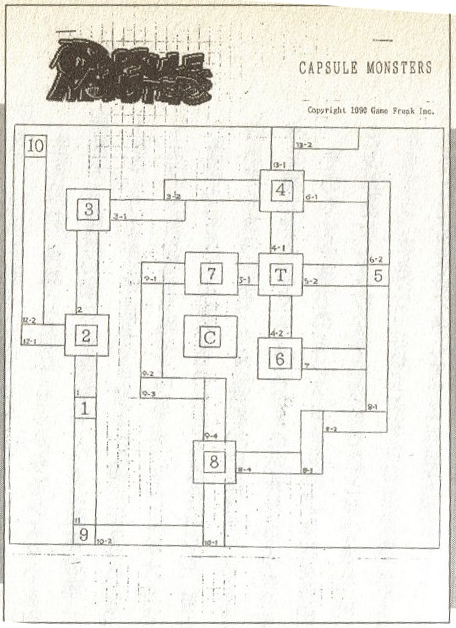
Capsule_Monsters_mapThis place is so old.

There’s something that’s been on my mind for a while, and with recent speculation that the upcoming Pokemon game on Nintendo Switch may be a reboot of the 1st gen games, it gets a new sense of urgency. That concern is that Pokemon has been doing a bit too much to attempt to relive its past.

I do understand the strong attachment to the Kanto region, its pokemon, and the characters associated with it. After all, that’s the place where the Pokemon franchise got its start. My concern is that, if 1st gen elements are over-represented, they can wear old, especially for faithful players that have been playing Pokemon for a long time.

One of the main concerns that Pokemon’s development team has had over the years is that Pokemon can be perceived as a game that one can “graduate” from, and move on to other games. This is an understandable concern, as Pokemon’s more complex strategic elements may not be immediately evident. This being the case, I question the effectiveness of continually returning to Kanto as a means of appealing to players that were involved in the early stages of the franchise but moved on to something else, or as an appeal to nostalgia.

For one thing, a continual return to Kanto and repeated nostalgic appeals can create the impression that Pokemon hasn’t been doing much since its early days. A person who hasn’t played Pokemon in a long time might see continual returns to Kanto and over-representation of 1st gen pokemon, and think the franchise isn’t really doing anything new. And if it doesn’t give us an experience we haven’t already had, that makes it easier to skip it.

We’re still hoofing through Viridian Forest, on the way to Pewter City to get a Boulderbadge. We’re still taking on Team Rocket at Silph Co. and having repeated battles against Giovanni. We’re still going through several consecutive routes packed with trainers that have either Normal/Flying or Grass/Poison pokemon, with little variation. We’re still battling a rival for the championship.

Is it really necessary to buy a new game for the same experience we’ve already had in several games we already own?

That question is not hyperbole. Consider for a moment just how many core Pokemon titles have included the Kanto setting:

First Generation: The Red, Green and Yellow versions all take place in Kanto. I’m not including Blue in this tally, since it’s pretty much the same game as Green.
3/3

Second Generation: Gold, Silver and Crystal each include the Kanto region.
6/6

Third Generation: Ruby and Sapphire take place in an entirely new setting, but we see the first Kanto remakes in FireRed and LeafGreen before we see the Emerald version.
8/11

Fourth Generation: Diamond, Pearl, and Platinum all take place in a new region, but Kanto is included in HeartGold and SoulSilver.
10/16

Fifth Generation: Four new games, all taking place in the new Unova setting.
10/20

Sixth Generation: Two games taking place in the new Kalos region, and two rebooting the Hoenn region.
10/24

Seventh Generation: Four new games in the new Alola region.
10/28

Considering this information, there are a couple noticeable trends. For one thing, it’s that we’ve gone three generations without treading in the Kanto region. While this can be viewed as a sign that Pokemon has been moving forward and not leaning too heavily on nostalgia, this could be used as an argument that we’re somehow overdue for a Kanto reboot.

The second noticeable trend is that nine-fourteenths of the core games have included Kanto, which comes to nearly one-third! This wouldn’t be that much of a big deal if the franchise were still young, but considering that it’s at over two dozen core games, that’s a massive over-representation of an old setting!

Even during more recent times, we’ve been noticing a certain favoritism towards more nostalgic concepts. In the Kalos games, we got a choice between the three Kanto starters before long into the game, and they received mega evolutions. One of the early areas is a very close recreation of Viridian Forest, and one of the Gyms even reused the layout for the Saffron gym in Kanto! That’s a pretty obvious use of throwbacks.

What’s more, in the seventh generation, we were treated to special variants of Kanto pokemon. While this was a breath of fresh air in its own sense and gave us some great designs (such as Alolan Raichu), it’s notable that only Kanto pokemon got this special treatment.

And while speaking of the Alola region, the recent games (Ultra Sun and Ultra Moon), featured a team called Rainbow Rocket, which was a new Team Rocket. This team had Giovanni as it’s head, and saw the leaders of the other teams serving under the Team Rocket banner. That all these leaders with their conflicting visions could be united under Giovanni and Team Rocket are a clear expression of favoritism to the franchise’s more nostalgic concepts!

Another point to bring up is the release of the virtual console games during the 6th and 7th generations. These re-releases gave us access to the old first and second generation games. And, as noted above, this is a handful of games that each featured the Kanto region. This means that the 6th and 7th generation actually did see games with Kanto in them! What’s more, this recent over-representation of a single region would blunt any nostalgic feeling one would get from yet another Kanto game, such as the theoretical Kanto remakes for Switch.

This retreading of the 1st gen isn’t something that’s limited to the video games, either. We see it in the trading card game, as well. Within a few years of the debut of the initial Base Set expansion, we saw the release of Base Set 2, which mainly contained reprints of cards from the Base Set, and was widely regarded as a rip-off. More recently, we saw the release of the Generations expansion. While the cards were mostly redone with the game’s power creep in mind, that it was intended to be a throwback to the original Base Set is obvious.

As far as the anime goes, one needs only look to the more recent movies to see the nostalgic appeal. Last year’s movie was a retelling of Ash’s first departure from Pallet Town with Pikachu. This year’s movie will have a story featuring Lugia, who was a staple character of the second movie. Even the main anime recently had a story arc with Ash making a short visit to Kanto to visit Brock and Misty.

Pokemon is a great franchise, but it spends way too much time living in the past. And if GameFreak is going to be leaning on the same feelings of nostalgia that they have been for the upcoming installment on Switch, I might not be feeling very strongly about it. Considering that Pokemon was one of the most innovative and creative games of all time when it made its debut, I think it appropriate that the game’s maker, GameFreak, continue to demonstrate that they’re capable of innovation and forward-thinking. After all, we saw a watch with a touch screen in Pokemon Diamond and Pearl about a decade before they became commercially available!

Move, or get out of the way.

Situational awareness is one of those things that’s universally recognized as a good quality, but it still seems to be at a premium. This is most apparent when you come across those who stay in the way when you’re coming, without realizing that you’re trying to get somewhere.

This happens in a variety of situations, and it’s very likely to have happened to you recently, so you probably know what I’m getting at. What I want to know is, what is it about pinch points and high-traffic areas that make stupid people want to gather together in them, talking about things they couldn’t put off discussing until having migrated to a less inconvenient spot?

At an office building I worked at, there were actually signs posted telling people not to gather at certain high-traffic areas, so I’m not the only one who sees that there’s a problem with this. But there’s not as big an outcry over it as I like, because Impulsive Socialization Attacks (ISA) are a huge risk to public productivity, and I want to see this problem addressed, preferably with proposed solutions.

Then there are those who walk or drive really slow. If you’re stuck behind someone who slowly plods along and you can’t somehow walk around them, you know how annoying this can be.

Oh yeah, there’s also the people who arbitrarily stop in inconvenient places such as the end of aisles in grocery stores because they think that’s a great place to check their phones, or those who stop right as they get off escalators so they can look around, as though they didn’t already plot out their course or had no idea that people could be right behind them, wanting to get off the escalator, too.

If you frequently blank out to stare into space or feel an impulse to socialize (an ISA), you have a responsibility to make sure you stay out of the way, so you’re not inconveniencing the rest of us when you get into an ISA. Be responsible with your ISAs.

As far as solutions to this problem, I suppose you could just ask someone to move, because you’re trying to get somewhere. However, such trivial social inconveniences can, over time, have a cumulative effect on one’s patience which can result in outbursts, sad attempts to reenact pro wrestling maneuvers, and even pusillanimous passive-aggression, all of which would be preferable to avoid.

So play your part. Move, or get out of the way.

Things to Know Before Going to College (Part 4)

There’s a lot to know before going to college. Here are a few more things.

16. Be ready to do presentations.

People dread presentations. There’s an element of public speaking, and knowing that you’re going to be judged by your peers right in front of you. It’s difficult, and most of us would rather not do it.

But if you’re going to college, you’re probably going to have to.

In fact, nearly all of my non-math, non major-specific courses had me do presentations (and some of those had me do them, too). It got to the point that I kind of suspected that it was some kind of crutch to pad out the curriculum. But still, nothing quite demonstrates that you grasp the material quite like your ability to explain it.

Sometimes, you might have one due, but that doesn’t mean that you’re going to be ready for it. I actually had a presentation to deliver in a programming class, of all things. And yes, it is possible to give a presentation on programming microcontrollers and it can somehow be interesting. It may as well be, considering that we’re the ones giving it, and if we find it boring, it’s our own fault.

As the presentation was coming up, my program wasn’t working, and I went over my program numerous times without finding out what was up. It got to the point that I almost accepted the fact that my program didn’t work, even if I was able to explain the idea in theory and could explain each line of code step-by-step. But right before the presentation, it occurred to me that there might have been a register that needed to be reset. So I gave it a try on the simulator. That did it. And my presentation was a success.

If you have to do presentations, you might have moments like that, especially if you get into something really technical. It’s sure frustrating when something doesn’t work and you have no idea why, but it sure does feel great when you find out what the problem is, and the result is something that works. When you have to do a presentation about it, there’s more at stake, but it also becomes more rewarding.

When you do enough presentations, you might learn something about yourself, which is that presentations aren’t as hard on you as they’re made out to be.

17. Many of your peers will be unsupervised for the first time.

This isn’t an invitation to throw an entire age group into a category to be labeled as problematic. After all, most of the people that go to college do so with similar goals. But there will be some among your fellow students whose college experience will be their first away from home, and there will be those among them that will allow that to go directly to their heads.

For the first time, they’ll be sharing a living space with people who aren’t their family members, and they might not immediately understand how to deal with something like that. Not only that, the lack of parental supervision or anyone enforcing certain boundaries may result in them making some choices that their peers would more readily recognize as unwise.

From my observations, it seems like the more successful students are those who understand the value of the opportunities presented to them. I suspect that this comes from having worked in low-paying jobs for a while, and in having done so, developing a desire to take their careers beyond. As far as this goes, I do have experience. I’ve worked in grocery and retail for years before going to school, and have attempted to get by on what little I’ve made. At some point while I was doing that, I came to believe that a college education would go a long way in making my situation better. So I went for it.

A person is less likely to arrive at this conclusion if they’re only at college because their parents signed them up for it just to get them out of the house. I’ve seen a student for whom that was the case, and he didn’t last very long. In fact, he was once thrown out of class for falling asleep during a lecture. Yikes.

If you’re a younger student, it doesn’t have to be the same way for you. You might be glad to be out of high school and in no hurry to return to a scholastic environment. But take a little time and consider just how valuable an opportunity to earn a college degree really is. One thing to think about is that not everyone who applied was accepted. Another thing to think about is what kind of job you can do with your degree, and how much harder it would be to get a similar job without one. Considering such things can lead to developing a valuable perspective.

18. Become a good test taker!

It’s not a bad idea to pay attention to the syllabus and how you’ll be graded. In many (if not most) college courses, tests count for more than half of your grade!

This doesn’t mean “ignore your homework,” after all, every bit helps. But there’s a lot at stake for tests, because how successful you’ll be will largely hinge on how well you do on these.

This is great news if you’re a good test-taker. But if you’re not, you can become one. There are numerous tips out there that can make you better at scoring high on those tests, and rocking that GPA! Here’s a few that worked for me:

  • Before answering any questions, go over the test once and pay attention to how many questions there are, and how long some questions may take to answer. This will give you a good idea of how to budget your time.
  • You don’t have to answer the questions in order. If one question stumps you, just leave it and come back to it later. A different approach to the problem may come to you after having answered other questions.
  • Impressed by those people who finished first? Don’t be. They probably bombed, or don’t even care. In fact, you’d probably be better off using up nearly all the allotted time, since you could use that time to go over your answers. You might even catch a mistake, and earn yourself some points you’d have otherwise missed.
  • On math tests, it’s not a bad idea to show your work. Some professors award partial credit if they can locate where you goofed, and suspect that you have a good idea what you’re doing.
  • If, during a lecture, the professor says something will be on the test, it’s a good idea to write it in your notes and come back to it. They’ll say that if they really want you to remember it!
  • Remember to put your name on the test. Oldie, but goodie.

Tests count for a lot in college. So if you become good at test taking, you’ll have an edge. Just don’t neglect your homework. And speaking of…

19. Prepare for tons and tons of homework.

I’ve heard of a student that aced all his tests, but turned in no homework. Tests counted for 70% of the grade, while homework counted for 30%. As stated earlier in this series, 70% is usually not a passing grade in college.

If you, for some reason, refuse to do homework, you’ll almost invariably fail. That’s how it goes when your final grade for a course falls by three letter grades.

So, it counts for a lot. Just do it, and you’ll be set. Right?

That’s much easier to say than to do. Some courses give a lot of homework. I’m not even kidding. It wasn’t unusual for a math course to give me two or three dozen problems to solve, and on top of that, a dozen or so from the textbook or a worksheet. I remember that it was a lot of work, but I went for it. And I went to bed tired.

Not only that, the way your classes are scheduled will lead to you budgeting your time in interesting ways. Some courses might be scheduled Monday through Friday, but some are scheduled Monday/Wednesday/Friday or Tuesday/Thursday. You’ll see times in which you’ll have just a little homework and have five days to do it, and you’ll have days in which you’ll have a mountain of homework and just a couple days before it’s due.

You’ll have days in which you’ll be tempted to put that homework off until just before it’s due, but that’s generally not a good idea unless you have assignments from a different class that are due in the meantime. You’ll also have days in which you’ll have to make time for powering through your homework, taking it on based on priority.

In the workforce, once you leave for the day, there’s usually no need to even think about work until you clock back in again. College is different, and it’s something that you’ll have to endure while you’re a college student.

20. Maintain a positive attitude. It does count!

While it’s true that earning a degree is a challenge, college is a great place to be, and that’s a great thing to keep in mind. In fact, many people look back on their college experience as the best years of their life. There’s no reason for you not to enjoy it, too.

A sour, cynical outlook can go a long way in holding someone back. One student I went to school with seemed to randomly decide that he was going to be bitter about things. I don’t know what was going on with him, but whatever it was, it wasn’t good. After that point, he was grumpy and allowed little things to bother him. It seemed like he wanted to stew over whatever it was that was getting to him.

It came to be that on graduation day, I was seated next to the guy. He was grumpy as usual, sitting there with his arms crossed, even though it was his graduation day, and was supposed to be one of the most meaningful accomplishments in his life. Did he drag me down? No. At one point in which most students stood up to clap, I did too, but he just sat there without making a sound. He shot me a look, and detecting that, I shot him one right back, to which he quickly looked away. Of course. Cynical doesn’t mean “strong-willed”.

How cranky would he have been from that point forward, going into his new career? I don’t know, but he didn’t really do anything to bring down the atmosphere for the rest of us. It was a great day for us, even if it didn’t seem to mean as much for him.

People go to college with the expectation that, after having done so, a better life awaits them with a college degree. That kind of expectation is called, “hope”. While many imagine hope to be some kind of passive wishful thinking, that doesn’t really do the word justice. Hope is the expectation that, after a series of events, there will be a positive outcome, an outcome worth the waiting and effort it takes to bring a person to seeing that outcome.

When you have hope, it’s easy to have a positive attitude. It follows, as a matter of cause and effect.

I might have even more installments to this series at a later date. In case you missed them, here are the other installments:

Part 1 of this series
Part 2 of this series
Part 3 of this series

Things to Know Before Going to College (Part 3)

This is a continuation of a series of things to know before going to college. As the title says, this is the third part thereof.

11. Locate lesser-used restrooms.

While dorm restrooms are regularly maintained (usually weekdays), the fact is, not everyone who uses them practices proper hygiene. It’s usually other students who make the restrooms difficult to use. What’s more, the sanitation staff is often away on weekends.

Therefore, there is benefit to locating restrooms less frequented. To this end, it helps to procure a campus map, and put some time into locating restrooms in other buildings. As you find them, mark them on your map along with the times that the buildings are open. Another thing to note is whether the buildings are open on weekends. After having done this, you can assign priority to restrooms in the event that you’re in a hurry, and have reference for availability.

There are several recommendations that can be scouted out. One would be near the admissions office. This is because the school wants to make a good first impression, and that’s often the first restroom one visits in that school. Another one to try would be in the main office building. That place gets a lot of visitors, so there’s reason for the school to keep the restroom well-maintained. An excellent place to try would be the library. After all, the library usually only has a few students at a time, and they might not even think to use the restroom while there.

If you have to take a shower, you’ll probably have to use the ones in the dormitory. It’s doubtful you could use the one in the rec center, but considering that it’s used by a bunch of jocks, would you really want to?

There is a bit of a peeve that I can bring up, here. Some students make a point of not flushing the toilet after they’re done, in an apparent effort to save water. They’ll usually do this if they only go number 1. What makes their efforts annoying and self-defeating is that the next person who comes in is going to flush before sitting down. People already hate when water splashes up and hits them on the bum when they’re dropping a deuce, when that toilet water is mixed with someone’s pee-water, that makes it even worse.

So, what’s a person do to? Flush before sitting down. Then, once their business is accomplished, they do their duty by flushing for themselves. So, one person comes in, then doesn’t flush. Then the next person flushes twice. The net total of water saved is exactly zero. Another failed attempt at environmentalism pointed out by some guy who over-analyzes things.

12. Be an activism avoider.

There is something about activism that appeals to a restless desire to bring about change. While college is seen as a natural place for it, you’d be much better off keeping activism separate from your college experience.

Avoiding activism is a good idea because activism is, as it has always been, a fast and effective way to get in trouble. And getting in trouble in college often means one’s college experience coming to an end.

So, don’t let it be you. If you see a bunch of kids gathering together and making a ruckus over the Social Justice flavor-of-the-week, just avoid them and find another way to get to class. They went to college to throw temper tantrums, you’re there to better yourself. Eventually, these kids will tire themselves out from banging some pots and pans together, and return to their dorms having not accomplished a thing. Either that or they’ll have worked themselves up to rioting, with some of them having been arrested or facing expulsion (inclusive or, because it’s likely it could be both). In any case, you should recognize that there’s no benefit to being counted among them.

Years later, you’ll be ordering a coffee at Starbucks, and they’ll be the ones to serve you because they wasted their college years attempting yet another failed communist uprising.

13. Don’t expect any privacy on the school’s network.

Once upon a time, people acted on the internet with almost complete anonymity. That age has been over for a long time, but there are still those who believe that this is still the case.

What does this have to do with college? It means that you have to be rather well-behaved while on the school’s network. This is because the IT department can see what you’re doing on their computers. And your own, if you’re using the school’s network.

If your classroom has computers provided, the instructor will be able to see what’s on your screen using their own. In a software course, I remember that the instructor called students out constantly for playing flash games during class. And it kept happening, as though no one was figuring out what was going on.

In another class, a student was caught looking at DeviantArt pages by the instructor, who told him that it wasn’t time to look at “furry porn”. Yes, he actually called it that. And the same student was caught doing the same thing again. He was again called out for it, but still somehow avoided getting in trouble.

In another incident, a major motion picture company brought to the school’s attention that one of the students pirated two movies. The school then sent out a mass email telling whoever is doing that to stop. I remember that one of my classmates admitted to his friends that it was him, though it’s possible he was joking. After that, another mass email was sent out, because apparently, the same thing happened again.

The use of mass emails doesn’t mean that the school couldn’t figure out who it was. But it’s possible that the motion picture company knows the device used. Motion picture companies tend to go after large companies rather than individuals, because large companies tend to have more money to go after. Considering this, the college would have great interest in finding out who’s behind it.

The takeaway is, school networks are a terrible choice for cybercrime.

14. Parties are generally a bad idea.

If you buy into the mainstream narrative, then you see college as a place to go crazy with the partying. And I mean crazy, lampshade wearing, neckties as headbands, par–tayz!!1 because that’s apparently the way they do it! Except don’t do it.

Partying in college is generally an insanely idiotic idea. Why? Because at parties, things get carried away and people make regrettable choices with consequences. And because people get drunk at parties, which results in hangovers, which makes studying a whole lot harder. And because you don’t have time for it. And because not everyone there might be of legal drinking age, and you don’t want to be anywhere close to there when that gets busted.

Contrary to some popular misconceptions, college is not a place for acting like an inebriated dimwit. It’s for just the opposite. The idea is to become good at doing something so that you can spend the rest of your life doing what you want to do. Parties are where people end up doing what someone else wants them to do after their inhibitions have been sufficiently crushed.

Don’t be dumb.

15. Don’t associate with cheaters (and don’t cheat).

This is one of those things that goes without saying, but saying it anyway gives me an opportunity to tell another story.

In my freshman year, one of my classmates tried to cheat on tests. I myself wasn’t aware of it until after he had dropped out, but according to another classmate, he would try to text him during tests for answers. He told him that he shouldn’t be doing that. The cheater had a kind of deer-in-headlights expression to him, so it would seem that the work was a little much for him, but it was hard for him to back out. Eventually he did, and didn’t bother returning the next year.

It’s unlikely for a person to cheat their way through college, since if a person doesn’t understand the curriculum, they likely aren’t clever enough to avoid getting caught. But if someone somehow was able to pull it off, where would they go from there? Because they didn’t really have what it took to get through college, they didn’t develop the skill necessary to thrive in their trade. So, what then? Is it their plan to BS their way through the rest of their professional career?

It really seems like it would be less effort to study hard while in college than to maintain a ruse through the rest of one’s life.

More to come? Yeah, there is.

Part 1 of this series
Part 2 of this series
Part 4 of this series

Things to Know Before Going to College (Part 2)

This is the second part of a series on things to know before going to college. The first part dealt with some pretty broad topics. This part starts to deal with some more specific matters.

6. Rock that GPA!

Colleges often require that their students maintain a Grade Point Average (GPA) at or above a certain level in order to stay enrolled. Usually, the minimum GPA is something like 2.0. Therefore, the higher your GPA, the better off you are.

What’s more, colleges have a different standard for a passing grade. While high schools generally consider a D- (60%) a passing grade, colleges generally consider a C (72%) a passing grade. A C- would not be a passing grade!

Oftentimes, students start out the semester by taking it relatively easy, thinking that they don’t have to work really hard until later, or that they’ll make up for it later. Don’t fall into that trap!

Instead, the beginning of the semester is an excellent time to put in a lot of effort. This is because semesters usually begin with easier material in classes. This makes it much easier to get As on those assignments and tests earlier on. So go for those easy As and rock that GPA!

There is an added benefit in that the early material in classes is foundational material, an understanding of which would make it easier to succeed later in the semester. All the more reason to go for it early on.

7. Don’t game the system as a “career student”.

While I’ve seen the term “career student” used in different contexts, what I’m referring to here is also called a “perpetual student”. A career student is one who games the system and puts off graduation so they can kick it up as a student for as long as they can get away with it, effectively putting off having to make payments on a massive debt that they accumulate as time goes on.

Their objective is to hang around, eat the food, and not worry about rent. To this end, they usually withdraw from courses as the deadline approaches so they can re-enroll the next year.

These students are despised by pretty much everyone else. The professors don’t like them because they know what they’re doing, students don’t like them because they’re an insult to those of us who are out to better ourselves, and both groups don’t like them because the seat that they’re taking up could instead be used by someone who is serious about what they’re doing.

Eventually, their game catches up to them. In time, they’re going to have to graduate, at which point they’ll have a huge debt to deal with, and they’ll have to explain to curious potential employers why it took them 4 years to earn a 2 year degree.

Don’t let it be you.

8. Textbooks are ridiculously expensive.

There are numerous jokes about how expensive textbooks are. For example, here’s one:

Did you hear about the thief who made off with over $500 in merchandise from the book store? He stole a college textbook and a bottle of water.

Those jokes will seem less hyperbolic once you see the prices on these textbooks. They are ridiculous. And sometimes, I suspect that they are as pricey as they are because students pretty much have to buy them. Goes to show what can happen without a free market.

For my first semester in college, six textbooks were required. The least expensive one went for around $30, while the most expensive went for around $200. Altogether, the bill for books came to around $500. And from what I hear, that’s not even as bad as it gets.

For how expensive these books are, you might think that they are of paramount importance, and that we use them in nearly every class session. Not really. Some of my textbooks were barely opened at all.

As you go to school, it’s a good idea to find out what programs exist to help you afford your textbooks. Some colleges have programs that hook new students up with former students so they can buy the books directly from each other. There are also colleges that offer a program where the books can be rented, or even borrowed at no charge.

Some schools have their textbook in their libraries. Don’t count on them to allow you to continually borrow them to meet class requirements, however. My previous school discouraged this.

One time, someone stole my video games. Not all of them, just the ones they wanted. They could have stolen my textbooks and come away with a pretty penny, but they didn’t touch them, even though my books were the most expensive things I owned at the time. Perhaps the thief wasn’t so much interested in electronic engineering as they were in electronic consumerism.

9. Don’t neglect your health.

College is one place where you want your brain to behave optimally. In people who are physically healthy, the brain tends to have what it needs to work well. Therefore, don’t neglect your health when in college.

Generally, you’re better off making better dietary choices where possible. Not only that, it’s a pretty good idea to stay physically active.

It’s tempting to go for plenty of desserts just because they’re offered by the dining hall, and to load up your plate because they don’t limit your portion sizes. But it’s a good idea to mind what you eat. The dining hall offers fruits and vegetables, so it’s on you to choose to eat them. Also, the dining hall isn’t at fault for offering plenty of pudding, it’s on you to not have too much. Also, eat some meat and dairy products. The human body doesn’t synthesize B vitamins, and they’re not in vegan sources. Your brain needs that, so don’t ignore it.

Eating wrong results in stomachaches and other problems that make it hard to do things like sleep. Functioning optimally is better than being a human dumpster.

Also, go out for a walk from time to time. It’s actually a good study habit, as after about 20 minutes of focused studying, a person retains the information better if they spend about the same amount of time walking about trying to recall what they just studied. Not only will you be in better health, you’ll also be a better student. It’s win-win.

Here’s another story. One time, after a long day, I arrived back on campus, only to find that the dining hall was already closed. So I went to the dormitory lounge rooms and checked under cushions for the change needed to buy some instant ramen. Afterwards, I barely had enough to do it. So I bought it, cooked it in a microwave, and ate it. Afterwards, I felt sick to my stomach. That wasn’t what my body wanted. That night, I still felt hungry as I went to bed, and the dining hall wouldn’t open again until 10:30am the next day.

What did I learn? It’s a good idea to get a stash going that has something besides ramen. Or at least some emergency cash.

10. Don’t forget to bring what you need.

Before you go to college, you might want to make a checklist of things that you’ll need when you’re there. This is especially true if your college is located a substantial distance from home. After all, once you’re there, it might be really hard to procure what you forgot.

Colleges usually have a recommended list of items for students planning on moving into dormitories. If you can find and print out such a list, that makes a good starting point. They usually also mention a list of prohibited items, which can help to know.

Here is a list of items I recommend, based on my experience:

  • Quarters – Find out whether you’ll need these to do laundry. If so, try to bring a lot of them. Those M&Ms Minis tubes are just the right size for storing them. Also, keep to yourself that you have them. Otherwise, you’ll see your collection diminish as people hit you up for them.
  • A calendar – Helps you keep track of due dates and important dates, such as for tests.
  • Laundry detergent and dryer sheets – You’ll likely have to bring your own.
  • A locking filing cabinet – Sometimes, people try to steal stuff.
  • A broom and dustpan – Keeps the dorm tidy.
  • Power strip with surge protector – The few outlets you’re given don’t seem to be enough. Bring a power strip. Or two.
  • Extra blankets – You’ll be glad you have these when it slips the staff’s mind that it gets cold during the weekend, and they forget to turn the heat up.
  • Electric fan – Same principle as the blanket, except for when the weather is warmer.
  • A mug – Coffee? Tea? It helps to have something to drink out of.
  • Index cards – Super helpful for many reasons. They make great bookmarks. You can copy your schedule onto a couple and keep it on you for easy reference. You can also keep one on you to keep track of pending due dates. They can be used as flash cards for studying. It’s surprising how useful these things can be.
  • Some tea or something – because water gets boring.
  • A coat and warm clothes – It might be warm when you move in, but winter will come shortly.
  • Paper towels – Accidents happen. Better safe than sorry.
  • Posters or flags – Covers those boring walls. Besides, anime posters rock.
  • A printer – This might appear on your recommended list anyway, but it’s so important that I decided to include it. You’ll have assignments to print up, so this serves you well. Also, remember to bring a stapler.

There might be more, but this is based on my experience. I left some common sense items off because you probably thought of them anyway, as well as items you’d find on a list of recommendations to begin with.

There’s a lot more to know about before going to college. More to come.

Part 1 of this series
Part 3 of this series
Part 4 of this series

Things to Know Before Going to College (Part 1)

College is a wonderful and daunting experience. There’s nothing quite like the freshman year, when things are new and you’re surrounded by numerous unfamiliar faces. Without some good advice, one can find themselves lost in their new environment.

Because of this, I’ve decided to make a list of things to know before going to college which may be helpful to those going for the first time. This list won’t be in any particular order, and it’ll flit about numerous topics and maintain a broad scope.

1. Be careful who you take advice from.

Before even setting foot on campus, you’ll likely be inundated with advice on college life. Much of the advice conflicts, and not all the advice is good. It can be taxing to consider so much advice at once, but it doesn’t need to be.

One principle that I’ve found helpful in determining the value of advice is to consider the qualification of the person who is offering the advice. This requires knowing something about them, but goes a long way in determining whether their advice is valid.

If a person is a school guidance counselor, their college advice is probably really good. After all, they have a position that makes them close to many college students, and in their experiences, they see what works and what doesn’t. Also, if a person has been to college, they’re likely to have insight that would help someone who hasn’t gone yet.

On the other hand, you might want to be a little leery of advice offered by those who have dropped out of school. After all, they didn’t succeed in making it work out, so whatever advice they have to give can be viewed in the light of how it worked out for them. The same goes for people working low-wage jobs. A college degree is intended to help a person’s career; if that person’s career is in the dumps, they might not have good advice to offer. That’s not to say that they can’t offer helpful college advice, but that’s a lot less likely to be the case when it’s coming from them.

You definitely want to be skeptical of advice offered by someone who doesn’t see the value of a college education and has no idea why anyone would go for such a thing. If they hold such an opinion, what would college success mean to them, whether for themselves or for you?

Not only that, there are a ton of “armchair experts” out there whose expertise with the college experience is limited solely to the fact that they know someone who went. Based on reasoning like theirs, a person can be an expert on Japanese culture because they know someone who speaks Japanese, or a person can be an expert on the Jewish religion because they work with a Jewish person. There’s a lot more to expertise than that.

When taking college advice, consider the qualification of the person giving it. That can help you get through the fog and go in the right direction. What about me? I’ve been to college before, and I’ve graduated, so I’m capable of giving some good advice. But if you’re unsure about some of the things you see in this list, it might be a good idea to bring them up with other people, so you get more insight. Taking helpful advice from one qualified source is good. Taking it from several good sources is even better.

2. Learn campus rules. Even if you don’t, they still apply to you!

When going to a new school, it’s a really good idea to learn the campus rules. I know that sounds like a preachy thing to say, but it’s a good policy on the reasoning that even if you don’t learn campus rules, they still apply to you.

I understand the principle of “just use good common sense” holds up pretty well in most places you go, but the excuse of “I just didn’t know” doesn’t hold up as well as people think. For that reason, it’s a really good idea to find out what the rules are. After all, when you know what the boundaries are, and make an effort to avoid crossing them, you’ll be far less likely to get in trouble.

On campuses, there’s usually a rule that smoking should only be done in designated areas. Are dorms designated areas? They usually aren’t. That’s helpful to know before smoking in a dorm, and it’s considered every student’s responsibility to know. If someone says something like “no one told me that rule”, what they’re saying is that they can’t be a responsible student, especially if it’s posted somewhere what the smoking areas are, and that dormitories are clearly not among them.

Schools also have strict no-weapons policies. So don’t bring those. There are places where it’s not clear whether pepper spray or Swiss Army knives are weapons. Play it safe and don’t bring those, either. For a rather severe example, a freshman at a school I went to once brought a katana with him, and carried it on his person. He apparently wanted to live some kind of Bushido fantasy. It didn’t take long for campus security to catch up with him, and he was quickly expelled. True story.

So yeah, learn what the rules are. If you do, you’ll be less likely to run afoul of them. It might be a good idea to reread them from time to time, like once a year. Play it safe.

3. It makes a difference what you go to school for.

This is a point that’s been made so many times by so many people that it’s difficult to say anything on this point that hasn’t already been said. But it belongs on a list like this, so I thought to include it. The point is, it matters what you go to college for, not just that you go to college.

Think about it: college’s purpose is to start you on your career path, or give it a solid boost. If what you go to school for doesn’t result in a fulfilling career, then you’re better off going to school for something else.

In this regard, English majors usually get picked on. It’s not that English majors don’t find fulfilling careers, but they do have a harder time of it than most other majors. Generally speaking, a person is better off not majoring in an elective, unless that elective is Math.

So, what does one go for? The best majors are usually ones that give a person skills to do a job or certain kind of job. And if the job pays better, that makes it a better choice (after all, there are student loans to repay).

A proper mentality is to think about what you want to do for a living. Would you want to be a doctor? A lawyer? An engineer? A programmer? Or something else? Then, once you’ve decided, you pick a major that does a good job of preparing you to do that. After all, college is intended to prepare you for your future job. If what you’re doing in college doesn’t do that for you, then maybe it’s time for you to rethink your approach.

4. Try to determine whether you may be buying into a false narrative regarding your future career prospects.

That point is a mouthful, but it’s important to think about. And it’s not always that someone is lying to students about job prospects; sometimes a student may be misguided about just what their degree does for them because they didn’t do their own research. Sometimes, people do fool themselves.

For one thing, it’s possible for a person to obtain a college degree without understanding the distinction between an undergraduate or a postgraduate, or between an associate’s degree or a bachelor’s degree, or how they can affect one’s job prospects.

I’ve heard of a student who obtained an associate’s degree in Electronic Engineering Technology who, after having graduated, believed that that made him qualified to be an electrical engineer. He even succeeded in finding a job as one. However, he was quickly overwhelmed with problems that he wasn’t prepared to find the solutions to! But, “Engineering” is in the name of the degree, right? Yeah, but an associate’s in that usually prepares one for industrial electrician jobs or working as electronic technicians in laboratory environments, which isn’t exactly the same.

As with the previous point, it’s better to know what you want to do, then determine the major that helps you achieve it. To understand what you want to go to school for and how it affects your career aspects are two points that are very closely related, so I put them on this list back-to-back.

5. Having a degree still makes a difference.

There are too many anecdotal stories out there that try to make the case that a college degree doesn’t make the difference it used to. As these stories are passed on, they have the effect of discouraging younger people from living up to their potential.

In reality, a college degree matters more than it ever has. It makes the difference between having a job that you’d love waking up in the morning to do, and barely getting by with a grocery, retail, or restaurant job wondering whether you’ll ever be promoted to management.

Not only that, a college degree makes a huge difference in one’s earning potential, even considering the increasing expense of student loans. Think about it, what seems like a better deal:

  • Making $50,000+ a year (results vary, do your research), with a debt that one can pay off in only about 10 years, or
  • Making $18,000 a year, possibly for life.

Your student loans go to an investment, not just an expense. While it’s true that student expenses are getting pretty crazy, it’s still a better choice than being broke your whole life.

Contributing to the problem are the stories thrown around, such as that Bill Gates became successful without a degree. Pointing to outliers only demonstrates that there are rare exceptions, and people who buy into them are apparently banking on becoming a rare exception, and in so doing making a terrible gambit.

It may be true that your granddad got by without a high school education, but he grew up in a time when high school educations weren’t needed to get a decent job. It may be true that your dad didn’t get a college education, but he was a child of a different time. Today, the job market is far more competitive than it ever has been, and if a person wants to afford a house, a car, and a family, that usually takes a job that requires a college degree.

You might have heard it said that a college degree doesn’t mean as much as it used to, but the fact is, it’s more important to have than it ever has been!

This is getting to be a bit lengthy, and there’s still a lot more ground to cover. So this is going to be the first of several parts. More to come.

Part 2 of this series
Part 3 of this series

Part 4 of this series