Category Archives: Anime and Manga

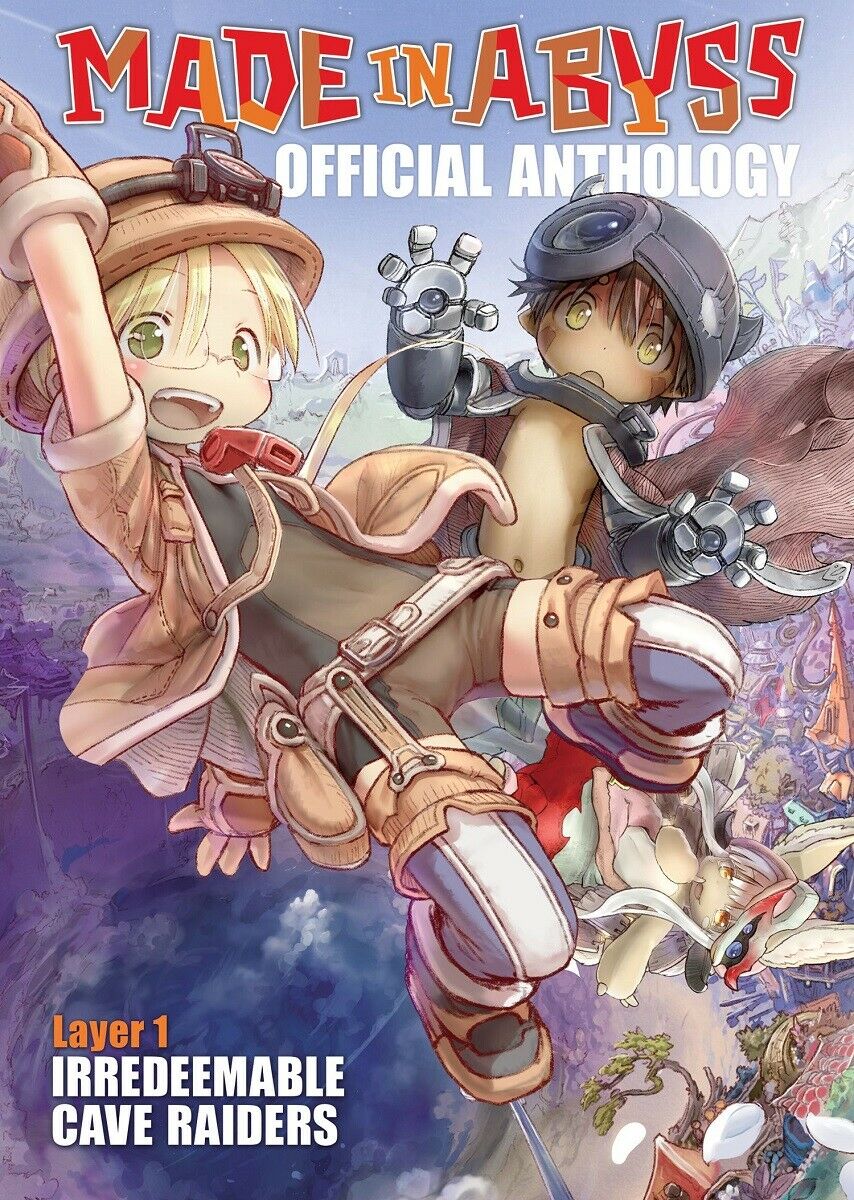
Review: Made in Abyss Official Anthology, Layer 1: Irredeemable Cave Raiders

Author: Various
Status: Ongoing
Genre: Comedy, Fantasy
Localization: Seven Seas Entertainment
Rating: Older Teen
Available to read online on BookWalker, fees may apply.

Made in Abyss is just a few volumes in, and it has had such an impact that it resulted in a collaboration from the Mangaka community, the end product being this: a tome of comedy skits inspired by Akihito Tsukushi’s magnum opus.

While the original Made in Abyss manga was mainly a fantasy adventure with some horror elements, this anthology focuses more on humor, with references to the main series.

It’s tempting to say that a book like this would have limited appeal. After all, it was written mainly for those who enjoyed the original Made in Abyss to the point that they would justify purchasing a non-canon derivative work contributed to by various artists, and that’s just what it is. But Made in Abyss is such a big hit, that the anthology has a reasonably large potential audience to appeal to.

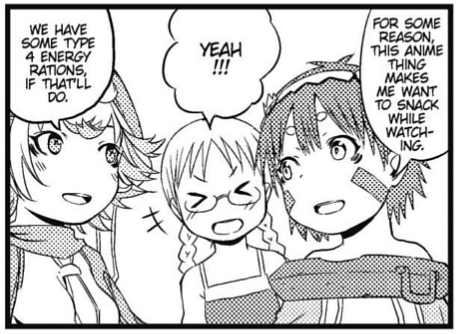
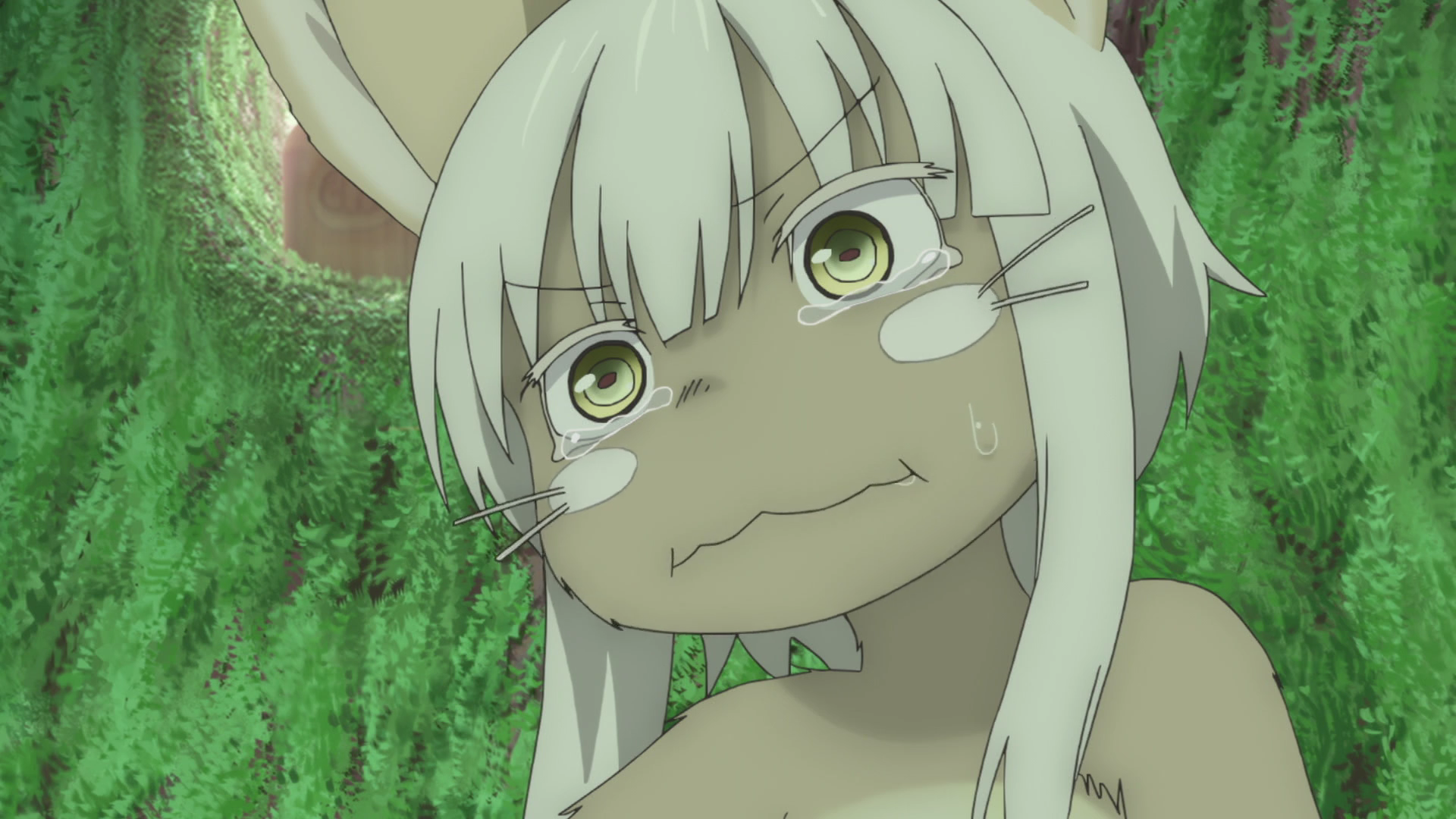
Different stylistic takes on the characters, such as this one by Yuki Hotate, is part of the anthology’s appeal.

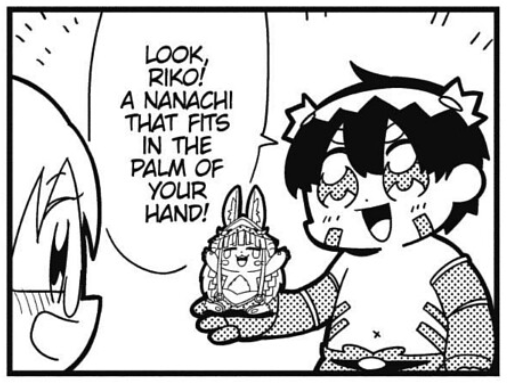
Many of the jokes were in the original, but in this book, they were labored to the point of awkwardness. Nanachi is irresistibly fluffy, I get it. That’s not to say it’s not funny, but the jokes are obvious to anyone who has already read Made in Abyss, and just about meaningless to those who have not.

Still, the anthology does have it’s redeeming qualities. For one thing, there’s more of a look at fan-favorite characters such as Ozen, Marulk, Liza, and Prushka, who are significant to the canon story but were far from overstaying their welcome. Also, those who remember Bondrewd as a resourceful nemesis might enjoy the dissonance in antics such as his impersonation of Daft Punk. This is, of course, far easier for those who succeeded in repressing the memories of his atrocities. Poor ol’ Nanachi…

What’s more, those still relatively unfamiliar to manga may appreciate the introduction to a handful of new artists, and to a few different subsets of the manga art style.

A lighthearted take by bkub OKAWA, in a campy 4koma style. Personally, I really liked his take.

A second volume is already available. Would I spring for it? I don’t know. There’s a saying, too many cooks spoil the broth. There isn’t much expectation of consistency when there are multiple artists with multiple art styles and multiple humor styles. It helps to have focus, because sometimes, when there’s something for everyone, there might not be enough for anyone. That’s a weakness for a compilation produced by multiple artists, and why variety isn’t always a winning formula.

That’s not to say that I have anything against any of the individual artists. But if I want to read a manga by Kuro (for example), I’d prefer to get one that Kuro authored, and have an expectation of a consistent experience throughout.

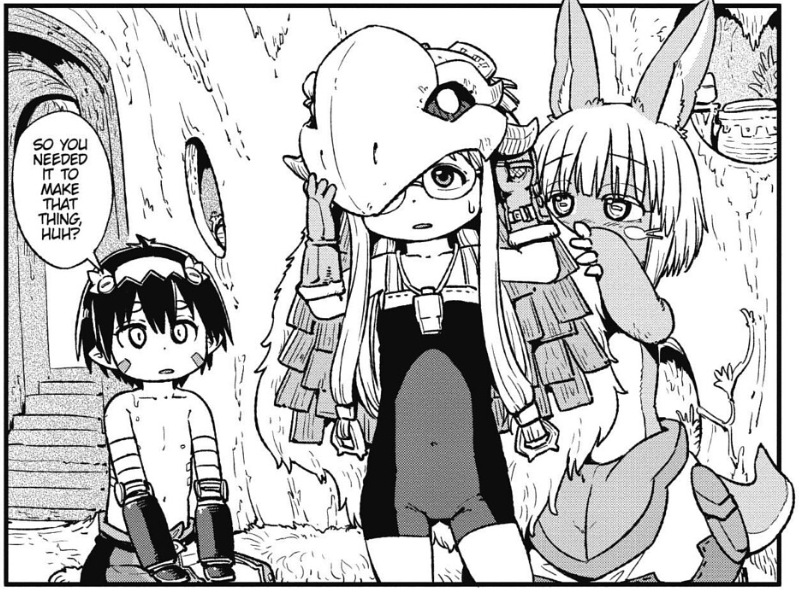
From “Preparations for the Journey”, by Ike

Okay, not only am I beating a dead horse, Nanachi is hollowing out it’s skull for use in Riko’s armor. It’s time to move on.

As obvious as it may have seemed already, your likely suspicion is confirmed: the Made in Abyss Official Anthology was primarily made for those who like Made in Abyss so much that they’ll eagerly buy up the merchandise bearing its name, including a compilation drawn by some of its more prominent industry fans. If that doesn’t sound like you, then Layer 1: Irredeemable Cave Raiders is an easy pass. And you might be happy to know that it’s not necessary to enjoy the rest of the Made in Abyss manga.

To give it a score, Made in Abyss Official Anthology, Layer 1: Irredeemable Cave Raiders gets a 6 out of 10. It’s okay, but it owes much of its consistency to repeatedly telling a joke that you likely read before picking the book up. Nanachi is fluffy, but Nanachi doesn’t like being pet. It’s awkward for Nanachi.

By the way, a Nanachi plushie is a thing. But it’s in excess of $100 on eBay.

But does it smell like Nanachi?

 “From even the greatest of horrors, irony is seldom absent.”

H.P. Lovecraft

Columbia Pictures to Attempt a Live-Action Made in Abyss Movie

Have you recently discovered Made in Abyss? If so, you’re not the only one. It seems that one of the media companies that your dad still follows has taken notice, and now wants to make a live-action film based on Akihito Tsukushi’s manga. The film is set to be produced by Columbia Pictures.

That scream of horror you just heard was probably you.

I prefer to keep an open mind when it comes to this kind of thing, but I’m sure I’m not the only one that remembers the mistake that was Dragonball Evolution. In fact, it’s almost as though Hollywood hates the manga and anime industries, and are intentionally trying to sabotage them. If that’s the case, their plan has already backfired in a huge way by illustrating their failure to produce something appealing to an intended audience.

I know that Hollywood is capable of producing animated movies, so what explanation could there be for their insistence on an unwelcome interpretation, especially considering a history of repeated failure in the very same endeavor?

Another potential issue is that the manga and anime both feature children in situations that are not only dangerous, but traumatic and horrifying, and punished in ways that are likely legally not allowed. The prospect of putting child actors through what the plot of Made in Abyss puts the main characters through might raise some eyebrows. Manga and anime are only drawings, and don’t require the participation of actual children, which is one of many reasons why an animated film might be preferred.

Come to think of it, a live-action retelling of the adventure of the Ganja Squad might be interesting. If that were the case, the movie would act as a recount that gives more background on the star compass, and tells the origin story of Faputa, as told by Vueko, without breaking up the flow of the story in the anime.

Hey, open minds, right? Why don’t we save our disappointment for when they actually show something to be disappointed in? After all, people actually liked the Sonic the Hedgehog movie.

Review: Nendoroid #167b: Suntanned Cirno

It happened one hot summer day: A knock at my door. Then, as I opened it, in came an ice fairy. “This is great!” I thought. “With my own ice fairy, I won’t have to pay as much to keep this place cool!” But then, she sat herself down in front of the air conditioner. This was not what I had in mind.

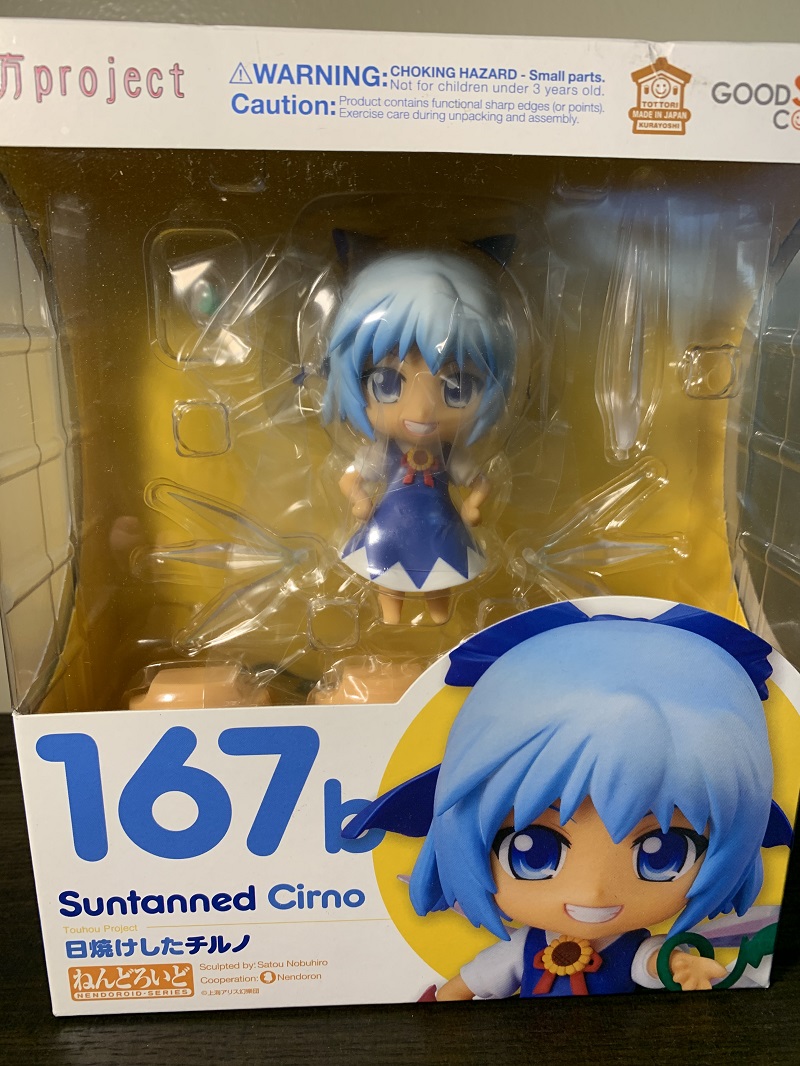
I decided to go for my first Nendoroid, Cirno from the Touhou Project series of video games. This would be the suntanned variant; the ordinary Cirno has lighter skin, doesn’t have the little decorative sunflower, and doesn’t come with the vine.

Here is the back of the box:

One might wonder what the significance of this character would be to me that I’d choose her out of the hundreds of Nendoroid characters available. Come on, it’s Cirno. If you’re familiar with Touhou, it won’t take long to figure out why she’s the most popular character. I liked the suntanned variant because there is a certain irony in that even an ice fairy can only do so much to cope with the hot weather.

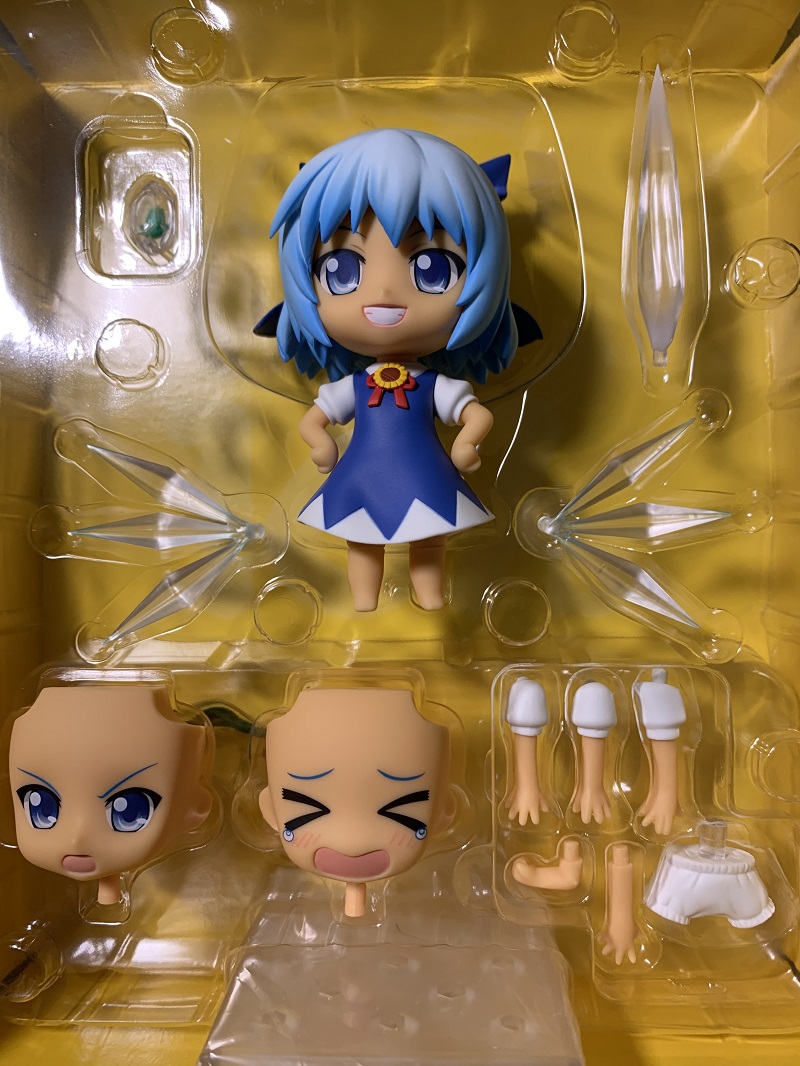
I didn’t buy this just to leave it in a box in a closet. I intended to open it. Here are the contents:

Included is a set of faceplates and limbs, giving this expressive character’s figure a variety of possible poses. She also comes with a couple accessories, including an icicle lance, and a small frog encased in ice. If you’re wondering about the bloomers, she comes wearing another pair, which allows for different poses.

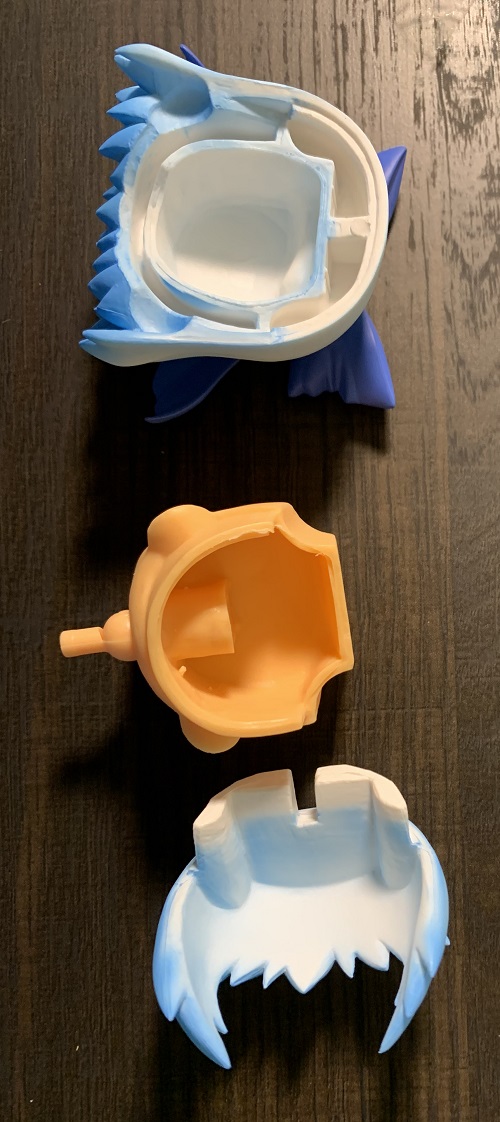
Changing the faceplate is a bit of a process. Apparently, the neck (which is articulated) is a part of the faceplate, and changing her faceplate takes undoing her hair.

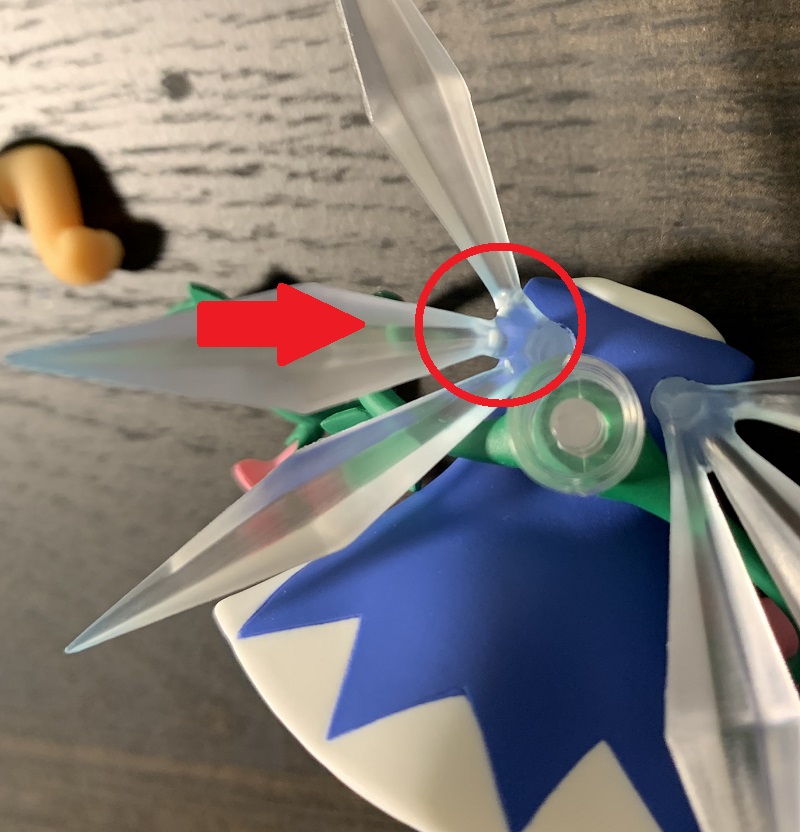
I didn’t have it out of the box for long before some of the plastic showed signs of stress. Particularly, on a couple of the icy “wings” indicated in the picture above. I’m a little concerned that they might break if I mess with them too much, and goes to show that Nendoroids are mainly just for show, and not so much for the kids to play with.

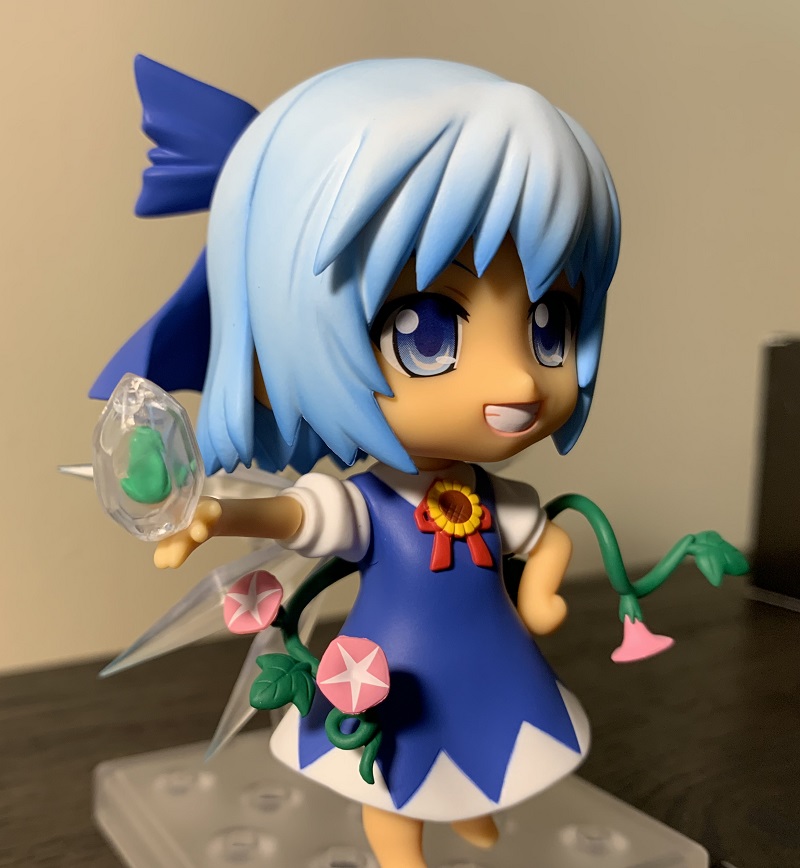
There she is, set up on the stand! Cirno is adorable, even with her cocky smile. For most of the figure, the paint job is pretty basic, putting aside her hair, which has a nice subtle gradient.

One of Cirno’s accessories is a frog encased in ice. It’s easy to forget sometimes that Cirno can have a bit of a naughty side. She views frogs as inferior creatures, and believes that she has the right to freeze them if she wishes to.

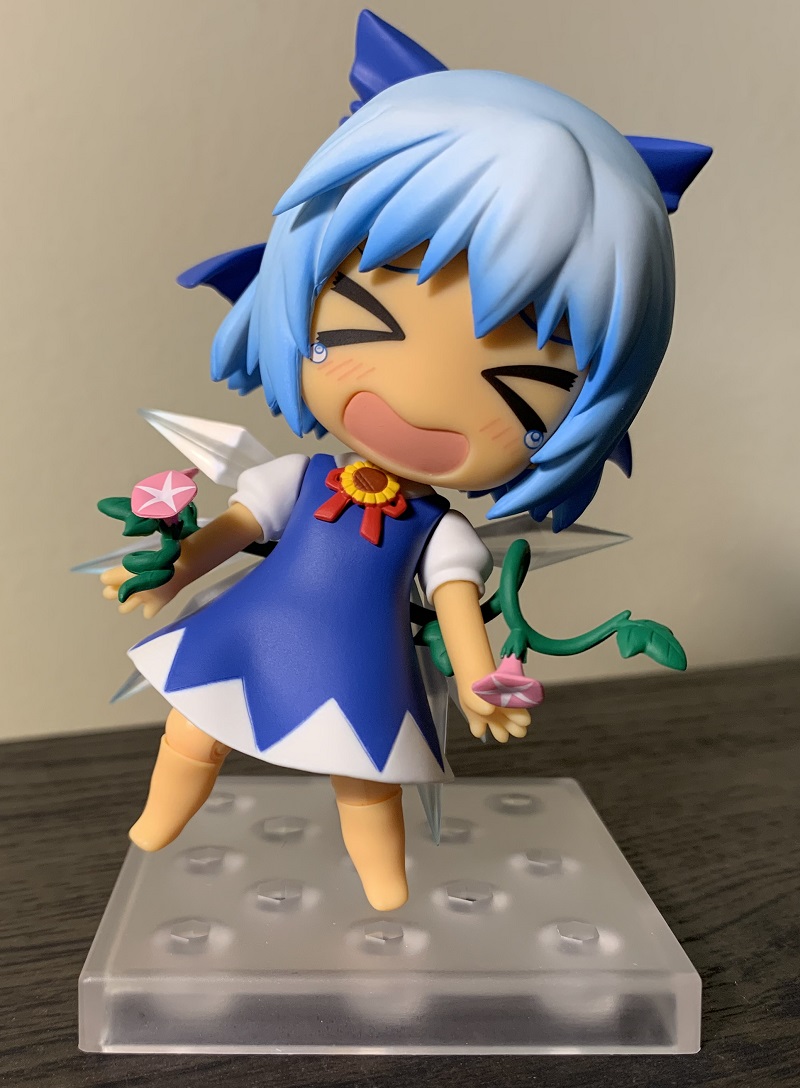
And this is Cirno looking not-so-happy. Perhaps Suwako found out what she’s been doing to the frogs? It’s a bit more obvious in this picture, but the legs bend at the knees. What’s more, they also pivot where they meet her bloomers, so they’re pretty well articulated. But the feet? Not so much. It’s the stand that keeps her upright.

Notice the lack of footwear? Perhaps, when you can fly, shoes are kinda superfluous.

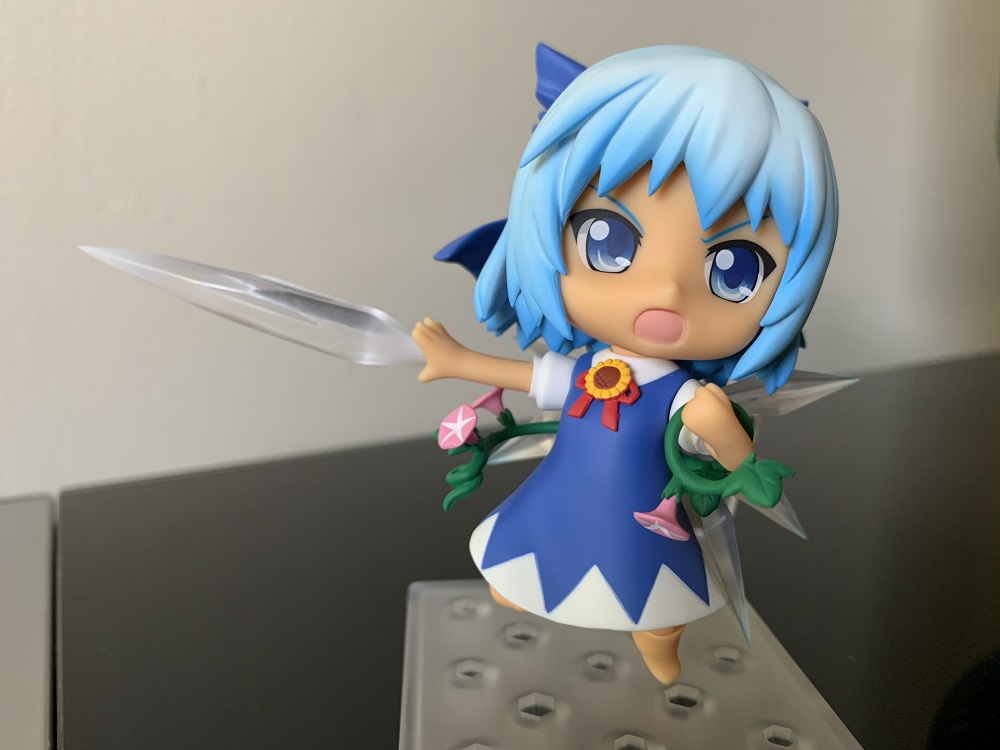
Here’s Cirno in an action pose! I decided that I’d go with this one, and it’s currently sitting on my desk, where the added personality is much-needed.

Now to give Nendoroid #167b: Suntanned Cirno a score. To be honest, I didn’t feel like I got my money’s worth. A typical Nendoroid would set a person back $60, or even more for highly-sought-after characters. That seems like a bit much for what basically comes down to a collection of delicate pieces of plastic.

But because I like the character, I think I can give this product a 7 out of 10.

And I think that’s really the point. A Nendoroid isn’t so much about collecting every single one as it is about having a highly-collectible figure or an attractive conversation piece depicting a character that you really like. If you don’t like the character, then really, what’s the point?

But to be blunt, I think it might be a while before I spring for another one. Marnie from Pokemon, maybe?

Manga Review: Made in Abyss (volumes 1-9)

One magnum opus, please. Hold the mayo.

Author: Akihito Tsukushi
Status: Ongoing
Genre: Adventure, Fantasy, Horror
Localization: Seven Seas Entertainment
Rating: Older Teen
Available to read online on BookWalker, fees may apply.

(This review consists of general impressions and is spoiler-free)

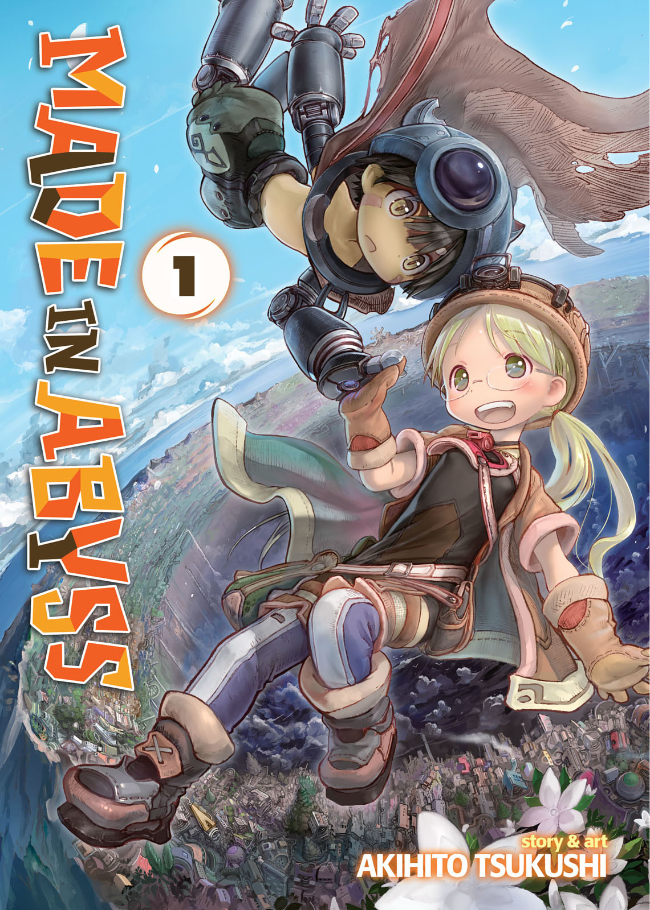
See that cover up there? If that alone were to cultivate your expectations, it might not take long reading Made in Abyss to discover that it’s a serious case of artistic style dissonance. That’s putting aside, of course, the many warnings circulating the web.

Made in Abyss is an excellent fantasy adventure and is one of the best examples of worldbuilding I’ve ever seen. This review is just getting started, let’s dive into it.

The story begins in an island town surrounding a deep abyss. The town’s economy depends on treasures discovered in the Abyss, with even residents of an orphanage participating in treasure hunts.

The Abyss itself is home to many monsters and other life forms, which makes trips to the abyss dangerous. However, the Abyss has an enigmatic “curse” which makes raiders experience deleterious effects when they attempt to ascend upwards. The deeper the expedition, the worse the effects.

The main character is Riko, an orphan girl whose mother is a famous raider. One day, when on a raid with others from the orphanage, Riko is attacked by a monster, but saved by a mysterious robotic boy with no memories of where he came from, or even why he attempted to save Riko. The robot boy then lived among the orphans, passing himself off as a human boy.

One day, a celebration was held in honor of Riko’s mom, who went on an expedition she did not return from. However, Riko did not give up hope that her mother was still alive. One day, she was shown a message from among her mother’s effects:

Come to the bottom. There I’ll be waiting.

If you guessed that Riko escaped with the robot boy into the depths of the abyss to reunite with her mother, knowing that she’s embarking on a journey from which she can never return, then you’re getting the hang of this “manga” thing.

As Riko and Reg journey through the Abyss, they encounter numerous life-forms that range in danger from benign to the kind of thing that even a man with a death wish would want to avoid. So nightmarish are the denizens, that this manga might even ruin leaves for you.

Much of the progression of the early story has to do with how the group copes with the dangers of the Abyss, as well as how they find the basics for survival, such as food, shelter, and water.

In the instances in which there is danger, there is a sense of something at stake, since Riko’s party isn’t just some assemblage of generic character classes (warrior, healer, wizard, etc.). Riko and her friends are dripping with personality, further supplemented by moments of levity which serve to further characterize the cast. Because, you know, just because the plot isn’t being advanced doesn’t mean the story isn’t being meaningful.

What’s more, there is a connotation of lasting consequence with every possible thing that could go wrong. For example, if someone were to fall over and hit their face on something, they might have to wear a bandage on their face for a very long time. If an artifact slips out of someone’s hand and they end up losing it, it’s gone. If someone ends up injured or poisoned, the agonizing choices that have to be made for one’s immediate survival are just the start of it.

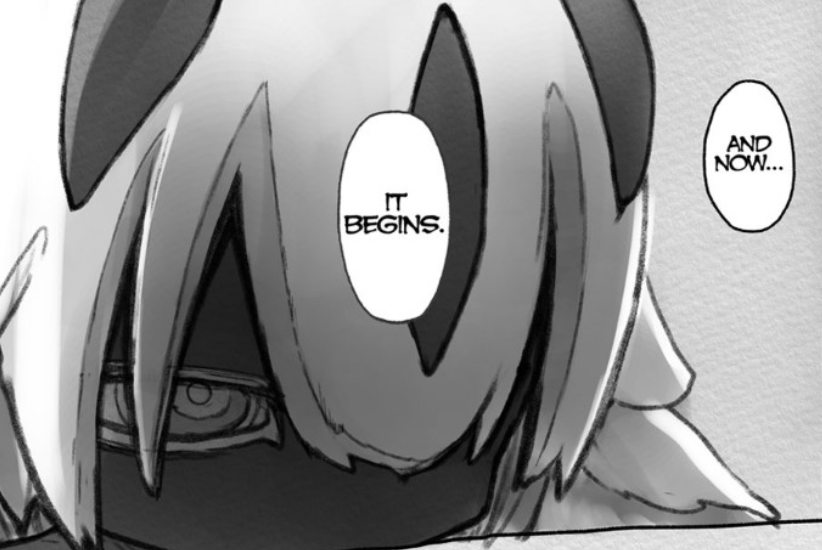
And that’s just what nature has to throw at the heroes. Once other humans are involved, the stakes get higher over whether they are friend or foe. For example, once this guy starts showing up:

…That’s the last chance for anyone who is faint of heart to take a hike. Over the course of the series, the only one who has managed to outdo Bondrewd’s horrors was Bondrewd himself.

To describe the art style in just a few words, think Ichigo Machimaro meets Tony DiTerlizzi. The stylistic design of the characters is a stark contrast compared to how gorgeous the environments are, whether they are of the island town or the majestic landscapes of the deep abyss.

The way the characters are stylized seems to follow their intended effect. Children and more sympathetic characters tend to be portrayed with softer, rounder features, while adults generally have sharper, more angular features. While the manga obviously stars the children, the adults are in a class of their own, as they exude a certain world-weariness that would be difficult to find outside of fast-food staff.

One thing I found kinda surprising was that there was nudity. Not just that it was there, but also that it was treated as a matter-of-fact thing. It was mainly the tip-of-the-mountain that was showing; I didn’t see any tube steaks or roast beef sandwiches. But if you’re mature enough for boom sticks, grown-up beverages, and movies where things get killed, you could probably handle it.

Made in Abyss has an intellectual element, as well. A few volumes in, and the birth allegories start to become more obvious. And the more you think about it, the more you start to notice. Or is that confirmation bias at work?

From what I’ve seen so far (up to volume 9), this manga series seems excellent, and I’m looking forward to seeing what comes next. New volumes seem to come once every few months to about a year. That’s fine, considering that it’s more likely to be a better product if it’s not rushed. Still, volume 9 ended with a cliffhanger, which doesn’t do much to make waiting easy.

There is already an anime adaptation underway, but I’m kinda on-the-fence as to whether to give it a look. It’s not that I have a problem with knowing what’s going to happen; it’s that I know what parts of it might be difficult to watch. It’s one thing to read the difficult parts, but seeing them in motion might be emotionally draining.

But hey, the warnings aren’t to discourage you, they’re to make sure you’re mentally prepared. Still, Made in Abyss wasn’t made for everyone. Some audiences might find this one disturbing.

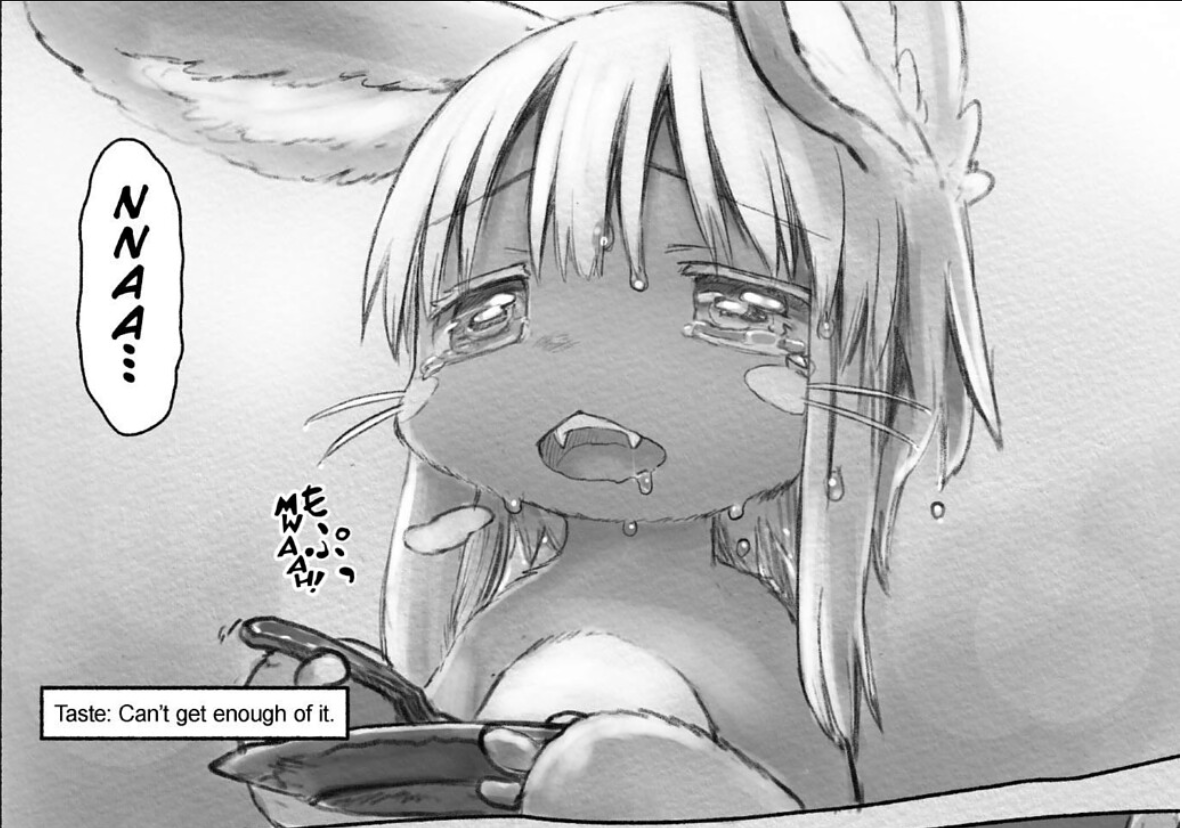
But now onto it’s score. Made in Abyss volumes 1-9 get a score of a satisfied Nanachi out of 10.

Which, as you might guess, would be a 10 out of 10. It’s outstanding.

By the way, I wonder whether Akihito Tsukushi has heard of Cave Story?

(The art provided in this review is snippets from the reviewed manga, to give an example of the work. These are used for review purposes, and therefore fall under Fair Use.)

Satirizing Jordan Peterson as Red Skull Illustrates Yet More Reason to Avoid American Comics

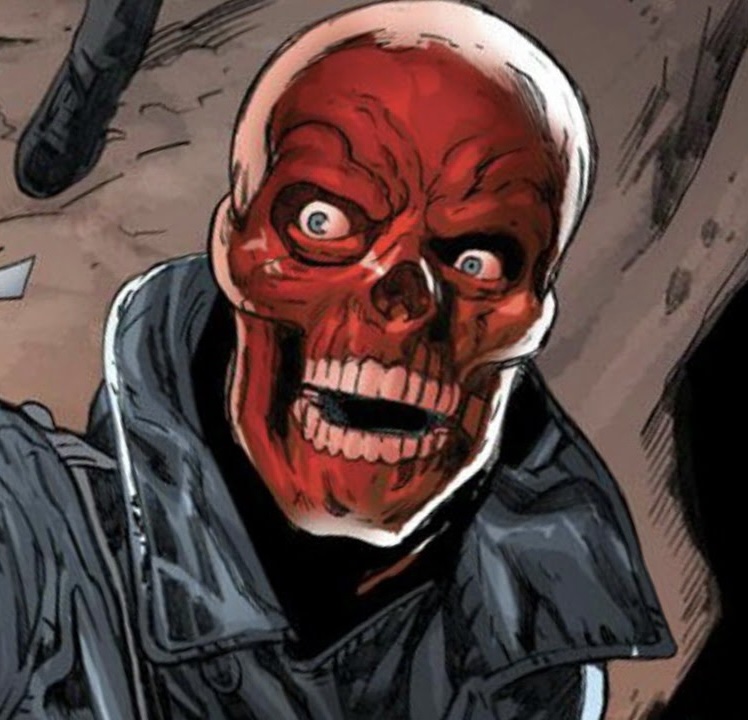
Red Skull wants you to clean your room and get your life in order.

In another sign of the baffling bizarro-world we are living in, the supervillain Red Skull, as depicted by a new interpretation of the Captain America comics, was apparently based on Jordan Peterson.

Yes, the very same Jordan Peterson who wrote a book about 12 rules for life, and one of them had to do with petting cats.

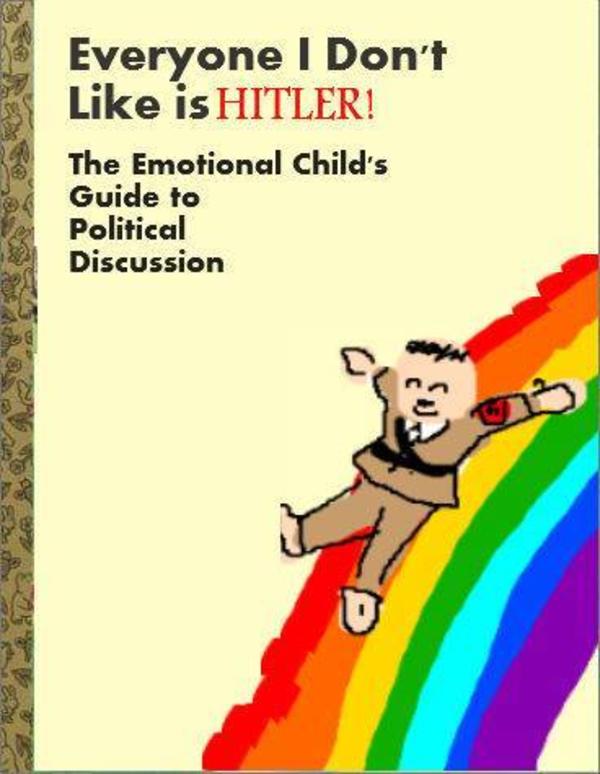
Red Skull, as you may know, was originally conceptualized as a Nazi, and was depicted as fighting for Hitler himself.

On the other hand, Jordan Peterson is a clinical psychologist who, as a college professor, encouraged self-development and gave lectures about, among other things, how Hitler was a seriously evil dude.

So, what’s the thinking behind making Peterson out to be a Nazi supervillain? I don’t know, but I imagine that avoiding the cognitive dissonance involved would require an immensely skillful evasion of reality.

If there’s one takeaway to be had from Sonichu, it’s that if you can’t beat your enemies in real life, just make them out to be villains in your own comic book.

Watch out, Captain Marvel!

As he is now, Red Skull represents every boomer-aged snowflake’s greatest insecurity: that millennials and post-millennials could simply use the internet and find better ideas than what the establishment has been shitting out.

The American comic book industry’s plunge into intersectional lunacy comes at a time when Japanese manga is beating them mercilessly in their own market.

It’s to the point where, if you found out that Jordan Peterson was caricatured in Captain America, you probably discovered it outside of the comic itself.

American comic book writers should want people to actually read their comics. To this end, it would be expedient for their comics to be something that people wouldn’t avoid out of self-respect. People don’t make fun of me for reading manga, but if they found me reading Captain America, it would be hard to live down.

Assuming I actually read American comics, that is.

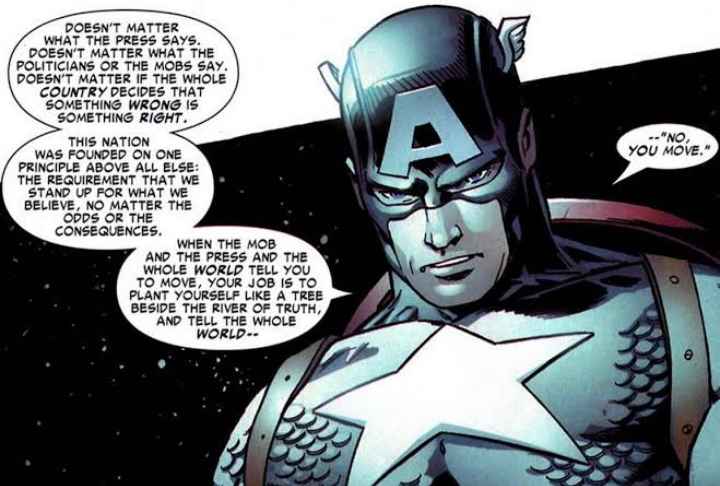
Thanks to humor website NotTheBee, we have an archive of a panel from Captain America from days-gone-by, from back before Cap was indoctrinated into the Cult of Woke. It’s quite moving, and an excellent example of what he has fallen from:

Twitter Infograph Warns Asian Art Communities

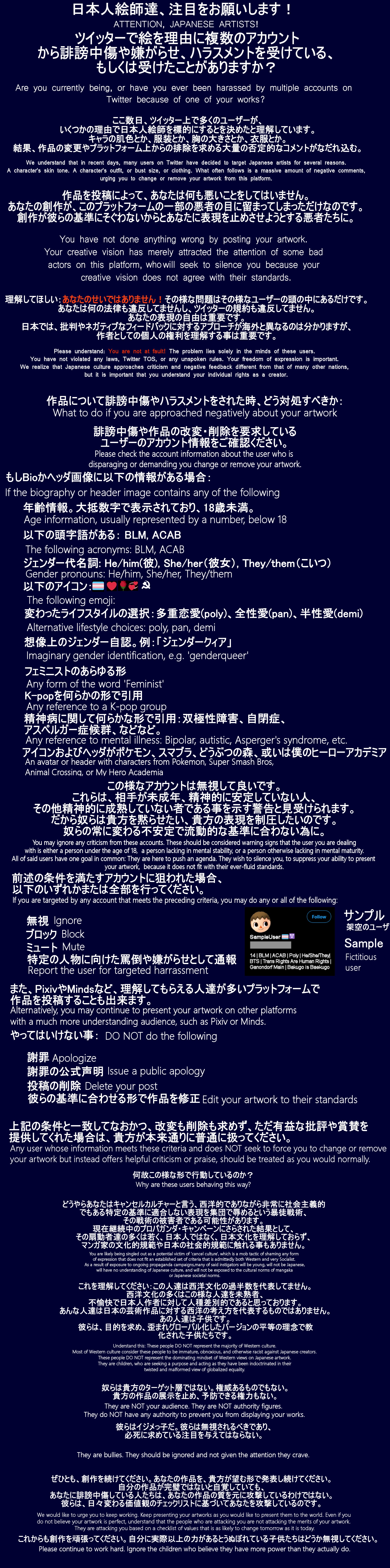
What you’re seeing above is an infographic uploaded to Twitter by an art-oriented account, intended for Japanese artists who may be seeing a sudden surge in western viewers who are intent on influencing Japanese art, particularly anything done in the manga or anime style.

This infographic comes at a time in which a nebulous affiliation of self-styled influencers are inserting themselves into art communities, intent on ensuring that anything that an artist expresses conforms to their sensibilities.

This can be jarring to Asian artists, who come from a career-oriented culture, who are now finding out that there are western subcultures that take entertainment media so seriously that they allow it to become a part of their identity while contributing little else to society.

The infographic comes in handy for Asians who may not be familiar with certain western subversive movements, and therefore may be less prepared to identify them when such bad actors appear. Whether we call them “intersectionalists” or simply “incels”, this group of people contribute nothing to society, but regardless are characterized by a legendary sense of entitlement, and it’s helpful to understand how to respond to them appropriately.

What I find particularly fascinating is the list of identifiers for the influencers, in that they are mostly accurate. Among them are preferred pronouns, imaginary gender identification, abuse of emojis, or identifying with certain activist groups (a dead giveaway). Also interesting is that they openly identify themselves with their mental illnesses. While one shouldn’t have anything against someone who has a legitimate condition, there are those among us who misuse these identifications for sympathy.

The infographic makes an important point: the way you deal with these people is by ignoring them, or by blocking them, if need be. It is important that one must never cave in to their demands, because they will interpret it as a sign of weakness to latch onto, as the tendency of predators often is.

In spite of their intimidation tactics, the influencers have no real authority, and are in no position to police anyone’s works of artistic expression. Thus, their threats carry no real weight.

One thing that the influencers seem to overlook is that in most of the western world, works of art are protected by freedom of expression, which is encompassing in its application. Even if a work of art is not considered socially acceptable, it is still protected under the freedom of expression. In fact, freedom of expression doesn’t have much value if it doesn’t protect art that isn’t socially acceptable.

Even understanding all this, the typical Japanese person may see the intersectional movement, and be distressed at the fact that so many young people in the west seem stunted and out-of-touch with reality, even years out of school. This highlights the difference in Asian culture, as compared to the west. The fact is, Asian society heavily emphasizes an education that prepares students for a career, reinforced by close-knit families that are highly supportive. It’s hard to imagine that in such an environment, a person would somehow become a cross-dressing ANTIFA windbag that blames all their problems on white-supremacists.

Westen families, generally speaking, could learn a lot from Asian families.

In the face of waves of leftist negativity, among the finest things we can do for Asian artists is let them know that they are appreciated.

There’s something to be said for the culture that brought us Chiyo-chan.

Amazon is Going After Anime Figures Again, and it STILL Makes No Sense

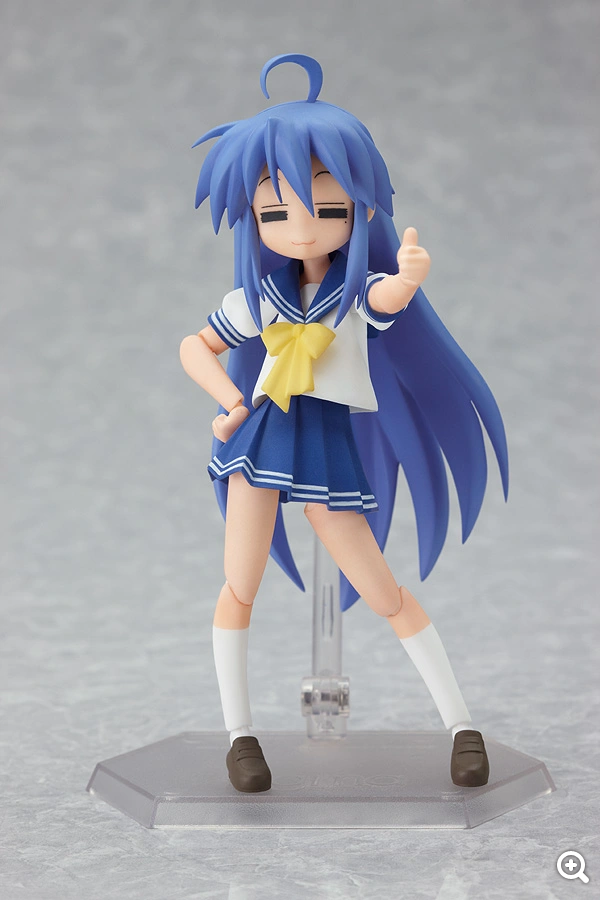
Amazon is back to banning anime figures on the reasoning that they “promote child exploitation or depict children or characters resembling children in a sexually suggestive manner”. An example of a figure that was banned was one of Konata Izumi (pictured above), doing neither of these things.

It seems they really didn’t learn anything, at all.

The characters depicted did nothing besides just standing there, fully clothed, doing nothing especially sexual. They were no more sexualized than any action figure you’d buy for your 10-year-old kid.

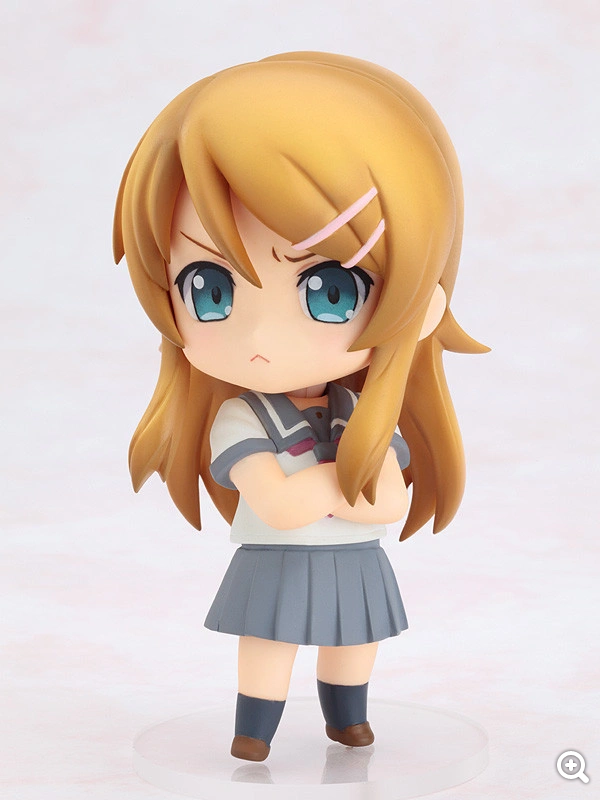
They even started going after Nendoroids, such as this one:

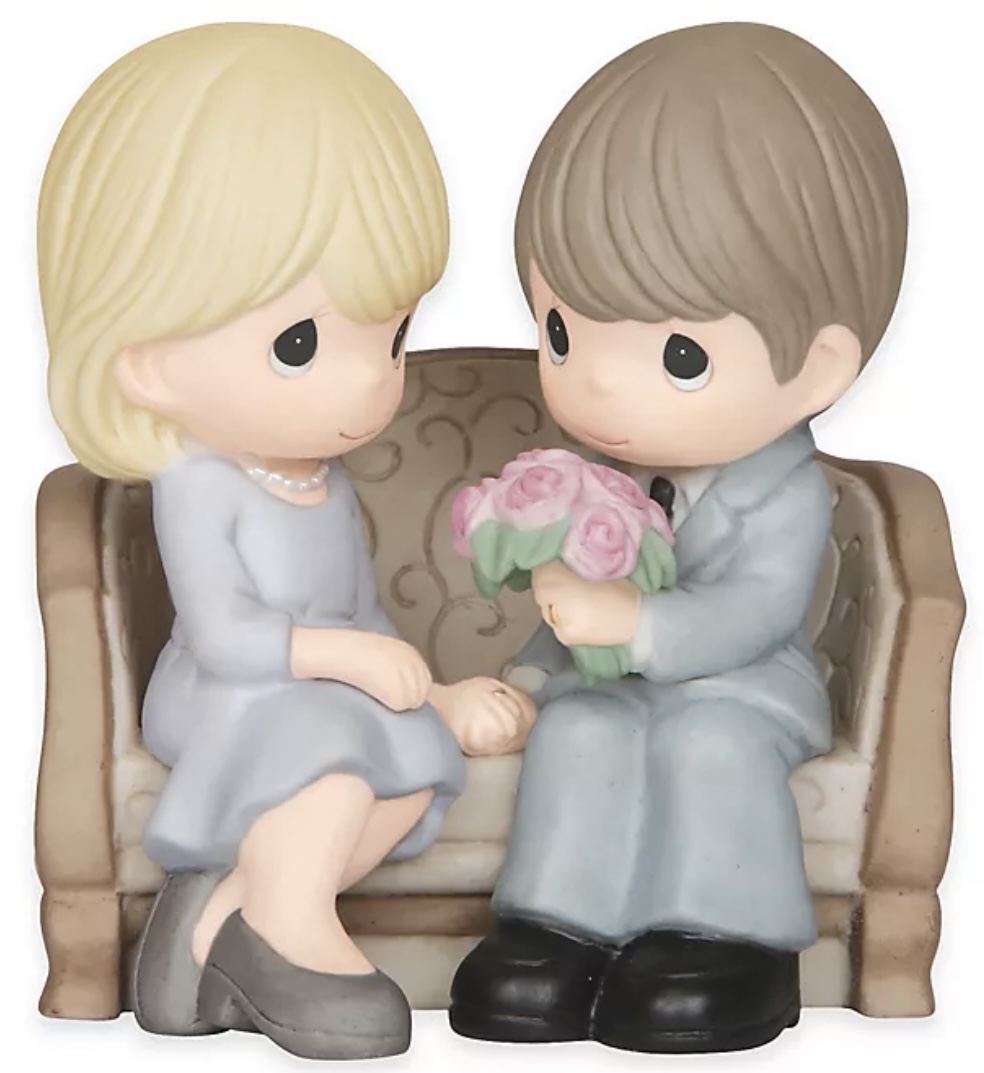
If they’re going to go after Nendoroids, they can also start going after Precious Moments figures, because they do just as much to “promote child exploitation or depict children or characters resembling children in a sexually suggestive manner”:

Hold on… is that hand holding? That’s a display of affection! Precious Moments is actually doing more to sexualize the characters the brand depicts than Nendoroids! How are the authoritarian moral busybodies not bazooka-crapping their collectively dainty undergarments?

Putting the manufactured nerd rage aside, I suspect that what’s going on is that a seller was targeted by frivolous complaints that weren’t properly vetted. The seller that the action was against was the same one as before, and similar merchandise was targeted.

Even the nature of the complaints was the same, suggesting that the real culprit was some Karen NPC who actually believes that going after anime figures somehow makes the world a better place, and as dimwitted as she is, she knows that something about complaints about child exploitation bypasses peoples’ better judgement. Putting aside that the characters are fictional, and therefore no children are being exploited.

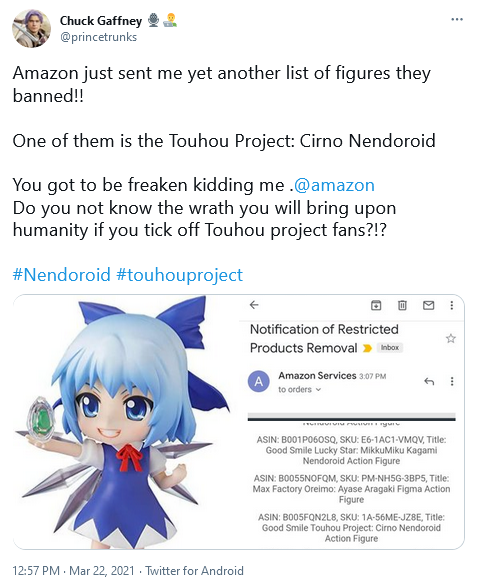
The seller came forward with subsequent complaints, as shown here:

Oh no, they are NOT going after Cirno. They’ve gone too far.

They’re Making Lola Bunny Less Attractive, and This Was Supposed to Benefit Women, Somehow.

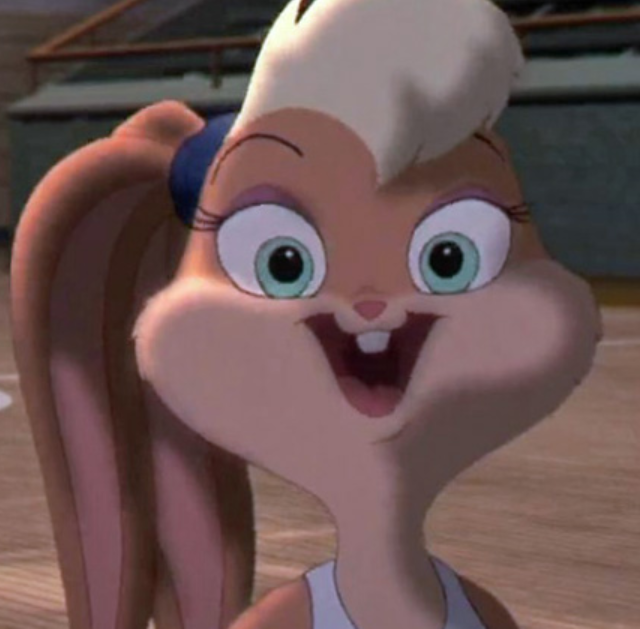
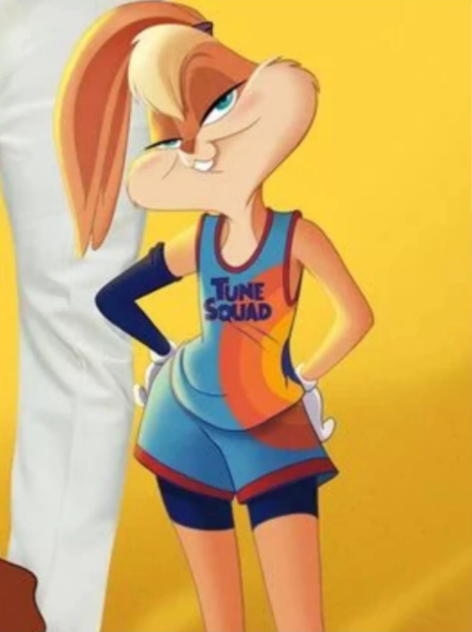
Hold on, what is this? I heard that Lola Bunny is getting a redesign, but that’s just gross. Is that piccie above really of Lola Bunny? She looks like some kind of freaky space-alien-looking-thing.

But that’s not the main thing about her that I’m hearing about. But before this post continues, here’s a short disclaimer:

WARNING: If you’re disturbed by mild sexualization of a cartoon character, you should probably get over yourself.

Now that that’s out of the way, apparently, Lola Bunny was given a breast reduction in an effort to make her less sexually appealing.

In the special way that Slate sees matters, “conservatives want you to be mad that Lola Bunny’s not hot anymore”. This lulzy position overlooks the greater problem that this is what feminism has done to women throughout the western world.

As depicted above, Lola otherwise still has highly feminine characteristics, including diminutive upper-body strength, narrow shoulders, softer eyes, broader hips, and so on. Those hips are quite well-defined, by the way. Those would be what’s referred to as “birther hips”, which are considered strongly appealing by, you know, men. Lola’s otherwise over-the-top feminine appearance makes her breasts all-the-more conspicuous in their absence.

As I see it, the designers of Lola’s character could design her as they wish for what they perceive as the creative benefit of the work that features her. Put another way, if it’s your character, you can design her however you want.

However, if it was the designer’s intention to distract from her sexuality, they’ve likely figured out by now how difficult that can be. In many ways, it couldn’t really be helped by virtue of the fact that sexuality is something that occurs in the mind. An artist can’t really control whether anyone could perceive a work in a sexual manner.

If an artist wanted to make something that was impossible to perceive with an element of sexuality, that in itself would be pretty-much impossible. Humans can perceive a sexual element, even in things that wouldn’t seem intrinsically sexual. Like pizza, which is a food item. I don’t get it, but it’s something that some people find sexual.

What’s more, sexuality is an intrinsic element of humanity. It might even be that sexuality is the most human of traits. The moment that something is humanized (such as, for example, when anthromorphizing a cartoon rabbit), it gains a sexual identity. The only time when it’s acceptable to not consider a sexual identity is when it’s not known, such as when the sex of an unborn child is not yet identified. But once it’s sex is known, it’s not acceptable to call the child an “it” again.

When you draw a cartoon character of your own, and call it a “her”, you’re acknowledging the existence of her vagina, provided that the character is a human female that is anatomically consistent with other human females. It is then assumed that this characteristic plays a role, even if slight, among other characters that they interact with (except in some cases when it is established that the character plays a non-traditional societal role).

If you think I just stated a lot of highly obvious stuff, you’re well enough off to not have to be told as much. But not everyone out there is as well off. Particularly, the radical intersectional feminists who mistakenly view sexualization as a form of objectification. But the fact that they’re wrong isn’t stopping them from passionately trying to become authoritarian moral busybodies.

Intersectional feminists, being absolutely tone-deaf, misses the irony of the fact that, on International Women’s Day, the design change of a cartoon rabbit that isn’t real, and therefore cannot be an actual victim, makes the news by becoming less feminine. While this is occurring, women in the middle-east have almost no rights to speak of compared to men, and are legally kept in harems as sexual slaves.

Priorities, much?

As one might imagine, the furry community is furious about this news. They’ve become yet another western creative community that has become negatively impacted by intersectionalism’s obsession with making everything it touches less entertaining. They’re a sorta-dubious addition to the club, but they’re an addition to the club, non-the-less.

You know whose cartoon bunnies remain unaffected by western censorship? Anime.

Today has shown us yet more reason why more and more westerners are turning towards Japanese manga and anime. One can really hand it to the Japanese for making sure that entertainment is still entertaining.

If you’re siding with intersectional feminism and have managed to stick around this far, please stand by for a send-off from Akira Kogami:

When western entertainment fails hard, along comes anime to sweep up yet more viewers. How long will it take for Hollywood et al. to figure out the obvious? I don’t know, but there’s a continual flow of new anime to watch in the time it takes for it to happen.

The New York Times Asks Why Japanese Animators Are Underpaid

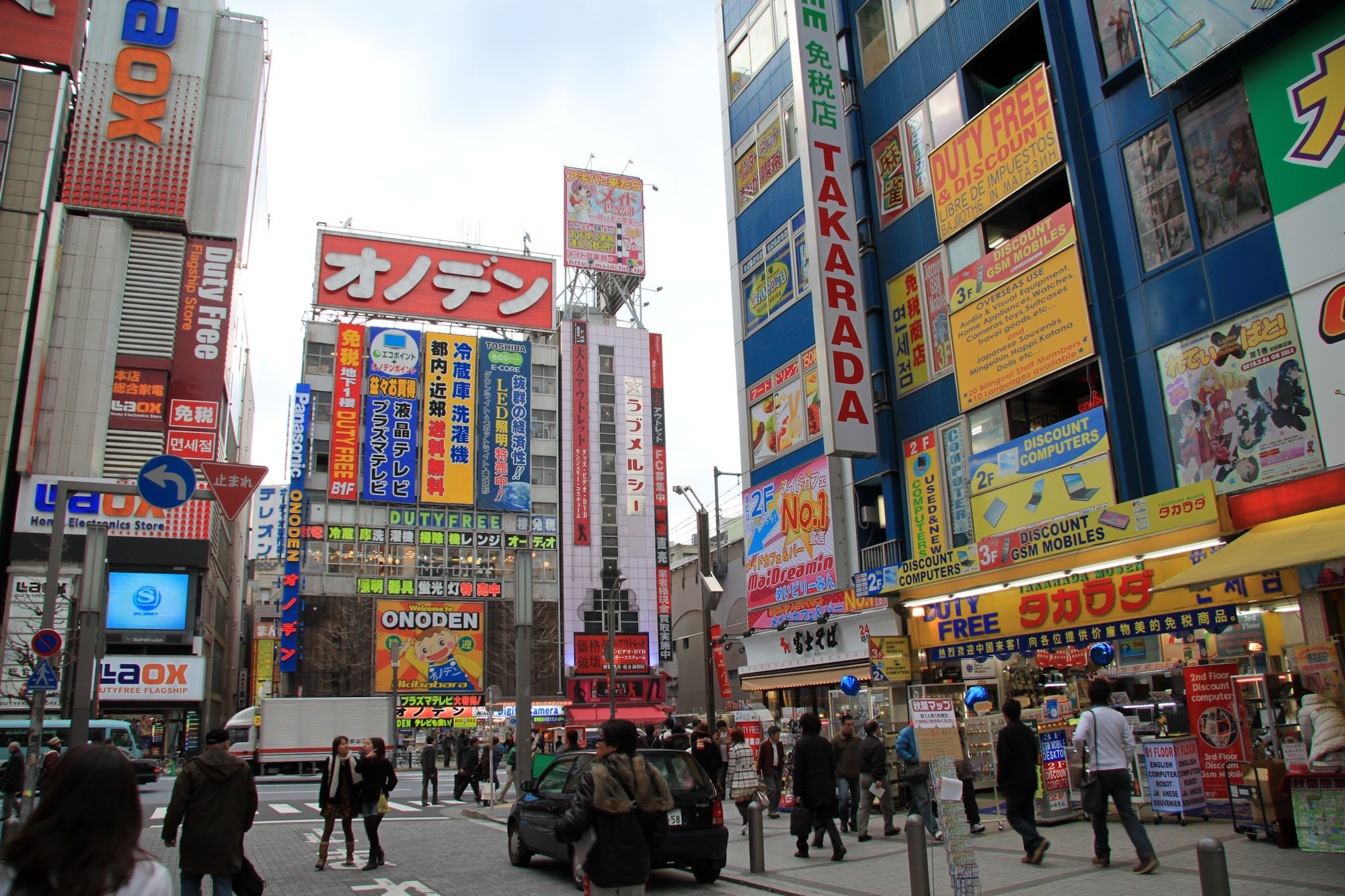
The famed Akihabara area in Tokyo, Japan is famous for manga and anime. Picture credit: Kanpai-Japan.com

Ealier this month, I pointed out that Americans wouldn’t likely take interest in becoming animators in Japan, seeing as how they get paid very little. Since then, the New York Times has published an article examining the difficult life of Japanese animators.

As the article points out, animators in Japan can make as little as $200 per month drawing up anime frames, which obviously is far beneath what one can realistically expect to pay for an apartment in urban Japan.

Not that many of them even bother renting an apartment, as many studios allow their workers to sleep at their desks after working shifts as long as 16 hours. If you think that sounds insane, then you apparently don’t have a Japanese animator’s tenacity.

You might wonder just why a Japanese man would accept such conditions. There’s a few, so let’s go over them.

For one thing, the anime market is flooded with young men who have long dreamed of making an anime of their own, and would happily accept working long hours for little pay, for a chance to make it happen. When many employees are willing to accept extreme conditions for the few jobs they want, there’s a lot less pressure on the industry to provide work environments that are much better than what they’re willing to settle for.

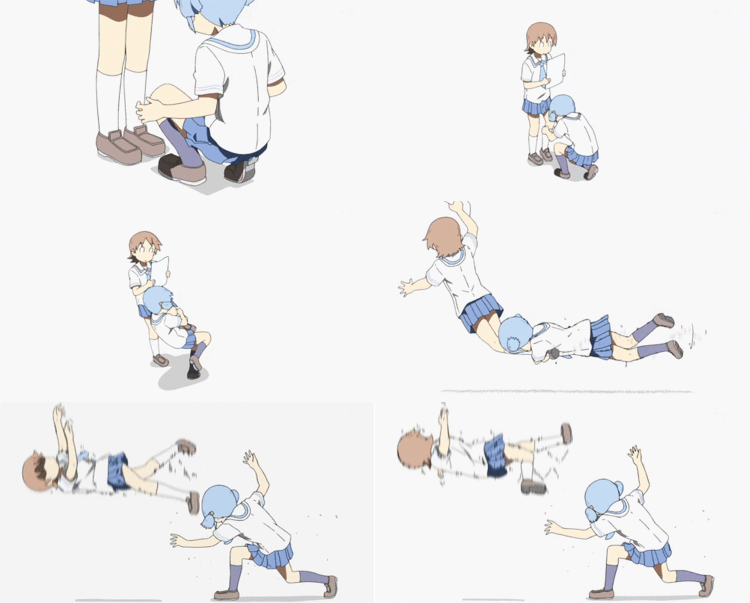
Here’s a sweet anime GIF to take the edge off. It gets harder from here.

Another point to consider is the principle of supply vs. demand. I know that there may be a lot of poorly-paid service industry employees out there that might not like hearing it, but if anyone could do what you do for a living, to the point that people could be easily taken from the street to do your job, there’s not much expectation of making a lot more than minimum wage to do it.

What does this have to do with Japanese animators? While it may be hard work, the fact is, it’s low-qualification work. And it’s easy to find many, many young people in Japan who are willing to do it. And it so happens that many people in Japan are willing to settle for less money.

For the employer, if someone could do the same job as someone else, but for less money, to hire the one that asks for less money would be a more practical choice. In some cases, the stakes are high, as many smaller animation studios in Japan make this choice because their budgets aren’t that great.

One might point out that if a person works long hours, day after day, with little rest in between, a person could easily wind up in the hospital. This happens frequently in Japan. In fact, the Japanese consider it a badge of honor. When a person works so hard that they end up at the hospital out of sheer exhaustion, the Japanese consider it a sign of just how dedicated that worker is.

So, do I have a solution to this problem? Not really. When so many young people are so eager to get involved in anime that they’re willing to accept the difficult life that comes with producing it, it’s hard to discourage them. What they produce makes people happy, they know it, and they are willing to put the work in to make that happen.

In time, however, they may come to more strongly want a house, a car, and to start their own family. When it comes to that point, a person may come to realize that throwing themselves at burnout for a pitiful amount of money doesn’t seem like it’s bringing them to their goals.

Here’s another kawaii booster. Hang in there.

While life is somewhat easier for a mangaka (Japanese comic artist), the fact is, producing Japanese manga comes with challenges of its own. I’ve heard stories about mangaka who worked a month just to produce what they pitch to a publisher, and if the publisher accepted, they usually wanted a comparable amount of content on a weekly basis. The author of Naruto, Masashi Kishimoto, has gotten so tired from his art that he actually hired someone to help him with it.

So no, taking the manga route doesn’t guarantee an easy life.

But then, the makers of video games have it difficult, too. The fact is, most outlets that produce entertainment in Japan aren’t held in as high regard in Japan as we might imagine.

The Japanese have a culture that’s so career-oriented, and they value hard work so much, that anything that comes with the risk of being called frivolous (such as entertainment) has a high likelihood of being underrepresented in the culture. While people in the west identify themselves with their favorite movies and shows, the Japanese are hesitant to bring it up at all, due to the perception that if anyone consumes any amount of entertainment media, they’re likely fanatical about it to the point that they allow it to consume their life.

While an American who works at Pixar might proudly tell their family about it, those who watch anime in Japan usually just keeps it to themselves.

Considering this, one might think that the animation industry in America hires on teams of animators that are paid a decent living wage. There might be some that do, but largely, if an American media company wants something animated, they’d just send their storyboard to Asia, where they can get the animation done cheap.

I doubt that you’re surprised.

Considering all this, it’s important to remember that the reason why so many Japanese people accept the difficult conditions associated with the Japanese entertainment industry is because they decide to. They’re not compelled to do it, and those who make manga, anime, and video games generally enjoy doing so.

With how challenging it is for them, it’s hard to imagine that they don’t.

Thanks for hanging in there.

Netflix Offering Tuition to Aspiring Animators in Japan (Including Westerners)

Netflix is offering a tuition program to students in Japan who are interested in learning to make anime. The program will award tuition to about ten students, including western students residing in Japan who may be interested.

I was immediately suspicious of Netflix’s motives, because there’s a potential for it to be about more than increasing the potential for new programming. After all, anime is one of the great forms of entertainment left that still hasn’t been poisoned by western intersectional politics. Because western entertainment companies are obsessed with activism (at the expense of the product itself), I’m not warm to the idea of western entertainment companies increasing their presence in Japan.

However, as far as that goes, there really isn’t much to worry about. For one thing, Japanese animators mainly produce anime for Japanese audiences. Anime is largely produced from a position of Japanese sensibility, and as I’ve pointed out before, even younger Japanese viewers are treated to content that is more mature compared to what Americans see in the “CalArts” style.

The CalArts style, as shown ruining Thundercats.

It’s one of the reasons why more western youngsters are turning to anime for entertainment. It’s easier to take anime seriously, because anime takes its viewers seriously.

Another, more compelling reason is that Americans wouldn’t be interested in working in anime once they discover that in Japanese animation, there’s no work-life balance, and the pay is dreadful.

Your typical Japanese animator works shifts as long as 16-hours. Because they’re usually allowed to sleep at their desks, many Japanese animators don’t bother renting a home, but instead spend days at a time at their workplace.

They’re not payed very well, either. Japanese animators usually get paid the equivalent of a few dollars an hour. But because they’d have little need to buy a car or pay rent, that income isn’t necessarily earmarked. By the way, I’m not kidding.

Compare this to the typical American wage expectation. What Americans want is a house, a car or two, and to support a medium-size family, and have disposable income on top of that. The wages of a Japanese animator are almost never enough to support anything resembling this.

In light of this, you might wonder why anyone in Japan would make anime for a living. The ones that make anime do so because they like doing it. They’d pretty much have to, because if they decided to do so professionally, it usually takes over their lives for as long as they continue in it.

TL;DR: An American who saw what being a Japanese animator was really like would be strongly unlikely to want to try it for a living.

If it’s a testimonial you want, an American actually did succeed in being hired to make anime in Japan, and here is a link to a story about him (warning: links to Buzzfeed).

Considering all this, I seriously doubt that American intersectional insanity would stand a chance of ruining anime anytime soon.