Category Archives: Culture War

Get A Load of This: The Vaxxed Blame the Rest of Us For Not Warning Them

You know that one kid who, when the class was taking a quiz, the teacher would sit down next to her and help her through it? She now has a voice on the internet.

A writer at IQfy is now experiencing post-vax regret, and tried blaming those who warned her by pretending that they didn’t.

No, I’m not kidding. Here’s a link to the article in question.

As the world struggles to come to terms with the devastating effects of the COVID-19 pandemic, one question that continues to surface is why the unvaccinated didn’t do more to warn us about the potential dangers of being injected.

Could it be because it wasn’t their job? Or could it be that they, like myself, did warn you, and you ignored us? Or could it be that our warnings to you for your benefit were being actively suppressed?

Of course, it’s still possible that you’ve heard sufficient warning to discourage you from making the wrong move, but despite your belief in yourself as a free-thinker, you lacked the drive to inquire concerning the matter, and followed the crowd like a herd animal.

While well intending citizens lined up, did the right thing, and received their COVID19 vaccinations — now seeming to do more harm than good — their unvaccinated friends stood by and let them do it. Some of them said too little. Some said nothing at all.

Even though they knew what we didn’t.

Don’t get carried away. We did warn you. Not only that, you had access to the same information that we did. You just poo-pooed it, dismissing the warnings as the ramblings of conspiracy theorists.

Now that you got the mRNA vaccine, you’re finding out that it’s not turning you into Spider Man. Instead, it’s causing you problems, and in some cases, it’s killing people.

You laughed at the people who warned you. Now, we’re laughing right back.

Our blood is now on their hands.

Those are strong words. But the unvaccinated had access to important information about the potential side effects of vaccines. They knew about the risks of severe allergic reactions, blood clots, and other serious health complications. They knew that vaccines did not immunize us. They knew it wasn’t effective, and that they can cause more harm than good.

“Our blood is now on their hands.” The battle-cry of the deceived.

Here’s a better idea: rather than try to take it out on the people who tried to warn you, why don’t you instead put your blame on the people who stuck you, which is right where it belongs.

If all these professionals are so smart, they’re the ones who should have known better.

They knew all of that, but instead of warning us, the unvaccinated chose to remain silent. They chose to look the other way and not speak out about the potential dangers of vaccines. They let millions of good folks who did the right thing (at the time) fall to death and disease, and many antivaxxers even gloated online about how their coin flip had been the right bet. The more diabolical even urged folks they disagree with to “get boosted.”

It has become all too clear. The silence of the unvaccinated was a dangerous, sociopathic, and irresponsible decision that has had serious consequences for those of us who received the vaccinations.

And silence is, after all, consent.

I remember that those of us who knew what was going on wanted to warn you, but we were being threatened. We wanted to warn you, but the establishment was doing everything they could to make sure that you went through with it, even going as far as threatening to shut down the social media accounts of those who would warn you, denying us a voice. And they went as far as threatening our livelihoods and careers, denying us a paycheck, as a possible price to pay for trying to warn you.

You should be blaming the establishment, or at least owning up to your own choice, which you made with agency. But instead, you’re blaming the people who tried to warn you? And on top of that, you’re pretending that we did not?

It is time for the unvaccinated to take responsibility for their actions and to work with the rest of us to find a solution to this crisis. We cannot afford to let their selfishness and lack of action continue to harm our communities. It is time for the unvaccinated to step up and do the right thing.

It occurred to me that maybe you deserved it. When presented with a choice, you went with the untested injection. When people warned you, you either ignored them, ridiculed them, or participated in ostracizing them. Even if you did none of those things, you had access to the same information that we did, but you weren’t inquisitive enough to seek it out. You were careless about what went into you, and now you’re paying the price.

Of course, if someone refuses to exercise proper inquisitiveness, it’s just a matter of time, and a question of how. In the case of many like you, it was an inadvisable medical procedure. They could have just as soon dumped all the money they saved into NFTs. Or they could have had 6-11 servings of wheat per day because the food pyramid told them to. Or they might think they could make their car more energetic by adding Mountain Dew to the gas tank. Or they might pick a fight with someone who was on the sex-offender registry, only to get shot in the face. Or they might attempt an SQL injection, only to somehow destroy their own home network.

In this world, people do stupid things. And sometimes, they try to shift the blame to someone else for not warning them not to do it.

The unvaccinated should by any moral measuring stick have done more to warn about the potential risks — to help us make informed decisions about our health. And they must now ask us for our forgiveness.

And, hand to heart, we may just give it to them.

Aw, how very gracious of you. But you have it backwards. Do you really not remember how the vaxxed ignored the people who warned them? Do you not remember how the vaxxed shunned them and threatened their livelihoods?
And you think we need your forgiveness?

Because we are good people. We took those injections because it was the right thing to do — until it wasn’t.

You’re not, and it never was.

Stupid is not malicious, but that changes when it tries to divert the blame.

An Image To Describe 2022

Fine then, I’ll do what I’ve been doing, year after year, near the end of the year. I’ll post an image that I feel describes the year pretty well.

Like the last three years, I’m just going to be lazy and share something that I found by using the internet, without bothering to shop it:

A theory that has gained popularity in recent times is the Strauss-Howe generational theory, which suggests that major conflicts occur in cycles of 80 years. When applied to the USA, one can point out that roughly 78 years separates the Revolutionary War from the Civil War, and roughly 76 years separates the Civil War from America’s involvement in World War 2. It’s been roughly 77 years since the conclusion of World War 2, so proponents of the Strauss-Howe generational theory are buzzing with the possibility that we are heading towards another major conflict.

Of course, the idea that major conflicts occur because they abide by a schedule is silly. Therefore, there must be something different to which we can attribute this apparent pattern (of course, the similarity in difference in time between these events could be mere coincidence). One possibility is that the difference in time (about 80 years) is the time it takes for most of the members of a generation old enough to remember a conflict to pass away. And without the benefit of the memory of a major conflict, younger generations won’t appreciate the urgency of preventing a similar conflict from repeating itself.

While the generation that fought in World War 2 is held in high regard, the sad fact is, most of the lessons that the western world learned in its light has been forgotten. It’s generally agreed upon that the Nazi Party was bad, but in a cynically unconstructive manner, many of today’s politically involved try as hard as they can to paint their rivals with Hitler’s virtues. In distorting what the dictator was really about, they play a huge part in unlearning the lessons of the war. There is a certain irony in that, mere decades after the Socialism of Hitler’s National Socialist German Worker’s Party (Nazi Party, for short) was overcome, that countless pseudo-intellectuals tout the benefits of Socialism in coffee shops and college campuses, mainly because they don’t want to work. What’s more, while the same pseudo-intellectuals decry racism, they’re overlooking that Hitler’s racism was the end result of following Darwin’s ideas concerning natural selection to their consequence, an evolutionary theory that the same people accept without question.

One might wonder what would cause a major world conflict, especially in today’s age.

Today’s uninformed like to pretend that most major conflict that has occurred over the course of history has been over ideology, with atheists in particular believing religion to be the prime driver behind conflicts. However, most people who have ever lived that weren’t Muslim wouldn’t care whether someone far off were to bow, kneel, and scrape before some graven image N times a day, so long as they themselves got to live in peace. The fact is, most wars that have ever been fought have been fought over resources.

In light of the ongoing war in Ukraine, this winter could prove to be a tad difficult, particularly for Europe. For one thing, Ukraine and Russia are energy rich (with Ukraine’s energy sector having been of particular interest for the Biden administration). In light of tariffs on Russian oil and disruptions in Ukraine’s energy supply, Europe may find itself on a strict energy allocation for the next few months.

What’s more, Ukraine has been one of the world’s top exporters of wheat, and the top producer of wheat for Europe, aside from France and Russia, the latter being the world’s number 1 wheat exporter.

To illustrate, the following chart from Wikipedia shows countries listed by export of wheat:

Wheat is kind of a big deal, as wheat is used to make foods that are substantial in calories, and calories are one of the major sources of energy that humans use to live. If a substantial source of calories, such as wheat, comes to be in short supply, more people could end up going hungry. And when people go hungry, unrest is an anticipated result.

According to the Strauss-Howe generational theory, when a major conflict does erupt, it usually involves the most powerful weapons that are available at the time. Based on this reasoning, we might think that we might be looking at the prospect of nuclear war. During World War 2, atomic weapons were being developed, and a couple of them were deployed.

But are nuclear weapons really the most powerful weapons available? Or has the communication age changed the nature of warfare, to the point that information has become a more powerful weapon?

In times past, wars could be won by kinetically attacking the civilian population, which would then lose interest in war, and no longer want to support the war effort. Thus, it was of paramount importance that the armed forces defend the civilian population. Today, there’s no need to deploy a nuclear weapon, as to weaken a country is as easy as producing a steady stream of bullshit that is designed to systematically destroy people’s minds.

The fact is, we live in an age of fifth-generation warfare, which revolves around the use of cyberattacks, misinformation, and psyops. While Alex Jones has become the right’s butt-monkey, he did have a point when he pointed out that there is a war for your mind. State actors understand pretty well that a demoralized population is less likely to get behind its government, and would tend more towards subversive movements, which could unsettle standing dominant economic powers.

Considering all this, I think that 2023 might be an interesting year. If you live in a big city, and have the means to get out of it, it might be a good idea to do so.

The “Mouse Utopia” Experiment That Fooled Your Parents and Grandparents

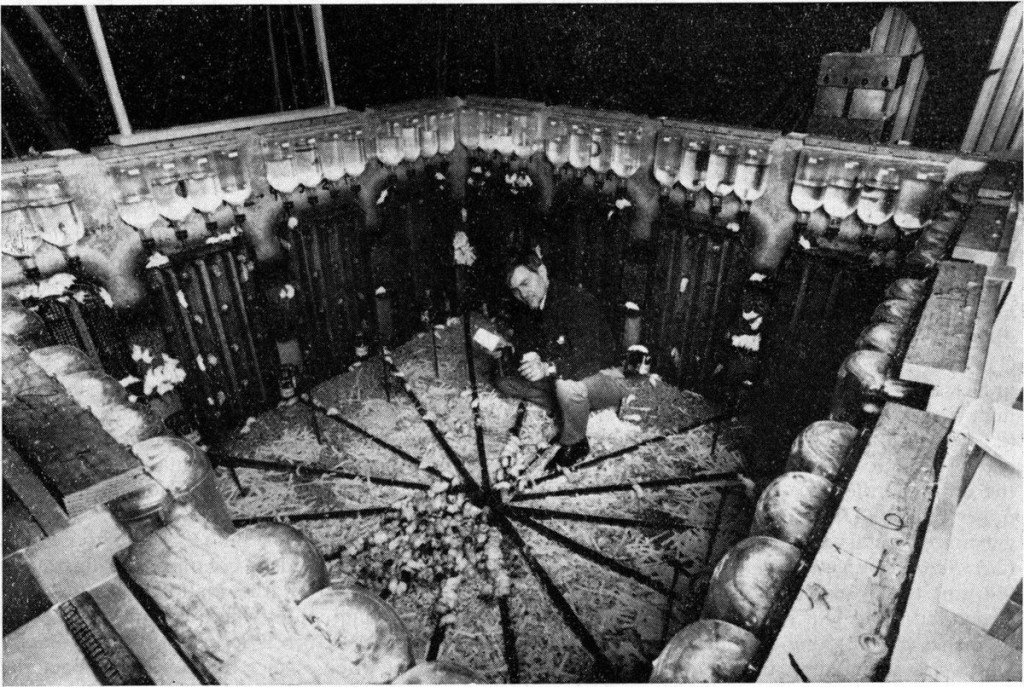
Dr. John Calhoun, pictured inside the Universe 25 enclosure.

Even with good intentions, what’s stupid is still stupid. So it is when one attempts to thwart a perceived oncoming crisis, but ends up doing more harm than good.

Decades ago, researcher John Calhoun set out to conduct a set of experiments which involved confining rats to enclosures, and observing them as they are continually provided with ample food, safety from predators, and allowing their populations to grow without interference.

The most famous of these enclosures was called “Universe 25”, which was notable for its capacity for housing upwards of 5000 mice. As the experiment progressed, the mice descended into antisocial and violent behavior, and the colony ended up failing when the females failed to care for their young.

This research came to be of particular public interest, as it came at a time when Malthusianism, the idea that the earth was nearing its limit for its ability to support humanity’s growing population, was widely accepted. In light of this, it’s easy to see why Calhoun’s experiments were interpreted to mean that consequences similar to what befell Universe 25 might also befall humanity, if humanity’s numbers were to continue to grow unchecked.

But there was a problem. Calhoun’s experiments did not concern limited resources, nor did it concern overpopulation.

The purpose of the experiments was to observe behavioral sink in rats who were not able to escape one another’s company at any time. This becomes evident when considering the fact that the colony did not want for anything to eat or drink at any time during the experiment, as it was all provided by Calhoun. What’s more, the Universe 25 enclosure came nowhere close to capacity at the point when the colony failed.

Nonetheless, the consensus was that the experiments gave us a glimpse into the future of humanity if humanity’s numbers were to continue to grow without check, further feeding into the Malthusianism that was popular at the time. In a sense, the Universe 25 experiment came to be the “mouse utopia” experiment which fooled your parents and grandparents.

As a case study concerning the National Socialists of Germany may prove, when any misconception becomes popular enough, tragedy is a potential outcome. While Malthusianism may have already been popular in the decades preceding Calhoun’s experiments, a popular misconception regarding them may have played a huge role in the movement’s further popularity. And, wouldn’t you know it, it was the following decade that saw the production of the now popular Jaffe memo.

That’s not to say that there’s no value to be found in Calhoun’s experiments. But to find that value, one would have to look at them in terms of the data that they actually provided. And if there is carryover between the observed behavior of rats made to live in close proximity and human beings, there is a concern which is applicable to today, rather than in a hypothetical future time when human population is far greater. After all, large numbers of humans live in close proximity, today.

The fact is, there is noticeable behavioral sink in rats who are made to live in close proximity, unable to escape one another’s company. Among what’s concerning is that the males in the experiment tended to become hyper-aggressive, often fighting each other, even when there’s apparently nothing at stake. They also tended to become hyper-sexual, with homosexuality becoming rampant.

The behavior of the females also became concerning. The females tended to become more masculine in their behavior, also becoming more aggressive and hyper-sexual. As matters continued, most of them failed to care for their own young, many of them abandoning their young, leaving them to die. And yes, we’re still talking about rats.

Also of interest was the emergence of a special category of male. These were referred to as the “beautiful ones”, because they avoided other rats (and thus fighting), and they devoted their time to self-grooming. Any time they fed, they avoided other rats, often by waiting until many of them were sleeping. These rats were so psychologically damaged that they refused to mate, even after being removed from the enclosure and placed in the company of ideal females.

I’ve been avoiding direct comparisons until now, but I’d like to indulge by pointing out the obvious similarities between these so-called “beautiful ones” and humanity’s MGTOW and Herbivore Men movements. If you’ve never heard of them, they largely boil down to being groups of men who have foregone relationships with women, often over bad experiences.

As large numbers of humans live in close proximity, it’s easy to see a certain disregard for one’s fellow man. Those who manage large numbers of humans tend to see less value in them as individuals, instead viewing them as statistics, and numbers to be managed. There is an Asian saying: “A frog at the bottom of a well knows nothing of the ocean.” Indeed, a limited perspective can lead one into making wrong assumptions, even as far as to interpret disparate data as supporting their own preconceived notions. Get out of cities.

Former Loudoun County Superintendent and School Official Have Been Indicted

Remember just last year, when Loudoun County school officials waved off criticism of a transsexual school policy by insisting that no sexual assaults by such individuals had taken place in their public schools, all while covering up a couple such sexual assaults by the same offender? (Pepperidge Farm remembers!)

The incident brought to national attention the downsides of opening to transgenders the public restrooms of their choosing, parents concerned with the safety of their children began to fight back, and the pendulum finally began to swing the other way.

Just yesterday, indictments against two school officials concerning the incident were unsealed, and one of those indicted was former superintendent Scott Ziegler, who was fired over the incident just last week.

The indictments against Ziegler read as charges of typical left-wing abuses of power:

  • misdemeanor false publication,
  • misdemeanor prohibited conduct, and
  • misdemeanor penalizing an employee for a court appearance.

Retaliating against an employee for a court appearance is a classic abuse of power. And in this case, it sets a particularly bad example, considering the charges relate to a cover-up of sexual assaults. Many people who have been sexually abused are afraid to report it to the proper authorities, because they are made to believe that they might face retaliation. When I was in college, a student complained about a sexual offense committed against him by another student, but school officials regarded the complainer with suspicion. Let’s not kid ourselves here, schools can do a hell of a lot better in this regard.

The felony indictment was against the school spokesman Wayde Byard, which was for felony perjury. Related point of advice: The government may be lying to us all the time, but if you lie to them, they’ll make you pay!

While people are cheering over Ziegler’s termination, his termination was classified as being “without cause”, making him eligible for a year’s pay (about $300,000). Once again, a member of the ol’ boys club gets his golden parachute.

The crime that the school officials attempted to cover up was when a boy in a dress forced himself upon an actual female student. While the act of covering up the crime did more than enough to endanger other students, the offender got off apparently scot-free, giving him the opportunity to victimize yet another woman in a vulnerable situation by abusing the school’s lax restroom safety policies.

Which is exactly what he did. If he wasn’t punished the first time, who would be surprised when he commits the exact same act of violence a second time?

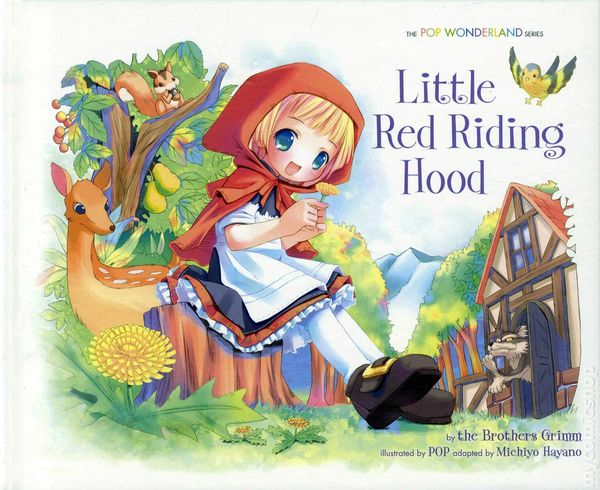
The fact is, those who are out of touch with reality when it comes to their own biological sex are more likely to commit a sexual faux-pas (to put it mildly). And that’s giving the offender the benefit of the doubt. There are certainly many predatory individuals out there who would gladly don a dress and welcome themselves to the women’s restrooms, taking advantage of relaxed policies that previously existed for the safety of women and girls, so that they can take advantage of them when they are in a vulnerable situation. In a sense, they’re kind of like the wolf who wanted to eat Little Red Riding Hood, but instead of acting out of hunger, the predators in question want to act out their sexual fantasies.

It should be understood without saying, but in the culture war, don’t get on the same side as perverts, groomers, and sexual predators. Those are the people against whom the backlash will be the strongest when the pendulum swings the other way, which is already beginning to happen.

Little Red Riding Hood: A Cautionary Tale About Avoiding and Identifying Predators

When we talk about fairy tales, it’s easy to focus on the fantastic elements. In so doing, one can overlook that the story may have been trying to make a point.

As one reads fairy tales, one may notice that they tend to have grim endings. This was to the end of communicating to the children listening that the world was not a pleasant place. Yet, this plays a part in preparing children for the real world. But what’s more, they also prepare children by imparting on them the moral lessons illustrated in these stories.

An example of such a fairy tale was Little Red Riding Hood. It’s evident that this story can be used to illustrate how tragedy can result when one fails to identify a dangerous predator, or fail to give mind as warning signs become apparent.

To succinctly summarize, the story is about a protagonist, a girl identified only by her choice of apparel, who went on a trip to her grandmother’s house. Along the way, she meets a wolf, who asks her where she is going. She told the wolf that she was going to her grandmother’s house. The wolf, wanting to eat the girl and the food that was with her, went to her grandmother’s house, ate her grandmother, then disguised itself as her grandmother for to act upon the girl by deception. The girl noticed that her grandmother (actually the wolf) had unusually large features, but this didn’t seem to concern the girl much until it was too late. The girl paid the price for her lack of discernment, when the wolf took her by surprise and ate her.

There are variations on this story. Some tellers may leave out that the wolf spoke to the girl on the way to her grandmother’s house, perhaps because the teller wished to focus more on the wolf’s deceptiveness. However, this leaves out the girl’s first mistake: sharing information that she didn’t have to with someone she didn’t know. This set her up for the tragedy that followed. Of course, one can ask why the wolf didn’t just attack the girl on the path. It could be that the wolf was diminutive or didn’t think much of its own ability to overcome a young human being, but I think it’s reasonable to believe that the original author’s insistence on the lesson of this part of the story was particularly strong.

Another revision states that, at the end, the girl was rescued by either a hunter or a woodworker. This revision was an obvious attempt to reduce the blow of the otherwise tragic end to the story. However, it also undermines the moral by reducing the connotation of consequences for the kind of mistakes that the girl made. The fact is, in the real world, if someone makes a grave mistake, there isn’t much realistic expectation that someone is going to come to the rescue.

And speaking of revisions, the earliest-known version starred an “attractive, well-bred young lady”, which differs from most modern versions which stars a little girl. However, this change doesn’t have an apparent impact on the story’s moral undertones. Putting aside that a “young lady” is expected to be old enough to know better, and that picturing a little girl as the protagonist is an obvious choice to emphasize her innocence or naïveté.

As mentioned above, the girl’s first mistake was sharing information with a stranger that she didn’t have to. Considering the connected nature of today’s world, this is a very important lesson to impart. The internet today is teeming with people of dubious intent who are out to take what they want, and if someone were to share just enough information to act upon, they’d consider that plenty.

You’ve probably heard stories about people who found that they were burglarized after returning from vacation, after they made the mistake of sharing their vacation plans on social media.

As bad as that was, Little Red Riding Hood’s fatal shortcoming was an inability to tell a trusted individual apart from a dangerous predator, even after all the signs became apparent to her (“what big ears/eyes/hands you have!”).

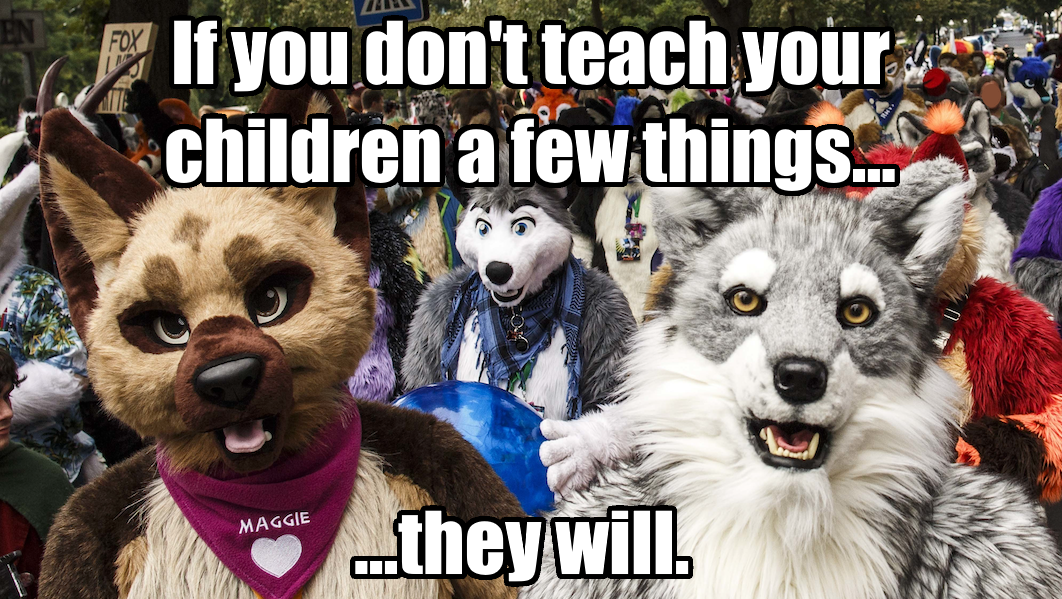
Sadly, many children today are vulnerable because they haven’t properly learned from their parents the kind of discretion and discernment that could have saved the life of the girl in the story. In many cases, this failure on the part of the parents has come about due to the fact that many parents find it difficult to approach the topic. Of course, difficulty is not an acceptable excuse. Way too many parents are failing their children!

Thankfully, we have stories like Little Red Riding Hood which make such difficult topics easier to approach. Narrative has long been a valuable tool in communicating important moral lessons, and it’s particularly effective when communicating them to children.

The story of Little Red Riding Hood is of particular importance these days, considering that dangerous predators have infiltrated positions of trust, which they then use to groom children. While we have a lot of work to do in an effort to remove these deviants from positions of influence, we must not overlook one of our most important roles, which is to teach children to recognize signs that something is wrong, and to speak up when something seems amiss. This goes a long way in protecting them from the predators who are preying on children today.

If they were wolves, they would have eaten them.

Hey Pennsylvania, What Is Wrong With You?

The midterms are mostly over. Votes are still being counted, and Democrats are acting as though they’ve won just because they didn’t lose as catastrophically as they deserve. Georgia is looking at a runoff, and we’re still awaiting some results. No surprise there. There wasn’t much expectation that it would all go smoothly.

But what I’d like to zoom in on now is Pennsylvania. Oh, Pennsylvania. What is wrong with you?

I do live in Pennsylvania, so it’s not like some criticism from the outside looking in. But just because I’m here, doesn’t mean I know what the people here are thinking. Especially those to the left.

It’s not as though I don’t hear what they’re saying. Every now and then, one of them meanders out of one of our three major cities, expresses wonder and awe at all the “unused space”, then proceeds to bloviate about what he thinks makes a successful society.

But what I don’t have an explanation for is why about 2.6 million of them became party to sending John Fetterman to the Senate.

I know that it’s usually inspirational for a person who suffered from an illness to succeed in spite of that. However, when the illness leaves a person less capable of performing a task where many people are counting on him, then the better choice is to have someone else do the job.

The poor guy suffered from a stroke. During his debate with Dr. Oz, he could barely string a sentence together, and frequently failed to form a coherent response.

Were the Democrats of Pennsylvania simply unaware of this? A lot hinges on the answer to this question. Either the Dems were unaware of the capacity of their own candidate and were therefore uninformed voters, or they were so vote-blue-no-matter-who that they’d be happy to hand a rubber stamp to a seat warmer.

It’s not as though they’ve done Fetterman any favors. Can you imagine the unintelligible internal monologue of someone who has not fully recovered from a stroke? Can you imagine how confused and disoriented such a person would be as they are ushered from one place to another and told what to say?

Considering that the current presidential administration is basically Weekend At Bernie’s, I think we can say that a pattern has been established.

But as bad as that is, it gets worse. Democrat Tony DeLuca won reelection. In spite of being dead.

You may be wondering how a dead man found his way on the ballot. His passing occurred last month, at which point, it was too late to remove him from the ballot. It’s been decided that a special election will be held.

While it’s possible that DeLuca’s reelection was on similar reasoning as Fetterman’s (ignorance or sheer tribalism), it may be that the people voted for DeLuca in an effort to force a special election, not wanting the victory to go to his opponent, who was a third-party candidate.

Third-party candidates sure do have it rough. Their run for office is usually little more than a cynic’s quest. Unless there’s some prize to be won for throwing tons of time and money into an endeavor that ends up going nowhere.

In any case, it’s refreshing to see the Democratic voting base so accurately represented.

Bulbagarden Founder Posits Theory That New Gym Leader Is Trans and Non-Binary, Gets Debunked Less Than 24 Hours Later

It seems like with every new major media release, someone from the questionable sexuality community will come forward with speculation (often stated as fact and foregone conclusion) that a character depicted represents their favorite flavor of sexuality.

As Bounding Into Comics points out, this time around, the speculator is Liam Pomfret, the founder of Bulbagarden, who posits his theory that the newly-revealed gym leader in Pokémon Scarlet and Violet, Iono, is non-binary and transgender.

Here is the promo video featuring Iono:

Upon what is Liam basing his theory? The initially ambiguous use of pronouns, and her choice of hair dye:

Image from Bounding Into Comics

One would expect the use of such flimsy inferences from an undiagnosed schizophrenic who believes that their TV is communicating secret messages specifically for them, not a Doctor of Philosophy. Our education system is fucked, isn’t it?

Because he was tripping over himself to find trans representation in a Japanese game marketed towards anyone in the family, he looked at the soft blue and pink hair (kinda looks lavender to me) and immediately thought of the trans kid flag, rather than the recurring red/blue coloration of Pokémon’s flagship games, Scarlet and Violet included.

Less than 24 hours later, Nintendo dropped supplemental promotional material concerning Iono. It’s the kind of thing that looks like it would have been released simultaneously with the promotional video that originally featured Iono, so maybe it was hastily thrown together after the fact.

The promo specifies Iono as having the feminine pronoun of “her”. Iono is female. Because we’ve already established that speculation is fun, maybe Nintendo threw this out there because they knew what Liam Pomfret was saying, and were all like “Nope. We’re not having that.”

If “Bulbagarden” sounds familiar, then you’ve been following along back when I pointed out how inappropriate it was that they used their Pokémon fan platform to soapbox about an immigration policy that they blamed on Trump (the problem was actually Obama’s fault, and Trump resolved the matter through an executive order).

This was Bulbagarden’s forum header at the time:

Fucking creepy.

And a fantastic opportunity to warn parents out there that there are some predatory actors in fan communities who use their positions in their respective communities to pressure younger members. Oftentimes, their activities involve performing “favors” over video chat. Of course, there are many ways that bad people can take advantage of children online.

That PSA aside, it can also be pointed out that there is a certain obsession with pointing to Japan’s status as a relatively advanced, orderly, and peaceful society. Oftentimes, someone on the radical left will attempt to glom onto a form of Japanese media, in a sad attempt to make the case that the Japanese are actually just like them.

What these attempts overlook is how Japan as a society got to be as advanced as it is. Japan is a heavily structured and stratified society that favors family, career, merit, and respect. To further reduce that, Japan is conservative. In fact, it’s one of the most conservative societies in the world.

Sometimes, a weeaboo pops up who thinks of Japan as being their kind of society, probably because they got ideas as to what it’s like from anime and manga. The fact is, Japan is a society of norms. If you move to Japan, you’re expected to conform to the norms. If you don’t want to, then you don’t belong in Japan. It’s as simple as that.

Red light districts aside, Japan is an advanced, peaceful, and orderly society. If your thinking is different from theirs, that might have a lot to do with it.

Iono is pretty far from the first character from Japanese media to have gotten this kind of attention. It wasn’t long ago that Shiver from Splatoon 3 came under scrutiny as possibly non-binary, but it turned out she was female. Nanachi from Made In Abyss is a frequent target of this, because author Akihito Tsukushi prefers to leave Nanachi’s sex as unknown. Or, more famously, there’s Bridget from Guilty Gear, who is male.

That’s not to say that there are no “non-binary” characters in Japanese media. However, such characters are seldom portrayed as sympathetic. But why would they, when there is something obviously wrong with their thinking?

Iono is merely a character in a work of fiction. She’s just made up, therefore nothing about her has any bearing on the reality of any matter. It doesn’t matter whether she represents anything, except maybe in the deluded thinking of those who lack the ability to parse reality without the assistance of a fictional construct. If this describes you, then you need to seek help. And get over yourself, while you’re at it.

Microsoft Drops NPC Update With New Pride Flag (seizure warning)

Here it is, the new pride flag, according to Microstiff:

I can only imagine the headaches that this new design will cause. An ocular migraine doesn’t look this intense.

What’s more, this new flag looks like a logistical nightmare. Can you imagine all the colors that would have to be used to print these flags, which could end up outside the porches of homes that we tell our children to avoid all across America? Then there’s all the flags that would be rejected by reason of smudging the colors, which would have a high potential of occurring with all the different colors used.

The flag reminds me of Ancient Greece. Not just for the debauchery it represents, but for how similarly the Greeks handled idolatry. They wanted to ensure that they honored every god that they knew. And with how heavily pantheistic they were, they knew a lot of them. It got to the point that some of their cities were so packed with statues, that cities like Athens were said to have more gods than men.

Eventually, people just decided to set up pedestals with plaques that read, “To the unknown god”, in the hopes that, in so doing, they’d honor any god that they may have forgotten to build a statue for.

Perhaps we’re just months away from seeing a new pride flag that just says, “To the unknown sexuality”.

How A Bunch Of Gullible People Are Being Tricked Into Getting Fired

You might have heard of “quiet quitting”, a movement that encourages young people in the workplace to coast by with a minimum of effort, often to the point of accomplishing nothing besides the occasional appearance of working, collecting the pay they feel they’re entitled to for doing little besides heating a chair.

It’s basically another manifestation of class warfare, which has performed yet another sideways shift in their evolutionary ladder.

I’d have imagined that relatively few people would fall for it, as it’s obvious to me that it’s a scheme to trick gullible people into being downsized or outright fired, making the career world less competitive for those intelligent enough to see through the ruse. But as the movement becomes steadily more pronounced, it’s becoming increasingly evident that many are the people who lack the capacity to see the sham for what it is.

I admit that it’s tempting to just keep my insight to myself, as I’m among the many who would stand to benefit from not sharing my workplace with self-centered, entitled morons. But I understand that even among those bright enough to be in my readership there is a chance of making a decision without thinking it completely through. Kind of like the mom who throws old toys away while thinking her son is growing out of them, not being aware that they are a couple decades away from being worth thousands of dollars.

To understand why quiet quitting has become as pronounced as it is, it’s helpful to understand trolling.

A simple-minded interpretation of trolling is that it’s saying something mean online in order to get a reaction. While saying things that are mean is one thing that a person can do to get a reaction, that one simple act doesn’t encompass the whole of trolling, nor is to get a reaction in every case the extent of the motivation of the one doing the trolling.

Basically, trolling involves influencing a person or people into a course of action. The outcome can be as simple as an angry reaction, or as contrived as an elaborate ruse. In many cases, to take humor in the outcome is the primary motivation of the one doing the trolling. But more involved trolling attempts can be campaignesque, involving multiple targets and with multiple trolls acting in cooperation, bearing a resemblance to a psychological operation.

Suppose that someone who is messed-up in the head wants to damage a government building. They could try defacing the building themselves, but there’s a problem with this: there’s way too much potential for negative consequences for the person who would attempt such a thing. If only there were some way to cause some damage, but eliminate the potential consequences against one’s self.

And there is. And this involves convincing someone else to do it. To this end, many influencers band together in subversive communities in an effort to get other people wound up enough that it would be easy to convince them to do what they want.

In terroristic groups such as Antifa, this dynamic permeates their culture. At a protest, when someone wants a Molotov cocktail to be thrown, they just hand one to someone else. The ones handing them out would be the influencers; they try to get other people to throw the Molotov cocktails because they don’t want to be the ones who get in trouble!

If your typical Antifa foot soldier had nerve, they’d hand the Molotov cocktail back and say, “If this is such a great idea, why aren’t you doing it?” Sadly, Antifa goons aren’t known for their strength of character, or their ability to see their cult for the sham it is.

The idea is to get you to do something, so you’ll be the one to face a judge, not the person who manipulated you.

When you understand this dynamic, you’re in a better position to understand the dynamic behind quiet quitting, and see it as a farce that’s designed to trick gullible people into destroying their careers, to the benefit of the influencers who understand the con and are motivated by the simple pleasure of destroying the lives of their victims.

Having said that, I do recognize that every cult has it’s faithful believers, those who actually do believe in what’s preached from the pulpit, and that these faithful believers can sometimes be found in the upper leadership. An example of this is a mod from the subreddit r/antiwork, who exposed himself as a goofball to the thousands of boomers who still watch Fox News:

Having said all this, I doubt that I’ll have thwarted the influencers’ carefully-laid plans in pointing out as much as I have. After all, if someone is so gullible that they’d think quiet quitting is a good idea, they’d probably look at a post this long and think it’s too much reading. It’s not easy to keep stupid people from doing stupid things.

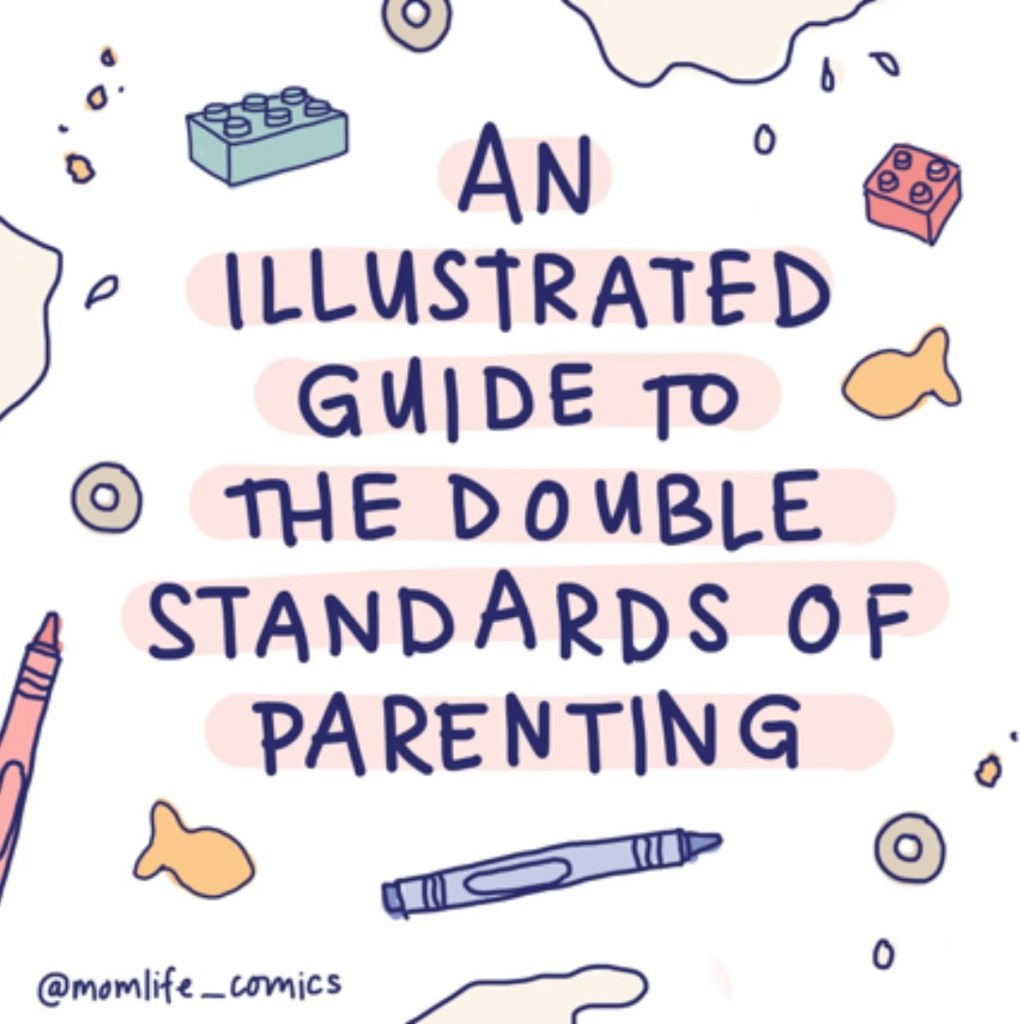
Webcomic Review: Momlife Comics

At first, I wasn’t going to comment on these. One-panel comics aren’t usually worth talking about, and these seemed little more than the meanderings of a woman who is bitter about one thing or another. Then these comics blew up, so I was like, “fine, I’ll acknowledge their existence and write up a review.”

For the setting, try to imagine a curious land in which most people don’t have to grow their own food, but meals are already fully prepared and delivered to peoples homes. Not only is rape illegal, there are no roving rape gangs on the prowl in rusty pickup trucks. What’s more, the homes are crisp and cool inside in the summer, and when there’s snow on the ground in the winter, the homes are warm inside, and glowing display screens deliver limitless free entertainment on demand.

But, there’s a catch: human nature remains mostly the same. The human adaptation to conflict that has been cultivated over the course of aeons still remains. Therefore, the people started questioning their idyllic peace and halcyon luxury. Then, grumblings came, acknowledging first world problems as though a prize awaited the cynics: “My coffee is too hot”, “thirty seconds is too long for an initial boot up”, “my delivery was delayed until tomorrow”.

At the center of this maelstrom of abject ingratitude is one housewife and her adversarial relationship with her husband. That’s right, we’re reviewing Momlife Comics.

Momlife Comics was written by Mary Catherine Starr, who gives us the first hint of her politics by listing her pronouns in her bio. Because her pronouns apparently weren’t already evident from the fact that she’s a mom. She also made a BLM statement, so you know that she’s not racist.

Wow, how stunning and brave, considering the current political zeitgeist!

Mary’s IRL husband is aware of the comics, and is okay with them, so I wouldn’t be surprised if he did a Jack Murphy and wrote up an article touting the benefits of cuckolding.

Let’s start this review off with the most famous cartoon in the series so far:

Both are valid uses of the peach, and the one who gets to it first decides what happens to it. But notice that the build-up is the woman thinking about someone other than herself. How dare that man want to eat something that he paid for, from a table he paid for, in a house he also paid for!

Wow! Look how much more work that woman is doing! Patriarchy and such mushuggunah!

The missing context: the woman took all the bags, leaving the man to bring back just one. Was she aware that she could take multiple trips to the car? She’s likely to smoosh something if she tries carrying in that much at once.

Pattern established: Woman imagines some rule, but doesn’t tell man about it. Woman then gets angry at man for breaking the rule he didn’t know about.

Another pattern established: Woman gathers everything to herself, leaving nothing for the man to do. Woman then complains that she does everything.

Mary also does comics where she reverses the gender roles, which is supposed to be clever because she leaves us to determine the irony without beating us over the head with the obviousness of the point that she’s trying to make.

Get it? Because men are generally more career-focused, and women tend to be more family focused? Though it’s hard to say definitively whether Mary intended to throw shade on the fact that men and women are different, and that because of these differences they tend towards different life choices. It might be that she’d prefer a world where they made similar choices, even if that meant less excuse to hear the sound of her own voice, complaining.

I wouldn’t put it past her to complain about the rain as though she’s blaming someone for it.

Mary is such a victim in her own mind that she even sees herself at fault for bringing her own children fast food. Or are her children the only ones in the universe who would complain about fast food? Sure, it’s garbage, but kids don’t know that.

It was my intention to review this webcomic, but I instead feel tempted to psychoanalyze the author, as her comics have given a window into the soul of a troubled woman. It’s obvious that from an impressionable age, someone was able to sell her a victimhood narrative, and this resonated with her life in the hard streets of sheltered suburbia.

Since her webcomic got noticed, she produced this comic in an answer to the trolls:

Along with a notice that she’ll block trolls. Which is a mistake, because it’s a reaction that trolls look for, and they’ll take any that is any indication that they’re getting to someone. And the above comic accomplishes this masterfully.

As far as art quality goes, Mary is evidently of the opinion that if you only do one thing right, you’ve got a comic. In Mary’s case, that one thing is body proportions. Aside from that, everything is wrong. The thick, inconsistent line art, the lack of facial features, everything is just wrong. Maybe Mary can draw better than a toddler. But bring elementary school students into it, and she’s out of her league.

Okay then, let’s grade this pile. Momlife Comics gets a score of 2.6 out of 10.

Gentlemen, I know that the dating game is flawed. But tread carefully. Getting hitched to the wrong woman can be quite taxing.

One of the classic signs of an abusive relationship is joking at the expense of one’s spouse in public. These comics give ample cause for concern.