Category Archives: Pokemon

Pokémon Scarlet and Violet Versions Just Announced, Coming Late 2022

A Pokémon Direct has just concluded, and with it comes the announcement of two upcoming Pokémon games, named Pokémon Scarlet and Pokémon Violet.

Here is the reveal trailer:

In the announcement, a detective investigates an apartment, then sees the trailer for the upcoming games.

We see some details of the new region, and get a first glimpse:

Like Pokémon Legends: Arceus, this new region seems to favor expansive explorable areas:

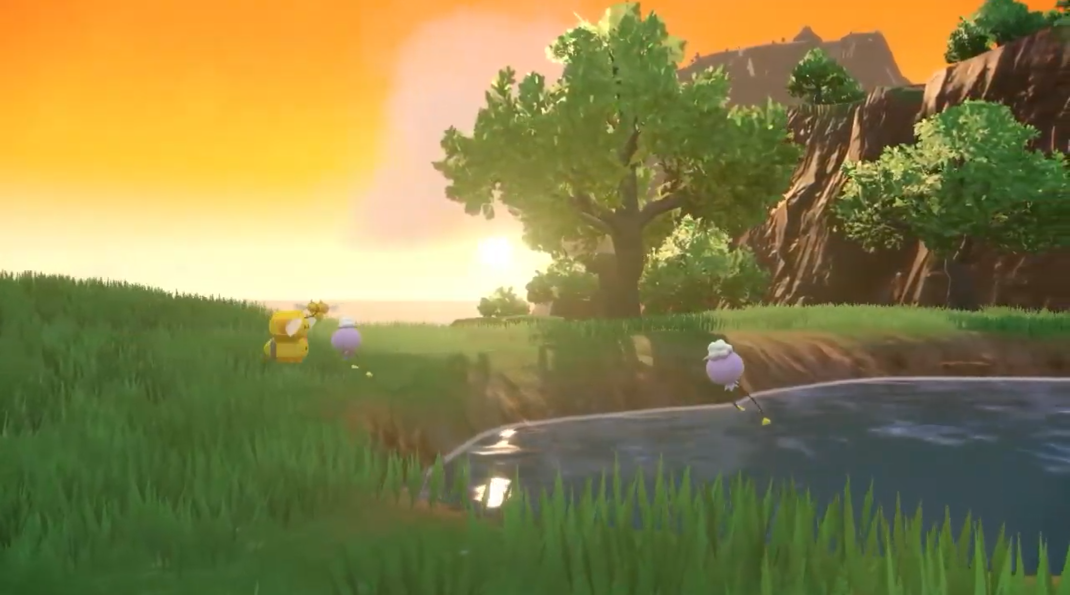
It also shows Pokémon wandering about, also like Legends:

There a town plaza, which seems very European. Perhaps the setting for this one is inspired by Greece or Italy.

The main character seems to get an oceanfront home, this time:

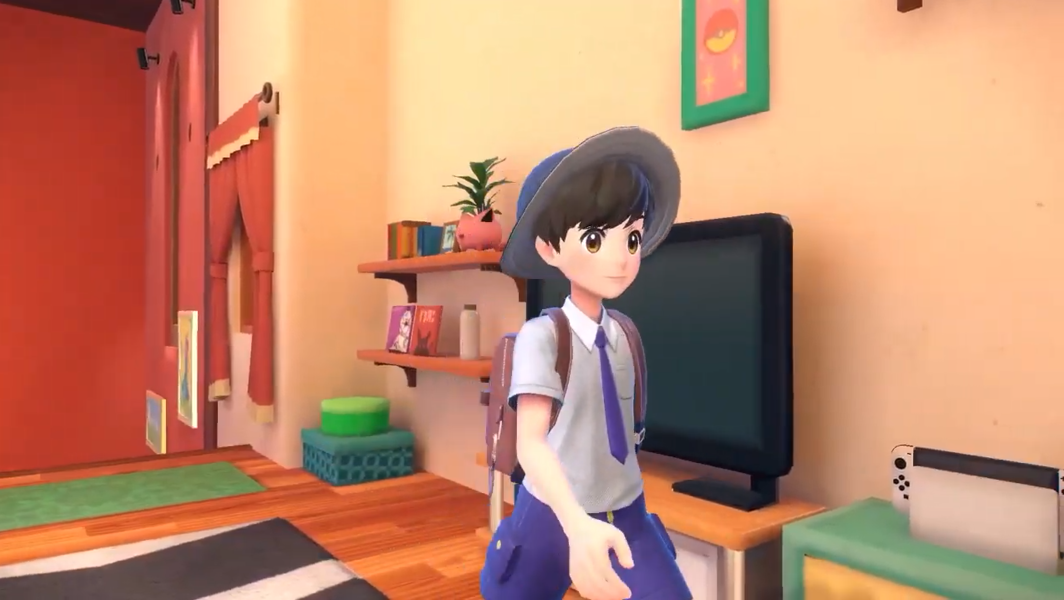
We were also shown the player character. There likely will also be a girl, as is the case in most Pokémon games.

We also get a brief glimpse of part of the region map:

Afterwards, we return to the detective. Perhaps the apartment is filled with clues as to the setting of the upcoming games, such as this food that’s sitting out:

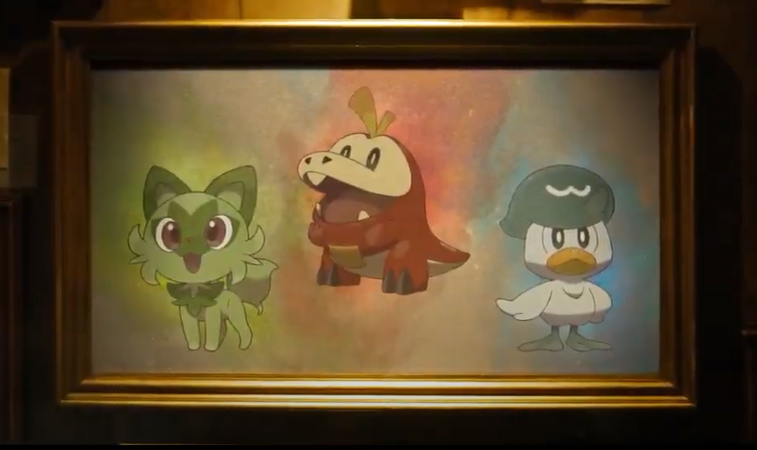
Then, we see what is likely the new starters for these games:

According to the official reveal page, the cat is named Sprigatito, the croc is named Fuecoco, and the duck is called Quaxly. I like the cat and the duck, but the croc reminds me of Bubble Bobble.

Pokémon Scarlet and Violet are coming later this year to Nintendo Switch. What do you think?

Review: Pokémon Legends: Arceus

On the timeline that we are currently on, GameFreak outsourced development on a Pokémon game to another developer, and then released a different Pokémon project just months later, in the cold of winter. And what’s more, this new Pokémon project blows everything that they have ever done clear out of the water.

No one expected this. This is the franchise that’s almost as famous as Madden for playing it safe. Since it’s inception, the Pokémon franchise has stuck to typical formulae for their releases, which have come to the point of being yearly installments where the most recent would be considered the definitive edition, and remaining current on the franchise required purchasing a new installment every year.

As Pokémon Legends: Arceus shows, GameFreak is willing to give a fresh take on a franchise that’s been regarded as among the most conservative. In fact, so much has apparently been poured into this one, that it’s more than a willingness, it’s a passionate desire.

Pokémon Legends: Arceus (hereafter Legends) takes place in Hisui, which is the Pokémon world’s region of Sinnoh as it would have been in centuries past (Sinnoh being inspired by the real-life location of Hokkaido). In this period of time, the people of Hisui are relatively few in number, and largely view the Pokémon creatures themselves as dangerous, and with some amount of suspicion. But then the main character comes along, and joins the Galaxy Team, a group of outliers that capture Pokémon and study them in their habitats.

As for how the main character got there, that could probably be called a spoiler, even though it happens at the game’s outset. However, it carries potentially huge implications for the Pokémon franchise’s branching timelines. In fact, the Pokémon community is already buzzing with speculation as to the impact that events in Legends would have in the continuity of Pokémon’s multiverse. So no, it’s not just some banal story about a kid from a small town collecting badges from gyms.

In Legends, the main character sets out on expeditions, where he (or she) catalogs data on a proto-Pokédex for Galaxy team. As you control him, he wanders freely about in one of the game’s immense open areas. I admit that I was a little concerned about this, as Pokémon Sword and Shield’s wild areas seemed like they’d be sprawling in early materials, but turned out somewhat small in the final game. Legends’ many areas may not be interconnected in the same way as in Breath of the Wild, but Legends’ wild areas are so huge in size that you’ll hardly feel confined. Not quite BotW, but the feel is almost the same. Better still, the Pokemon characters and other interactables such as trees and pick-ups are drawn from a considerable distance, which is another huge improvement over Sword and Shield.

Legends may not be the hyper-edgy game that some fans might be making it out to be, but it does have a bit of edge to it. Noticeably, there’s a connotation of danger from the Pokémon themselves. Pokémon can actually attack the main character, and if he takes too much damage at a time, he’ll be rescued, but lose a few items in his inventory. Players can capture Pokémon by throwing Pokéballs at them, though if they notice you first, that might not work. Even then, it’s still an option to send out a Pokémon, and battle the wild Pokémon one-on-one.

Except, it’s not always one-on-one. If there are other Pokémon nearby that notice you, they might join in and gang up on you. Interestingly, during battles, you can use the left control stick to reposition your character. Considering that it’s possible to take damage from being in an attack’s area of effect, it’s not a bad idea to stay out of the way. Adding to this is that the battle takes place on-location, rather than in some generic battle environment.

Over the course of your adventure, you’ll come across some Alpha Pokémon which, if you were to attempt to battle them, might give you a hard time. But if you can catch one, it might be a great asset, as they tend to come at a high level, with high stats and great moves. But, they might not obey until you progress in a certain way. My first one was a Golduck, but it disobeyed orders when I tried using it in battle.

Certain Pokémon are encountered as part of the story as “Lords”, which act as boss battles in this game. The battles with them involves avoiding their attacks while attempting to calm them with satchels, but only infrequently do you have the opportunity to use your own Pokémon during the battle. Other Pokémon still are the kind that you befriend, and they increase your mobility when called upon, which is handled in a way that is super-convenient. These can help you do things like cross water and climb cliffs.

One of the best mechanics that I’ve seen involves crafting your own items, which you get the capacity to do on-the-go early on. In most Pokémon games, stocking up involved buying lots of items at PokéMarts, which still remains in a certain way in Legends. However, you can obtain recipes so you can craft items like Potions and Pokéballs from items that you gather while on expeditions, which does a lot to make the expeditions feel really worthwhile.

Legends also brings some welcome changes to battles and Pokémon customization. One is that the Speed stat works differently, giving faster Pokémon opportunity to attack more often, rather than going first in strictly turn-based battles. Pokémon can also “master” moves, giving them the option of use “agile” or “strong” moves, which can offer more or less power and have an effect on turn order. This adds a lot more finesse to battles that was missing from many of the older games, not to mention a new element of strategy. Also, Pokemon no longer forget moves. While Pokemon still select from four moves during a battle, players can customize these moves from learned moves while outside of battle.

I can also point out that Legends is certainly harder than the core titles that Pokémon players would be used to. For a short while after getting started, I was surprised at how durable opposing Pokémon were, and their ability to consistently deal about 50% of my Pokémon’s HP in damage. Even level-grinding didn’t seem to result in as huge an advantage as it would in other RPGs in the franchise. Perhaps there was a change in the formula for damage calculation. Whatever the reason may be, I suspect that players wanting a higher level of challenge from the Pokémon franchise may appreciate Legends.

While many are comparing Legends to Breath of the Wild, I’ve heard others say that it’s more comparable to Monster Hunter. I haven’t played Monster Hunter, but if it’s anything like Legends, I’ve been missing out. But hey, has everyone already forgotten about Skyrim, all of a sudden? Skyrim did a lot to popularize this style of game, too.

In any case, it seems like more games are tending towards the freedom of an open-world adventure. While the story in Legends is linear, the gameplay has a sweet sense of freedom, and is certainly a blast of fresh air, which is something that this franchise has needed for a long time.

For those of you wanting to skip ahead to the score, here you go: Pokémon Legends: Arceus gets a score of 9.5 out of 10.

If you wrote Pokémon off as some nineties fad, then day trading might not be your thing.

Review: Pokémon Brilliant Diamond and Shining Pearl

Developer: ILCA
Publisher: Nintendo, The Pokémon Company
Genre: Turn-based RPG
Rating: Everyone
Platform:
 Nintendo Switch

“Old fans would not want us to mess with their good memories… but there is no point in just redoing the same thing, right?”

GameFreak President, Pokémon HeartGold and SoulSilver

It’s plain to see what approach was taken this time around. Because as it is, Pokémon Brilliant Diamond and Shining Pearl (hereafter BDSP) may be the most predictable game I’ve ever played. At this point, the Pokémon franchise has pretty much cornered the market on those who like their games completely non-surprising.

Let’s go, Brandon!

This review almost saddens me to write, because I had some fond memories of the original Diamond and Pearl. It seems I’m far from the only one, as gamers have been calling for Sinnoh remakes since the well-received Omega Ruby and Alpha Sapphire. While nostalgia is a selling point for Pokémon remakes, the previous remakes cultivated an expectation of an upgraded experience, not simply a retread. Up until the Let’s Go games, the remakes were usually done in a style similar to the most recent core Pokémon games at that point, and they usually included tweaks to the gameplay, and elements that weren’t in the originals. Considering this, it should be understandable that the Sinnoh remakes would have the same approach. But it wasn’t the case for BDSP.

Pokémon Diamond and Pearl were really early to the whole smart watch dealie.

I often start reviews with a brief, non-spoilery synopsis of the game’s plot, but in this case, it’s easy enough to guess the story direction for BDSP. A trainer starts out in a small town, and after picking from among three starter pokémon, the trainer embarks on a quest to obtain 8 gym badges, with intermittent interruptions from a team of bad guys, culminating in a showdown with the Elite Four, then the Champion. The story is the same as it was for the originals, so if you’ve played Diamond or Pearl before, then BDSP will have pretty much no surprises for you.

When it comes down to it, BDSP are almost straight ports of Diamond and Pearl, with some elements from Pokémon Platinum, but some upgrades to the production values.

But not by much.

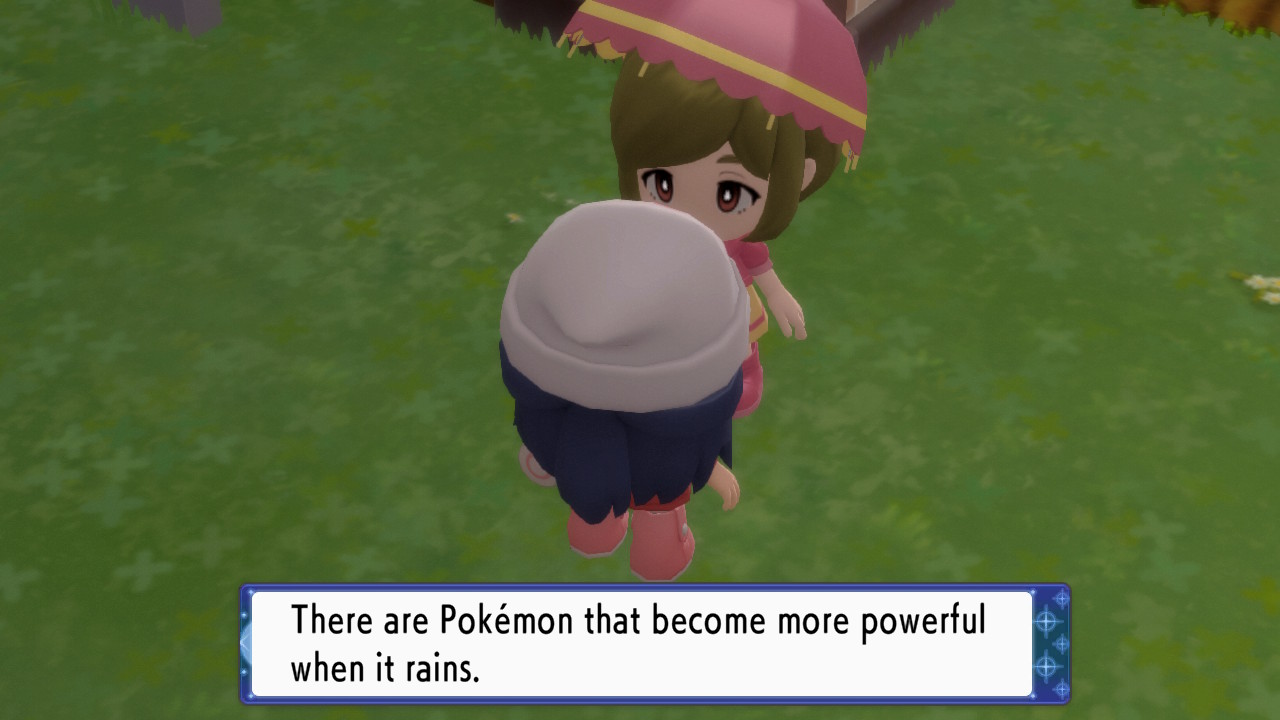
For some reason, ILCA decided to go with a chibi graphical style for the overworld models that are reminiscent of Nendoroids.

Believe it or not, this was already a thing.

I was initially skeptical but open-minded about this, but in execution, these chibi Nendoroid models leave much to be desired, especially when the games do a dramatic zoom-in, which happens often.

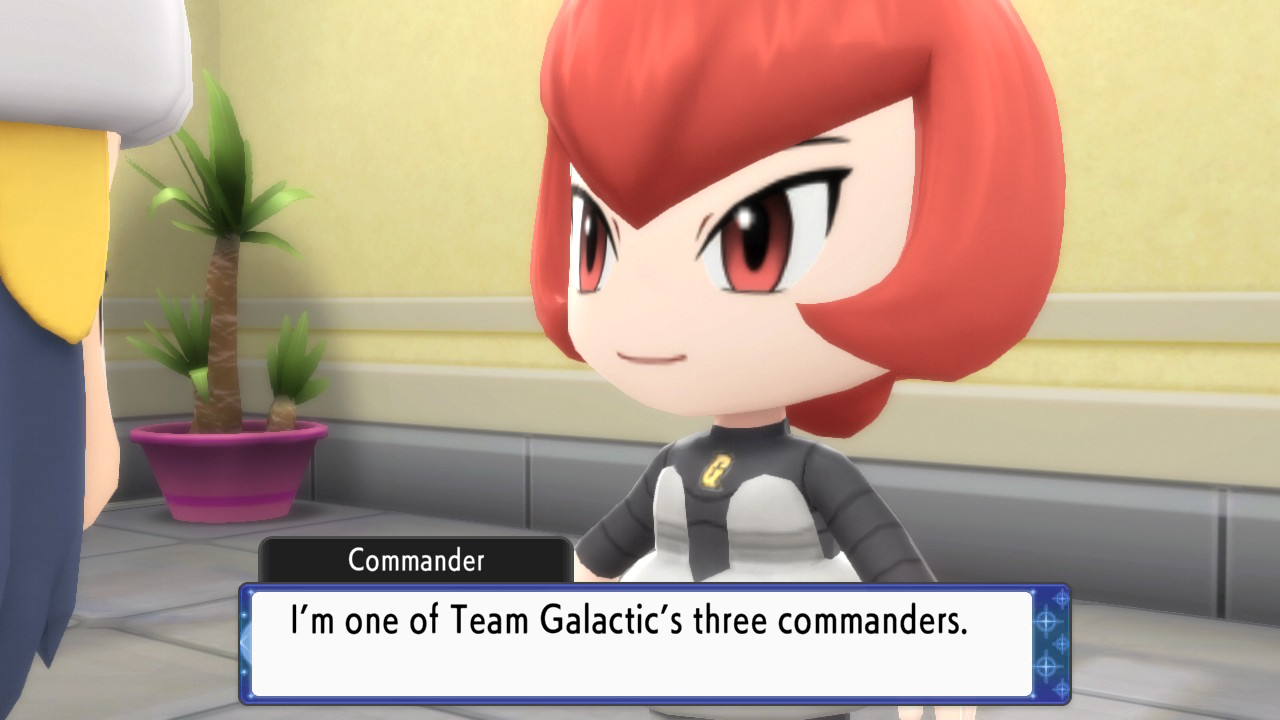
Watch out, here comes Team Galactic to teach you some respect!

When these extreme close-ups happen, the jaggies and aliasing on these character models becomes really apparent, and the result is so cringy that I’ve found myself wishing that ILCA didn’t bother with them.

Interestingly, ILCA is short for ”I Love Computer Art”.

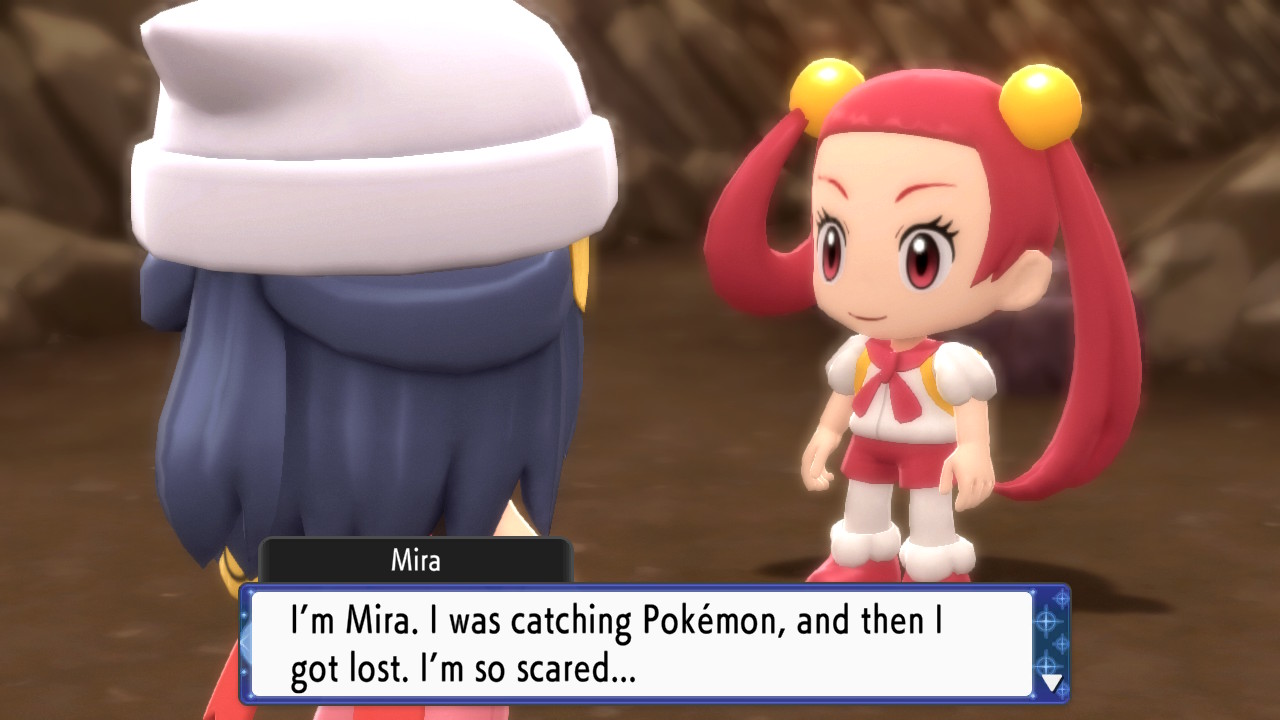
She’s not the only one.

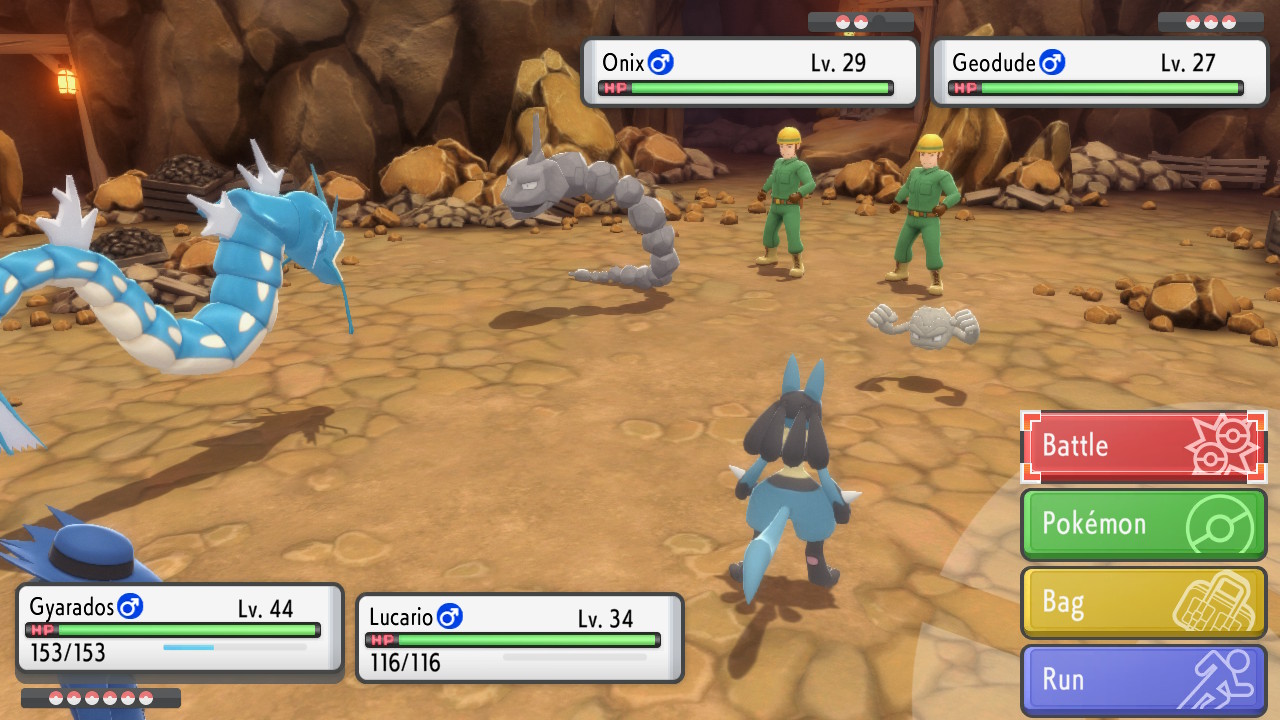
The music tracks are on point, and while that’s normally a great thing, that brings up the question of why two different aspects of production so starkly differ in quality. This dissonance becomes more apparent when you see that the in-battle scenes look current-gen, complete with proportionate anime-style character models. Why couldn’t they have done the whole game with these models?

This is not Sword or Shield.

I’m going to come right out and say it: BDSP seem incomplete. To the point that I actually closed the game to check to see that I was playing with the day one update, which I was (1.1.1). It’s hard to believe that this was a full-price professional product, let alone the latest core installment to the single highest-grossing intellectual property of all time.

Smol Gyarados.

Yes, that following Gyarados is undersize, and that seems intentional. But for some reason, it spawned on that thin log. Who else is looking forward to what the glitch hunters are going to find?

As far as gameplay goes, BDSP is pretty much a classic-style turn-based RPG. There was less call for that to be messed with than anything else, so maybe it’s not bad that ILCA didn’t do much to tamper with it. Each turn, attacks are selected, then the pokémon take turns executing their attacks, with the ones with higher speed getting priority. There are many complex gameplay elements that can alter the flow of battle, and many players formulate their strategies based on these. Usually, a player that can exploit an opponents type weaknesses will have a significant advantage, but different offensive and defensive stats introduce an element of complexity that sometimes makes the best play unclear. As is the case in most installments in this series, the flow of battle can change drastically due to a variety of buffs and debuffs.

But hey, you may have already known how to play Pokémon already, especially if you’re in this game’s target audience. Even if you don’t, getting though most of the game will be pretty simple, especially now that the EXP system rewards all pokémon in the party, not just the one that did the battling. Yes, like just about any other RPG.

If you’re great at competitive Pokemon, college may not present you with much of a challenge.

I know that I’m not being greedy when I say that I wish that ILCA did more to mess with the experience that I remember. The Hoenn remakes did include soaring, which wasn’t in the original, and the Let’s Go games had mega evolution. Would the addition of a similar mechanic to a Sinnoh remake have been too much to ask?

I enjoyed the Sinnoh Underground in the originals, and I’m happy with the experience this time around. I’m okay with how relatively little they’ve messed with the experience of digging up treasures. What’s more, there are mini-biomes in the underground which, upon their discovery, increases the variety of pokémon available to the player. If players find, catch, and use pokémon that weren’t part of the typical walkthrough of the originals, that counts as a somewhat changed experience, right?

I suspect that the nurse was the one that polished the floor.

It’s really hard to imagine who I’d recommend this game to. If someone is already a Pokémon fan, then they’ll likely have already played Diamond, Pearl, or their original remake, Platinum. If someone is one of the people left who haven’t, BDSP isn’t likely to impress them. If someone is such a Pokémon fanatic that they’re determined to buy them anyway, they’re not likely to change their minds based on anyone’s recommendations.

So, who is this game for? It’s really hard to say, which factors well into Pokémon Brilliant Diamond and Shining Pearl’s score of 6 out of 10.

Remastered music, updated graphics, and some gimmicks that don’t do much to the core experience. There’s your TL;DR.

Pokémon is Not As Childish As It Looks

The idea that Pokémon is a childish game has been around for quite some time. It’s a superficial observation, which does hold up to an extent. But some of the themes of the Pokémon games are quite a bit darker than they get credit for.

Let’s examine some of the themes of each generation of games, one at a time.

Generation One (Kanto)
Shows how casino gambling can be used to fund genetic engineering experiments which culminate in a psychotic, telekinetic battling machine.

While Team Rocket were certainly the bad guys in raiding the corporate offices of Silph Co., let’s not forget that Silph was developing a proprietary PokeBall that bypasses the will of a Pokémon and guarantees its capture.

Generation Two (Johto)
Team Rocket cut off the tails of Slowpoke to sell for profit.

Later, in what can be called a TI’s paranoid delusion having come to fruition, electromagnetic waves were employed that literally drove certain creatures within its area of effect berserk. If all you know about Team Rocket is the buffoonery of Jessie, James and Meowth, you’re not getting the whole story.

Generation Three (Hoenn)
We get to see both sides of the climate change extremes.

With the Hoenn remakes (Omega Ruby and Alpha Sapphire) came a postgame episode that showed all of Hoenn being threatened by an impending meteor impact. The Devon corporation proposed teleporting the meteor to an alternate dimension, where it would strike a different Hoenn region in a different timeline, instead. Yeah, for an alternate Hoenn region, it could have been death from above, with no warning and no way to respond.

Generation Four (Sinnoh)
Hoo, boy. This one is a whopper. Where to begin?

The bad guys resemble a sci-fi cult. Like many cults, the group exists for the aspirations of its leader. Cyrus doesn’t share his true motives with the rest of Team Galactic, which involves wiping out the entire universe then replacing it with an emotionless universe governed by Cyrus. Grandiose, much?

In the anime, Cyrus meets his end when he’s killed by Giratina. If you don’t know what a Giratina is, it’s a Lovecraftian monstrosity that was banished to a different dimension for it’s violence. Considering what animals in this world do just to stay alive, to be so violent to end up banished to another dimension for it is quite a feat. And judging from the condition of the Distortion World, Giratina might not have learned its lesson.

Generation Five (Unova)
The theme of this one is philosophical, but goes to show that the popularity of an idea can cause people to give up something that’s clearly to their benefit to keep. Behind it all is a cultist who stands to benefit from everyone else giving up their Pokémon, and he actually came up with a plan to change society, first through persuasion, then through peer pressure. When his plan fell apart, he pretty much went insane, even as far as railing against his adopted son, and not accepting that he lost.

In the sequel game of gen 5, the bad guy attempts to murder the main character.

Generation Six (Kalos)
Are you sitting down? You might want to. The bad guy wanted to wipe out all humanity, except for whoever happened to be in his little team, with the Malthusian reasoning that there wasn’t enough resources to go around. Like many who think like that, he’s as enthusiastic as he was because he fantasized about being the one to manage all the world’s resources.

In the anime, Lysandre became one of the few humans to have been killed by a Pokémon, when he was killed by Zygarde (Bonnie’s friend Squishy shared in the guilt). It’s hard to imagine anyone shed a tear for him, but Malva might have. She was Lysandre’s girlfriend, and a TV anchor. So yeah, in Kalos, a Malthusian infiltrated the tech industry and the mainstream information media. Sounds familiar, doesn’t it?

Generation Seven (Alola)
As much as I’d like to say that things cooled down since gen 6, gen 7 depicts a monolithic corporation endangering two universes for selfish reasons. Then there’s all that Lillie had to go through. That poor girl watched as her family was torn apart in slow motion, beginning with when her father disappeared, then her mother went insane looking for the ultra beasts, then her brother ran away from home. Lusamine’s obsession was with Nihilego, a jellyfish from another dimension that can control people and make them go berserk. In the original Sun/Moon, Lusamine ended up in an intermittent coma due to the cells of Nihilego remaining in her brain, and Lillie went to Kanto to search for a cure. Some of this was redacted in Ultra Sun and Ultra Moon, perhaps because the writers thought they went a little far. If Lillie grows up to be normal it’s going to be against some pretty steep odds.

The Ultra variants of Sun and Moon have a postgame story where Giovanni enlists the bad guys from different regions, except these ones came from different grimdark timelines where those bad guys succeeded in their plans. Considering how screwed up some of their plans were (see above), that’s a lot to contemplate.

Generation Eight (Galar)
The bad guy imprisoned a cosmic dragon, and slowly tore it apart, one fragment at a time, to continually extract energy from it. By the time the player encountered the thing, it was nearly a skeleton of its former self. What’s more, the bad guy was willing to risk a catastrophe for the entire Galar region, just to solve an energy crisis that would have been centuries away from being significant.

Having said all this, Pokémon is not really a super-edgy franchise, as these dark elements don’t do anything to subvert the main theme, which is about the connections that one can form as they meet people who share their interests. But to dismiss Pokémon as being merely childish is to demonstrate how easy it is to hide an edge behind a disarming exterior.

Fan Trailer Shows What the Pokémon Diamond and Pearl Remakes Would Look Like With a Huge Boost in Quality

When the trailer dropped for the upcoming Pokémon remakes, Brilliant Diamond and Shining Pearl, just about everyone was underwhelmed.

(blank stare)

The Pokémon fandom is pretty awesome, and one among them decided to produce a fan trailer for the upcoming D&P remakes. The result looks like what one might expect from the single highest-grossing intellectual property of all time, if produced by a company so rich that they don’t need to turn to a bank to finance their own projects:

The trailer looks like it’s for a video game that would be worth $60. That’s pretty impressive, considering that it was made within days of the official trailer.

Isn’t it something special that one fan could pull off in days what a team of professional game developers with years of experience did not?

In fact, it makes one wonder why the professionals didn’t even bother. In light of this, I’ve come up with a theory: What if the official trailer for Brilliant Diamond and Shining Pearl is actually showing us Cyrus’ world?

Cyrus (pictured above) is the antagonist of the original Sinnoh games. His ambition was to reshape the universe to eliminate concepts like human emotion, which he viewed to be flawed and incomplete.

In Pokémon Ultra Sun and Ultra Moon, Giovanni formed a group called Team Rainbow Rocket, which was composed of leaders from other teams which were taken from grimdark parallel universes where those team leaders actually succeeded.

If the official trailer for Brilliant Diamond and Shining Pearl showed us what the world would look like if Cyrus succeeded, it would go a long way in explaining why the humans in that interpretation of the Sinnoh games look so unimaginative and unexpressive.

(blank stare)

Somewhere out there, someone let their save file for Pokémon Diamond, Pearl, or Platinum sit for like ten years, without beating Team Galactic. Therefore, Cyrus seized the opportunity to bring his vision of a world of Nendoroids to life.

That’s why you beat your video games, kids.

(halp)

ILCA, the Developers of the Upcoming Pokémon D&P Remakes, Made a Miku AR App

You may have already heard of ILCA, the company collaborating with GameFreak to make the upcoming Pokémon remakes, Brilliant Diamond and Shining Pearl. The artistic direction of these games, still in development, has gotten to be rather controversial in the Pokémon community.

Understandably.

You may have already been aware that the company was involved with some big-name games, such as Metal Gear Rising: Revengeance, and Dragon Quest XI.

But what you might not be aware of is that ILCA is the company behind an AR (Augmented Reality) app that was part of a collab between Hatsune Miku and Domino’s Pizza in Japan.

If you’ve never heard of Hatsune Miku, welcome to current year, things must have been pretty dull beneath that rock. But if the name is unfamiliar, there’s a strong likelihood you’ll have at least seen the character herself in the back of Suncoast or wherever. She looks like this:

As part of the promotion, Domino’s Pizza produced a special pizza box in Japan. This box, when scanned by the app, would reveal a 3D model of Miku, who would then proceed to sing and dance.

Miku is no stranger to Pokémon, as she had previously been involved in a collab with the media franchise, as shown in the following promotional material:

Here’s the advert of the Domino’s promotion, as presented by none other than the president of Domino’s, himself. I don’t suggest skipping over this one if you haven’t watched it already, as it’s one of the most hilarious and cringe-inducing things out there:

You know what? That app is a marvel of technology. Now that I’ve seen what ILCA can do, I think they deserve a chance with the D&P remakes.

It’s clear that these guys are brilliant.

Do the Upcoming Pokémon D&P Remakes Spoil a Future Nendoroid Line?

Considering that our freedoms are being screwed over along with whatever solutions that could make things any better, I’ve been dwelling on the graphical style of the upcoming Pokémon remakes quite a bit.

But after a while, I came to notice that the overworld models in Pokémon Brilliant Diamond and Shining Pearl look kinda reminiscent of something: Nendoroids.

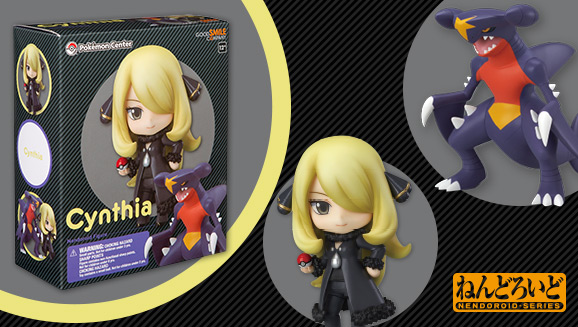
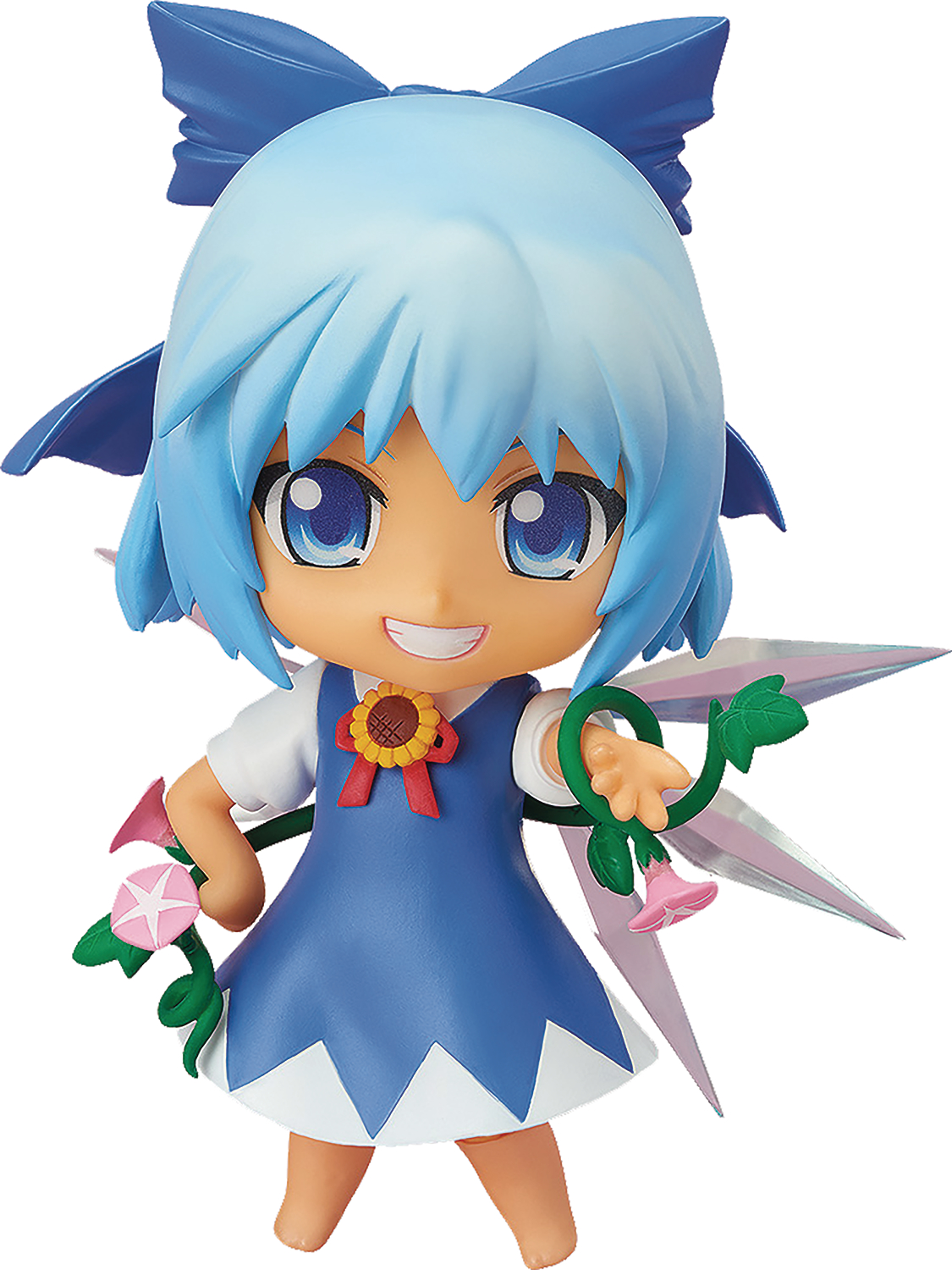
If you’re wondering what a Nendoroid is, it’s a figurine line that originated in Japan. It’s basically like Funcopops, except Nendoroids make Funcopops look like smoldering crap. They are massively more expressive, and usually come with accessories like faceplates and exchangeable limbs for posing.

Here’s an example:

There are already Nendoroid figures of Pokémon trainers, such as this familiar character:

Even the champion from Diamond and Pearl, Cynthia, has been featured:

Could it be that the upcoming D&P remakes are providing strong hints of an upcoming line of Nendoroids? If so, perhaps ILCA are brilliant marketers, after all.

GameFreak must be well aware that most of the revenue that the Pokémon IP generates comes from merchandise. By making a game’s characters look like the merchandise, the interesting aspects of the franchise are being integrated in an intelligent way.

What a brilliant move.

The Pokémon DP Remake Art Style Needs to Improve

When I first saw the art style for the upcoming Pokémon games, Brilliant Diamond and Shining Pearl, I was warm to it. But since then, the artistic direction hasn’t been sitting well with me.

If you’re wondering what I mean, check out the character model in this picture:

I think that would look awesome on a keychain (Etsy artists, you’re probably well ahead of me). But for a core Pokémon title released in the year 2021? It kinda seems like the Nintendo Switch isn’t being pushed to its limits.

I know that GameFreak could do better. But this time, it wasn’t them. The company has delegated work on the D&P remakes to ILCA, which is short for I Love Computer Art.

Among their accomplishments include Metal Gear Rising: Revengence:

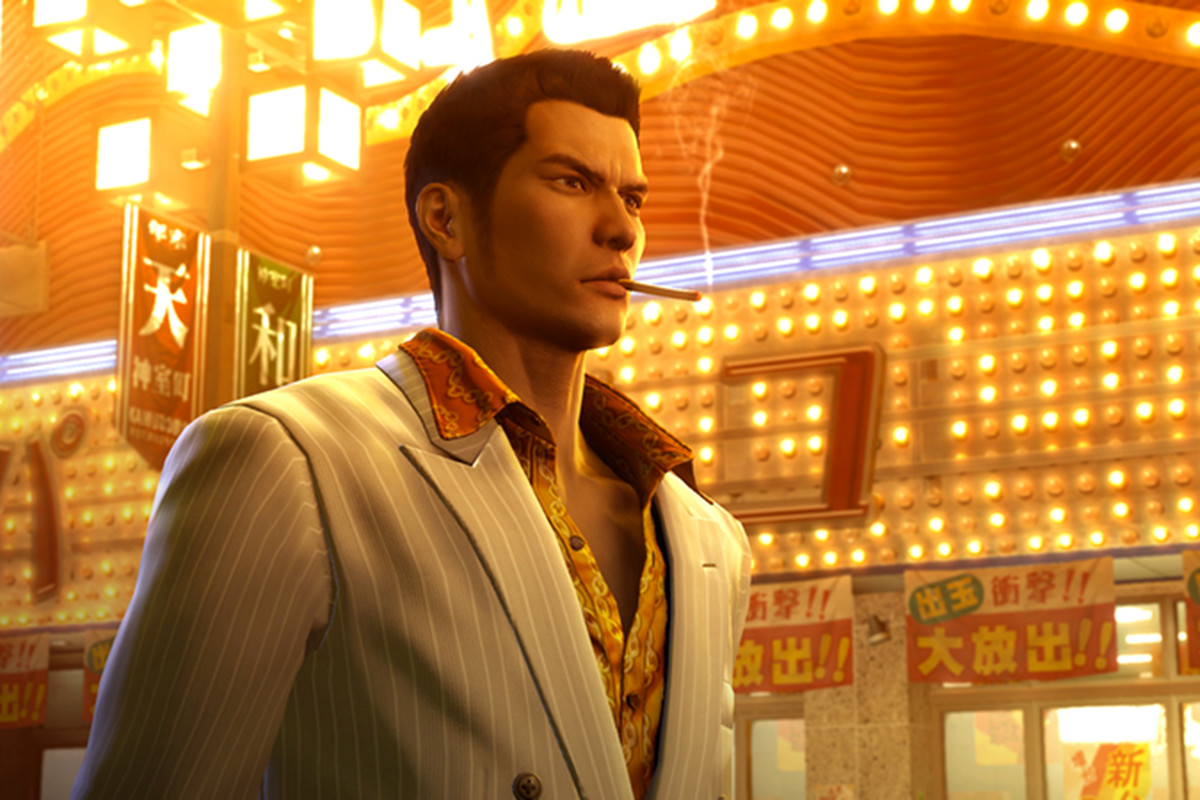
Yakuza 0:

Dragon Quest XI:

NieR: Sutomata:

Ace Combat 7: Skies Unknown:

And now Pokémon: Brilliant Chibi and Shining Smol:

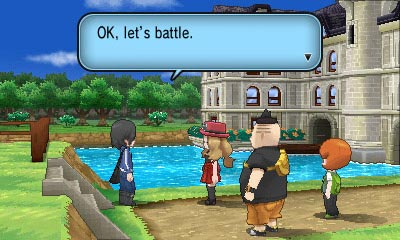
They may “love computer art”, but it’s plain to see when they’re not putting their hearts into it. Unless you can look at this battle scene and really think this is current gen:

So, who gets the blame: GameFreak or ILCA?

The answer is both. Whether it’s GameFreak for delegating work on their most beloved IP or ILCA for not taking it seriously, both are at fault for apparently not caring much, in spite of the fact that the games in question are ones that gamers have wanted to see for years.

Looking at the art for the D&P remakes, it’s obvious what little more could be done to make the games presentable: outlines and cel shading. And Pokémon fans are well ahead of the game in providing examples:

Just the outlines alone would do it. But check out what cel shading could do for, you know, an anime-style game:

And as if that weren’t enough, here’s more simple outlining at work:

Oh, hold on… That screen was from a Pokémon game released back in 2013. My mistake.

Still, they’re excellent examples of what you can do when you actually love computer art.

On top of the lazy look, there’s the fact that the remakes are made out to be faithful to the originals. Depending on how true that is, there might not be much point to them. After all, we already have the original Diamond and Pearl games. Other Pokémon remakes justified their existences with the presence of additional content, and it would be sensible if the D&P remakes did the same.

Comparisons have already been made between the D&P remakes and the recent Link’s Awakening remake for Switch. While a nostalgia trip could potentially justify that game’s purchase, the original is already available to play on 3DS. There didn’t seem like there was much new to it to justify the $60 tag when money was tight, so I didn’t purchase it.

That brings up a question that’s likely making more than a few Pokémon hardcores a bit uncomfortable: “Do I really need either of the upcoming Diamond or Pearl remakes as part of the core experience?”

This isn’t just a spin-off we’re talking about here, it’s a core installment for the single highest-grossing intellectual property of all time. If GameFreak wanted to, they could produce a polygon-pusher of immense scale. It’s hard to imagine that budget would be a limiting factor, especially considering that they work with Nintendo, a company that’s so rich that they could finance their own projects without turning to a lender.

But instead, they outsource their big game to a different company, and accept their half-baked effort to present to the world as part of their big presentation. Those don’t seem like the actions of a company that strongly cares.

Don’t worry, I didn’t forget about Pokémon Legends: Arceus. That’s evidence that GameFreak is capable of making a great-looking game. It’s obvious that that’s the one that GameFreak was more passionate about.

Whether it’s GameFreak or ILCA, it’s obvious that they can do better.

The Right Way to Play Pokemon Diamond and Pearl

This guide is intended to help decide the best pokemon you could choose for a playthrough of Pokemon Diamond or Pearl.

This isn’t like a speedrun, which takes advantage of exploits, nor is it a competitive team-building guide. This guide’s team is intended to be the best selection of pokemon that players can reasonably be asked to assemble to get them though the game with a reasonable playtime, and with little to no grinding for levels.

Many players have attempted guides like this, but usually make mistakes like including competitive builds, which aren’t reasonable for simple playthroughs, or they forget to include HM users, leaving anyone who attempts them to backtrack and find for themselves the pokemon that can get them past roadblocks.

A word of advice, before continuing: Pokémon Diamond and Pearl have caves in them, including Mt. Coronet. These places are pretty cool, but not everyone likes them because it’s in caves that wild Pokémon could interrupt your progress every few steps. Here is what you can do about that:

Buy Repels, and Super Repels. When you enter a cave, activate one. If your lead Pokémon is higher in level than wild Pokémon in that area, they won’t interrupt your progress until you’ve traveled the distance it takes for the Repel to wear off. Repels are cheap, so don’t be afraid to spend a little bit on them to save you some aggravation.

With that explained, on to the team selections:

Any of the three Sinnoh starters are a great choice, and picking between one to compliment this team was hard. But the nod goes to Turtwig, which eventually evolves to Torterra. Torterra takes care of the Ground types that can give this team trouble, particularly Bertha’s Quagsire and Whiscash, which are only weak to Grass. Torterra does great against the first and last gym, but is especially notable in that it’s the only fully-evolved Sinnoh starter that isn’t weak to anything Cynthia’s Garchomp can do.

There’s a couple catches, and that’s that Torterra doesn’t handle Ice, Flying, or Fire-types very well. Worse, these are often fast enough to score the first hit on it. If this is enough for you to consider another starter, none of the other two are a bad choice. Just know that fully-evolved forms of the other two might result in Ground types giving this team problems.

Starly becomes an excellent attacker, and it’s available on Route 202. The first time it evolves at level 14, it gains the super-useful Intimidate ability. If you let it evolve at level 34, it gets the opportunity to learn Close Combat, and it gets great Flying moves throughout its moveset, including Brave Bird at level 49. Even better yet, it gets great Speed and Attack stats, with which to use those attacks.

Staraptor works surprisingly well against Candice, the Ice gym leader, because of the secondary typing of her pokemon. But because Staraptor is weak to Ice, it’s a risky play.

Besides its attack moves, Staraptor has room for a couple HMs, namely, Fly and Defog.

You can also catch Shinx on Route 202. You’ll want one with the Intimidate ability. You’ll know that it has it because it will activate as soon as it appears. Having two pokemon with Intimidate is great, because it makes it so it’s hard for the many physical attackers you’ll encounter to do anything to your pokemon.

Shinx evolves to Luxio at level 15, and again to Luxray at level 30. It’s a powerful physical attacker that gets strong Electric and Dark moves, giving you an answer to Crasher Wake and Lucian.

Bidoof is also available on Route 202. It’s not going to be a battler for your team, it’s instead there to give you mobility with the HMs it learns, keeping moves free for your primary battlers. The HM moves that Bidoof learns are Cut and Rock Smash.

Bibarel is available later on, at Route 208. Its purpose on your team is similar to Bidoof, except Bibarel can learn four HMs that Bidoof can’t, which are Surf, Strength, Waterfall, and Rock Climb.

You meet one of the two cover legendaries as part of a scripted event, and they are Dialga (Diamond Version) or Palkia (Pearl Version). You encounter one of these two on the summit of Mt. Coronet, late in the game. The catch rate is low, so you might want to save the game before attempting to battle it (Palkia, being a Water type, is easier to catch in a Net Ball than an Ultra Ball). They may be a few levels behind your team’s battlers, but leveling them up isn’t much trouble, and their stats, typing, and movepool more than make up for it.

Dialga’s typing lends it many resistances, and it’s only weak to Fighting and Ground. The idea of a move that requires recharging might not sound appealing, until you consider that Roar of Time comes off Dialga’s super-high Sp.Atk stat!

Palkia’s typing means it’s not weak to any type in particular, except to Dragon (remember that in the DP days, Fairy wasn’t a type yet). Palkia’s signature Spacial Rend is very spammable, but strong Water type moves aren’t a bad thing to have!

Once you have the Beacon Badge, you’ll be able to find the Adamant Orb and Lustrous Orb in a room in Mt. Coronet, with the help of a pokemon with Waterfall. Waterfall can be obtained from Jasmine in Sunyshore City after beating Volkner. By the way, is something going on between those two?

How to beat Cynthia’s Garchomp

Cynthia is considered by many to be the hardest champion in any Pokemon game (though Iris seems to be a handful). Cynthia has a diverse team of top tier pokemon, among the most problematic of which are her lead pokemon, Spiritomb, which doesn’t have a weakness (pre-Fairy type), and Milotic, which can use Mirror Coat to retaliate double for Special attacks.

But the hardest pokemon on her team, by far, is Garchomp. This has left many players scrambling to add a fast, hard-hitting Ice type to their teams.

Except you don’t really have to, because of what this team can do.

When Cynthia sends out Garchomp, shift to Luxray (if your battle style is set to Shift, which it should be). “But, Luxray is weak to Garchomp, so why?” you might be asking. This seems crazy, but it’s actually not. When Luxray is sent out, Intimidate activates, lowering Garchomp’s Attack stat. Garchomp is a physical attacker, so this makes the battle much easier. Then, switch Luxray out for Staraptor immediately. Staraptor’s Intimidate goes off as well, and if Garchomp is (predictably) going for Earthquake, it wouldn’t work on Staraptor.

The idea is to swap between Luxray and Staraptor for as long as you can get away with it, or until Intimidate has activated 6 times, bottoming out Garchomp’s Attack stat. At that point, there won’t be much that Garchomp could do to you. Go after Garchomp with strong attacks, and if things go well, that should finish it. Then, you’ll have beaten a pokemon that’s been a nightmare for many, many trainers by being clever.

But what about…

There are a few pokemon that some might have wanted to see on this team, but for some reason, weren’t. Here are a few of them:

Piplup or Chimchar are both great starters. The choice between these was very close. For this team, the choice was made for Turtwig because it rounds this team out just a bit better.

Abra and/or Azelf are both hard hitting and fast Psychic types, but it’s not a great defensive typing, and becomes especially glaring considering their low defensive stats. What’s more, Abra needs trading to fully evolve, so if you go with Kadabra, eventually replacing it with Azelf might not be a bad choice.
Gible can be found at Wayward Cave, but in Diamond and Pearl, the area you find it in requires Strength to access. By the time you can get it, it’s somewhat late in the game for a pokemon at that low of a level.

So, what do you think? Can you think of some ways to improve this team? Are you thinking of trying it for yourself? Or are you looking for some team ideas for the upcoming remakes? If it turns out that a different team might work better for the remakes for some reason, I might make a separate guide for those.