Category Archives: Uncategorized

Things to Know Before Going to College (Part 4)

There’s a lot to know before going to college. Here are a few more things.

16. Be ready to do presentations.

People dread presentations. There’s an element of public speaking, and knowing that you’re going to be judged by your peers right in front of you. It’s difficult, and most of us would rather not do it.

But if you’re going to college, you’re probably going to have to.

In fact, nearly all of my non-math, non major-specific courses had me do presentations (and some of those had me do them, too). It got to the point that I kind of suspected that it was some kind of crutch to pad out the curriculum. But still, nothing quite demonstrates that you grasp the material quite like your ability to explain it.

Sometimes, you might have one due, but that doesn’t mean that you’re going to be ready for it. I actually had a presentation to deliver in a programming class, of all things. And yes, it is possible to give a presentation on programming microcontrollers and it can somehow be interesting. It may as well be, considering that we’re the ones giving it, and if we find it boring, it’s our own fault.

As the presentation was coming up, my program wasn’t working, and I went over my program numerous times without finding out what was up. It got to the point that I almost accepted the fact that my program didn’t work, even if I was able to explain the idea in theory and could explain each line of code step-by-step. But right before the presentation, it occurred to me that there might have been a register that needed to be reset. So I gave it a try on the simulator. That did it. And my presentation was a success.

If you have to do presentations, you might have moments like that, especially if you get into something really technical. It’s sure frustrating when something doesn’t work and you have no idea why, but it sure does feel great when you find out what the problem is, and the result is something that works. When you have to do a presentation about it, there’s more at stake, but it also becomes more rewarding.

When you do enough presentations, you might learn something about yourself, which is that presentations aren’t as hard on you as they’re made out to be.

17. Many of your peers will be unsupervised for the first time.

This isn’t an invitation to throw an entire age group into a category to be labeled as problematic. After all, most of the people that go to college do so with similar goals. But there will be some among your fellow students whose college experience will be their first away from home, and there will be those among them that will allow that to go directly to their heads.

For the first time, they’ll be sharing a living space with people who aren’t their family members, and they might not immediately understand how to deal with something like that. Not only that, the lack of parental supervision or anyone enforcing certain boundaries may result in them making some choices that their peers would more readily recognize as unwise.

From my observations, it seems like the more successful students are those who understand the value of the opportunities presented to them. I suspect that this comes from having worked in low-paying jobs for a while, and in having done so, developing a desire to take their careers beyond. As far as this goes, I do have experience. I’ve worked in grocery and retail for years before going to school, and have attempted to get by on what little I’ve made. At some point while I was doing that, I came to believe that a college education would go a long way in making my situation better. So I went for it.

A person is less likely to arrive at this conclusion if they’re only at college because their parents signed them up for it just to get them out of the house. I’ve seen a student for whom that was the case, and he didn’t last very long. In fact, he was once thrown out of class for falling asleep during a lecture. Yikes.

If you’re a younger student, it doesn’t have to be the same way for you. You might be glad to be out of high school and in no hurry to return to a scholastic environment. But take a little time and consider just how valuable an opportunity to earn a college degree really is. One thing to think about is that not everyone who applied was accepted. Another thing to think about is what kind of job you can do with your degree, and how much harder it would be to get a similar job without one. Considering such things can lead to developing a valuable perspective.

18. Become a good test taker!

It’s not a bad idea to pay attention to the syllabus and how you’ll be graded. In many (if not most) college courses, tests count for more than half of your grade!

This doesn’t mean “ignore your homework,” after all, every bit helps. But there’s a lot at stake for tests, because how successful you’ll be will largely hinge on how well you do on these.

This is great news if you’re a good test-taker. But if you’re not, you can become one. There are numerous tips out there that can make you better at scoring high on those tests, and rocking that GPA! Here’s a few that worked for me:

  • Before answering any questions, go over the test once and pay attention to how many questions there are, and how long some questions may take to answer. This will give you a good idea of how to budget your time.
  • You don’t have to answer the questions in order. If one question stumps you, just leave it and come back to it later. A different approach to the problem may come to you after having answered other questions.
  • Impressed by those people who finished first? Don’t be. They probably bombed, or don’t even care. In fact, you’d probably be better off using up nearly all the allotted time, since you could use that time to go over your answers. You might even catch a mistake, and earn yourself some points you’d have otherwise missed.
  • On math tests, it’s not a bad idea to show your work. Some professors award partial credit if they can locate where you goofed, and suspect that you have a good idea what you’re doing.
  • If, during a lecture, the professor says something will be on the test, it’s a good idea to write it in your notes and come back to it. They’ll say that if they really want you to remember it!
  • Remember to put your name on the test. Oldie, but goodie.

Tests count for a lot in college. So if you become good at test taking, you’ll have an edge. Just don’t neglect your homework. And speaking of…

19. Prepare for tons and tons of homework.

I’ve heard of a student that aced all his tests, but turned in no homework. Tests counted for 70% of the grade, while homework counted for 30%. As stated earlier in this series, 70% is usually not a passing grade in college.

If you, for some reason, refuse to do homework, you’ll almost invariably fail. That’s how it goes when your final grade for a course falls by three letter grades.

So, it counts for a lot. Just do it, and you’ll be set. Right?

That’s much easier to say than to do. Some courses give a lot of homework. I’m not even kidding. It wasn’t unusual for a math course to give me two or three dozen problems to solve, and on top of that, a dozen or so from the textbook or a worksheet. I remember that it was a lot of work, but I went for it. And I went to bed tired.

Not only that, the way your classes are scheduled will lead to you budgeting your time in interesting ways. Some courses might be scheduled Monday through Friday, but some are scheduled Monday/Wednesday/Friday or Tuesday/Thursday. You’ll see times in which you’ll have just a little homework and have five days to do it, and you’ll have days in which you’ll have a mountain of homework and just a couple days before it’s due.

You’ll have days in which you’ll be tempted to put that homework off until just before it’s due, but that’s generally not a good idea unless you have assignments from a different class that are due in the meantime. You’ll also have days in which you’ll have to make time for powering through your homework, taking it on based on priority.

In the workforce, once you leave for the day, there’s usually no need to even think about work until you clock back in again. College is different, and it’s something that you’ll have to endure while you’re a college student.

20. Maintain a positive attitude. It does count!

While it’s true that earning a degree is a challenge, college is a great place to be, and that’s a great thing to keep in mind. In fact, many people look back on their college experience as the best years of their life. There’s no reason for you not to enjoy it, too.

A sour, cynical outlook can go a long way in holding someone back. One student I went to school with seemed to randomly decide that he was going to be bitter about things. I don’t know what was going on with him, but whatever it was, it wasn’t good. After that point, he was grumpy and allowed little things to bother him. It seemed like he wanted to stew over whatever it was that was getting to him.

It came to be that on graduation day, I was seated next to the guy. He was grumpy as usual, sitting there with his arms crossed, even though it was his graduation day, and was supposed to be one of the most meaningful accomplishments in his life. Did he drag me down? No. At one point in which most students stood up to clap, I did too, but he just sat there without making a sound. He shot me a look, and detecting that, I shot him one right back, to which he quickly looked away. Of course. Cynical doesn’t mean “strong-willed”.

How cranky would he have been from that point forward, going into his new career? I don’t know, but he didn’t really do anything to bring down the atmosphere for the rest of us. It was a great day for us, even if it didn’t seem to mean as much for him.

People go to college with the expectation that, after having done so, a better life awaits them with a college degree. That kind of expectation is called, “hope”. While many imagine hope to be some kind of passive wishful thinking, that doesn’t really do the word justice. Hope is the expectation that, after a series of events, there will be a positive outcome, an outcome worth the waiting and effort it takes to bring a person to seeing that outcome.

When you have hope, it’s easy to have a positive attitude. It follows, as a matter of cause and effect.

I might have even more installments to this series at a later date. In case you missed them, here are the other installments:

Part 1 of this series
Part 2 of this series
Part 3 of this series

Things to Know Before Going to College (Part 3)

This is a continuation of a series of things to know before going to college. As the title says, this is the third part thereof.

11. Locate lesser-used restrooms.

While dorm restrooms are regularly maintained (usually weekdays), the fact is, not everyone who uses them practices proper hygiene. It’s usually other students who make the restrooms difficult to use. What’s more, the sanitation staff is often away on weekends.

Therefore, there is benefit to locating restrooms less frequented. To this end, it helps to procure a campus map, and put some time into locating restrooms in other buildings. As you find them, mark them on your map along with the times that the buildings are open. Another thing to note is whether the buildings are open on weekends. After having done this, you can assign priority to restrooms in the event that you’re in a hurry, and have reference for availability.

There are several recommendations that can be scouted out. One would be near the admissions office. This is because the school wants to make a good first impression, and that’s often the first restroom one visits in that school. Another one to try would be in the main office building. That place gets a lot of visitors, so there’s reason for the school to keep the restroom well-maintained. An excellent place to try would be the library. After all, the library usually only has a few students at a time, and they might not even think to use the restroom while there.

If you have to take a shower, you’ll probably have to use the ones in the dormitory. It’s doubtful you could use the one in the rec center, but considering that it’s used by a bunch of jocks, would you really want to?

There is a bit of a peeve that I can bring up, here. Some students make a point of not flushing the toilet after they’re done, in an apparent effort to save water. They’ll usually do this if they only go number 1. What makes their efforts annoying and self-defeating is that the next person who comes in is going to flush before sitting down. People already hate when water splashes up and hits them on the bum when they’re dropping a deuce, when that toilet water is mixed with someone’s pee-water, that makes it even worse.

So, what’s a person do to? Flush before sitting down. Then, once their business is accomplished, they do their duty by flushing for themselves. So, one person comes in, then doesn’t flush. Then the next person flushes twice. The net total of water saved is exactly zero. Another failed attempt at environmentalism pointed out by some guy who over-analyzes things.

12. Be an activism avoider.

There is something about activism that appeals to a restless desire to bring about change. While college is seen as a natural place for it, you’d be much better off keeping activism separate from your college experience.

Avoiding activism is a good idea because activism is, as it has always been, a fast and effective way to get in trouble. And getting in trouble in college often means one’s college experience coming to an end.

So, don’t let it be you. If you see a bunch of kids gathering together and making a ruckus over the Social Justice flavor-of-the-week, just avoid them and find another way to get to class. They went to college to throw temper tantrums, you’re there to better yourself. Eventually, these kids will tire themselves out from banging some pots and pans together, and return to their dorms having not accomplished a thing. Either that or they’ll have worked themselves up to rioting, with some of them having been arrested or facing expulsion (inclusive or, because it’s likely it could be both). In any case, you should recognize that there’s no benefit to being counted among them.

Years later, you’ll be ordering a coffee at Starbucks, and they’ll be the ones to serve you because they wasted their college years attempting yet another failed communist uprising.

13. Don’t expect any privacy on the school’s network.

Once upon a time, people acted on the internet with almost complete anonymity. That age has been over for a long time, but there are still those who believe that this is still the case.

What does this have to do with college? It means that you have to be rather well-behaved while on the school’s network. This is because the IT department can see what you’re doing on their computers. And your own, if you’re using the school’s network.

If your classroom has computers provided, the instructor will be able to see what’s on your screen using their own. In a software course, I remember that the instructor called students out constantly for playing flash games during class. And it kept happening, as though no one was figuring out what was going on.

In another class, a student was caught looking at DeviantArt pages by the instructor, who told him that it wasn’t time to look at “furry porn”. Yes, he actually called it that. And the same student was caught doing the same thing again. He was again called out for it, but still somehow avoided getting in trouble.

In another incident, a major motion picture company brought to the school’s attention that one of the students pirated two movies. The school then sent out a mass email telling whoever is doing that to stop. I remember that one of my classmates admitted to his friends that it was him, though it’s possible he was joking. After that, another mass email was sent out, because apparently, the same thing happened again.

The use of mass emails doesn’t mean that the school couldn’t figure out who it was. But it’s possible that the motion picture company knows the device used. Motion picture companies tend to go after large companies rather than individuals, because large companies tend to have more money to go after. Considering this, the college would have great interest in finding out who’s behind it.

The takeaway is, school networks are a terrible choice for cybercrime.

14. Parties are generally a bad idea.

If you buy into the mainstream narrative, then you see college as a place to go crazy with the partying. And I mean crazy, lampshade wearing, neckties as headbands, partayz!!1 because that’s apparently the way they do it! Except don’t do it.

Partying in college is generally an insanely idiotic idea. Why? Because at parties, things get carried away and people make regrettable choices with consequences. And because people get drunk at parties, which results in hangovers, which makes studying a whole lot harder. And because you don’t have time for it. And because not everyone there might be of legal drinking age, and you don’t want to be anywhere close to there when that gets busted.

Contrary to some popular misconceptions, college is not a place for acting like an inebriated dimwit. It’s for just the opposite. The idea is to become good at doing something so that you can spend the rest of your life doing what you want to do. Parties are where people end up doing what someone else wants them to do after their inhibitions have been sufficiently crushed.

Don’t be dumb.

15. Don’t associate with cheaters (and don’t cheat).

This is one of those things that goes without saying, but saying it anyway gives me an opportunity to tell another story.

In my freshman year, one of my classmates tried to cheat on tests. I myself wasn’t aware of it until after he had dropped out, but according to another classmate, he would try to text him during tests for answers. He told him that he shouldn’t be doing that. The cheater had a kind of deer-in-headlights expression to him, so it would seem that the work was a little much for him, but it was hard for him to back out. Eventually he did, and didn’t bother returning the next year.

It’s unlikely for a person to cheat their way through college, since if a person doesn’t understand the curriculum, they likely aren’t clever enough to avoid getting caught. But if someone somehow was able to pull it off, where would they go from there? Because they didn’t really have what it took to get through college, they didn’t develop the skill necessary to thrive in their trade. So, what then? Is it their plan to BS their way through the rest of their professional career?

It really seems like it would be less effort to study hard while in college than to maintain a ruse through the rest of one’s life.

More to come? Yeah, there is.

Part 1 of this series
Part 2 of this series
Part 4 of this series

Things to Know Before Going to College (Part 2)

This is the second part of a series on things to know before going to college. The first part dealt with some pretty broad topics. This part starts to deal with some more specific matters.

6. Rock that GPA!

Colleges often require that their students maintain a Grade Point Average (GPA) at or above a certain level in order to stay enrolled. Usually, the minimum GPA is something like 2.0. Therefore, the higher your GPA, the better off you are.

What’s more, colleges have a different standard for a passing grade. While high schools generally consider a D- (60%) a passing grade, colleges generally consider a C (72%) a passing grade. A C- would not be a passing grade!

Oftentimes, students start out the semester by taking it relatively easy, thinking that they don’t have to work really hard until later, or that they’ll make up for it later. Don’t fall into that trap!

Instead, the beginning of the semester is an excellent time to put in a lot of effort. This is because semesters usually begin with easier material in classes. This makes it much easier to get As on those assignments and tests earlier on. So go for those easy As and rock that GPA!

There is an added benefit in that the early material in classes is foundational material, an understanding of which would make it easier to succeed later in the semester. All the more reason to go for it early on.

7. Don’t game the system as a “career student”.

While I’ve seen the term “career student” used in different contexts, what I’m referring to here is also called a “perpetual student”. A career student is one who games the system and puts off graduation so they can kick it up as a student for as long as they can get away with it, effectively putting off having to make payments on a massive debt that they accumulate as time goes on.

Their objective is to hang around, eat the food, and not worry about rent. To this end, they usually withdraw from courses as the deadline approaches so they can re-enroll the next year.

These students are despised by pretty much everyone else. The professors don’t like them because they know what they’re doing, students don’t like them because they’re an insult to those of us who are out to better ourselves, and both groups don’t like them because the seat that they’re taking up could instead be used by someone who is serious about what they’re doing.

Eventually, their game catches up to them. In time, they’re going to have to graduate, at which point they’ll have a huge debt to deal with, and they’ll have to explain to curious potential employers why it took them 4 years to earn a 2 year degree.

Don’t let it be you.

8. Textbooks are ridiculously expensive.

There are numerous jokes about how expensive textbooks are. For example, here’s one:

Did you hear about the thief who made off with over $500 in merchandise from the book store? He stole a college textbook and a bottle of water.

Those jokes will seem less hyperbolic once you see the prices on these textbooks. They are ridiculous. And sometimes, I suspect that they are as pricey as they are because students pretty much have to buy them. Goes to show what can happen without a free market.

For my first semester in college, six textbooks were required. The least expensive one went for around $30, while the most expensive went for around $200. Altogether, the bill for books came to around $500. And from what I hear, that’s not even as bad as it gets.

For how expensive these books are, you might think that they are of paramount importance, and that we use them in nearly every class session. Not really. Some of my textbooks were barely opened at all.

As you go to school, it’s a good idea to find out what programs exist to help you afford your textbooks. Some colleges have programs that hook new students up with former students so they can buy the books directly from each other. There are also colleges that offer a program where the books can be rented, or even borrowed at no charge.

Some schools have their textbook in their libraries. Don’t count on them to allow you to continually borrow them to meet class requirements, however. My previous school discouraged this.

One time, someone stole my video games. Not all of them, just the ones they wanted. They could have stolen my textbooks and come away with a pretty penny, but they didn’t touch them, even though my books were the most expensive things I owned at the time. Perhaps the thief wasn’t so much interested in electronic engineering as they were in electronic consumerism.

9. Don’t neglect your health.

College is one place where you want your brain to behave optimally. In people who are physically healthy, the brain tends to have what it needs to work well. Therefore, don’t neglect your health when in college.

Generally, you’re better off making better dietary choices where possible. Not only that, it’s a pretty good idea to stay physically active.

It’s tempting to go for plenty of desserts just because they’re offered by the dining hall, and to load up your plate because they don’t limit your portion sizes. But it’s a good idea to mind what you eat. The dining hall offers fruits and vegetables, so it’s on you to choose to eat them. Also, the dining hall isn’t at fault for offering plenty of pudding, it’s on you to not have too much. Also, eat some meat and dairy products. The human body doesn’t synthesize B vitamins, and they’re not in vegan sources. Your brain needs that, so don’t ignore it.

Eating wrong results in stomachaches and other problems that make it hard to do things like sleep. Functioning optimally is better than being a human dumpster.

Also, go out for a walk from time to time. It’s actually a good study habit, as after about 20 minutes of focused studying, a person retains the information better if they spend about the same amount of time walking about trying to recall what they just studied. Not only will you be in better health, you’ll also be a better student. It’s win-win.

Here’s another story. One time, after a long day, I arrived back on campus, only to find that the dining hall was already closed. So I went to the dormitory lounge rooms and checked under cushions for the change needed to buy some instant ramen. Afterwards, I barely had enough to do it. So I bought it, cooked it in a microwave, and ate it. Afterwards, I felt sick to my stomach. That wasn’t what my body wanted. That night, I still felt hungry as I went to bed, and the dining hall wouldn’t open again until 10:30am the next day.

What did I learn? It’s a good idea to get a stash going that has something besides ramen. Or at least some emergency cash.

10. Don’t forget to bring what you need.

Before you go to college, you might want to make a checklist of things that you’ll need when you’re there. This is especially true if your college is located a substantial distance from home. After all, once you’re there, it might be really hard to procure what you forgot.

Colleges usually have a recommended list of items for students planning on moving into dormitories. If you can find and print out such a list, that makes a good starting point. They usually also mention a list of prohibited items, which can help to know.

Here is a list of items I recommend, based on my experience:

  • Quarters – Find out whether you’ll need these to do laundry. If so, try to bring a lot of them. Those M&Ms Minis tubes are just the right size for storing them. Also, keep to yourself that you have them. Otherwise, you’ll see your collection diminish as people hit you up for them.
  • A calendar – Helps you keep track of due dates and important dates, such as for tests.
  • Laundry detergent and dryer sheets – You’ll likely have to bring your own.
  • A locking filing cabinet – Sometimes, people try to steal stuff.
  • A broom and dustpan – Keeps the dorm tidy.
  • Power strip with surge protector – The few outlets you’re given don’t seem to be enough. Bring a power strip. Or two.
  • Extra blankets – You’ll be glad you have these when it slips the staff’s mind that it gets cold during the weekend, and they forget to turn the heat up.
  • Electric fan – Same principle as the blanket, except for when the weather is warmer.
  • A mug – Coffee? Tea? It helps to have something to drink out of.
  • Index cards – Super helpful for many reasons. They make great bookmarks. You can copy your schedule onto a couple and keep it on you for easy reference. You can also keep one on you to keep track of pending due dates. They can be used as flash cards for studying. It’s surprising how useful these things can be.
  • Some tea or something – because water gets boring.
  • A coat and warm clothes – It might be warm when you move in, but winter will come shortly.
  • Paper towels – Accidents happen. Better safe than sorry.
  • Posters or flags – Covers those boring walls. Besides, anime posters rock.
  • A printer – This might appear on your recommended list anyway, but it’s so important that I decided to include it. You’ll have assignments to print up, so this serves you well. Also, remember to bring a stapler.

There might be more, but this is based on my experience. I left some common sense items off because you probably thought of them anyway, as well as items you’d find on a list of recommendations to begin with.

There’s a lot more to know about before going to college. More to come.

Part 1 of this series
Part 3 of this series
Part 4 of this series

Things to Know Before Going to College (Part 1)

College is a wonderful and daunting experience. There’s nothing quite like the freshman year, when things are new and you’re surrounded by numerous unfamiliar faces. Without some good advice, one can find themselves lost in their new environment.

Because of this, I’ve decided to make a list of things to know before going to college which may be helpful to those going for the first time. This list won’t be in any particular order, and it’ll flit about numerous topics and maintain a broad scope.

1. Be careful who you take advice from.

Before even setting foot on campus, you’ll likely be inundated with advice on college life. Much of the advice conflicts, and not all the advice is good. It can be taxing to consider so much advice at once, but it doesn’t need to be.

One principle that I’ve found helpful in determining the value of advice is to consider the qualification of the person who is offering the advice. This requires knowing something about them, but goes a long way in determining whether their advice is valid.

If a person is a school guidance counselor, their college advice is probably really good. After all, they have a position that makes them close to many college students, and in their experiences, they see what works and what doesn’t. Also, if a person has been to college, they’re likely to have insight that would help someone who hasn’t gone yet.

On the other hand, you might want to be a little leery of advice offered by those who have dropped out of school. After all, they didn’t succeed in making it work out, so whatever advice they have to give can be viewed in the light of how it worked out for them. The same goes for people working low-wage jobs. A college degree is intended to help a person’s career; if that person’s career is in the dumps, they might not have good advice to offer. That’s not to say that they can’t offer helpful college advice, but that’s a lot less likely to be the case when it’s coming from them.

You definitely want to be skeptical of advice offered by someone who doesn’t see the value of a college education and has no idea why anyone would go for such a thing. If they hold such an opinion, what would college success mean to them, whether for themselves or for you?

Not only that, there are a ton of “armchair experts” out there whose expertise with the college experience is limited solely to the fact that they know someone who went. Based on reasoning like theirs, a person can be an expert on Japanese culture because they know someone who speaks Japanese, or a person can be an expert on the Jewish religion because they work with a Jewish person. There’s a lot more to expertise than that.

When taking college advice, consider the qualification of the person giving it. That can help you get through the fog and go in the right direction. What about me? I’ve been to college before, and I’ve graduated, so I’m capable of giving some good advice. But if you’re unsure about some of the things you see in this list, it might be a good idea to bring them up with other people, so you get more insight. Taking helpful advice from one qualified source is good. Taking it from several good sources is even better.

2. Learn campus rules. Even if you don’t, they still apply to you!

When going to a new school, it’s a really good idea to learn the campus rules. I know that sounds like a preachy thing to say, but it’s a good policy on the reasoning that even if you don’t learn campus rules, they still apply to you.

I understand the principle of “just use good common sense” holds up pretty well in most places you go, but the excuse of “I just didn’t know” doesn’t hold up as well as people think. For that reason, it’s a really good idea to find out what the rules are. After all, when you know what the boundaries are, and make an effort to avoid crossing them, you’ll be far less likely to get in trouble.

On campuses, there’s usually a rule that smoking should only be done in designated areas. Are dorms designated areas? They usually aren’t. That’s helpful to know before smoking in a dorm, and it’s considered every student’s responsibility to know. If someone says something like “no one told me that rule”, what they’re saying is that they can’t be a responsible student, especially if it’s posted somewhere what the smoking areas are, and that dormitories are clearly not among them.

Schools also have strict no-weapons policies. So don’t bring those. There are places where it’s not clear whether pepper spray or Swiss Army knives are weapons. Play it safe and don’t bring those, either. For a rather severe example, a freshman at a school I went to once brought a katana with him, and carried it on his person. He apparently wanted to live some kind of Bushido fantasy. It didn’t take long for campus security to catch up with him, and he was quickly expelled. True story.

So yeah, learn what the rules are. If you do, you’ll be less likely to run afoul of them. It might be a good idea to reread them from time to time, like once a year. Play it safe.

3. It makes a difference what you go to school for.

This is a point that’s been made so many times by so many people that it’s difficult to say anything on this point that hasn’t already been said. But it belongs on a list like this, so I thought to include it. The point is, it matters what you go to college for, not just that you go to college.

Think about it: college’s purpose is to start you on your career path, or give it a solid boost. If what you go to school for doesn’t result in a fulfilling career, then you’re better off going to school for something else.

In this regard, English majors usually get picked on. It’s not that English majors don’t find fulfilling careers, but they do have a harder time of it than most other majors. Generally speaking, a person is better off not majoring in an elective, unless that elective is Math.

So, what does one go for? The best majors are usually ones that give a person skills to do a job or certain kind of job. And if the job pays better, that makes it a better choice (after all, there are student loans to repay).

A proper mentality is to think about what you want to do for a living. Would you want to be a doctor? A lawyer? An engineer? A programmer? Or something else? Then, once you’ve decided, you pick a major that does a good job of preparing you to do that. After all, college is intended to prepare you for your future job. If what you’re doing in college doesn’t do that for you, then maybe it’s time for you to rethink your approach.

4. Try to determine whether you may be buying into a false narrative regarding your future career prospects.

That point is a mouthful, but it’s important to think about. And it’s not always that someone is lying to students about job prospects; sometimes a student may be misguided about just what their degree does for them because they didn’t do their own research. Sometimes, people do fool themselves.

For one thing, it’s possible for a person to obtain a college degree without understanding the distinction between an undergraduate or a postgraduate, or between an associate’s degree or a bachelor’s degree, or how they can affect one’s job prospects.

I’ve heard of a student who obtained an associate’s degree in Electronic Engineering Technology who, after having graduated, believed that that made him qualified to be an electrical engineer. He even succeeded in finding a job as one. However, he was quickly overwhelmed with problems that he wasn’t prepared to find the solutions to! But, “Engineering” is in the name of the degree, right? Yeah, but an associate’s in that usually prepares one for industrial electrician jobs or working as electronic technicians in laboratory environments, which isn’t exactly the same.

As with the previous point, it’s better to know what you want to do, then determine the major that helps you achieve it. To understand what you want to go to school for and how it affects your career aspects are two points that are very closely related, so I put them on this list back-to-back.

5. Having a degree still makes a difference.

There are too many anecdotal stories out there that try to make the case that a college degree doesn’t make the difference it used to. As these stories are passed on, they have the effect of discouraging younger people from living up to their potential.

In reality, a college degree matters more than it ever has. It makes the difference between having a job that you’d love waking up in the morning to do, and barely getting by with a grocery, retail, or restaurant job wondering whether you’ll ever be promoted to management.

Not only that, a college degree makes a huge difference in one’s earning potential, even considering the increasing expense of student loans. Think about it, what seems like a better deal:

  • Making $50,000+ a year (results vary, do your research), with a debt that one can pay off in only about 10 years, or
  • Making $18,000 a year, possibly for life.

Your student loans go to an investment, not just an expense. While it’s true that student expenses are getting pretty crazy, it’s still a better choice than being broke your whole life.

Contributing to the problem are the stories thrown around, such as that Bill Gates became successful without a degree. Pointing to outliers only demonstrates that there are rare exceptions, and people who buy into them are apparently banking on becoming a rare exception, and in so doing making a terrible gambit.

It may be true that your granddad got by without a high school education, but he grew up in a time when high school educations weren’t needed to get a decent job. It may be true that your dad didn’t get a college education, but he was a child of a different time. Today, the job market is far more competitive than it ever has been, and if a person wants to afford a house, a car, and a family, that usually takes a job that requires a college degree.

You might have heard it said that a college degree doesn’t mean as much as it used to, but the fact is, it’s more important to have than it ever has been!

This is getting to be a bit lengthy, and there’s still a lot more ground to cover. So this is going to be the first of several parts. More to come.

Part 2 of this series
Part 3 of this series
Part 4 of this series

No, you can’t make an “authentic” Philly cheesesteak at home.

Menu-PatsSteaks-3077A Philly cheesesteak, easily mistaken for a dirty diaper. (Source: Pat’s King of Steaks)

The Art of Manliness did a piece on how you can make an authentic Philly cheesesteak at home. Being from Pennsylvania, I know that there will be some who take issue with this article. Mainly, with the very idea that an authentic Philly cheesesteak would be something that a person could make at home.

According to Pennsylvanians, the authentic Philly cheesesteak is something that a person can only find in Philadelphia. If the sandwich was assembled anywhere else, it’s not an authentic Philly cheesesteak.

It might seem petty to say that a sandwich is not authentic for having been made in a different location, even though it’s assembled with the same ingredients in exactly the same way, and that’s because it is. To understand this pettiness, one needs to understand the mystique surrounding the Philly cheesesteak.

To Pennsylvanians, there is no such thing as a bad Philly cheesesteak, and they hold the Philly cheesesteak as beyond reproach. If you don’t like the Philly cheesesteak sandwich, then it’s because you didn’t have an authentic one. As already mentioned, authentic Philly cheesesteaks are only made in Philadelphia. If you had one there, and still didn’t like it, then you went to the wrong place.

This provides ample opportunity for the Philly cheesesteak to escape criticism, because there are a number of restaurants in Philadelphia that claim to offer the authentic Philly cheesesteak, and in each case, there is dispute surrounding their claim of authenticity. So, you can’t criticize the sandwich unless you’ve had one from every possible establishment in town, otherwise, there’s at least one place for the fanboys to retreat to to defend their beloved sandwich.

For one thing, I don’t want to have to eat a couple dozen cheesesteak sandwiches before I decide I don’t like them. One should suffice. The fans can instead explain to me just what it is that each of these restaurants do that’s any different from one another, and explain just how that impacts the quality of the sandwich.

But what if you were to lose your mind and decide to go eat at every cheesesteak joint in Philadelphia? Upon completion of this task, do you finally have the right to criticize this sandwich?

Not quite.

There are different ways to order your cheesesteak. Not only that, you’re expected to order it with a proprietary cheesesteak lingo. For example, if you want a cheesesteak with onions, you’d say,

“Wiz wit”

And then you’d feel like a moron, because it’s impossible to talk like that without sounding like one. Decoded, what this means is “with Cheeze Whiz, with onions”.

And no, I’m not kidding. The Philly cheesesteak is made with Cheez Whiz. While you’re mulling over just what tragedy of thinking resulted in a major American city accepting a sandwich made with Cheez Whiz as its representative sandwich, here is the Cheez Whiz ingredients list:

Whey, canola oil, milk, milk protein concentrate, maltodextrin, sodium phosphate, contains less than 2% of whey protein concentrate, salt, lactic acid, sodium alginate, mustard flour, Worcestershire sauce (vinegar, molasses, corn syrup, water, salt, caramel color, garlic powder, sugar, spices, tamarind, natural flavor), sorbic acid as a preservative, milkfat, cheese culture, oleoresin paprika (color), annatto (color), natural flavor, enzymes.

I thought it was illegal to call something “cheese” unless it actually contained cheese, but to Kraft’s credit, they don’t technically do that. They call it “cheez”, which may sound identical, but is spelled differently enough to get around the law and still trick poor people.

Another way to sound like a moron while ordering a sandwich is to say:

“Wiz wit-out”

Which might have made your ears perk up a little, because even though it still sounds like toddler speak, it sounds as though there’s a variant without Cheez Whiz, and a sandwich made with steak and onions sounds pretty decent. The catch is, the “wit-out” part is referring to the onions, so you’d be ordering a steak and Cheez Whiz sandwich.

You can order the sandwich with provolone instead, but the catch is, you’re still going to come across those who will say that it’s not an “authentic” Philly cheesesteak unless the topping used is Cheez Whiz. And they might be right. The most famous cheesesteak stands in Philadelphia order huge containers of Cheez Whiz to slather all over their sandwiches.

The celebrated sandwich of Philadelphia, which you supposedly could not have had unless you made the long journey to that same city, is made with Cheez Whiz. This makes the Philly cheesesteak a paradox sandwich: even if it’s authentic, it’s still not authentic.

If you go to all this effort to have an authentic Philly cheesesteak for yourself, you finally get to say you don’t like it, right? Nope. Even if you’ve consumed every permutation of the set of cheesesteak in the city of Philadelphia and you still say you don’t like it, Pennsylvanians still insist that there is no problem with the Philly cheesesteak. Instead, they’ll say that the problem is with you.

And they’d probably be right. After all, you’d have had hundreds of Philly cheesesteaks just to say you don’t like them.

Don’t play their game. If a Philly cheesesteak fanboy starts going on about how their cheesesteak is great, have them tell you where you have to go to get the right sandwich. If another fanboy is in earshot, they’ll likely disagree about the choice of cheesesteak joint. You’d be surprised how likely this is, because even though not everyone has been to Philadelphia, you’ll find people who consider themselves experts on the Philly cheesesteak everywhere. These experts argue with each other at the drop of a hat, so they’ll be distracted with each other while you make your getaway!

If that doesn’t work, ask him how a Philly cheesesteak is made. You can have fun with this by seeing just how long it takes for the guy to admit that his  sandwich of choice is made with an imitation cheese product. In some cases, they’ll know what you’re getting at, so they’ll try to avoid it for as long as it takes before you drop the fact-bomb yourself. Then you’ll have humiliated his favorite sandwich, and him.

Then you can tell him that you can make the exact same sandwich at home. You just choose not to.

Is Rey from Star Wars a Mary Sue character?

“She’s not a superhero. She’s a normal girl thrust into extraordinary circumstances, so it’s very relatable.”
-Daisy Ridley, presumably talking about Rey

Oh really?

There have been complaints that Rey from Star Wars is a Mary Sue character. While these complaints have been around for some time, they have been gaining traction lately. Is this the case? Let’s look at the evidence.

It should be noted that just because a work of fiction has a Mary Sue character doesn’t mean it’s bad, though it is universally considered a sign of poor writing. While it’s true that there’s no exact agreed-upon criteria for what is considered a Mary Sue character, there are some signs to look out for when considering whether it may be the case.

Usually, a Mary Sue character is one that meets a significant amount of the following criteria:

  • Mary Sues are often self-inserts who vicariously act out the author’s fantasies.
  • The character is overpowered or has extraordinary abilities or skills that aren’t properly explained in the narrative.
  • The character’s experiences come off as wish-fulfillment or power fantasy.
  • The character is relatively flawless, or what flaws they have can be made to benefit the character in some way (such as making them more endearing).
  • The character quickly makes strong personal connections with all the major characters of an established work, especially among the protagonists. Even antagonists may have a difficult time denying their goodness. This point especially applies to fan fiction.
  • The character possesses ideal beauty or high intelligence, and often finds a comparably fantastic love interest.

Also of note is that Mary Sues are usually the main characters of their stories, or are at least major pivotal characters.

Considering all this, there are many examples in the Star Wars films that show that Rey meets almost all of this criteria. The following are a few examples:

  • Rey is the main character of the Star Wars sequel trilogy, beginning with Star Wars: The Force Awakens.
  • Teedo found BB-8 first, so he had more right to the droid than Rey. However, Teedo releases the droid just because she demanded he do so.
  • When Rey is ambushed by a couple thugs intending to abscond with BB-8, she quickly defeats both assailants before Finn, a trained Stormtrooper, could so much as make it to her.
  • There’s more. After BB-8 fingers Finn for stealing Poe’s jacket, she cuts in front of him before he could get away with incredible speed, and beats him up, too. She did this to a Stormtrooper that’s been trained for decades in spite of having no formal combat training of her own.
  • Rey expertly pilots the Millennium Falcon in spite of the fact that the ship hadn’t flown in years, and she had presumably never piloted a starship before.
  • That last point not implausible enough? She, along with Finn, successfully evade two First Order pilots in this craft they had never commandeered before, destroying both First Order assailants in the process.
  • Her technical knowledge of the Millennium Falcon is just a little too impressive. She identified the problem with putting a compressor on the ignition, just as Han did, which clearly impressed him. In the original trilogy, Han and Chewbacca still stumbled on various repairs to the craft, even though they personally operated it for years at that point.
  • It gets better. Rey bypassed the compressor while the Falcon was in operation, enabling the group’s escape, impressing Han again. As an aside, any skilled electrician can tell you what a terrible idea it is to perform electrical work on a machine that’s powered on.
  • When Finn is being dragged about by a rathtar (and being protected by plot-armor instead of being instantly killed), Rey knew just what door to shut on the rathtar’s tentacles and at what precise moment, even though the event was occurring outside her line of sight. Even Jedi rarely exhibit that kind of intuition.
  • Luke’s lightsaber called out to Rey while they both were in Maz Kanata’s castle. Why Rey? We still have no explanation.
  • When Kylo Ren force-probed Rey’s mind, he was at first successful at identifying her thoughts. Moments later, she turned his own technique back on him and told him his greatest insecurity. This is in spite of the fact that Ren was a skilled user of the technique and had years of training as a particularly gifted Jedi and as a dark side user under Snoke. Rey had no force training whatsoever.
  • Minutes later, Rey succeeded in using a Jedi mind trick on a Stormtrooper to get him to release her. Apparently, she didn’t need any training to use that technique either. For that matter, how could it have occurred to her that she could use that technique at that time?
  • For the climactic lightsaber duel of The Force Awakens, the big bad is a former Jedi of exceptional potential and extensive training in lightsaber battle versus a junk dealer who never trained in using the force or even used a lightsaber before. Though Rey stood a rabbit’s chance in a tiger pen, she defeated her opponent in convincing fashion. (As this was happening, a pilot in a tiny craft dealt the finishing blow to a battle station with an embedded superweapon that also happened to be a planet, and blew the whole thing up. Because Star Wars.)
  • The mission of retrieving Luke Skywalker is among the most important in the history of the Resistance, so it stands to reason that Leah would send someone she knew and trusted to do the job. Either Poe Dameron or Admiral Ackbar would have been ideal for the job. Better yet, Leah could have gone and talked to her brother herself. Instead she sends Rey, who she only just met not long prior. Of course, we know if Rey went to Luke, she could train under him, as though Rey wasn’t strong enough as she was.
  • Rey captained the Millennium Falcon on her mission to retrieve Luke, even though Chewbacca had years more experience with the craft and was the first mate to its previous captain. What does Chewbacca have to do for some respect?
  • Rey’s idealism is easy enough to portray as a positive trait, but it looks so much better when contrasted with Luke’s cynicism. Let that sink in: the Luke Skywalker was brought down to bring Rey up.
  • Once Rey is brought before Snoke, his only criticisms of her are mere stereotypical bad guy taunts. He even says that she “has the heart of a true Jedi”, so even the big bad of the movie acknowledged her virtue.
  • Rey displayed as much skill as Kylo Ren in dispatching the Praetorian Guards, even helping him out with the last one as it had him in a neck hold. This in spite of having no lightsaber training, unless you count swinging a lightsaber around while Luke is looking on with no involvement as “training”.
  • After the Praetorian Guards are defeated, Ren offers Rey to join him, showing that even her greatest adversary would prefer to have her as an ally.
  • Kylo Ren informed Rey that her parents were mere junk traders, and no one of consequence. While it’s interesting to see characters in Star Wars don’t have to be related to other major characters to become someone of significance, it makes Rey’s exceptional abilities even more of an anomaly that we now have even less of an explanation for.
  • By the end of The Last Jedi, the only skilled force users in the galaxy were Rey and Kylo Ren, and the Knights of Ren, of which we know Kylo to be the leader. As we’ve already seen, Rey could beat Ren in spite of Ren’s extensive training and Rey’s lack thereof. This makes Rey the strongest force user in Star Wars.

Considering this, is Rey a Mary Sue character? YES. No doubt about it. In fact, she’s so Mary Sue it’s surprising to see a character of her sort in a professional work, let alone in such a huge IP as Star Wars.

Not only is Rey an obvious Mary Sue character, she may very well be the most Mary Sue character I’ve ever seen outside of fan fiction. I kid you not, while researching this article, I looked up “Narcissistic Personality Disorder” to determine whether Rey would be just the character that someone with the condition would prefer to see themselves as.

Perhaps the greatest irony here is that the very namesake of Mary Sue comes from Star Trek fandom, Star Trek being a competing IP. At this point, the term “Mary Sue” can be shortened to “Rey”, as Star Wars has once again denied Star Trek what little cultural significance it has left.

Rey Mary Sue Star Wars

Aside from all that, Daisy Ridley and J.J. Abrams made quite a relatable character.

Intellectuals don’t do football.

jeopardy is still on the airMy biggest surprise is that this show is still on the air.

Last night on Jeopardy, one of the categories was football. The host, Alex Trebek, mocked the contestants after they failed to provide a correct question to each of the answers in the category.

Jeopardy is an odd case of something that is not terribly interesting, but can succeed in being around for a long time, and everyone knows what it’s about. In that sense, it’s like The Simpsons, except somehow less entertaining. Like The Simpsons, if someone were to call you while you were watching it and invite you to do anything else, you’d take them up on it, because there is nothing exciting going on in the show.

The premise is that in each round, there are six categories, and in each category, there’s an answer that the contestants are presented with, and points go to the contestant that can provide the correct question that goes to it.

What, you already knew that? So did just about everyone else, but when was the last time you actually watched Jeopardy? I didn’t watch yesterday’s episode, either. I was so bored, that I watched the same movie that I had already seen at least three times already. Who still watches Jeopardy? Or game shows in general? If someone’s just waiting for death, there’s funner things to do in the meantime.

In last night’s Jeopardy game, a football category was presented to three guests, and they failed to get a single point, all while being sassed by the host. A bunch of intellectuals didn’t know a thing about football; who would have guessed?

If they wanted a really interesting program, they could have had the typical categories plus a football category, then they can bring in a bunch of guys who were jocks in high school but didn’t really succeed much beyond that. It would be hilarious to watch the jocks ace the football category, but fail miserably at the rest of it. The contestants on Jeopardy are usually intellectuals, so there’s not much expectation that they’d get the football category, or have much interest in it.

High school is the place where students start selecting courses that have a more direct impact on the college that they attend. This makes high school an important part of a person’s formative years. It’s important for the student to not just come away with good grades, but demonstrate that they can succeed in higher education.

In this environment, jocks are treated like celebrities because of their place on the school’s sports teams. However, they’re dismissed from classes early to go practice, not benefiting from the lessons, and are sometimes even shown preferential treatment by teachers that give them good grades under pressure from the coach that wants them to continue to practice.

I’ve heard it argued that high school athletics do benefit students based on two main arguments:

  • Students who play sports can learn teamwork and cooperation, and
  • Student athletes may be awarded college scholarships.

For one thing, a student can learn teamwork and cooperation from a number of assignments that have real-world application. Or they can cooperate on essays, presentations, or even large homework assignments. If the goal is to prepare students for career success, why not teach teamwork with assignments relating to their field of study?

Also, if a student is awarded a college scholarship on the premise that they can continue playing football in college, they’re merely delaying the inevitable. The number of student athletes that go on to become professional is a razor-thin margin of one percent. Unless they figuratively win the lottery and go on to play for a professional team, that time that they’ve spent playing games when they should have been studying is only going to waste. Otherwise, they’re going to have to eventually pick a real-life skill and learn it before time runs out on them, because their time spent playing sports in school doesn’t qualify them for much outside of pushing carts at Walmart.

When it comes down to it, sports like football are only games. Schools sometimes let student athletes out of classes early so they can practice playing sports. If they’re going to do that, why not also let them out to play video games? The reasoning is just as sound, so why discriminate against one form of entertainment in favor of another? When I went to high school, I liked video games. But I didn’t play them during class, and I didn’t kid myself into thinking that they were anything besides entertainment.

Considering all this, it’s only natural that the intellectuals among us are those who didn’t bother with sports in high school, as they didn’t spend their class time that they should have spent self-improving instead playing games. Is it any surprise that the contestants on Jeopardy didn’t get any points on the football category? It would have gone much better if there were instead a category on Super Mario trivia.

Student athletics is a huge scam. What makes it so diabolical is that it plays to a student’s desire to become rich and famous by doing something that’s considered recreation, with the cost of admission being the important formative years of the student’s life. Nearly all of them fail to become professional, however, and they are left to pick up the pieces of their lives and find for themselves the focus that would actually get them somewhere, which they should have done to begin with. And schools come away with huge state funding, especially if the athletic teams do well, and they (might) thank the individual students for their time and energy with meager scholarships. Then they can continue to train to do nothing at all when they should be learning important skills in college! What a deal!

I know that the few football fans who actually watched Jeopardy last night are coming away from it high-fiving one another because they know something that the people who studied math in school don’t, but it’s really nothing in which a person can take true pride. If someone got on a game show and nailed five questions about anime but bombed at everything else, that goes to show where he’s been directing his efforts.

Not that there’s anything wrong with that.

may's enormous smile

If you’re a jock and were somehow able to read all this, leave a comment. I’m curious as to how many made it through.

Google ex-prize: Google ditches moon trip contest without awarding prize

shruggingWah wah~

Google has just announced an end to their “X Prize” contest which would have awarded $20 million dollars to a team that could put a man on the moon. Earlier today, they stated that that they’re not awarding the prize.

Here is Google’s announcement as it appeared on Twitter:

google ex-prize

The reason, as given by Google, was that none of the five finalists could meet the March 31 deadline for a launch. Therefore, Google did not succeed in getting someone to the moon by dangling a heap of money as an enticement.

As anyone who has ever argued with their little brother can tell you, victory can still be claimed by changing the conditions of victory and then saying that you’ve met them.

sailor moon brother

In that light, here is what Google executives have to say on the matter:

“As a result of this competition, we have sparked the conversation and changed expectations with regard to who can land on the moon. Many now believe it’s no longer the sole purview of a few government agencies, but now may be achieved by small teams of entrepreneurs, engineers, and innovators from around the world,”
-Peter H. Diamondis and Marcus Shingle, Google executives (emphasis added)

That sounds great; you were able to challenge beliefs and expectations. But what about actually getting someone on the moon? Also, since when is the truth of any matter determined by mere belief? Why would it take a campaign involving tens of millions of dollars just to challenge the beliefs and expectations of an unspecified “many”?

Of course, we all know that the point of any corporate-sponsored contest isn’t to award a prize, but to win positive publicity for the corporation holding the event. In this case, Google’s Lunar X contest was a smashing success for Google because of all the positive publicity that they’ve gotten since the contest was announced in 2007. After all, the contest did succeed in giving Google a pro-science veneer which is all the rage with the science-chic millennials whose only real involvement with science is using consumer electronics.

Google could at the very least award the cash prize as a consolation to the team that came the closest to the goal. They may not have achieved the conditions of victory as stated in the rules of the contest, but considering how much time and expense the contestants put into it, it doesn’t seem wrong to at least award a consolation prize. I don’t know, but I suspect that the reason has something to do with the fact that such a choice might cost Google $20 million.

Now that Google’s contest has succeeded in netting them their pro-science publicity, they’ll probably go right back to censoring the internet and pushing their political agenda. By the way, Firefox is an awesome browser, and DuckDuckGo is an awesome search engine.

Maybe there’s more to solving problems than throwing a ton of money at them.

How I De-Googled My Online Activities

anti-google-ads

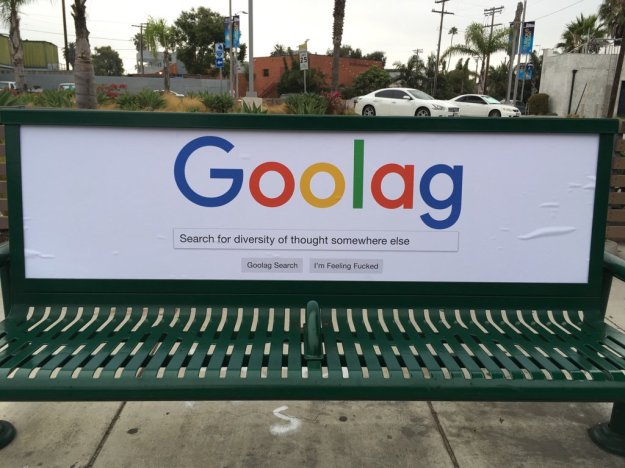
Since it came to my attention that some of my posts were being omitted from Google search results, I decided that it was about time to remove Google’s influence from my computer and online activities.

Why would I do this? First, and most obviously, censorship is bad. Google is primarily a search engine, which makes them digital librarians. Because Google is omitting from search results pages that it deems problematic to the ideology of its staff, Google has become the book burners of the information age.

Second, I value my privacy. Google collects tons of information on its users. Google then uses this information for profit with targeted advertising. If you’re particularly stupid, you’ll see targeted advertising as another way to bridge the gap between yourself and products that you weren’t aware you would have wanted. Otherwise, you’ll see it as another technique for liberating your money from you.

While I’m aware that some of Google’s alternatives might have some similarity in business practice, Google is generally the worse option due to the nature of its agenda. Also, the fact that it’s actively censoring me makes the matter more personal.

Browser

First, if you’re still using Chrome as your browser, you should stop. There are numerous alternatives out there, and even Microsoft’s current default browser Edge isn’t so bad. After considering my options, I decided on Mozilla’s Firefox as my browser. There are lots of reasons to go with Firefox instead, but I found that I liked Firefox’s ability to store multiple themes, as opposed to Chrome, which makes you redownload old ones if you want to reuse them unless you use an extension. And even then, the extension wasn’t reliable.

The only real bother was making up a new list of favorites and bookmarks for my new browser. While there may have been an option to import them from Chrome, I decided to just start afresh, rather than eventually go to the trouble of deleting legacy bookmarks I don’t use anymore. It’s a new browser, and a new beginning.

When switching from Chrome, don’t forget to uninstall the Chrome browser so it won’t still be on your computer doing whatever it is that it does when you’re not using it. Paranoid? Maybe, but this is Google we’re talking about, here. And while you’re at it, remember to uninstall your other Google programs as well.

Search Engine

Second, you’re going to want to use a new search engine. Of the changes to make, this one was probably the easiest. Just remember to set whatever search engine you choose as the default on your new browser.

There are some pretty nice contenders for this category, notably Bing, which greets you with a pretty nice home screen which changes. But my choice was DuckDuckGo. DuckDuckGo is a well-developed search engine with the main selling points being that it doesn’t track you or store information about you. This already makes DuckDuckGo a winner, but it doesn’t censor search results like Google does. Big win.

One word of caution is that you should probably be a little careful about how you use DuckDuckGo. If you turn Safe Search off, it’s very easy to find Rule 34 in the image search. You’d see the internet the way it used to be. You might find that awesome, depending on who you are. But it might be a good idea to mind the Safe Search setting, depending on where you are and at what time.

EDIT (15 Nov 2020): DuckDuckGo has lost its integrity. Finding a different search engine is advised.

Email

This is easily the hardest part of the de-Google process, because we tend to like having one email address for everything. After doing some research, I’ve determined that most mail clients are satisfactory, but I decided to go with Yahoo. As old as it is, Yahoo is still a decent email client.

I’ve been thinking of changing my email client for a while now, but I found the prospect of going to different sites and changing the email address in my profiles daunting. However, the main thing that prodded me on is that my ex-girlfriend decided to try to get revenge on me by using my old email address to sign me up for numerous online services so my inbox would be flooded with spam emails. I’m sure that what she’s doing is illegal, but I blame myself for not doing my due diligence in making sure that the women I’m interested in are not psychotic.

As it turns out, switching to a new email client isn’t that bad. It helps to make up a list of those you want to have your new email address, and notify them of the change. It’s also a good idea to update your resume and your online job search profiles. In case you miss someone, it’s not a bad idea to check your old inbox from time to time. In fact, it’s not a bad idea to go through the first few pages of your old inbox, making note of those you still want to receive email from.

Cloud Storage

I’ve never used cloud storage because I’m not an idiot. If you store your files externally, they can be accessed externally. Storing them using the internet doesn’t make them secure.

Suppose you took a picture of your genitals to copy into your sketchbook (because that’s more fun to draw than a bowl of fruit). If you then send the same picture to the cloud, you’re sending it through the internet, and having it stored where you have no idea how many times it’s copied or viewed by someone else.

If you’re running low on storage space, buy a bigger hard drive. Or an external hard drive. Or a thumb drive. All these choices are smarter than sending your files to the cloud.

Google already makes it it’s business to collect as much information about people as they can. Why trust them with your files?

What about YouTube?

YouTube is owned by Google, so one might think that an effective boycott of Google would include avoiding YouTube. However, Google is having a difficult time running YouTube due to the sheer number of users that use AdBlock. What’s more, Google’s attempts to pander to advertisers have upset YouTube content creators, so YouTube has had to walk on eggshells to keep the platform viable.

Therefore, I’m not really concerned with Google’s presence in YouTube, as the platform has proven to be a liability for Google to run. You’re more likely to spite Google by using YouTube. Besides, the YouTube alternatives that I’ve seen are varying degrees of suck.

That’s how I’ve been doing in de-Googling my computer and online activities. I suggest that you give it a try, too. Send Google a message letting them know that if they’re going to censor the people, then the people are going to hit them where it counts: right in the pocketbook.