Category Archives: Uncategorized

An image to describe 2019

The Gregorian calendar is about to increment, and here is an image to describe this passing year. No need to photoshop this time, this one has been ready since January:

dxuvqgzwsaet6_n

Old media has demonstrated it’s efficacy by hastily concocting a story that defamed a young man for doing nothing more than smiling while wearing a hat that they didn’t like. That’s the current year for you.

YouTube’s Real Beef With COPPA

YouTube-COPPA.png

YouTube was recently found to have been in violation of COPPA, and was subsequently fined. Afterwards, in a public statement, YouTube suggested that they’d crack down on content creators who post content directed towards children without tagging their videos as child-appropriate. Content creators that run afoul of YouTube’s COPPA measures could end up fined $42,000 for each offending video.

Since learning of this, YouTube’s content creators are speaking up in outrage about both COPPA and YouTube, with some saying that this recent development could result in the end of their channels.

If you’re wondering what COPPA is, it’s the Child Online Privacy Protection Act, a law passed in 1998 that makes it illegal for website owners to collect data on children under the age of 13. Why 13 and not 18, which is the generally-agreed-upon age of adulthood, I don’t know. Website owners have largely responded by disallowing persons under the age of 13 from starting accounts. In light of this, it should be obvious that COPPA is a good thing, as it extends protections to children online that adults would love to have.

So then, why the outcry among YouTubers against it? The answer is simple: YouTube has turned the onus of compliance with COPPA to its content creators, complete with a disproportionately steep punishment for slipping up.

That being the case, it’s obvious why YouTubers would be upset with YouTube and COPPA. While this seems unfair on YouTube’s part, it would be just the right move if their aim was to present COPPA in an intensely negative light, turning public opinion against COPPA, and potentially stir up a movement that results in getting COPPA repealed.

Is that what’s motivating YouTube? It’s hard to discern motives for certain, but if turning people against COPPA wasn’t their plan, it’s hard to think of a reason for them to punish the community for their own failure to properly manage a website. But if we were to look for motives, it helps to understand how YouTube makes money.

YouTube is owned by Google, a tech company that offers many online services that are (apparently) free to those who want to use them. These services include Gmail, Google Drive, Google Maps, and the huge search engine that put them on the map. Because Google offers its services for free, many have wondered: How does Google make money?

Google makes money by collecting data. About you. And anyone else they can. Google then takes this information and sells it to a network of advertisers who then use it to serve targeted advertisements.

Make no mistake, the information collected about people is something that ad companies are willing to spend a lot of money on. On the internet, advertisements are big business. The more effective advertisements are the ones that succeed in convincing people to make purchases. If advertisers know what kind of things appeal to you, they can serve you advertisements specific to you that other visitors to the same page might not see.

As a person uses Google products, Google collects data on that person that’s used to construct a profile specific to them. While Google is who we’re talking about today, they’re far from the only tech company that collects data like this to sell to advertisers. Even social media outlets get in on this, and it’s on these platforms that people voluntarily surrender piles of information about their interests.

nami one piece google violating privacy.png

To give an idea of how extensive an ad company’s profile could be on you, the algorithms that are used collect deeply personal data, including psychological information. An ad company is able to make determinations about a person’s internal tendencies, including sexual preferences, that the person themselves might not even know about. Even the federal government doesn’t collect this kind of data on the general population. If they wanted to, tech companies are capable of making a person’s life a living hell, and they have all they need to do so.

If that’s not scary enough for you, try this one: an advertising company was able to determine that a woman was pregnant based only on her purchasing history, then serve her targeted ads based on this information before the woman herself discovered that she was pregnant.

Considering this, think about what Google has to gain from having COPPA repealed: if COPPA no longer factored into their considerations, their dragnet of data collection could be cast without restraint. Children would then be included in Google’s data collection endeavors. As the shopping season comes full swing, consider what this would mean for the pocketbooks of millions of parents: children would be included in Google’s psychoanalytical scheme of subconscious desires, to be directed as their data purchasers wished.

Of course, indirectly encouraging parents to max out credit cards on Christmas toys is just one of many ways the data purchasers can use data from children. If the data purchasers had political motives, they could use this data to direct culture and political opinion in a manner and scale that has never been seen before.

If you want tech companies such as Google to collect data on your kids, then go right on ahead and play into YouTube’s hands: react with outrage about COPPA as though COPPA was to blame. I don’t know about you, but I think it’s about time that even more limits were placed on tech companies concerning the data that they can collect about us.

What is Sockpuppeting?

ichigo machimaro strawberry marshmallow sockpuppet.png

Have you ever happened upon a network of bloggers with content, layout, or opinions that seem suspiciously similar, but they don’t seem to have much engagement from anyone else? If so, you might have just seen sockpuppeting at play.

What is sockpuppeting? On the internet, sockpuppeting is the act of making it appear as though there is more engagement than there actually is. This is usually accomplished when someone makes multiple accounts, then uses those accounts to engage their own content. This can be done by leaving comments, likes, linking posts, just to name a few examples.

But why would a person sockpuppet? There are a few reasons a person might. Perhaps they want to encourage discussion on their posts by making it appear as though a discussion is taking place. Perhaps they want to make it appear as though their ideas are well-supported by the community, in an effort to persuade people to accept their ideas. Perhaps they intend to make the appearance of multiple biases to dissuade people from arguing against them. In some cases, it’s a measure to ensure that the discussion heads in the direction that the puppeteer prefers, perhaps so that they can take on arguments that they’d prefer to, rather than the ones that would pose a significant challenge to their viewpoint.

Of course, it’s very possible that it’s a lonely and sad individual who isn’t getting a lot of real human attention.

Sockpuppeting isn’t as big as it used to be, largely due to the fact that it’s become harder to get away with. Admins on message boards and bloggers can see the IP addresses of individual comments, which contain location-based elements. If a blogger notices a couple commenters shooting it back and forth, and the discussion seems kind-of predictable, the shared IP address of the commenters is a red flag that something is up. And, in case you’re wondering, the FBI and NSA pretty much laugh at your silly VPN.

Have you seen sockpuppeting at play? Or do you have funny stories where sockpuppeting is involved?

Angry Fast Food Employee Exposes Panera’s Mac and Cheese

panera bread mac and cheese lol.png

An employee at Panera Bread recently posted a video on TikTok exposing how Panera Bread prepares their Mac and Cheese on site. After the video spread to the point of being featured on the evening news old media, the employee was afterwards fired.

The video, only seconds long, shows a packet of mac and cheese being dropped into boiling water, then a prepared pouch is pulled out, opened with a pair of scissors, then emptied onto a bowl on a tray. This is set to an audio of a man reacting with laughter. Here’s a link to see for yourself, because why not after just having it described to you?

The video exposes Panera Bread as being fast food with a somewhat fancy dining area and high prices. It certainly busts the illusion of partaking in princely dining with convenience.

Out of irony, I gained an interest in trying Panera Bread’s mac and cheese, but I changed my mind upon arriving at the ordering kiosk and discovering that they want over $8 for it. Eight dollars!? It’s macaroni and cheese; it’s not exactly the stuff of luxury, and it seemed all the more a rip-off after knowing that it’s boiled in a pouch.

I’ve been thinking this for a while, and this provides an opportunity to bring it up: fast food employees are some of the most disgruntled people. It stands to reason considering that fast food work is the butt of numerous class-oriented jokes, but what exacerbates things for them is that a lot of those jokes have some truth to them. Food service workers usually make minimum wage (or less, if they’re tipped), and their work history is stained by virtue of the fact that they’ve spent a significant amount of time working in it. Management is aware of this, and sometimes use the fact that the work is low-qualification to point out that employees can be easily replaced.

If fast food employees could get away with it, they’d stick it to the companies that they work for, as the Panera employee did. But they usually can’t, so they take it out on the next people who wander into their sights: the customers. Customers place orders and make fast food employees do a job that they’d rather not do. It’s true that it’s a job that they applied to, interviewed for, and after being extended an offer, accepted it, and make a decision to return to each day that they’re scheduled, but once a person is in it, it can be very hard for them to get out of, and once they’re in it for a while, they can really come to resent it. And once that resentment comes to a certain level, the customers can become a target for providing business to an establishment that the employee has come to be disgusted with.

In and near cities, visiting a fast food establishment often feels like taking a side in class warfare. But that’s not really intended, people just want something to eat, and fast food dining is usually a compromise with the quality of one’s food in order to have something convenient. In Panera Bread’s case, the quality is lower than what many diners had initially realized.

But now more of us know what’s really going on, thanks to a certain employee that looks more like a whistle-blower than some mere grumbler. What people should be doing when something is wrong is making some noise. Otherwise, any abuse that is occurring is likely to continue. The Panera employee came forward, and while she paid with her job, it may be better for her in the long run.

To paraphrase a point I shared previously: It’s better to be fired by a bad employer than to work for one.


WordAds is garbage.

I decided to check out how this site looks from a device other than my computer, seeing how my site would look for my visitors. What I was treated to was a bunch of super-gross advertisements. The content that I typed away to deliver to you guys was being undermined by drawings of cross sections of intestines that looked like they were exploding with worms, and I wasn’t even aware of it. When I finally learned that it was going on, I wasn’t happy.

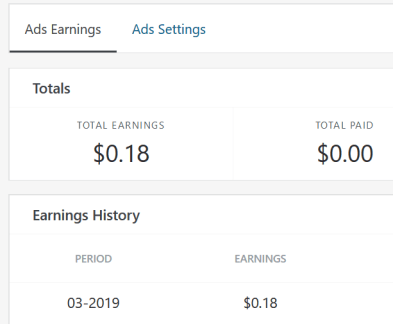
A little while ago, I decided that a little ad revenue wouldn’t be a bad thing for supplementing my income. I wasn’t really planning on going professional by blogging as so many people out there attempt to do, but it would have been nice to have been making a little money on the side to subsidize how disappointingly little I was making with a STEM degree. What I didn’t anticipate was just how little my income would be supplemented:

ads revenue.png

That’s right, eighteen cents. Thousands of ads have been served, some of which making the site a nauseating experiencing for an unknown number of visitors, and I didn’t even get enough money out of it to buy a gumball.

At first, I applied for Google Adsense. I figured I’d try. It took a long time to hear back from them, but after they reviewed the content of my site, to my surprise, they gave the OK. This in spite of the rants I’ve made about Google. It would seem that they are actually some pretty cool guys.

But it took so long to hear back from them that I decided to sign up for Amazon affiliate links. That was much faster, but there was a problem: the links required the use of script tags that weren’t permitted when editing this site. I had a WordPress Premium account, so adding my own adsense code should not have been an issue.

I checked various tutorials that came up in search results, but the methods that they described no longer worked. For some reason, it seemed impossible to implement one’s own ad code into their own WordPress site. That’s suspicious.

Shortly afterwards, I learned why it was so hard to add Amazon affiliate links and Google adsense codes: WordPress had developed their own advertising program called WordAds, and they’re pulling some shady tactics in an attempt to eliminate the competition.

WordPress worked to ensure that people would primarily use their own ad network, which requires a hundred dollar investment to participate in. After spending that to start to monetize this blog, and getting just pennies back as the return on my investment, it seems like the way to make the most of the money spent would be to eliminate ads from this site, so that readers can enjoy my content without it being interspersed with unintended gross-out pictures. If WordPress has a problem with my benefiting financially from my writings, then I can reduce their ability to benefit financially from my writings, as well.

At the moment this post is made, I’ve disabled advertisements on Magnetricity, as a service to you, my readers. Any ads that are running on this site would be doing so without my permission.

Currently, I receive marketing messages from WordPress to use their email system. Apparently, if they think I’m gullible for spending a hundo to activate ads on this site, I must be gullible enough to spend money to have an email inbox.

Wordads is garbage, don’t bother with it.

My Opinion of the Sonic the Hedgehog Movie Trailer

Paramount Pictures just released a trailer that has been precision-engineered to demolish your childhood in a thermonuclear detonation of suck:


I don’t usually do this, but it’s reaction time:

pokemon dawn facepalm.jpg

If this trailer did as most trailers do and showed us the most exciting parts of a movie, this one is a pretty safe skip. It didn’t do a single thing right.

Did they really just make Sonic a hairy monstrosity? Did they really just have Jim Carrey do Dr. Eggman? Did they really just unfuse Sonic’s stylized eyes and made his arms blue? Did they really just labor a child abduction joke? Did they really just use a song over two decades too old to use for movie trailers?

What I really want to know is what the film industry has against anime style. It’s not like hand-drawn animation would kill the budget, especially if millions can be spent on overly-hairly CG models. Detective Pikachu could have been hand-drawn, but instead they made the pokemon have ugly scales and fur. Dragonball Evolution could have been hand-drawn, but instead they brought in actors to proceed to disgrace the source material.

adumanga daioh.pngHey film industry, we actually watch this.


Here’s the thing: we really do want anime movie adaptations to be done in the anime style. When characters are done in the anime style to begin with, that’s how to do them justice. But it doesn’t look like it’s going to happen, because when movies like Pokemon and Spirited Away aren’t watched in theaters, the film industry takes this to mean that people aren’t interested in traditional animation. Not only that, the film industry is really proud of its ability to throw tons of money at CG models.

At any point during this movie’s production, a person familiar with Sonic the Hedgehog could have piped up and said, “Look, this isn’t what Sonic the Hedgehog is supposed to be. I know this because I actually played the games, and watched some of the cartoons.” The reason I doubt this happened is because the film industry is packed with directors and producers who think they’re right about everything, and they’re surrounded by inefficacious suck-ups who are afraid to question them.


If they would have made the movie look like this:

Sonic-X-sonic-x-25468271-1024-768.jpg

Viewers would have loved it. Instead, someone threw up, decided to sprinkle dog hair on it, colored it blue, and called it Sonic the Hedgehog:

getting sonic wrong.png

As you could imagine, this film’s creative direction was made without Sonic producer Yuji Naka’s knowledge or permission. When he was introduced to Sonic’s new style from a leak earlier this year, his reaction was “This is a Sonic the Hedgehog movie?”

Well said, man. Very well said.

EDIT (5 May 2019): The director of the Sonic the Hedgehog movie has since come forward saying that he’s taking fan input and will change Sonic’s design. What he comes up with remains to be seen. It’s refreshing to see someone in the film industry listening to feedback.

What is it about Jordan Peterson’s book that has leftists going crazy?

Peter_12Rules-for-Life_new4_1.jpg

Lately, Jordan Peterson has caused quite a stir. This has largely to do with the fact that he’s a Canadian college professor that doesn’t toe the line for the left-wing agenda. He has also written a book that has gotten loads of attention, and has even been banned by a distributor in New Zealand.

Considering the controversy surrounding his book, it caught my curiosity, and I decided to go out and purchase a copy, wanting to know what it says. Because the hard left is making out Peterson to be some radical icon of the far-right, one might expect the 21st century equivalent of Mein Kampf.

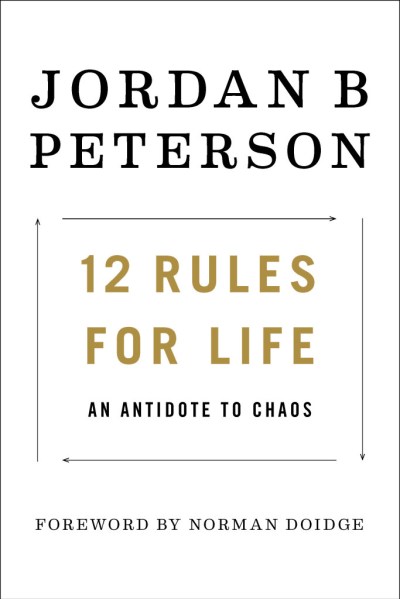
The book is titled, 12 Rules for Life: An Antidote to Chaos.

Hmm… With a title like that, Peterson’s book sound more like some kind of self-help or self-improvement book than a political manifesto. However, there’s got to be something about this book that has leftists riled up. What is it about Jordan Peterson’s book that has liberals everywhere going crazy?

Let’s take a look at some excerpts from Peterson’s book, and perhaps we’ll see just what’s got them worked up:

“Rule 1 – Stand Up Straight With Your Shoulders Back”

This would be the title of the first chapter of Peterson’s book, and my impression is that he’s trying to encourage good posture. One can understand why this would be beneficial; it’s not just about maintaining physical structure, but also boosting one’s confidence and presenting a positive self-image. That’s the impression that I get, which seems far different from an admonition to act like an early 20th century German dictator. I suppose that different people can take different things from the same message.

“Rule 3 – Make Friends With People Who Want the Best for You”

I’m kinda picking up a self-help or advice vibe. It’s really hard to argue with the point being made. Sometimes, people really do settle for some duds when it comes to friends, and the result is being seriously dragged down.

You might know someone who acted on a dare because they thought that doing so would result in them being respected. In fact, the person acting on it was being respected less, and was being treated as a toy for someone else’s amusement. It was easy for the one kid to ask the other to act on a dare, because the asker didn’t have to face the potential consequences of what he was asking the other kid to do.

Or perhaps you’ve seen someone who seemed a little disappointed to hear that you succeeded at something. That’s a sign that the person might not be that great of a friend.

So, Peterson is advising readers to seek out people that would make good friends. That doesn’t really sound like “evil monster” material, to me.

“Rule 8 – Tell the Truth – Or, At Least, Don’t Lie”

Here we go, now I’m beginning to see what the problem is. In today’s “post-truth” society where kids are taught that lies are acceptable as long as they further the cause, I can see why an admonition not to lie can cause some ripples.

One thing I’ve noticed while looking at the book’s illustrations is that the protagonist character depicted in them is actually a girl. If Peterson’s position is supposed to be sexist, that seems kind of counterproductive.

“Rule 6 – Set Your House In Perfect Order Before You Criticize the World”

Again, there’s some serious self-improvement vibes, here. In fact, it seems like Peterson’s book is about building character.

Another thing about Peterson’s book and the few of his lectures that I’ve seen is that he seems to embrace theology, Christianity in particular, as being something positive for a person’s mind. That certainly goes against the idea that theology is outdated. Of course, most of humanity has been theologically involved throughout our entire history, even today in the modern age, so one can make the case that it’s something that humans are well-adapted to, and therefore is good for one’s mental health.

There does seem to be something about a theologically-inclined college professor who is a psychological practitioner that challenges perceptions about what those in the field are about. While one can argue about what his beliefs are and how he presents them, there’s something notable about the fact that he presents religion as approachable to those who might not otherwise consider it.

“Rule 12 – Pet a Cat When You Encounter One on the Street”

It’s a bit of a stretch, but the act of petting does involve gesturing your body in a manner that somewhat resembles a stiff-arm salute.

From what I’ve read, it seems like the point of Peterson’s book is “be a better person”. If the book were really intended as some manual on how to usher in a racist age of darkness, Peterson is mind-blowingly clever at hiding it.

Based on what I’ve read that Peterson has written and what I’ve heard him say, he doesn’t seem like he’s the monster he’s made out to be. But then, I actually listened to him speak for himself rather than just go with what some Tumblr snowflake was passing along in a deliberate attempt to make him look bad.

Peterson had twelve chapters in a book enumerating principles on living life, and he made one of them about petting cats. This is the guy that leftists are comparing to Hitler.

Mysterious Pink Salt

Check out what I found at the store today:

pink himalayan sea salt

It’s pink Himalayan sea salt. You know, sea salt. Right from the shorelines of the Himalayas:

Himalayas.jpg

If marketers can sell burnt ash as “activated charcoal” to impressionable people as though there’s some mysterious benefit to it, why would it be a stretch to get the same people to buy sea salt that came from a mountain range that’s pink for some reason?

If you really want to convince anyone that your potential is going to waste at your lousy job…

fast food anime.jpg

I know what it’s like to have a horrible job that goes nowhere and feel like your potential is being squandered doing it. I know that I’m not the only one out there that had a job like that, and that there are many people out there that are in that kind of position now.

But here’s the thing: If you really want anyone to believe that your potential is going to waste at your lousy, dead-end job, you must do the job that you have now as though you have potential.

While I’ve been thinking about it for a while, I bring it up now because I’ve noticed an increase in the number of disinterested young people who obviously don’t want the jobs that they have, and many of them seem to have the idea that the way to get back at the society that did them wrong by “giving them that job” is to take it out on their customers by being passive-aggressive with them and intentionally performing poorly.

About that “giving them that job” quip: No, society didn’t conspire to decide that your job was the job that you had to have. You chose your job, and decided to apply for it and attend an interview for it. If “the government” or Google or whoever exercised some sort of mind control to get you to seek a job and then follow through with it by making you go to work day-to-day, society would have far worse problems than whether you’re brewing coffee at Dunkin’ Donuts.

You chose your job, and if you didn’t want it, maybe you shouldn’t have applied to it to begin with. If you no longer want it, find a different one, and let someone have your old job who wants it. Life is too short to spend most of your waking hours doing something you can’t stand.

Until you can find that job that you would prefer to do, the best way to convince anyone that your potential is going to waste is to demonstrate that potential by doing excellently at the job that you already have.

About a decade back, I had a job that I hated working, which was at a register in a supermarket. After a while, I got fed up with it, and decided that a better bet for a brighter future would be to get a college education. I did some research, and did some studying. But in the time until I was to start attending classes, I still had a job to do.

So I did a great job at it. The store displayed the stats for how fast cashiers were, and I was consistently on top. My prize for doing so well? Pretty much just to say I did. Not even a pat on the back.

I worked in nearly every other department in the store, and did a great job at those, too. There were days in which I was the only person working in two departments; everyone in the department had off on the same day, including the managers. I carried two departments by myself on the same day.

My way of demonstrating that my potential was going to waste at my terrible job was to get really good at it. I left no doubt that I could do better, and eventually I did.

Now, what is a person supposed to think when someone does a poor job and continually makes mistakes at an easy job where the stakes are low? When you clearly ask for dine-in at a fast food joint and are then handed your meal in a bag, one would get the idea that the cashier isn’t very dependable. When you ask for a hot coffee and get an iced coffee instead, you might feel inclined to think “there’s a D-student”.

Among the reasons why many jobs don’t pay well is because fewer people are counting on the staff, and the repercussions for a mistake are usually much lower. If you work at a fast-food joint and make mistakes with people’s orders, you might just be in the right place. You wouldn’t be convincing very many people that you’d make a great doctor.

People aren’t really perfect at their jobs, but they can at least try to do well at the ones that they have, even if they’d rather be doing something different. That way, when you finally start doing something you’d rather do, at least you’ll be convinced that it wasn’t a mistake that you got there. Doing a great job at stuff really pays out in the long run, but intentionally doing a terrible job just to spite your employer has obvious ways of backfiring very quickly.

If you’re smarter than your job, that’s great! But at least put some effort into proving it, you know?

Voice your opinion on the future of Magnetricity

microphone.jpg

I started this blog in the year 2012, and since then, this has been my E/N blog, and it has gotten a surprising number of views. I’ve been thinking about the direction of this blog, and I’ve decided to ask for your input.

The decision would remain my own, but I would value input from my readers. But from what I’ve seen in my referral logs, a huge percentage of visitors have come looking for opinions about Pokemon.

Seeing this has made me feel a little concerned that perhaps those visiting to see Pokemon content may feel alienated when they see off-topic rants and political opinions shared largely for humor. I suspect that I’d do a better job of retaining a viewership if I were to keep my content focused, particularly on what matters to a large number of my readership.

I’m considering giving this blog a stronger Pokemon focus. Not only that, I’m also considering moving much of my non-Pokemon content to another blog where it wouldn’t distract from what may be the main thing a substantial portion of my readership may have come for. By keeping different blogs for different content, I may be making the most people happy.

Please leave your opinion in the comments below. You don’t have to, but if you don’t, this post can be taken as a warning that this blog may be taking a more focused direction, soon.

-Raizen