The candy crusaders need to take it easy.

It seems like some people were upset that a popular candy had its name changed from “Easter Eggs” to “Gesture Eggs”. This is the impression that one would get from this headline from Not The Bee:

Stores pull Cadbury “Gesture Eggs” promo after some genius removed the word “Easter” and caused public outcry

I think we can appreciate how ridiculous “Gesture Eggs” sounds, since that conjures up the image of a person innocently cracking open one of those Kinder Eggs or whatever, and finding a plastic hand giving the middle finger.

Let’s see what Not The Bee has to say about it in their opening paragraph:

Back in 2022, chocolate giant Cadbury was embroiled in a scandal involving reports of shocking child labor abuses in their supply chain.

The last time a well has been so thoroughly poisoned, a village died.

If one were to go just on the tone of Not The Bee’s article, one would think that a candy company is making a deliberate attempt to distance itself from Christianity by removing references to a pagan holiday that’s been thinly coated with Biblical-sounding names and concepts. And people are peeved, because they like that holiday that was the reason they got candy as kids.

The reality of the matter is far more mundane.

The signage was limited to just a few locations in a chain, which was independent of the will of corporate headquarters, which quickly reversed the decision. It’s true that Not The Bee stated as much in their article, but by placing such important modifying information late in their article, they’re more likely to farm rage-clicks from angry Christians who are more upset about signage used to refer to some candy than a bunch of African Christians who are being killed by a bunch of Muslims who hate that any religion besides their own exists.

Here’s the marketing, as shared by The Daily Mail, tell me whether you notice anything about it:

No, not that the candy has become ridiculously expensive. To help you out, here’s a pic of another product from the same line:

Still don’t see it? Neither do I. That’s because the product isn’t called an “Easter Egg”, that’s a Cadbury Creme Egg. The word “Easter” doesn’t even appear on the packaging. The closest that the candy comes to having anything to do with Easter is that Easter is used to market it. Which pretty much any candy can be.

Saying that Cadbury Creme Eggs have anything to do with Easter because Easter is used to market it is like saying that PlayStation has something to do with Christmas because Christmas is used to market PlayStation.

People threw a hissy fit because “Easter” didn’t appear in marketing for a product that doesn’t even acknowledge the observance by name, like the hypothetical box of Matzah that doesn’t mention Passover.

Did you know that in the religious world, there are problems that actually matter? For example, that Muslims are clashing with Christians. Or that sexual abuse is still a scandal in religious denominations. Or that Muslims are clashing with Jews. Or that Scientology is a predatory cult. Or that Muslims are clashing with Hindus. Or that the current Pope is compromising Catholicism with his left-wing stances. Or that Muslims… let’s just say that they don’t play well with others.

But throwing a hissy-fit over signage displayed with candy? Is this how one inspires confidence in their religion?
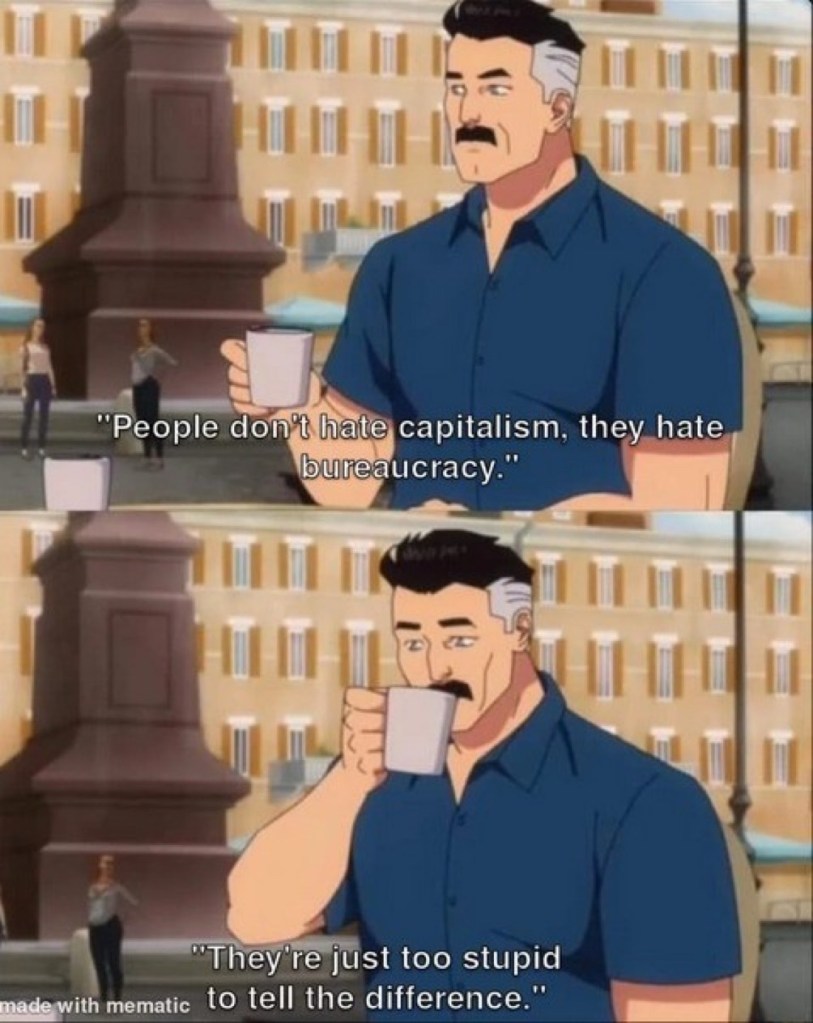
Consultants Will Kill Your Company!

Imagine that you ran an electronics manufacturing company. Would you hire someone who has an education in electronics and a few years of experience?

Now, suppose that the applicant instead had no degree, no experience, and, for that matter, no background in electronics at all. Would you still hire him? Odds are, you’d favor the applicant who has the degree and the experience.

So then, why would you hire someone to make decisions for your company who has no experience with electronics manufacturing, or with managing such a business? Such a decision would seem counterproductive.

Yet, that’s what happens when countless businesses hire consultants, and delegate their decision-making to them.

But it gets even worse than that, because such a move would be a betrayal of the trust of each individual who is in the company’s employ, and each of its shareholders.

Think about it: each person employed by the company is dependent upon the company’s continued success. Each employee represents at least one mouth to feed, considering that each of them could hypothetically have multiple dependents who rely upon them to continue paying living expenses. If the company were to fail, then each of these employees and their dependents would face an uncertain future.

And as for the shareholders, understanding how self-defeating it would be to hire someone who would undermine the company, and the effect this would have on investments, would seem a standard feature of a three-digit IQ.

Now, let’s be a bit more specific. One of the trends that’s become evident in consultants is an embrace of the concept of DEI, short for Diversity, Equity, and Inclusion. It has to do with ensuring a certain amount of representation in the workplace. When presented in as many words, this might sound like a noble endeavor.

But it’s not.

DEI focuses on meeting certain quotas in hiring decisions, without respect to actual qualifications. It has to do with making incentives to hire based on characteristics such as race, sexual orientation, religion, sexual identity, and other characteristics.

It sells itself by saying that it’s not racism. But it’s something that might be more damaging, called tokenism.

Ideally, an employer should not be racist or tokenist. Hiring decisions should be made based on qualification and ability, with no regard to immutable genetic characteristic.

DEI does not respect this, and this is its fatal flaw.

Suppose you had to go in to see a doctor. Suppose a team of physicians agreed that you have need of open-heart surgery. Which would you prefer:

  • The most qualified and experienced operating physicians in the state? Or,
  • A team of less competent physicians, who at least look different?

Does this seem too dire? Okay then, here’s a different example:

Suppose you’re booking a flight from Philadelphia to Houston. Would you prefer that your airline of choice have a team of mechanics who:

  • All know what they’re doing, because they’ve been carefully selected from the most qualified, educated, and experienced candidates? Or,
  • A bunch of entitled busybodies who can’t turn a wrench, let alone identify a mechanical fault, but at least a few different religions are represented?

That wasn’t much better. Here’s another example, which might be more lighthearted:

You need an electrical repair to your home. Would you rather:

  • Have a few experienced, qualified electricians on the job? Or,
  • Sleep under a bridge knowing that your house was burned down by people who preferred certain genitals?

I hope that the point is getting across. While racism on its own was bad, the tokenism espoused by DEI has the potential to be far more destructive.

Here’s a real-world example: Last year, a submersible in the Atlantic Ocean experienced a catastrophic failure, resulting in the implosion of the submersible, instantly killing everyone on board, including Stockton Rush, the head of OceanGate, the company that made the submersible.

Previously, Stockton Rush had stated an interest in not hiring white men, saying that he didn’t think this was inspiring. If his focus was more on qualification rather than tokenism, Stockton Rush might still be alive today, as would his passengers.

While tokenism is horrifying in both theory and practice, it’s an ideology that is espoused by a disturbing number of consultants.

Related less to tokenism and more to inappropriate cost-cutting, the McKinsey consulting firm advised Disneyland to cut maintenance costs. Consequently, there have been many ride failures, many involving injuries and fatalities, which could have been avoided with the proper maintenance.

While it’s often said that consultants are economic Marxists, it should be known that most consultants are evidently not economic Marxists. Today, it’s challenging to find any economic Marxist who can be taken seriously.

However, consultants bear the memetic legacy of Marxist ideology. This is particularly relevant as relates to consultants because Marxists teach that there is an adversarial relationship between the collective and the private corporation. Obviously, to hire someone on with an ideological motivation to undermine the company would be counterproductive.

It’s important to understand that no company needs consultants. Consultants don’t exist for the betterment of your company, they exist to draw in a paycheck. And they are excellent at tricking gullible people into hiring them on.

The fact is, you can make your own decisions for your own company. The people in your employ are counting on it. And for that matter, so are your customers and your investors, whether they know it or not.

Is Pokémon going woke?! And why isn’t Raizen concerned?

It’s just come to the attention of the general community that The Pokémon Company has a job posting for a Director of DEI. This has resulted in concern that Pokémon has become the latest to fall prey to the woke ideology.

While it’s true that this is an unsettling development, I’m not as worried as others seem to be, for reasons that I’ll go into.

But first, I’ll go over why my fellow Pokémon fans are understandably concerned.

Wokeness degrades everything it touches. It’s concerned with the ideology rather than the quality of the product. Where it infiltrates, tokenism and virtue signaling become the order of the day. The usual consequences involve the quality of the product suffering, investors losing out on stock value, and in many cases, sales tank because customers disagree with the implementation of political ideology in a product that was otherwise less divisive.

So, if The Pokémon Company is looking for a DEI director, does that mean that Pokémon is falling to woke?

While this development is far from welcome, and may call for action on the part of the community, it does not mean that Pokémon is already a lost cause, as some might make it out to be.

For one thing, The Pokémon Company are not the main developers of the core Pokémon games. That would be GameFreak.

You might remember that Nippon Ichi Software America (NISA) was among the first companies to jump onto the anti-GamerGate bandwagon when game journalists initiated their slander campaign against gamers upset about the state of games journalism. One might imagine that Nippon Ichi Software (NIS) games turned SJW as a consequence.

But they didn’t. And here’s why: NISA doesn’t develop games. NISA is a localization company. The games were still made by NIS in Japan. The worst NISA could do is make changes to the original product in such a way which constitutes censorship, which one could get around by getting the Japanese originals and playing the games in their original languages. Whether NISA censors the games they localized or not, they must recognize that to do so would risk alienating their core audience of JRPG purists. And, as it so happens, NISA’s censorship has been minimal, if at all existent. The main issue with NISA is whether they can localize a DLC package without turning it into a buggy mess.

Knowing this, consider the fact that The Pokémon Company, which is largely a merchandising and localization company, is looking for a DEI officer. There wouldn’t be much expectation that such a person, if hired, could do much to damage the brand.

Now, I know that some might present the picture of the jacked woman from Scarlet and Violet as evidence that Pokémon has already been going the woke route:

Oh, hold on… That screen was from Pokémon Colosseum, released in 2003 (2004 in Japan and Europe). Here’s the one from Scarlet and Violet:

Aside from the fact that this is an obvious example of the cherry-picking fallacy, as there are many NPCs in SV that have many body types (the female protagonist is standing right there), it also overlooks that sometimes comically jacked characters are used for irony, particularly when they’re women. It’s also nothing new that sometimes ambiguous characters are used for humor, and for some reason, we’ve all collectively decided to overlook it when it was employed in FFVII and its remake.

Having said that, the fact that The Pokémon Company is seeking a DEI director at all is concerning. But there’s another side to this that’s not being understood: that the posting isn’t new. It was only recently discovered by the general community. Unless I’ve been misinformed, the posting is years old. Thus, the position hasn’t been filled, perhaps because The Pokémon Company wasn’t actually serious about filling it. What’s more, the posting was packed with buzzwords.

When you consider this, what it looks like to me is that the posting was formed to fill out some arbitrary checkboxes to satisfy some unsavory consultants, rather than a sincere desire to pay someone $200,000 a year to destroy a brand and piss off investors.

I know that taking a moment to look at a matter rationally might not be as fun as rushing out in some indignant rage, but it’s important that we understand the reality of the matter, so we can make more strategic moves.

Still, I know that some might see the posting, and feel tempted to flood it with joke applications and résumé’s. To this I say, don’t do anything I wouldn’t do.

Now, if you want to reach out to someone who is in an official capacity to express your concern, the best way to go about this is to make your concerns known to the Japanese company, GameFreak. While you can try to reach out to Nintendo of America or The Pokémon Company, because they are largely merchandising and localization companies, they wouldn’t have much say over how their respective parent companies are run. Basically, it’s companies like Nintendo of Japan and GameFreak that hold sway in how the products are made, and the direction that their respective merchandising companies go in.

When writing to a company in Japan, it helps to know that the culture is way different. The Japanese are far more likely to respond to respect. If you come off as entitled or condescending, they’re not likely to listen to you. Also, it might not hurt to run your message through a translator to get your message in the Japanese language. There may be someone there who can read your message in your own language, but it’s less likely. Perhaps include a disclaimer that Japanese isn’t your first language.

Woke is coming for the things that we consider fun. It may be late in the game, considering the effectiveness of the boycotts against Bud Light and, more recently, Planet Fitness. Still, we can’t let the woke mind virus destroy the things we love. Even if the tide is turning in our favor, we can’t let up in fighting back.

Matt Walsh had another bad take.

Matt Walsh is developing a reputation for bad media takes. This time, Matt railed against violent video games by saying that, even if a person who plays a video game doesn’t commit a violent act, there’s still some part of their mind where they’d entertain such a fantasy.

Which sounds similar to another bad take he spilled out about anime.

By now, people are starting to figure out that Matt Walsh is more Conservative than Libertarian. And to those who are starting to figure out the difference between the two, that’s great, because that’s the kind of thing people need to know.

Matt Walsh is still problematic. For one thing, it’s already obvious that Matt doesn’t care for anime, and has no idea why anyone would. He also seldom plays video games, and can only guess what motivates anyone who plays them.

What Matt Walsh does is a great job of representing a brand of Conservatism that is insular and only grudgingly participates in culture, preferring instead to piss all over it when he can do so in a way that’s consistent with the image that he made for himself, which is akin to a stodgy old curmudgeon whose idea of entertainment is sipping an Old Fashioned while watching some non-interactive form of entertainment that’s so ancient that any surprise and every point of trivia has been thoroughly raped from it, leaving behind a desiccated film on the musty reel that hosts it.

Conversely, the left has no problem with making culture. The culture may be debased and a sad debauchery of what has already been established, but they still have no problem with making culture. And for their efforts, they now have an entire team of Avengers which, while they inspire no confidence, will parrot all the DEI talking points that the consultants lurking at Marvel and Disney would have them say.

Matt Walsh is out of touch and more willing to complain about culture than pull it in any particular direction. Unless you were to call Johnny the Walrus a sincere attempt to influence culture.

If you’ve been following along, you’d know my position when it comes to violence in entertainment media: that any depiction of violence in media that someone consumes does not indicate a sincere desire to act out the violent acts depicted. And even if the person did harbor such fantasies, I’d prefer that they keep it limited to their fantasies. I wouldn’t consider them guilty of a crime that they haven’t committed.

But if you disagree, then go ahead and call me a dragon slayer, because I’ve killed a bunch of those. And died a lot. But for that matter, can we talk about the time I saved spacetime by slaying a reality-devouring parasite? Or captured and cataloged over 1000 cryptids, and currently have living samples of each?

What’s that? That didn’t actually happen? Exactly. It’s just made-up stuff, and nothing to get worked up over.

But while we’re at it, let’s talk about the time I studied mountains of math and physics, and only ended up making slightly more per hour than someone at a nearby gas station.

As we consider culture, it helps to keep in mind that culture doesn’t form in a vacuum. Culture always forms in response to something. Aboriginal culture came about in a particular time and place, that is, recent Australia, which contrasts with the Inuits of northern Canada. Considering what these cultures are in response to, it should be obvious why these cultures would not be expected to continue in their new homes if the people were to swap geographies.

California has a particular culture in its densely-populated coastal areas, which came about as a consequence of a willingness to explore new paradigms, which they were more willing to do as the area became wealthy, in no small part due to the richness of the land and climate. Because of their wealth, it appeared as though the consequences of traditionally-unwise behaviors would be blunted, emboldening the people to continue in them. At the same time, relative ease allowed for people to become more creatively involved, and an industry grew in the midst of this.

Normally, the particulars of a culture would be localized, and thus any failures of that culture would be specific to the location in which the culture developed. However, because California has a far-reaching influence by reason of its tech and entertainment sectors, its culture has reached far beyond California’s coast. This allows for the consequences for the failures of its culture to be felt far outside its point of origin. Thus, there’s a new problem, which will result in a new culture that seeks to solve the problems caused by California culture.

One of humanity’s greatest attributes is the ability to adapt to changing circumstances, either over the long term through adaptation, or on an individual basis by reason of the plasticity of our minds.

Matt Walsh, however, is characterized by a certain rigidity of mind that makes him poorly suited to adapt to changing circumstances. This is a huge shortcoming, and contrasts with the real manly men throughout history who have been nimble, quick to adapt, and diligently sought solutions to problems.

The fact is, times are changing. While it’s true that humans are motivated by the same things they historically have been, the technology and the means available to them have changed, and those who insist on remaining in the past are likely to do just that.

But hey, perhaps Matt Walsh can change. I remember that my mom wasn’t fond of video games either, but she became more accepting of them when she saw that they didn’t negatively affect my grades, among other reasons.

As far as politics goes, Conservatives are not that great. Where one party insists upon radical change, the Conservatives are little more than the ones that mildly resists. Sure, they slow the other side’s agenda, but they can’t be counted on to reverse direction.

If Libertarians prove to be more proactive in their advocacy for limited government and personal freedoms, they’d be an excellent replacement to the Conservatives, who have largely proven themselves useless.

We’re now up to that chapter.

I’ve been following along with Geno Samuel’s Chris Chan: A Comprehensive History. If you’ve never heard of it, then you’ve probably also never heard of Chris Chan.

If you were to get into it, it’s a doozy of a rabbit hole. In summary, Chris Chan is one of those people who is infamous on the internet, and is easily the most well-known among internet infamous people. To the point that there are documentary series’ and there have been entire wikis that cover his antics and various facts about him.

About two-and-a-half years ago, it came to light that Chris Chan has been committing incest with his own mother. This set off a firestorm that resulted in Chris Chan trending on Twitter, culminating in Chris Chan’s arrest, and subsequently legacy media outlets have reported on it, exposing aging boomers to the Chris Chan phenomenon.

For those who have been following along, we knew that the time would come that Geno would come to these events in the timeline of his docu-series.

Well, here we are:

Chris Chan’s crime was disgusting. But as bad as he looks, this chapter made Bella look worse.

When I heard about Bella’s mythically horrible exploits, at first I thought that they were embellished. If even half of what I’ve heard about her was true, she was a magnificently bad person.

As bad as she looked in the documentary, it didn’t touch on everything. After all, the documentary was about Chris Chan. But people like Bella are the reason why prisons exist.

Of course, she got off because her parents worked for a three-letter agency.

As much as I’d like to quip with some insightful takeaways, what can be said that wouldn’t be obvious to just about all of us?

  • Don’t commit incest with your own mother,
  • Don’t associate with shitty people like Isabella Loretta Janke,
  • If you’ve committed a crime, don’t be so smug that you drop hints to people who might turn you in,
  • And, for that matter, don’t make a long, unprompted, and highly-descriptive confession to the same crime (oldie but goodie),
  • If you have an EPO against you, don’t violate it,
  • If you’re down and out, don’t prioritize buying a bunch of shitty toys,
  • And again, to emphasize: Don’t commit incest with your own mother. Ugh.

See what I mean? Who really needs to be told these things?

But whether or not there are lessons to be learned from the debacle that is Chris Chan’s life, it is still nonetheless fascinating, in much the same sense as watching a train crash in slow motion, with every last failure being meticulously documented, and every person who was impacted being carefully studied.

But with Chris Chan now being free, apparently having avoided the consequences of his actions, it now falls on the connected network of those monitoring Chris Chan to keep a careful eye on him, to mitigate the likelihood that he would reoffend, as Chris Chan is once again a danger to the public.

Pokémon Legends Z-A just announced, but not much else out of Pokémon Presents.

There was a Pokémon Presents today, I suppose.

I didn’t go in with high expectations, but I was somehow still disappointed. Just remembering last year, it seems like Pokémon Presents has basically come down to a bunch of announcements for some mobile games that I mostly don’t care about.

Pokémon Sleep? I tried it, and it got old after about a month. Pokémon Cafe Remix? I played it a few times, but it was basically a puzzle game with a Pokémon theme. Pokémon Unite? Did anyone really still care about Pokémon Unite a week after it dropped?

The new Pokémon TCG app looks kinda lit, but outside of that, what was there? Pokémon Go is still huge, but its announcement was yet another Pikachu with a hat. Anyone who has been playing Pokémon Go can tell you just how mundane that is. The Pokémon Horizons anime is great, so it deserves a better tie-in than to add its characters to the list of photobombs in Pokémon Go.

Here’s the Pokémon Go announcement that I want to hear: that Niantic will finally address the many problems that have plagued the game’s features since the inceptions of those features.

Instead, Niantic is probably just going to implement one flawed feature after another, not implementing fixes unless there’s an exploit that players could potentially benefit from, that they would issue a quick-fix for.

I used to really like Pokémon Masters. So I might have hoped for something that might have gotten me back into the game. Instead, they announced a new batch of variant trainers that you have to randomly pull from gachas. At this point, Pokémon Masters can be called a “try to pull your favorite waifu character from the gacha” game. Is that accurate?

The big announcement was for Pokémon Legends Z-A. That was completely unexpected. That might be exciting, but it’s not even arriving this year. Sure, it’s great that GameFreak is putting more time into their next game rather than going for the yearly scheduled Nov. 18ish release. And it’s from GameFreak and not another buggy ILCA mess, so it’s probably going to be great. And mega evolutions are coming back, so there’s that, too.

But overall, this year’s Pokémon Presents was a great disappointment. So, maybe I’ll give PalWorld a try.

This is an unmitigated disaster.

Lately, I’ve been feeling a little nostalgic. Therefore, I decided to look up places where I used to live on Google Maps’ streetview. Then, out of curiosity, I decided to look up an apartment community that I used to live at.

As I did, I was hit with the community’s rent, which nearly doubled since my time there, just over a decade ago.

It was unbelievable. So, I looked up rent for other places in the area, and the trend was consistent.

It’s only been a few years since I last checked. And just within the last few years, rent has skyrocketed to the point of nearly doubling.

I can tell you why this so deeply affects me. Back when I last lived in that community, I worked a full-time retail job, but somehow lived on what little I made. On most months, I barely scraped by. Most of the time, I was concerned about my finances, because there was nothing I could do to save a significant amount. If anything went even slightly wrong, my financial situation would have been a disaster.

Right now, I’m much better off. But I couldn’t try living the same way I did in the same place, if I were to make the same money. If anyone tried now, what are they supposed to do?

I’ll throw some numbers your way: On the typical month, I took home about $1100 per month. Rent got to be about $800 per month. Of the rest, most went towards other expenses like bills, leaving me with about $30 to spend on stuff to eat. For the time being, I’ll leave you to imagine the kind of food that I ate.

But if the rent were to instead be $1500 per month? Just forget about it, unless you were to share the one-bedroom apartment with one or two other guys.

Lately, I’ve been entertaining the thought of moving back near my hometown. But now? That doesn’t seem reasonable.

Thinking on what could have happened in the last few years that might have resulted in this, there’s one thing that springs readily to mind: an explosion in unchecked immigration has caused demand to soar. Companies like BlackRock have profited huge off of shitty policy that has fucked Americans over, and the current dogwater administration has done jack-all outside of enabling it.

If you’re poor and just getting by, leave a comment and let me know how you’re getting it to work out.

Cart Narcs may be just what’s needed to restore your limited faith in humanity.

You may have heard of the “shopping cart test”. It goes like this: If you return your shopping cart to the cart return (or corral, or whatever you call it), then you can function in society. If not, then probably not so much.

The reason why it’s so effective as a test is because it’s a simple ethical consideration: you get nothing for bringing the cart to the cart return when you’re done with it, but it’s a little thing that’s expected of people to keep society running smoothly.

If you don’t, and you leave the cart loose in the parking lot, then that means that you’re only considering your own convenience, and are expressing indifference towards other people who may want to use a parking space that the cart might occupy, or that the cart might damage a car if it were to roll away.

Do you do your small part to keep society neat and orderly, or are you only concerned with your own convenience?

That’s something to consider when watching the Cart Narcs, who confronts the lazy and self-centered among us, in the interest of getting the “lazy bones” among us to reconsider their choices.

The Cart Narcs are social media personalities who go to parking lots, and confront the lazy people who don’t bring their carts to cart returns when they’re done with them. It’s a simple premise, but pure entertainment.

See for yourself. Here’s the latest update on their YouTube channel as of this posting:

One thing that I can appreciate about what the Cart Narcs does is the risk that they take with each confrontation. After all, if someone is the kind of person who places their own convenience over keeping society running smoothly, they’re probably simple-minded to the point that they don’t think things through, and might tend towards violence.

Yet, such people are seldom physically fit, so they wouldn’t be great at that, either.

One of the reasons why I appreciate the Cart Narcs as much as I do is because I once worked as a cart fetcher at a supermarket. In fact, the store was so busy that that was just about all I did throughout my shift while I was there. And in my time there, I got to see humanity on full display, complete with its entitlement and laziness.

I often did see customers just leave their carts between parking spaces. It was a mild inconvenience for me, but I didn’t see it as so much of a problem that it would have been worth confronting anyone about it. And it often went that it evaded my notice until after the customer drove off.

It didn’t take long working that job to see it all, after which point returning for another shift was like tuning in to a rerun for a show that was never fun to watch to begin with.

I’ve seen quite a few lazy people, and in the case of many of them, it wasn’t hard to see that they’re not right in the head. It’s because of this that I respect the efforts of the Cart Narcs. There’s also the fact that there are people out there who really need to hear what the Cart Narcs have to say.

Also, they make me remember how glad I am that I no longer work in customer service. Some people out there are only fit to be drowned.

About the ending to Made In Abyss chapter 67

As a brief disclaimer: This post contains spoilers for Made In Abyss chapter 67, which as of this posting has just released in Japan.

Made In Abyss chapter 67 has just released, and as is often the case for this series, the chapter ends with a cliffhanger.

But this time, the cliffhanger has caused quite a stir, as it contains a heavy implication that the party of protagonists has just lost a major character.

While the manga has been released in Japanese, the language barrier is not an issue in understanding the last scene, which conveyed much of the drama visually. Thus, one doesn’t need to understand Japanese to know what happened in that scene.

In the chapter, Riko’s squad, along with Hail Hex, continue their journey into the Seventh (and possibly final) Layer. As they do so, they converse.

In the last scene, the party comes to a halt, as they sense that something doesn’t seem right. Just then, Nanachi senses something (possibly a piece of organic debris) hurtling towards the twins, Menae and Sherumi. Acting quickly, Nanachi pushed the twins out of harm’s way. But in doing so, Nanachi put herself in danger.

While it remains unclear what became of Nanachi, we see that the helmet she was wearing was removed from her head, and the helmet was crushed. Not only that, we see Reg reaching with his extendible arm in a possibly vain effort to rescue his friend.

While it may be too soon to write a eulogy for Nanachi, at this point, the outlook doesn’t seem good for her. Nonetheless, fans of Made In Abyss are concerned that they may have to say goodbye to this beloved character.

As has been pointed out before (possibly here), the character Nanachi has been on borrowed time. Nanachi was originally intended by author Akihito Tsukushi to meet her end in the Ido Front arc, where her character arc would have been complete, and she and Bondrewd the Novel would have both perished while fighting each other. Interestingly, this averted outcome was referenced by Nanachi herself at the conclusion of the Ido Front arc.

Interestingly, while writing the manga, Tsukushi hurried through the Third Layer part of the story, leaving out much of what was originally intended, because he was afraid that his manga would be cancelled. He was in a hurry to introduce the character Nanachi, reasoning that she would be popular enough to save the series. The portion that was left out of the manga made it into the anime.

However, Tsukushi underestimated how popular Nanachi would be, so he made the choice for Nanachi to continue on with Riko’s party.

When the story advanced to the Sixth Layer and the Village of the Hollows, it seemed as though Nanachi would be written out, as Nanachi found a copy of her friend Mitty, so she sold herself to Belaf so that Belaf would stop continually eating the regenerating immortal, and therefore Nanachi could live peacefully with Mitty.

However, there was an apparent change of plans, considering that Faputa was destroying the village. So Belaf placed his memories in Nanachi, and set her free with a new outfit.

Nanachi has picked up a sort of plot armor, by virtue of the fact that she’s so popular. But with the series nearing its conclusion, there’s no guarantee that much of the cast will live to see the end. What’s more, Made In Abyss was written to be emotionally impactful, and events in the series so far have proven that there’s little that’s off the table.

When it comes down to it, in spite of her appearance, Nanachi has been a sad character. She was taken in by a mad scientist who experimented on her and a few dozen other children, and she saw her best friend get mutated in front of her eyes. She didn’t value her own life much, as evidenced by the fact that she sold herself to Belaf to save Mitty, and she was suicidal when Reg first met her, though she didn’t want to act on that while Mitty was alive, and she remained alive after the first Mitty was slain to honor her promise to Reg. Then, she had to say goodbye to Mitty again, after she found a copy of her in the Sixth Layer. What’s more, other characters conducted themselves with Nanachi in a way that didn’t consider her wishes. For example, even though she’s fluffy and other characters liked to pet her, she didn’t want it, and she preferred for the other characters to respect her personal space.

Considering this, for Nanachi to sacrifice herself to save a couple other people, even though they just met, is well within her character.

It’s a type of virtue that doesn’t tend to last long in a world like this.

Whether it’s truly over for Nanachi is still up in the air, and we may find out in the next chapter, which we’re likely to see in a few months. But one Redditor has expressed skepticism that things have ended for Nanachi:

Tsukushi has already warned that, by the time the story concluded, the members of Riko’s party would be unrecognizable. He has also pointed out that people on adventures do die. That being the case, it’s no surprise that a story he has written would come with the occasional figurative gut punch. And a person who has read Made In Abyss up to this point would reasonably expect it.

But at the moment, for those who keep up with it and have a particular attachment to the character of Nanachi, it might not be a bad idea to find someone to talk to. And maybe come to the understanding that a parasocial relationship that involves overly strong emotions might not be healthy.

Antivirus For Your Mind: Leading Questions

The Riddler from the Batman series

People know that computers can be hacked. But what’s not as obvious is that people can also be hacked. Where computers can be hacked with code, people can be hacked with rhetoric. Understanding how rhetoric can be used to manipulate you can be thought of as antivirus for your mind.

One such form of hacking is through the leading question. A leading question is a question that is designed to control a person’s thoughts, answers, and even sometimes behaviors. It’s a hypnotic trick which, if you don’t recognize it, can get you to say or do something that you otherwise might not have.

One example is the loaded question. A loaded question is a question that contains an assumption, but is phrased in such a way so that the assumption avoids being challenged.

Here’s an example that you might see on social media:

Do you suppose that those racists are going to push for a border wall, again?

Larson E.

Here, Larson E. is trying to pull a fast one: his question is whether those who favor a border wall to stem the tide of unnaturalized illegal immigrants will continue to do so, but it contains the assumption that they are motivated by racism. In reality, the people being impugned as racists may be of the understanding that certain values are not universal, and that illegal migrants may commit crimes or otherwise weaken the culture.

One can call out the claim that racism motivates those calling for a border wall, but the one posing the question may insist that this wasn’t his question, and that he wanted to know whether they still wanted a border wall. Remember, the idea is to insulate the racism claim from challenge, because people like Larson E. wants the claim of racism to be accepted without dispute.

Another trick to watch out for is the false dichotomy. A false dichotomy is a question that is phrased to suggest that there are only two possible answers, when there could be many more.

Here’s an example of a false dichotomy in action:

What do you propose we do about those rebels disrupting the supply lines? Do we withdraw or ignore them?

Skip2

Two options are presented: cede ground or continue as though there’s no problem. In reality, there may be other ways to handle the matter, such as fight or negotiate. Perhaps Skip2 didn’t suggest the other options because he didn’t prefer them.

The person presenting the false dichotomy may be motivated by a desire not to call attention to a decision that he doesn’t consider preferable, but it’s also possible that he wishes to present a course of action as unwise, so he presents only a couple of the most unfavorable outcomes as one that one can reasonably expect. Here’s an example:

If you confront him, you’ll likely get into a fight, or at least waste your time.

Willie M.

Of course, it’s possible that both parties would reach an agreement or a compromise, but Willie M. isn’t expressing much expectation of such outcomes.

To be fair, a person isn’t always obligated to present all the possibilities, as there’s often the expectation that you’re able to consider the ones that you can reasonably expect, on your own. Presenting an incomplete list of possibilities or options is sometimes done for brevity, not with malicious intent.

Leading questions can sometimes be phrased to suggest a yes/no answer. This is often an attempt to limit your options, or trick you into a false confession.

Are you ever going to stop stealing from the poor?

TehCheet1337

If you answer yes or no, you’re confessing to stealing from the poor, which is just what the question is designed to do! The idea isn’t to determine your sincerely-held viewpoints, it’s to trick you into making a confession, however false that confession may be!

Interestingly, the Japanese have an answer to this. While they could answer “hai” (yes) or “ie” (no), their language has a third one-word answer, “mu”, which means something like “impossible” or “inapplicable”. It’s a one-word way for a person to say that a question doesn’t apply to them.

At one point, I worked a customer service job. One of the things that staff was trained to do was ask what’s referred to as suggestive questions, such as the following:

How can I help you, today?

Notice how the question is not whether the clerk can help, but how. The question as phrased makes the customer less likely to be left to their own decision-making, and more likely to state how they can be assisted. This makes the clerk more likely to be involved with their decision-making, and thus more likely to make a purchase. And thus, another sale is made!

Considering how often leading questions are used, it’s not a bad idea to be ready to answer by saying that “the question is wrong”. Then, you can point out how the question is wrong, so that onlookers can immediately see through the trick being employed. Then, if you wish, you can ask them to rephrase the question, and perhaps you might not get the same bad-faith rhetoric. But don’t get your hopes too high.

By the way, tricks such as these are sometimes used in interrogations by law enforcement in an effort to trick the people being questioned into making confessions that may be admissible in court. It’s because of this that the first thing you ask for when being questioned is to have a lawyer present representing you, and not answer any questions until you have one there.

They say that you don’t “lawyer up” unless you have something to hide. They say this to discourage you from protecting yourself when you’re questioned. The fact is, the questioner in an interrogation (or “interview”, as they may rephrase it) is not your friend, however they may speak or act, and you’re not in a fair fight. If you have a lawyer present, the nature of the questions will change, because a seasoned lawyer will know the tactics being employed, and will advise you right then and there whether you should answer a question.

When it comes down to it, there are people out there who are out to manipulate you, and it can be as simple as how they ask questions, which they may expect you to answer. If you learn to call out the questions as phrased, or at least state that the question is wrong, this trick will be a lot less likely to have the desired effect.