Category Archives: Pokemon

Those fake gen 8 starters from a year ago were surprisingly accurate.

Over a year ago, a Facebook user by the name of 50 Shades of Heliolisk got Pokemon communities talking by unleashing concept art for the starters of the generation 8 games. His art, done with the help of a friend that knew Japanese, was really convincing, and he did come forward and admit that he made them, and they were fakes.

But just how much did he really know? How accurate that his fakes turned out to be really gets one thinking.

Let’s look at them, one at a time:

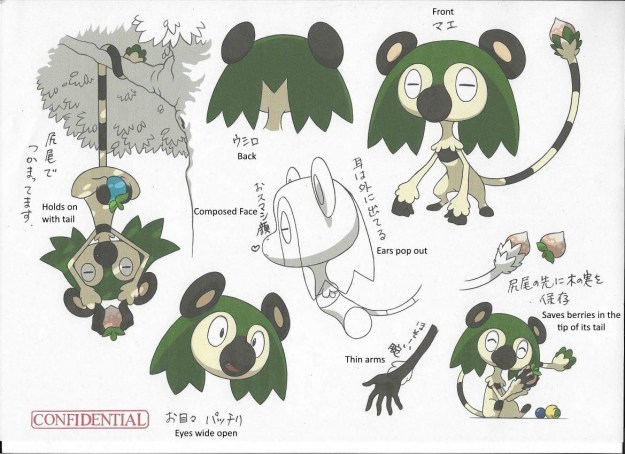
pokemon_gen_8_leak_potential_grass.jpg

One of the fake starters that was revealed was a Grass-type monkey that stores berries on the tip of its tail. What GameFreak themselves did was also a Grass-type monkey, this one storing a twig as part of its hairpiece:

grookey

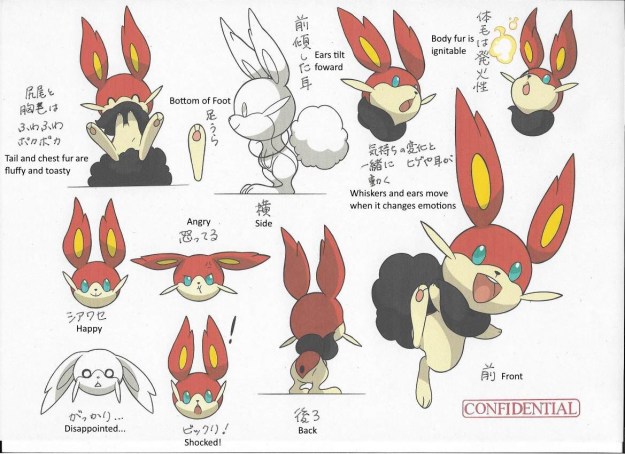
Next, we see that one of the fakemon was a Fire-type rabbit:

pokemon_gen_8_leak_potential_fire.jpg

And I was so disappointed a year back to discover that it wasn’t real, not knowing that a year later, GameFreak themselves would do a Fire-type starter rabbit:

scorbunny

I could gush over how much I like it, but let’s stay on topic and move on.

The fakes also included a Water-type platypus:

pokemon_gen_8_leak_potential_water.jpg

We got a water lizard instead.

sobble

Hold on, is Sobble doing a crotch chop? That’s a straight up dis! This little guy has some nerve.

So, the fakes got two out of three right, and two out of three ain’t bad. One can wonder whether 50 Shades of Heliolisk actually had some inside information all along. While we’re talking speculation, there’s an idea going around that “fake leaks” we’ve been seeing are attempts on the part of media companies to gauge public reaction. Or maybe GameFreak themselves saw the fakes, liked them, and decided to implement the ones they liked.

Hanlon’s Razor goes that the correct explanation tends to be the one that makes the fewest assumptions, and it would seem like that would be that it was just a coincidence. Coincidences do happen, and with surprising frequency.

But, in this case, it was a cool coincidence.

Pokemon Sword and Shield first impressions

pokemon sword and shield.pngOne magnum opus, to go. Hold on… Make that two.

We got a first look at the new generation of Pokemon games in a trailer that was released today:

Here are my first impressions of the starters that have been revealed.

First up is the Grass-type, Grookey:

grookey.png

I still don’t know what this guy is supposed to be. At first, he seemed to be some kind of bug, but right now, he’s looking more like a monkey. He’s kinda growing on me, but I’d probably like him more if he evolves into something cool.

sobble.png

This guy is named Sobble. I’m thinking Mudkip when I see him. He seemed really funny to me at first, but I’m starting to like this guy. I like how he did the invisible-in-water thing in the trailer.

Now for the third one:

scorbunny.png

I’ll take this guy, please and thank you. I’ve wanted a fire rabbit starter since I’ve seen this fan fake, which you may remember from a while back:

pokemon_gen_8_leak_potential_fire

Now they actually have done a fire bunny starter! I really liked the fan concept, and I think it looks really convincing, but now I like the real one more. By the way, the new fire rabbit is called Scorbunny. Score, indeed. He’s well on his way to becoming my second favorite pokemon.

Now for the setting. Here’s a smaller version of the map that can be found on Serebii.net:

galarmap.jpg

The setting, named Galar, is apparently based on the UK. I think that’s great, because I’ve wanted to see a Pokemon game set in the UK for quite a while. I wonder whether the region is going to be very rainy?

As indicated by the logos above, the new games will be called Pokemon Sword and Pokemon Shield. This implies an emphasis on attack and defense, so it’s possible that version exclusives will be either more offensive or defensive, depending on the version. I suspect that Steel types will get plenty of attention, and maybe Aegislash will be a significant pokemon in Galar.

What we’ve seen of the Galar region and its pokemon so far is quite appealing. I suspect that we will see more soon, because the timeframe for release for the games is late 2019. If they stay on track, we’re months away from it’s release.

More Prototype Pokemon From Gen One Surface

capsule monsters pocket monsters logos.png

More prototype designs from the early stages of Pokemon’s development have come to light, as posted on Helix Chamber. These designs include early title screens, as pictured above, early trainer models, early maps, and early pokemon designs.

Some of these designs were already known thanks to a recently-released manga about Pokemon’s creator, Satoshi Tajiri. I’m offering commentary on some of the designs here; the rest can be seen over at Helix Chamber.

Missing-Intro-Graphic.pngYuuichi2-291x300.png

The early design for Red had a bit of a roughneck look to him. He looks more like an adult, so perhaps Pokemon wasn’t always intended to be a kid’s game. Especially of interest is the whip he holds. It’s been suggested that in the early Pokemon games there was to be a conflict between trainers that were harsh with pokemon, using whips to discipline them, and trainers that built bonds with pokemon through trust. Previously, we’ve had evidence of this in that there still included trainer classes that held whips, such as Team Rocket members and even the gym leader Sabrina.

The fact that there are two large sprites showing Red with a whip and without suggests that maybe the player got to choose which side they’d take.

Ichitarou-239x300.png

We get yet another look at Yujirou, the trainer who was originally planned as the Viridian gym leader. The take on him above is referred to as Ichitarou, with “ichi” meaning “first”, which implies what we already knew about him: he almost came before Brock!

Umezou.png

Umezou may have been intended to be related to one of the main characters. His name implies it, as it does mean “junior”! His hat looks similar to one worn by Red in early art, so perhaps Umezou was to be Red’s little brother. He may have been replaced by Daisy, Blue’s sister. This is a large sprite, so it’s possible he had his own team.

HC_protogen1_Blaine.png

Blaine has been through a lot of redesigns. This early one has him looking like an army man. Sugimori said that his gym was originally planned to have bombs in it, which was scrapped in favor of riddles.

early_kanto-768x813.png

This early map of Kanto contains many dummied-out sections. That there are several similar versions of this map goes to show that GameFreak was very deliberate about how the first Pokemon region was designed.

Notice how there is a town south of Fushia City? Seafoam Island was originally intended to be multiple islands, but this map doesn’t reflect that.

Now for the pokemon designs. There was originally planned to be as many as 190 pokemon in gen one, but some of them were scrapped. Here’s a few that stood out to me:

Bloonder.png

You know those guys who pick on Drifloon as an example of new pokemon designs looking too weird? Those guys can shut up now, because a balloon pokemon was planned from the start, and the one we ended up getting looks a lot more interesting.

Cragodile.png

This may be the backsprite for the crocodile pokemon first shown in the Tajiri manga, without the Einstein hair. However, it’s possible that this would have been the green dragon that would have taken “two hours to find and catch” that we’ve been hearing about.

Bittybat.png

Zubat may be annoying to encounter over and over again in caves, but at least it had personality. This guy was apparently to be a pre-evo, but didn’t quite make it into the final game.

Guardia.png

This shows what could have been an evolved form of Marowak, which shows Cubone with its mother. There’s a resemblance to Kangaskhan that’s noteworthy.

Gorochu.png

This may very well be Gorochu, the evolved form of Raichu that we’ve been hearing a lot about recently! Gorochu was described as having fangs and horns. This back sprite shows just one horn, but you can notice the resemblance to Raichu in the bifurcating ears. What the ice-like formation is around it, I don’t know. Perhaps it was some kind of thundercloud?

There’s a lot more, as can be seen over at Helix Chamber. It’s really interesting to see some of the early concepts of Pokemon, as it shows just how much thought went into the game’s development. If even one of these pokemon were implemented into Pokemon Red and Green, that might have had an effect on the game that would have made Pokemon much different than it turned out to be.

Even now, decades later, stuff like this can still come to surface. It’s hard to tell what from the early concepts we’ll get to see next. More Gorochu, maybe?

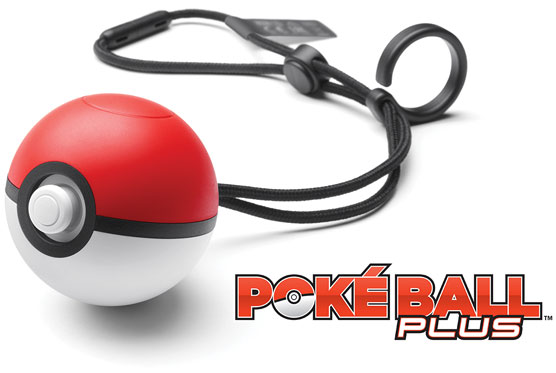
The PokeBall Plus: Is this thing worth buying?

Pokeball-Plus

When Pokemon: Let’s Go, Pikachu! and Pokemon: Let’s Go, Eevee! were released late last year, they came alongside a peripheral that was intended to act as a dedicated controller for the games. Not only that, it also functioned similarly to the Pokemon Go Plus accessory for smartphones.

Is this thing worth buying?

I ended up getting one a little while back, and after having played with it quite a bit, I think I can answer the question: it really depends on whether you play at least one of the two Let’s Go games, and whether you play Pokemon Go. And even if you play both, it’s still a “maybe”, because there still wouldn’t be a guarantee that it would appeal to you. Personally, I think I got my money’s worth, but not everyone would have the same tastes in game accessories as me.

The PokeBall Plus functions as a dedicated controller for the Pokemon: Let’s Go games. As far as I know, any attempt to use the controller with any other game would only result in failure.

When used with the Let’s Go games, the PokeBall Plus is a motion-sensitive controller. As a controller, it’s pretty simplistic. It has a main button, which would be the button of the pokeball that we’ve been seeing all these years. The main button basically acts as your “A” button: you use it to talk to people, make menu selections, interact with Pikachu, that basic A button stuff.

But here’s the catch: the main button is actually a “click” feature by pushing down on a control stick. So, the button that you use to make selections such as executing attacks? You also use it to move around, and to highlight different options and different attacks. I’m not a fan of it. It’s way too easy to attempt to select something accidentally because the stick is moved in a direction.

The spherical shape of the controller does make it disorienting when it comes to moving in a direction. There’s not really much in terms of tactile feedback to determine how the controller is oriented in one’s hand. That means that you have to look down at it to determine whether you’re holding it right. At the very least, the rubber coating of the controller does prevent it from slipping, so you don’t have to reposition it very often. Having said that, a spherical controller isn’t terribly ergonomic.

There’s also a “B” button on the controller, and it’s on the top of it. It’s simple, you use it to cancel selections. There’s not much to it, and it works just as you’d expect. But when outside of battle, it acts as a “pause”, which brings up the menu, and also closes it.

Shaking the controller acts as the “Y” button when prompted, but also provides a shortcut to interacting with Pikachu/Eevee. When in battle, and Pikachu/Eevee’s special is available, shaking also provides the shortcut to using it.

Now, here’s the big thing: when confronting wild pokemon, the PokeBall Plus provides that extra bit of simulation. The motion controls work similarly to the joy-con, but you get that added satisfaction of swinging a Pokeball at a pokemon with an accessory designed to expedite the experience. It’s accurate, too. In fact, it seems like the PokeBall Plus is more accurate when throwing Pokeballs than an ordinary joy-con.

Another nice touch is that the opening around the control stick of the main button is illuminated by what may be RGB LEDs, which can glow certain colors depending on what you’re doing in the game. It glows certain colors when attempting to catch pokemon, and when you catch one, it emits a color that corresponds to the pokemon that was just caught. Cooler still is the fact that the PokeBall Plus also makes sounds, such as cries of pokemon that were just caught. It’s little things like that that makes the PokeBall Plus a very thoughtfully-designed product.

Having said that, it’s still the case that the right way to catch pokemon in Let’s Go is to undock the Switch and play in handheld mode, especially if you intend to chain pokemon for large amounts of candy.

Another added function of the PokeBall Plus is that you can send one of your own pokemon to it, and take it around with you as you go about your day-to-day business. When you do this, the controller acts as a step counter. You’ll be able to “play” with the pokemon inside by making it active with the control stick, and it’ll respond to shaking, “petting” motions, and moving the control stick in circles. I’m still not entirely sure what the benefits of playing with the pokemon might be, but certain activities might increase the rewards obtained when sending the pokemon back to the game.

Players that wish to raise legendary pokemon or other pokemon that are very difficult to obtain candy for in Let’s Go would appreciate that the PokeBall Plus makes it possible to obtain candy for these pokemon in substantial quantity. Just put the pokemon in, take it for a long walk, perhaps use the device with Pokemon Go, and when you send your pokemon back to your game, you’ll likely get quite a few species-specific candies.

Aside from sometimes enjoying the novelty of a Pokeball-shaped controller, the main thing I use it for in Let’s Go Pikachu! is getting lots of species-specific candies. It’s not hard to get tons of Oddish Candies in-game, but getting lots of Mewtwo or Meltan candy? Obtaining lots of candy specific to legendary pokemon is a tall order in Let’s Go without the help of the Pokeball Plus.

Now for the main thing that I use the PokeBall Plus for: as an accessory for Pokemon Go. As a Pokemon Go accessory, the PokeBall Plus rules. It functions basically the same as the Pokemon Go Plus accessory: when you pair it with your game, it allows you to play Pokemon Go somewhat passively.

Here are the main perks:

  • It vibrates when a wild pokemon is nearby. Push B to consume a regular pokeball attempting to capture it. If it works, you catch the pokemon. If it fails, it flees.
  • It automatically spins PokeStops you’re near. Wild pokemon seem to take priority, so you might have to attempt to capture them, first.

That first point is great, because if you manage to accumulate regular pokeballs in massive quantity, you can just spend them out quickly, and if you catch something with one, great! You get the EXP, candy, and stardust that you normally would, but if you use the PokeBall Plus in this manner, you’re currently only able to use regular pokeballs this way, and it’s only ordinary throws. But hey, if you’d otherwise just chuck those pokeballs out to make room for great balls and ultra balls, what’s the harm in spending them like this?

Also, this provides a quick way of gaining experience: Just set a Lucky Egg, walk through a WalMart parking lot or some similar place, and use the PokeBall Plus to try catching lots of pokemon. Using the PokeBall Plus to attempt a capture may not be a sure thing, but it bypasses the long animations associated with using the app, so you could gain lots of EXP fast if there’s lots of pokemon around to capture.

I’m able to accrete pokemon to myself while walking down the street. What an age we live in!

And if you’re wearing a heavy coat and don’t have your phone out, how would anyone know whether you’re playing Pokemon Go? Of course, that would only be a selling point if you cared whether anyone found you out.

Overall, I’m pleased with the PokeBall Plus, but I know that it’s not going to appeal to everyone. If you have one of the Let’s Go games, it adds a novelty to the experience. But to be honest, I found myself using a joy-con while playing, instead. If you play Pokemon Go, and want to add to the experience what feels like a late-game power-up in a video game, then you might find yourself enjoying the PokeBall Plus. But it’s most likely to appeal to you if you fall into both categories.

However, if you don’t play Pokemon Go, and you’re starting to move on from Let’s Go to some other games, then the PokeBall Plus would likely start to spend a lot of time sitting in your entertainment center as a conversation piece.

Also, for the modders out there: the matte nature of the rubber may make it difficult for paint to stick to the thing. It’s a shame, I was looking forward to seeing what people would come up with.

But hey, while the promotion is still running, you can still get a Mew out of the deal. Supposedly, it’s a limited-time thing, but I don’t know how long it’s supposed to last. Also, if it’s the Mew that you’re in it for, it would be much safer buying the PokeBall Plus new. Only one Mew would be distributed for each individual device.

The very specific nature of this accessory makes it difficult to score. If you don’t have at least one of the games it’s specifically-designed for, the PokeBall Plus is likely to be an expensive piece of plastic. But for hardcore Pokemon fanatics that wanted more of an element of immersion, it might be a dream come true.

Based on my own feelings about it, I can give the PokeBall Plus a score of 8.4 out of 10.

I wonder whether this thing would be compatible with any future Pokemon games? There might be some potential for expansion, here.

The Right Way to Play Pokemon Red and Blue

red green blue.jpg

This is one guide that’s overdue. By something like two decades.

If you were alive in the late nineties, there’s a strong chance you’ve played Pokemon Red and Blue. You may have even been one of the few to have played the Green version, which was exclusively available in Japan.

You may have been playing it, but have you been playing it right?

This is a guide on how to make the most effective team for a speedy playthrough of Pokemon Red, Blue, and even Green. This guide also makes the assumption that you’ll be attempting to play through the game without exploiting glitches.

If you were to exploit glitches, you’d be able to beat the game pretty fast. In fact, it’s possible to exploit a glitch to beat the game in under a minute. But even if you weren’t to go that route, you could easily get a Mew early in the game. Also, it would be possible to exploit an experience underflow glitch to get a level 100 pokemon at the beginning of the game. Then there’s the obvious Missingno. glitch. The list goes on.

missingno.jpg

But when it comes down to it, what’s a glitch? If a glitch is something that the developers didn’t intend, then exploiting a glitch is similar to using a pokemon that’s strong because the developers didn’t properly balance the game. But hold on, we’ve actually been using the word “glitch” wrong. A technical definition of a glitch is a brief voltage spike that can cause a program to operate in a manner that was unintended. Yet, it’s come to be the term used for unintended behavior due to improper coding.

In any case, when a game glitches out (however you may define a glitch), the game is still obeying the laws of physics, and the programming is still being executed by the hardware in a manner consistent with natural laws. And in the case of Pokemon Red, Blue, and Green, the programming is a relatively simple assembly language. It just so happens that players have found ways to manipulate the addresses through the course of gameplay that result in outcomes that the original programmers didn’t intend.

But, I digress. This guide is about the most practical teambuilding choices for Pokemon Red, Blue, and Green. Thankfully, version exclusive pokemon don’t break the game, making it easy to group the three games together into one guide.

Many teambuilding guides for playthroughs I’ve seen tend to focus on choosing a team of six pokemon. While the players do succeed in making diverse teams of effective pokemon, the main flaw with these guides is that in the earlier games the experience points aren’t distributed to all party members in the same way that some of the newer games do. By late in the game, there’d be a need to power-level to make up for the fact that experience points gained from the typical playthrough don’t spread very well among a bigger team. It’s better for there to be a team of just a few core battlers that are higher-leveled and can take on what the game throws at them. What’s more, this enables the player to free up space on their team for dedicated HM users to grant the player mobility, while leaving move slots available for offensive battlers.

Also, if you’re looking to have an efficient playthrough, it’s best to come to the realization that it may be better to box a pokemon that’s no longer pulling it’s weight in favor of a more effective one. You’re treating pokemon like data in a game, because in this case, that’s just what they are.

So then, on to the teambuilding choices:

bulbasaur bandaid.png

Bulbasaur is my favorite generation one starter. However, while it gains a strong move in Razor Leaf and has lots of HP recovery options, Bulbasaur doesn’t have a diverse set of offensive moves for much of the game, and the HP recovery moves don’t lend Bulbasaur to being ideal for an efficient playthrough. What’s more, Bulbasaur’s defensive typing is terrible.

squirtle.png

The playground wars over which Kanto starter reigns supreme continues to this day. But as far as this guide goes, Squirtle is the clear winner.

Squirtle retains its effectiveness throughout the whole game. Squirtle beats Brock, easily. It’ll likely evolve to Wartortle soon afterwards, and it’s capable of going blow-for-blow with Misty, if it comes to that. It doesn’t do well against the next two gyms, but you’ll have other choices to help you with them. For most in-game opponents, it does very well, especially against the many hikers you’ll see that use Rock/Ground pokemon, and because it’s strong against those, it’ll be easy to pick up a few levels with a few stray wild pokemon you’ll find in caves. The final form, Blastoise, is great against the last two gyms. If Squirtle is your starter, it easily maintains its usefulness throughout the entire game.

Because Surf is one of Blastoise’s best moves, it’s a natural candidate for it. Blastoise can also learn Ice Beam and Blizzard, which gives it a punch against the many Flying types you’ll encounter in this game, and the Grass types that would usually give it trouble. The catch is, it’s dependent on TMs for Ice Beam and Blizzard.

Don’t despair Charmander, because once mega evolution becomes a thing, you’re going to make a serious comeback.
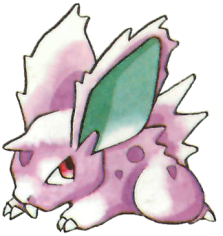

Nidoran boyNidoran girl

Which Nidoran is easier to find depends on the version you’re playing, but the boy is easier to find in the US Red version, while the girl is easier to find in the US Blue version. Both are great for similar reasons, and neither one suffers much in terms of difference in stat totals. The male one becomes a Nidoking, which benefits from higher Attack and Speed stats, but the female one becomes Nidoqueen, which learns Body Slam by level, which is considered superior to Nidoking’s Thrash. If the one you prefer is harder to find and you have some spare time, then you can catch one at the outset on Route 22 just west of Viridian City.

It’s okay to start with, but here’s the selling point: they evolve to their next stage up at level 16, which is about the time that you reach Mt. Moon. They evolve to their final stage using a Moon Stone, which you can obtain in Mt. Moon. See what I’m saying? You can have a fully-evolved, super-strong pokemon shortly after having obtained your first badge. And at level 23, they learn strong moves.

One thing to keep in mind is that they’ll pick up the Ground type, so they won’t necessarily do well against Misty’s Water types. However, you’ll have other pokemon on your team by the time you face her.

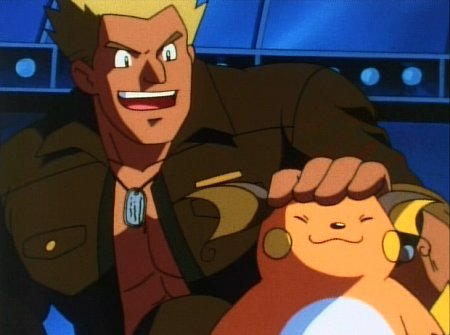
So, Gary is coming at you with a Bulbasaur? Go at him with your massive, spiky super-mouse. Ekans may be a natural predator, but you’re going to be the terror of Nugget Bridge. If you struggle at this point in the game with a Nidoqueen or Nidoking on your team, you’re doing something wrong.

When it comes time to leave Cerulean City, you’ll have the TM to teach your Nido Dig, so it’ll have a strong move that matches its type. This will make it very useful in the next gym.

It’s kind of hard to say, but the Nido will be replaced with a different Ground type before long in the game. Another pokemon will prove to be a better long-term choice. Don’t allow that to discourage you from enjoying the power trip while it lasts. Besides, the Nido can learn Strength, so there would still be a use for it on the team.

abra.png

You find Abra on Routes 24 and 25, north of Cerulean City. It’s annoying to find because it’s kind-of rare, and really annoying to catch, because it only knows Teleport, which has it escape from battle. When you encounter one in the wild, your best bet for catching it might be to just throw a ball at it and hope it works with it at full HP. Which isn’t unrealistic.

But it’s very much worth the trouble. Abra Evolves to Kadabra in just a few levels. At level 16, it becomes a powerful Kadabra, and learns the move Confusion. At that point, it’ll be all set to sweep most trainers that you’ll meet. Poison types are very common opponents in this game, used by many of the Team Rocket grunts that you’ll meet, and many of the Grass types you meet that can give your other teammates trouble will also be Poison type, so Kadabra supports your team very well.

One thing to know about Kadabra is that its Defense isn’t great. But its Speed and Special stats are so high, that most opponents might not be able to get a hit in before they get straight-up KOed! If opponents are KOed before they can take a shot at Kadabra, then it’s low Defense don’t be that much of a liability.

You can evolve Kadabra into Alakazam by trading it, but that’s not even necessary, because even Kadabra is strong enough to be a mainstay on your team throughout the rest of the game. The only thing that would threaten it with obsolescence would be Mewtwo, but that guy is available in the postgame, so that would have no effect on a playthrough. But hey, Mewtwo in gen one makes everything else obsolete, anyway.

Kadabra usually has some room for non-offensive moves, and it can learn Flash, so it’s a great choice to teach it the move when you obtain it.

There are a couple gym leaders that might give Kadabra trouble. One is Misty, because her Starmie is also a Psychic type, so it would resist Kadabra’s own Psychic-type moves, while dishing out the Water type Bubblebeam. Sabrina also uses Psychic types, including Alakazam. Overcoming her Alakazam might be challenging, but you can cheese yourself a victory with a little strategy:

First, have Kadabra use Flash on Alakazam to lower its accuracy. Use healing items as necessary. Once you’ve used the move a few times, the odds that Alakazam’s attacks will connect will be very low. At that point, just switch to some attackers that can hit hard and let them have at it. The idea is that even though Alakazam’s Special attacks are very strong, with decreased Accuracy, it might not get a hit in, so it might not make a difference. Keep in mind that even if you lower its Accuracy by a lot, there is still a small chance that Alakazam’s attacks can still connect.

spearow.png

You can catch a Spearow quickly just to the east of Vermilion City. Don’t get too attached to it, because you’ll be trading it away pretty quick. If you’re playing the Japanese version of Pokemon Blue, go north of Vermilion city to Route 6 and catch a Pidgey, instead.
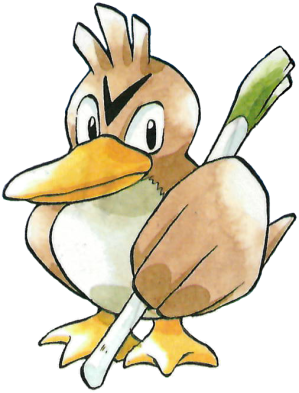
083Farfetch'd_RG.png

There’s a trainer in Vermilion City who is willing to trade his Farfetch’d away. The pokemon he wants for it? A Spearow. Or a Pidgey, if you’re playing the Japanese version of Pokemon Blue. Give him what he wants, and you’ll get a Farfetch’d in return.

Why Farfetch’d? For mobility. It can learn Cut, which you’ll soon have a use for, and Fly, which helps immensely with mobility later on.

It’s mainly on the team for those HMs, but there are some players that like it in spite of it’s somewhat sub-par stats for the fact that it gets an EXP boost by virtue of being a traded pokemon, and it learns Swords Dance. Sounds cool, and if you want to try that, go ahead. Just keep in mind that it might not obey you if you overlevel it before obtaining certain gym badges.

050Diglett_RG.png

Poor ol’ Lt. Surge. He started up an Electric gym, but the pokemon that can beat them with little problem can be obtained with ease just outside of town. Even better yet, there’s a chance you might find the evolved form, a high-level Dugtrio, instead.

Diglett (Dugtrio) will replace Nidoking/Nidoqueen as the Ground type for your team. You might be hesitant, but hear me out. Diglett and Dugtrio learn excellent moves on their own without the use of TMs, which the Nido would be heavily dependent on. Dugtrio has slightly lower Attack, but it more than makes up for it in Speed. Also, the Nido’s Poison typing will later prove to be a great liability, especially against Sabrina and Giovanni, when you’d likely want something really fast, anyway.

So yeah, Dugtrio is the better long-term choice than Nidoking/Nidoqueen. It’s really tough being a Poison type in this game, just ask Bulbasaur and many other gen one Grass types.

eevee.png

There’s an Eevee for you to pick up in Celadon City, and it’s yours for the taking. Eevee is one of the rare pokemon that can still learn moves by level after you use a stone to evolve it. And it so happens that you can obtain all three of the stones that you could use on it right there in Celadon City. The choice that fits this team the best would be the Thunder Stone, which can get you a Jolteon.

Remember the TM for Thunderbolt that you got from Lt. Surge? Jolteon is a prime choice to teach it to. It’s really a shame that you only get one in a non-glitched game, since it’s a great move. With Thunderbolt, Jolteon can power through the many Bird Keepers and Swimmers that are easy to find, giving Jolteon opportunity for plenty of levels. What’s more, Jolteon beats Gary’s Gyarados, which can otherwise be pretty challenging. It takes a while for Jolteon to learn Pin Missile, but it’s one of the few decent offensive options that actually gets super-effective hits against Psychic types in gen one.

You might consider eventually replacing Jolteon with Zapdos later on, but a word of caution: Zapdos is weak to Lorelei’s Ice-type moves, while Jolteon is not.

So, there you go. With that, you should have an effective team of core battlers and HM users. Here is how the team should look by the end of the game, with HMs indicated:

  1. Blastoise (Surf)
  2. Kadabra (Flash)
  3. Diglett
  4. Jolteon
  5. Farfetch’d (Cut, Fly)
  6. Nidoking/Nidoqueen (Strength)

“But what about…”

There are a few other choices you may have preferred that didn’t make the team. They’re not bad pokemon, and if you want to use them instead, it’s up to you. Here’s a few that have been considered, but didn’t quite make this team:

Gyarados
Gyarados has high stats all around, especially its Attack stat. The catch is that it must be leveled up from Magikarp, which is really inconvenient to do in these games, even if you can get early on. But there’s actually another catch: it doesn’t learn any power moves of its own type except for Water moves, which come off it’s Special stat, rather than its phenomenal Attack stat.

Doduo
If you haven’t tried using a Doduo, you’re missing out. You can obtain one right by Celadon City, and it has an easy time against that town’s gym. It’s evolved form, Dodrio, is a pretty strong Normal/Flying type, and can take down the numerous Grass types you see, easily. However, because Kadabra can do a better job against many of those same opponents, it was difficult to justify including it. Especially if you want to try using Farfetch’d to battle.

Articuno
Articuno comes at a high level, and comes with the super-useful Ice Beam. A Blizzard coming from Articuno does catastrophic damage, and it learns the move just one level after catching it. But its catch rate is low, which may necessitate soft-resetting multiple times while attempting to catch it. What’s more, it’s located at a very inconvenient place, at the bottom of Seafoam Islands. Seafoam Islands is a pain to go through, but thankfully, it’s an optional area, as the player can access Cinnabar Island by Surfing south of Pallet Town.

Zapdos
Like Jolteon, it’s dependent on the Thunderbolt TM to be effective. But the nod goes to Jolteon because it’s available earlier on, and is safer to use against Lorelei because it’s not weak to her Ice-type moves. But if you want to give Zapdos a try, it’s not nearly as inconvenient to get to as Articuno, and there’s something appealing about having an Electric type that’s immune to the Ground-type attacks that usually give them trouble.

Dratini
Comes too late in the game and at a low level for that point. It’s difficult enough to level it up to the point that it catches up to your teammates, but even then, it has to evolve to Dragonite (at level 55!) to really be worthwhile. But worse yet, Dragonite in gen one is highly overrated, save for a slow, cheesy strategy that’s better in multiplayer matches than in a speedy playthrough.

pikachu.png

Pikachu
I know, I know. Pikachu has fans. And it’s great that it can be obtained early on. One could make the case that it would be strong against Misty, but it would largely depend on its Thundershock attack, because it can’t learn Thunderbolt by level in Red, Blue or Green. But if you can get it all the way to Celadon City, you can evolve it to Raichu, and that’s certainly appealing.

Raichu.png

Now you know the right way to play Pokemon Red and Blue, as well as the rare Japanese Green version. That’s how Pokemon was played, way back in the day, before they started coming along with lots of new stuff.

Like lots of new pokemon, some of which are pretty cool.
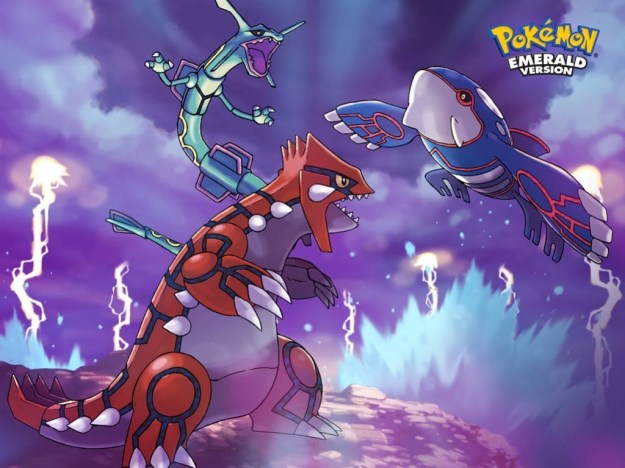
kyogre groudon rayquaza.jpg

And new human characters, some with surprisingly complex motivations.
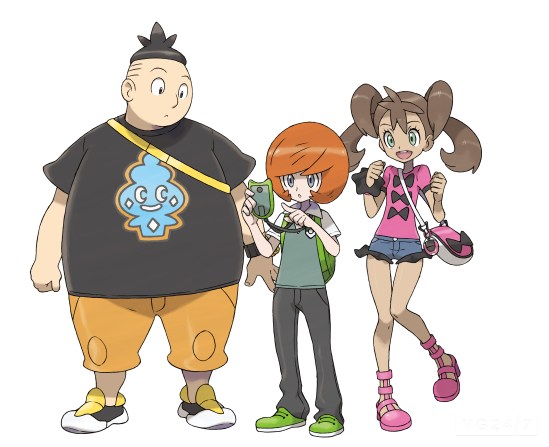
pokemon x y rivals.jpg

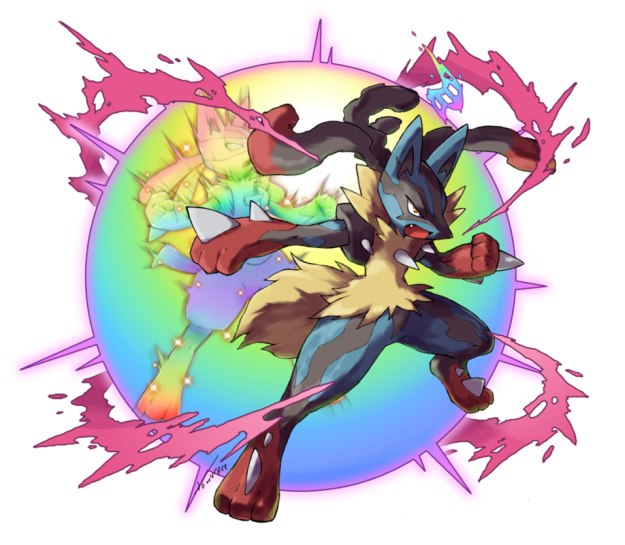
And new gameplay mechanics to shake things up.
mega lucario.png

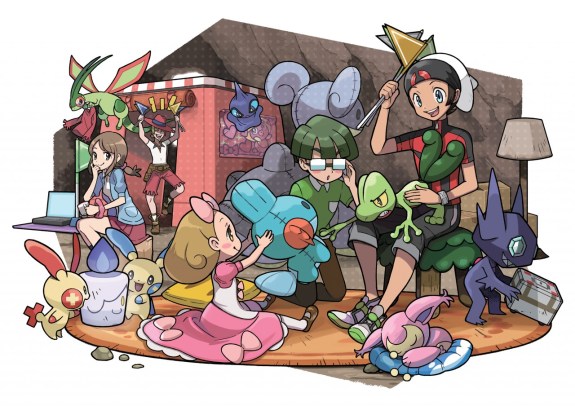
Some of which encourage community in ways that provide hours of fun outside the main game itself.
Pokemon-Omega-Ruby-and-Alpha-Sapphire-1-1280x904.jpg

Wow, Pokemon sure has come a long way. And when it comes down to it, that’s just how we wanted it. I know that many of us like to get all nostalgic and remember the times when Pokemon was simple. But the fact is, even then, we saw potential for the series to go much further. Back in the Red and Blue days, we wanted there to be new pokemon. Lots more.

We wanted it so badly, that we’d go to public libraries because that’s how most people in the nineties accessed the internet. Then, we’d scour some Geocities pages on the chance that some random guy with a web page somehow had insight into the future of Pokemon. That’s what the internet was like back then. I remember going to the school library with a couple friends and doing just that. It was a time of pagers and fax machines, which would soon give way to emails and text messages.

We have a tendency to look at the past through rose-colored glasses, and in so doing, we seem to forget that the struggles we faced are every bit as vivid as the ones we face now. This is enabled largely because, in hindsight, we know we lived through them to see today. Not only that, we remember with fondness the things that we enjoyed back then. For those of us who liked Pokemon, that was one of those things. When we’re honest about it, we wanted new Pokemon with new characters. That’s one of those things that worked out.

The Pokemon games have been around for decades. The first ones were enjoyable, and there have been many enjoyable games in the series, since. As great as this was, great times are still ahead. Pokemon taught us to be positive and enthusiastic about the future, not just because it comes about without our input, but because we can train for it. It’s not just about training our pokemon, it’s about training ourselves to be better than we were before. Think about the ways that you can become a better you.

You can think of life as a game if you want to, but if you do, think about the rules and how you can get better at playing it, and take the practical actions necessary to achieve conditions of victory. A college degree? A successful career? Or something else? Choose a goal, and think about what you need to do to attain it. Then maybe you can think of a few pointers for winning at the game of life.

Train on.

The Right Way to Play Pokemon: Let’s Go Pikachu

Lets_Go_Pikachu_EN_boxart.png

The game has been out for over a month, so the timing seems right for a teambuilding guide for the theoretical few that are struggling to get very far in Pokemon: Use Pikachu and Win.

Let’s not dance around it: Pokemon Let’s Go Pikachu is an easy game. It may very well be the easiest game in the series with the exception of Pokemon Let’s Go Eevee, its version counterpart. Yes, they actually are easier than Pokemon X and Y. I don’t know why, but GameFreak seems to be on this stint where they feel like they have to compete with cell phone games. Look, if I’m going to spend $60 on a JRPG, I want it to have more more to it than some vapid cell phone app with all the depth of a puddle of rainwater. Besides, cell phone games are free. It’s hard to compete with that.

This guide is about practical team-building choices for those who want to quickly and efficiently power their way through the game. It’s probably better to take one’s time and savor the experience, but some players are in a rush to get to the post-game so they can build a competitive team, even though the Let’s Go competitive scene is pretty much summed up as beat-Mewtwo-and-win. But hey, it’s the player’s choice how they play through a cutesy game about huggem-squeezems.

Pokemon-pikachu-hd-wallpaper-background.jpgGet ready to see a lot of this guy.

Obviously, Pikachu is going to be on your team. It’s going to be the strongest pokemon available to you for most of the game, and it’s given to you right from the start. Mewtwo isn’t available until the postgame, but Pikachu can get you to that point.

A pointer for those who insist on having their pokemon perfect: The gender of the partner Pikachu is determined right when you start your save file, and is obvious at that point. If it’s the one you want, go with it. Otherwise, just reset. For nature, that’s determined when you enter the grass and encounter it, and you see its nature when you receive it in Oak’s lab. This would be the only partner Pikachu you get in a save file, so if its nature or gender matters to you, take the opportunity to soft reset for it. Its IV will be flawless, so don’t worry about that.

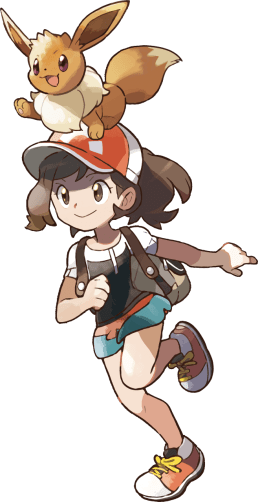
You’ll also have the choice of which trainer to play the game as. If you’re wondering who the girl is this time, here she is:

Lets_Go_Pikachu_Eevee_Female_Trainer.png

Her name would be Elaine (Ayumi, for the elites). I suspect that she’d be the highly-popular choice. But you can also choose to play as the boy if you want to. Not that there’s anything wrong with that.

The partner Pikachu can pretty much get you through the game. It’s over-the-top busted for most of the playthrough, and because EXP is distributed evenly among all team members, don’t be afraid to lean heavily on Pikachu while catching a few other pokemon for backup.

For one thing, the partner Pikachu has better stats than other Pikachu you can capture. It’s almost like starting the game with a Raichu. Better yet, you can start to chain Pikachu at Viridian Forest at the game’s outset. You start with piles of Pokeballs, so you can actually get a pretty decent chain going. If you do this, you’ll gain plenty of EXP, and as the chain continues, you’ll get Pikachu Candy. This candy will increase each of the partner Pikachu’s stats by 1, and as you give Pikachu more of them, this can really add up. You can also gain plenty of Quick Candy by chaining Pikachu, which is another perk.

You can increase Pikachu’s advantage by chaining various pokemon, such as Caterpie for Health Candy, and Oddish for Smart Candy, to name some early-game examples. It’s really not necessary to go for lots of these candies to breeze through the game, however. I mostly ignored candies as I played through, and didn’t really have any problems. This game won’t do much to challenge you, and if you exploit the games deeper mechanics, it will be easier still.

Playing with partner Pikachu seems like it’s just for fun, but increasing friendship with Pikachu makes it perform better in battle. For one thing, it can sometimes just shrug off status conditions, healing them on its own. It can also sometimes hang in there with 1 HP remaining when something would have knocked it out, giving you the opportunity to heal it up with a potion. Its critical hit rate increases, too. Not only that, if you play with Pikachu often, it can sometimes use a special move in battle that does more damage if it’s friendship level is higher, or can give a stat boost to a teammate if you (for some reason) have a different pokemon out.

One would think that Pikachu would have problems with Brock, but Pikachu can learn Double Kick at level 9, giving it a super-effective edge against the Rock types he uses. Double Kick remains a useful move for a while, but mind the fact that Rock types usually have high Defense stats which might offset the type advantage somewhat.

At Cerulean City, you’ll find a move tutor in the Pokemon Center that can teach the partner Pikachu Zippy Zap. Pikachu would already likely beat Misty as it is, but Zippy Zap is a useful priority move. What this means is that it goes first unless a faster opponent also uses a priority move. Also, this move has a 100% critical hit rate, so it does double damage, and it ignores defense stat buffs. That’s insane. And with a base speed of 120, Pikachu is likely to outspeed everything you come across (it helps that Electric types can’t be paralyzed).

Once your friendship level with Pikachu is high, you can get a Raichu outfit at the Pokemon Fan Club in Vermilion City. You might not be able to evolve the partner Pikachu into Raichu, but you can at least deck it out in its merchandise. And you get a Raichu outfit to wear, too.

The Celadon City Gym is Grass type, which resists Electric moves. This would normally be a problem for a Pikachu, but the partner Pikachu can learn a strong Flying move in the same town’s Pokemon Center. Floaty Fall is a better move than Fly because you don’t have to wait for the next turn for it to work, and it can make the opponent flinch. Two for flinching.

To get into Celadon Gym, you have to show the woman in front a cute pokemon. I tried it, and yes, Raichu can get you in. Because of course it can.

raichu heart.JPGAdorable.

What’s more, partner Pikachu can also learn a strong Water move, Splishy Splash, so it will have an option to sweep the gyms on Cinnabar Island and Viridian City.

Most of this guide is about how OP the partner Pikachu is, and how most in-game opponents don’t stand a chance against it. But what if the unthinkable happens and Pikachu gets hit with two critical hits from strong Ground moves in a row? When that happens, it helps to have some pokemon as backup. I’ve selected a couple suggestions that can help with some opponents that Pikachu might have to attack more than once to KO.

129Magikarp.png

While it might seem like a joke, Magikarp can evolve to a Gyarados at level 20. Gyarados can hit hard with strong Water moves, and with its secondary Flying typing, it will be immune to the Ground moves that Pikachu would be weak against. You can obtain a Magikarp early on if you buy one from the Magikarp salesman at the Pokemon Center at the base of Mt. Moon. The guy is supposed to come off as a conman, but obtaining a Magikarp that early on is actually a pretty sweet deal. Because party pokemon gain EXP from captures and from Pikachu’s battles, it wouldn’t take long to get a Gyarados just by having Magikarp hang around in your party.

050Diglett.png

Pikachu can beat Lt. Surge. But if you want to be sure, you can catch a Diglett at Diglett’s Cave. I kinda feel bad for Lt. Surge. A pokemon that can beat his gym with ease can be obtained in mass quantities just outside of town. You might even be able to find and catch the evolved form, Dugtrio, instead. It’ll be able to carry it’s weight through most of the game, so it’s a nice catch. It’s mainly for getting you Lt. Surge’s gym badge with ease. You can also get his autograph, while you’re at it.

I like Surge’s taste in pokemon, by the way.

raichu_sketch006a

The other three pokemon on your team is really a matter of personal preference. There are no HMs in this game to worry about, so you can add some favorites to your team or try a pokemon you might not have considered.

142Aerodactyl.png

The main reason to add Aerodactyl to your team is so you’ll have a pokemon to help you fly in the sky in the post-game. Charizard or Dragonite can also do the job, but Aerodactyl is the easiest to come by (just take the fossil from Pewter City to the research facility on Cinnabar Island).

026Raichu.png

It’s hard to disagree with having a Raichu following you around, and this game really brings out its cuteness. If you’d like, you can trade a Kantonian Raichu for an Alolan Raichu in Saffron City and give that one a try. It might be hard to trade a Raichu away, but you’d be getting a Raichu in return.

I’m having a hard time thinking of a sixth pokemon for a playthrough of Let’s Go Pikachu. Pikachu can get you through the game. Arcanine looks awesome, and riding it around is fun, so give that one a try if you feel inclined.

One might ask whether there’s a pokemon that can be brought in from Pokemon Go to make the game easier. Mewtwo, maybe? Pokemon Go Park is available late in the game (Fushia City), and the pokemon you get from it aren’t very high leveled and wouldn’t really break the game in the same way that the partner Pikachu has been up until that point.

If you have the Pokeball Plus accessory, you’re in for a really easy game (more so than it was already). If you put a pokemon in it at the start of the game and take it for a long real-life walk, it’s likely to gain piles of levels when the pokemon returns from the stroll (it doesn’t actually leave the game). You can use this to make the partner Pikachu even stronger than it has to be. The partner pokemon is actually the default option. If the event Mew is still available to you and you go for that, you can have a level 1 Mew early on. But it won’t remain level 1 for very long if you return it to the ball and take it for a decent walk.

151Mew.png

Mew has high base stats across the board, and can learn any TM in the game. You’re free to ponder the implications of that.

So there you have it, now you know how to beat one of the easiest games on the market. If you somehow found a way to lose a battle against an in-game opponent, please let me know how you did it in the comments below.

I actually lost my first attempt against Raichu Master Charlotte. The master trainers don’t mess around.

Why Raichu?

raichu smile.png

Raichu has long been my favorite pokemon. People who have known me long enough usually figure it out. I’ve even been asked the question, “Why Raichu?” I think it’s about time I answer that question.

I’ve also had it asked of me whether Raichu would still have become my favorite pokemon if Pikachu weren’t the Pokemon series’ mascot. Would I have noticed a pokemon like Raichu if it didn’t receive so much reflected attention from Pikachu? I don’t know, it’s hard to say. But we don’t live in that timeline, so we really don’t have to give it much thought.

Raichu is appealing on so many levels. It’s both cute and tough at the same time, which is something that’s very difficult to pull off. It’s a very aesthetically-pleasing pokemon.

When I first saw Raichu, it was in the episode of the Pokemon anime, “Thunder Shock Showdown”. That episode introduced Raichu as the prime pokemon of the gym leader, Lt. Surge. Being Pikachu’s evolved form, Raichu had a clear statistical advantage that would make it a challenge. Eventually, Ash’s Pikachu did defeat Raichu, providing an explanation for the victory that was satisfying and at the same time had some truth to it from a game mechanics perspective. It was the first gym badge that Ash truly earned, without question.

raichu_sketch006a.jpg

The episode made Raichu out to be a formidable opponent, a challenge that would be difficult to overcome. Which is why it was a change of pace when we saw another Raichu in a future episode which was friendly with Pikachu. It was an early example of how different pokemon of the same species can have a different personality.

What Raichu represents is a kind of realization of one’s potential, a coming-of-age where a person becomes what they would develop into. While some get romantic about the world we live in, the fact is, we have to develop strength in order to soldier on. Those who choose to flounder about, content with what they’ve achieved so far, tend to be left behind. A desire to realize their potential is one of the reasons why children look forward to the day that they’ve grown up.

Having said that, there is a metaphor for a careful upbringing in that a Pikachu can learn some speed-based moves by level that a Raichu that was evolved too soon would not have access to.

It’s the tendency of people to look at the past through rose-colored glasses. We tend to remember our own childhoods as idyllic, even if they might have been every bit the struggle for survival that our adulthoods may be. We remember clean environments and being under the care of our parents, and we felt loved. But the fact is, we live in a world that acquiesces to decay, and when we move outside of the shelter of our parent’s care, we take up the battles that they’ve been fighting, and we must continue to develop strength, as time will continue to move forward, whether or not we make the effort to keep up.

The Pokemon anime shows us how some of Ash’s pokemon prefer not to evolve, which was an apparent decision by the show’s writers to maintain the appeal of those pokemon at their lowest stage of growth. In the show, this is acceptable, because it’s only intended for entertainment, and in entertainment, it’s okay for the characters to maintain consistency in such a manner. But, in reality, stagnation is often rewarded with failure.

1484032488-3214bb8e28a979d1e3e0fe9b6cab30f5.jpg

Having attended the Pokemon TCG League a while back, I’ve made a few friends. They were some great people, and they were a blast to play with. But I do remember that one of them in particular continued to live with his parents into his late twenties. While he had a responsibility to make a better attempt to live up to his potential, his parents were enablers who were more interested in seeing him remain so that they may continue to have a child at home. Though I encouraged him to come out of his comfort zone, he wasn’t interested in living up to his potential, and his parents preferred that he didn’t. He preferred to remain a Meowth long past the point that it would have been far more practical to become a Persian.

Some might see evolving a Pikachu into a Raichu with a connotation of corruption, seeing it as an induction of change into something that loses its popular appeal and may even be more brutish and inelegant. I disagree. In a sense, it’s like the realization of maturity. Part of what it means to be a trainer is to bring out your pokemon’s potential.

While there is more to like about Raichu, I think that’s sufficient to share for now. Strength, coolness, cuteness, and a connotation of realized potential are what makes Raichu a standout pokemon to me.

By the way, in case anyone is thinking of asking, yes, Alolan Raichu also counts as a Raichu. Because it is one!

raichu pancakes.GIFPancakes!

Pokemon Let’s Go Pikachu! and Pokemon Let’s Go Eevee! might already be available in your part of the world by the time you read this. Is there a generation one pokemon with meaning to you?

The Right Way to Play Pokemon Emerald

Emerald_EN_boxart.jpg

Pokemon Emerald is one of the best Pokemon games, and is the definitive GBA Pokemon game. It’s not just called “Emerald”, it’s a true gem in the GBA library. There is nothing wrong with taking one’s time playing through Emerald and appreciating what this game has to offer.

However, this guide is for the man-on-a-mission; the one who seeks out the fastest and most practical way to play through the game. To help such players out, I’ve put together a team building guide for getting through Emerald quickly.

This guide is different from most team building guides that I’ve seen. Many in-game team building guides focus on making a balanced team of 6 battlers, suggesting that players keep all 6 throughout the game. These guides are flawed in that experience values tend to distribute better among fewer pokemon, and by late game, players would have been better off with 2 to 4 higher-level battlers than a full team of 6 pokemon that can’t quite hack it.

Another flaw with those teams is that they seldom consider HM users, leaving players that try them with the task of backtracking to either catch HM users or access PC boxes as they come across roadblocks.

Such guides also suggest keeping every teammate on their team for the rest of the game. While the authors do take care to select teammates that carry their weight for the rest of the game, sometimes, that’s not the most practical way to go about things. Sometimes, you have to box a pokemon that’s no longer carrying its weight, or once you have a pokemon that better serves its purpose.

What this guide gives you are suggestions that are designed to get you through the game. A core of battlers will be considered with the intent of covering the challenges you’d reasonably face in a playthrough, and suggesting HM users to give you maximum mobility.

With that, let’s get this team building guide underway:

Pokémon_Mudkip_art.png

The first pokemon on your team would be your starter. It was close, as each of the Hoenn starters are pretty good. But for this game, the best starter would be Mudkip. Mudkip has an advantage at the first gym, so things are easy for it when getting started. But it gets even better when it evolves to Marshtomp. As a combination Water/Ground type, its only weakness is Grass. It’s a double weakness, but Grass attacks are infrequent. With its ground typing, it’s great against the third gym. It’s final form, Swampert, is kind of slow. However, its offensive and defensive stats are great, and Swampert has access to strong Water, Ground, and Rock attacks, giving this pokemon some great coverage against many opponents.

taillow

Surprised? So am I. But Taillow actually is an effective early-game pokemon. Its defensive stats are really low, which is something to be careful about. But it’s very fast and has a pretty good Attack stat, so it can hit pretty hard with Wing Attack, which it learns at level 13. Taillow evolves to Swellow at level 22, which results in an even greater boost to its Attack and Speed. Taillow does a great job of making sure that an opposing Grass type isn’t an auto-loss, which is really important considering your rival will eventually face you with Grovyle. What’s more, Taillow will have an advantage in the second gym. Taillow will eventually be replaced with another pokemon, but it’s great at its job until then.

263Zigzagoon.png

Zigzagoon is a decent HM user. It can be taught Cut, Surf, and Rock Smash. Of those three, you’re likely to use Cut soon after catching it (after getting the first badge), and it can use Rock Smash when you need a pokemon that can use it. Surf comes much later in the game, but by then, you’ll have other pokemon that can learn it. Zigzagoon has a gimmicky use: some players like to try to get a few of them with the Pickup ability and benefit from the items it might pick up after battles. The Pickup item list is different in Emerald, and is influenced by the Pickup pokemon’s level, but it’s still a nice ability that could pay for itself before long. Later, on Route 119, you’ll be able to find Zigzagoon and Linoone that have levels in the 20s, which makes it easier to obtain better items. Unused space in your party can be put to use to obtain items.

ralts

A fan favorite, and a pretty good choice. But I had a tough time adding Ralts to this list because it’s encounter rate is so low (4% on Route 102), and is pretty weak at first. However, Ralts has an advantage against the second gym, and evolves into a pretty good Psychic type. Ralts and it’s family learn strong Psychic moves by level, as well as Calm Mind, and it can learn Thunderbolt from a TM for decent coverage. Abra is a good pokemon of the same type, but Kadabra has to be traded to get Alakazam, which might not be an option. Therefore, the nod goes to Ralts. Ralts is not necessary for this playthrough, but you can go with it if the thought of going with just your starter and a Flying type for a while bothers you.

latest.png

In Dewford Town, next to the gym is a fisherman who gives you an Old Rod. It also happens that it’s right there in Dewford Town that you could fish up a Tentacool with that very same rod. Tentacool is an awesome HM user in that between Tentacool and Tropius (which you can catch later) all 8 HMs can be learned, granting you full mobility while freeing up the rest of your team to teach whatever moves you please. Tentacool’s HM selection is Cut, Surf, Waterfall, and Dive. Most of those moves come much later in the game, but when the time comes to use them, Tentacool is an awesome choice to teach them to.

Also, while you’re in Dewford Town, you’ll obtain TM 47. I suggest saving that for the pokemon that I suggest next.

latest.png

When you make it to Route 119, Skarmory will be available to capture. Skarmory replaces Swellow, so you’ll be boxing Swellow for another team member. There are a few caveats to this choice worth mentioning. Some players would prefer holding onto Swellow because it’s faster and has a comparable Attack stat. Also, it can take a while to find a Skarmory, since it has only a 5% rate of encounter on Route 119. What’s more, Skarmory levels up slower than Swellow, and when you find Skarmory, it will likely be underleveled compared to the rest of your team.

So, why is Skarmory worth the trouble? Because it pairs excellently with Swampert. Swampert is weak to Grass, while Skarmory resists Grass moves for days. Skarmory is weak to Electric and Fire, two move types that don’t really bother Swampert. Swampert and Skarmory make an excellent tag team which rocks when played well. What’s more, Skarmory benefits well from the bounty of resistances that its Steel typing offers, and thanks to its flying type, it’s immune to the Ground moves that would normally plague Steel types.

You find Skarmory at level 16, and it comes with Peck and Swift, which are so-so attacks, and it doesn’t learn a decent offensive move by level until it learns Air Cutter at level 29. That’s why it’s a great idea to use TM 47 to teach Skarmory Steel Wing, so it has a decent Steel move. It’s also a good choice for Fly (the HM) or Aerial Ace (TM 40). Skarmory may take more EXP to level up, but experience splits pretty well between it and only one or two other teammates. If you can be picky about the ability, in-game Skarmory does pretty well with the Keen Eye ability, which makes life easier against opponents that like lowering Accuracy.

tropius.png

On Route 119, Tropius appears 9% of the time, which isn’t too bad. Once you have it, you’ll have a pokemon that can learn all the HMs that Tentacool doesn’t. Tropius, along with Tentacool, will be your team’s dedicated HM users. With them, you’ll be set as far as HM users goes. You can do something similar by pairing Tropius with Gyarados, but Gyarados is a bit more challenging to obtain.

It’s also on Route 119 that you can find higher-leveled Zigzagoon or Linoone for better Pickup yields, if you’re interested.

Rayquaza_flying.png

You get an opportunity to battle and catch Rayquaza after it resolves the Kyogre/Groudon dispute, and it can be found at the top of Sky Pillar, where you already met it. You’ll have seven badges at this point, so you’ll have almost beat the game. But having Rayquaza on your team ensures that you shred the rest of your way through. The only potential problem for Rayquaza would be Ice moves used by Juan, Glacia, and Wallace. But Rayquaza is so strong, they might not stand a chance, anyway.

Rayquaza comes at level 70, has superhigh stats, and already has team-wrecking moves without having to use a TM on it. But if you do teach it TMs, you’ll find that Rayquaza can learn many different types of moves. It’s a one-pokemon army. Just a few levels after catching it, Rayquaza learns Hyper Beam, which is great if your team needed a wave motion gun.

Rayquaza doesn’t have to replace any team member, but it’s so strong that it might make the rest of your team seem obsolete. The trick is catching the thing. Without resorting to using the Master Ball, catching Rayquaza is a tall order.

But what about…

Pokemon Emerald is packed with great pokemon, so picking out just a few for a team is challenging. Here are a few that didn’t quite make this team, but are still great pokemon.

Torchic – It evolves to a pokemon with great stats and typing, has a great movepool, and does well against several gyms. The nod went to Mudkip because it evolves to a pokemon with just one weakness that doesn’t come up often and is easily covered by another teammate. Also, Blaziken has several weaknesses, relatively low defenses, and its Speed, though higher, is just okay.

Aron – Great defensive typing in Rock/Steel and an awesome Defense stat means that the many Normal moves that you see in-game, especially early on, will hardly leave a dent. However, Aron and family doesn’t take strong Special attacks very well, especially from Water types.

Abra – Needs to be traded to evolve to its final form. If that’s an option, Abra’s a great alternative to Ralts. However, Gardevoir can learn Thunderbolt, while Alakazam would have to settle for Shock Wave.

Miscellaneous other great pokemon such as Lotad or Shroomish – Making this list wasn’t easy, and neither was excluding pokemon that really aren’t bad. Hoenn has a lot of great pokemon. If you’d rather use a pokemon that didn’t make the team, it’s your call. It’s not like Emerald is especially hard. Personally, I wouldn’t be surprised if I saw a lot of disagreement with the choices, here. It goes to show how balanced the Ruby/Sapphire/Emerald games are that there are so many choices that work well. Unlike Crystal, where if you get an Abra with elemental punches, it could take you through nearly every opponent you face.

What team would you use to get through Pokemon Emerald?