Category Archives: Tech

Terraria Developer Blocked From Stadia, Withdraws From Platform

The developer of Terraria, Andrew Spinks, has been banned from the Stadia platform and from other Google services. The developer retaliated by declaring the bridge burned by Google themselves, and decided to no longer develop for the platform.

If you’re wondering what Stadia is, it’s like a streaming service for video games. There’s no need to download the games, they are just streamed, and you play them on your device. I can justify digital download games, and that’s primarily what I’ve been doing on Nintendo Switch. But the dealie where you don’t even store the game digitally comes off as some creepy Great Reset mushugganah where you’re expected to own nothing and somehow be happy.

The news of Spinks’ decision to withdraw from the platform (after apparently being unfairly banned from it) comes days after Google decided to pull the plug on its own internal game development studio.

I’ve never had to interact directly with Google personally, but from what I’ve heard, it’s just about impossible to get a human being at Google to actually see your complaint. Therefore, it’s a challenge to get an account reinstated if it got a strike, or worse, a ban.

This is ironic considering that Google is enormous, and rich enough to easily buy their own country, if they so wished. Certainly, they could afford to pay the wages of a few more staffers who would interact with customers. You know, customer service? But as companies get bigger, they can upset more of their own customers, and not see much in the way of backlash. It’s a way large companies become too “big-picture” for their own good.

Here is what Andrew Spinks has to say about the matter on Twitter:

This wasn’t just a simple banning, thousands of dollars in content associated with the account has been lost, and his associated material linked with Google (Gmail, YouTube, Google Drive) has been lost. And, to make it all worse, Spinks hasn’t even gotten an explanation.

What I’d be pointing out here may be obvious, but perhaps his business should not have leaned so heavily on Google, or any external company, for that matter. While having a YouTube account is understandable, even small businesses have gotten custom email accounts. Then there’s the decision to store sensitive company information on the cloud; why would a person do that? If you have your own personal data storage, why wouldn’t you use it? To go to Best Buy and get an external hard drive would be trivial, and it would certainly be far more secure than storing files on the cloud.

But now, Google messed with the wrong guy. Terraria is one of those games that’s ubiquitous, available to play on smartphones, game consoles, PCs, and even graphing calculators.

But now, not through Stadia. Stadia has become one of the few platforms that the developer of Terraria won’t support.

It’s a matter of personal philosophy, but I suspect that Google could use this idea to solve their own problems: When making a product or offering a service, you make sure that the customer is getting a quality product or service. You don’t take the risk of upsetting the customer, whether it’s someone big, or an apparent nobody. While this may rub some people the wrong way, efforts to offer a quality product is of greater priority than most company policy. Managers usually have this understanding when resolving customer disputes.

If you take risks where it becomes more likely that you lose the customer, you don’t just risk losing the sale, you also risk losing future business. Not just from that customer, but from potential or current customers that that customer may interact with.

Your company policy is not more important than your customers, or the quality of the product that you offer. Google is likely to learn this lesson the hard way, soon.

“Those who sit up high have the farthest to fall.”
-Egyptian proverb

In the Early 2000s, Microsoft Tried Buying Nintendo

When Microsoft’s Xbox brand was first getting started, things weren’t looking so great. There was relatively little third-party support, for a long while after launch the number of triple-A titles on it could be counted on one finger, the company had a poor corporate image, and cracking the Japanese market was a difficult hurtle.

Microsoft decided to do something about it, and they decided to shop around for second-party support. And it so happened that Nintendo was one of the companies up for consideration. So Microsoft sent some reps and approached the old Japanese company, and it went about as well as you’d expect.

Nintendo pretty much laughed at the offer. Hard.

Steve Ballmer, former Microsoft president, explained it this way: “Like, imagine an hour of somebody just laughing at you.”

Because, of course they did. While explaining as much may only benefit the random boomer whose gaming outlet is strictly PC, Nintendo is not merely some random game development studio, they are one of Japan’s oldest, richest companies.

While PC gamers may chalk it up to it being Nintendo wanting to do things their way, there’s more to it than that. The fact is, Microsoft has nothing Nintendo would want. Nintendo has already been a massively-successful company, for a long time. Not only that, Nintendo has so much money that they can fund their own projects, and not have to turn to external financing. If you can imagine a person being so rich that they can just buy a car outright, or purchase their entire college education up-front, it’s like that, but on a much larger scale.

One can imagine the confusion of Microsoft execs who, after having thrown their money on the table with the full expectation of compliance with their wishes, were instead met with laughter.

When American companies meet Japanese companies, the difference in cultures becomes apparent. As I’ve pointed out before, the Japanese are more strongly characterized by a desire to produce a superior product. While Americans tend to view profitability as justification for a company’s existence, the Japanese tend to be more altruistic in philosophy. Japanese companies usually justify their existence in their belief that society is a better place for the services and products that they provide, and Japanese workers are generally sincere in their desire to excel at what they do, whatever they do. Exceptions to the generalities exist on both sides of the ocean, of course.

When Microsoft initially tried winning over SquareEnix, they ran into some hurtles at first. Mostly because the Microsoft reps sent over to Japan to SquareEnix treated their meeting like an American business meeting. You know the kind: where a bunch of overpaid suits loudly boast about being “in the money”. The Japanese weren’t as fond of that, and the SquareEnix employees distanced themselves from them, resulting in a huge setback between the two companies.

After the meeting, a SquareEnix rep met with a Microsoft rep, and asked him, “What is your philosophy” when it comes to game-making. If you understand Japanese corporate culture, you’d understand such a question for the blow that it is.

Considering all this, it becomes clear why a company like Nintendo would not allow a company like Microsoft to purchase them, though one wouldn’t expect an ethically-challenged American conglomerate to admit as much: For the owner of a Japanese company to sell his company to a company like Microsoft would be like betraying all the people in his employ who count on him to maintain the company’s cultural identity.

On a related note, Sony Computer Entertainment became headquartered in California, USA. Now, you see the game company tending more towards western notions of woke culture, alienating the company’s initial Japanese culture, and the Japanese (and gamers in general) are turning more towards Nintendo for games.

Oh hey, I’ve got an excuse to use this piccie, again:

As the situation with SCE develops, it’s likely to become yet another case study in what happens when a company compromises with its culture.

The fact is, corporate culture does matter, and there are people out there that wouldn’t give up their company’s identity, even if presented with a huge mound of money. I don’t know how many of America’s wealthiest people would understand that, but I suspect that it might not be very many.

Smart speakers can make out what’s entered on touch screens.

Smart speaker with Alexa, photo from eBay

People have long been paranoid of smart speakers, and for good reason, as they are joining the growing list of devices that are being used to spy on us.

However, we may have underestimated just how good they are at it. As ThreatPost has pointed out, smart speakers have microphones that are so sensitive, that they can even pick up and accurately determine strokes on touchscreens, even as far as being able to discern pin numbers entered on the screens of nearby phones.

If you’ve kept one near your bed, you might want to consider moving it.

What was found was that smart speakers have multiple microphones (as many as five to seven), which allows for multidirectional listening in the same sense as human hearing, though with greater effectiveness. Smart speakers were found to be so sensitive that they can determine the location of tapping on a touch screen. But right now, you’re probably dwelling on whether some NSA snoop knows what you’re doing in bed.

Putting aside how you top your chimichanga for a moment, there’s the important matter of whether smart speakers are secure to begin with. If these always-on devices could be accessed remotely by someone who isn’t you, they could use them to determine whether you’re home, your bank login information, and even your activities at home.

…You didn’t put that aside, did you?

Whether it’s drones, smartphones, or even smart speakers, there are a lot of highly-effective ways to spy on us that really get the imagination going. Just the tech that we know about is highly effective in this regard, so one can imagine how far they’ve really gotten with what we don’t know about.

Honestly, I’m not as much concerned with the NSA as I’m concerned about advertisers. While NSA surveillance is creepy in it’s own sense, the continual feedback involved with targeted advertising takes it to another level. It’s not okay if advertisers know what I have for breakfast. I don’t need to know that there are cult-driven fad diets based on it.

Deplatforming: A Surprising Reason Why the Right is Better With Tech

The printing press (circa. 18th century), how Christians overcame censorship.

The free-speech elements of the right have just faced deplatforming due to Amazon’s decision to boot Parler from its servers, resulting in the temporary unavailability of the closest thing Twitter has ever had to a competitor.

While the left has long enjoyed the image of the resourceful managerial technocrat, their own proficiency with tech is overstated, they tend to overestimate their own intellect, and they underestimate the capabilities of their opponents.

Because of the establishment position of the left in big tech, they have a certain capacity for silencing the opposition through deplatforming, a capacity that they have abused for years. However, establishment is not the same thing as proficiency, and by repeatedly deplatforming their opposition, they have incentivized their opposition to learn to overcome the barriers that have been presented to them.

The irony is that while the left fancies itself as gurus of tech, most of them don’t know much about tech outside of end-user experience, and they tend to become conditioned to ease. Meanwhile, the right becomes nimble, being forced to do so by necessity.

For a person to say that they are excellent with tech just because they use devices is as naïve as saying that they understand cars because they drive them, or that they are excellent artists because they’ve used an expensive set of paints.

When a person is censored, they don’t give up on their ideology. Rather, they adapt, finding different channels through which they can connect, and they continue to speak to an audience willing to listen.

Christianity didn’t vanish because it was censored by the Roman Catholic system, it was driven underground. In time, Christians came to operate printing presses, by which point, they became unstoppable. Christians could print the Gospels faster than the Catholics could confiscate them, and as a result, people came to see that there was something wrong with the Catholic ideology, as it was plainly out of alignment with the clear words of the scriptures, which became available for all the world to read.

It’s interesting to see those who have long fancied themselves as “liberals” celebrating as their intellectual superiors are silencing the opposition through censorship, making it clear that they are not the free-speech advocates they may have claimed to be. However, history echoes their failures, making evident what comes next.

“You’re not the first person to try to rule the universe with a sword of injustice. They all failed. And so will you.”

Goku, Dragonball Z

Free-Speech Tech Going Forward

By now, you’re likely aware of Amazon’s decision to kick Parler off their servers. This decision would take effect early Monday morning. This doesn’t mean the platform is dead, but there might be a temporary decline in its usage, depending on how long it takes the platform to find a new host.

Amazon’s decision is part of an obvious effort to deplatform alternative social media, in this case under the pretext that Parler can be used to organize violent rallies. While the potential is there, this doesn’t make the platform any different from other social media platforms. There are multiple reasons why Parler is being targeted, among them being that:

  • Parler is the most significant challenge to Twitter in years,
  • Parler isn’t one of the big three in tech, which includes Google, Facebook, and Twitter, and therefore doesn’t enjoy the same established position,
  • Parler has a disproportionate presence of conservatives and political outsiders, making it a natural target for the big three’s efforts to deny them a voice.

Amazon’s behavior is obviously anti-trust, on intellectual, ideological, and market levels.

Sadly, it seems we can expect more of the same, as the traditional tech companies can benefit from their buddy-buddy relationship with the political establishment to ensure that the consequences for their anti-trust behavior can be mitigated. Because the Democrats are poised to assume control of all major branches of U.S. government (except Judicial, unless they pack the courts), it seems as though matters are likely to rapidly accelerate from here.

Kicking up the rhetoric, Mozilla has just stated that site should somehow “go beyond” deplatforming “bigots” (ADVISORY: Gizmodo link, be sure your adblocking and anti-trackers are active if you intend to follow that link), which sounds suspiciously like the dehumanization employed by authoritarians just prior to getting jiggy with the atrocities.

Considering the rampant left-wing censorship, there is a surging demand for free-speech tech, software, and platforms. In any case, it seems like the safer way to go for the average freedom-lover is to explore alternative tech, and break away from the big three, where it’s reasonable to do so.

One huge point to consider is that of operating systems. Currently, we live in an era of operating-systems-as-services, where OSs like Windows, iOS, and Android are offered for “free”, but there’s data collection going on in the background that is being sold to marketers so they can employ targeted ads. Because these OSs are considered services, they can be denied to a person, even if it came pre-installed on a device they purchased.

Imagine how much it would such if some yutz in California were to falsely declare you a bigot, then proceed to ban you from using Windows on your PC, iOS on your iPhone, or Android on your Samsung phone. You’d be instantly shut out of your own phone, and you might not be able to access the data you have stored on it again.

That would suck.

If censorship extends to banning users from OSs, the people who would be best off would be the ones that use open-source OSs. Because of this, it might not be a bad idea to look into Linux for PC. For smartphones, Android seems like the better option. Perhaps not so much the out-of-the-box version, but if you have the ability to install your own version of Android (and know what you’re doing), you can be ahead of the game if you have a version that resists Google’s attempts to interfere with your use.

If you use iPhone, how well off you’d be depends largely on how serious Apple is about honoring their commitment to privacy. They might not be terribly nosy, but if they were to decide to bar you from their services, you might become another Android user, quick.

If this concerns you, when shopping for a smartphone, you might be interested in looking into phones with the capacity for installing your own version of the OS.

Some might be concerned with the open-source nature of Android, reasoning that because it’s open-source, anyone might know how to hack it. However, it’s because it’s open-source that if there’s an exploit, anyone in the world could locate it in the source, and then present a remedy. On the other hand, if an unsavory individual were to find an exploit in a closed-source OS, it has far more potential to be a zero-day disaster, and by the time the owners of the source code discover something is amiss, millions of users could be affected.

There was a famous case a few years back in which government investigators got their hands on a terrorist’s iPhone. The investigators couldn’t crack the encryption, so they appealed to Apple for a backdoor. But Apple wouldn’t comply, because the privacy of the customers mattered to them.

The investigators got a backdoor anyway, but not from Apple. They just did what many hackers do: they purchased information about a backdoor from a hacker who had discovered it, but Apple wasn’t aware of.

This means what it sounds like: The iPhone is compromised.

When it comes to free-speech platforms, there are options. Here are a few that are currently significant:

  • Minds.com – This platform is comparable to Facebook in that a person can post quick updates, blog posts, pictures, and video. I have a Minds account.
  • Parler – This is the one getting huge media attention. It might be down for a few days, but it’s easy to imagine it’ll surge immediately after it’s back up. I’m on Parler.
  • Bitchute – A free-speech alternative to YouTube. Let’s be honest, it’s nowhere near as popular as YouTube. But what makes a platform popular is people, and if you care about low-censorship platforms, it’s easy to join and and to frequent the page. Because of it’s ubiquity, I don’t currently suggest abandoning YouTube altogether.
  • Newsmax – It’s not really a social media platform. Newsmax is a news site that’s trusted for its integrity as compared to the three-letter networks of legacy media.

Reducing your use of Google services is a challenge, due to their ubiquity. And considering Mozilla’s recent tendency towards fanaticism, it’s understandable that one would want to drop FireFox like a hot rock. Thankfully, the new Brave browser appears uncompromised. Brave boasts of more speed than Chrome, and better default privacy than Firefox. On top of that, it has ad-blocking software built in, and instantaneous access to private windows through Tor. Or an ordinary private window, if you prefer.

I just switched to Brave, and so far, I’m really liking it!

As far as search engines go, one that I can recommend is Yippy. Yippy is relatively new, so it might be some time before more browsers support it as a default search engine. But on the plus side, it’s high privacy, and provides search results by cluster, which can provide you with far more relevant results.

Tech aside, there are a few more points that can be made about how to improve going forward, on a personal level. These points are general, and there is plenty of information out there that can expand on these points.

Don’t neglect your physical health. In fact, it’s a great idea to become as physically fit as can be reasonably accomplished. Because things can turn dangerous in a hurry, martial prowess may be what saves you and the people you care about.

Don’t neglect your mental health. Remember to take some time off to relax. These times are stressful, even for those who are not directly involved.

Don’t neglect your spiritual health. There is a spiritual aspect to world affairs, and not everyone perceives it.

Keep your living space neat and tidy. That does a surprising amount for your well-being.

Have enough food for a few extra meals, and don’t let yourself entirely run out, in case things go crazy with supply chains.

It’s not a bad idea to be ready to go on a moment’s notice. Keep items like changes of clothes, extra money, flashlights, batteries, and/or other items reasonable to stock in a bug-out bag or in your car.

Don’t overly-indulge in conspiracy theories, even if it seems like so many of them are coming true. It’s hard enough keeping things straight, even keeping things limited to what’s demonstrably true.

Remember that people who disagree with you aren’t necessary stupid, or your enemies. In most cases, they’re just misguided. An enormous psyops campaign is currently underway, and most people are not aware that they are on the battlefield.

Taking up a new hobby may not be a bad idea. It may go a long way in keeping a person sane.

Also, and this is really important: keep your cool. The people around us who think it’s funny to accuse people of racism and bigotry might require quite a bit of patience. It won’t be hard to be better people than they are.

The lack of introspection on the part of those who call other people Nazis while acting like Nazis themselves is rather troubling.

Has DuckDuckGo been compromised?

A couple years ago, I took interest in DuckDuckGo while looking for alternatives to Google’s products and services. DuckDuckGo’s appeal was that it was a search engine that protects the privacy of its users, and that search results from DuckDuckGo faced relatively little censorship.

That last point is particularly important when looking for news outlets, as mainstream search engines usually prop up corporate information media with a clear left-wing bias. When a search engine is being trusted to provide information sources, and the corporate entity providing the search engine has a left-wing bias, there’s a clear conflict of interest, and they cannot be trusted to provide honest, unfiltered results.

While privacy is important, what’s especially important to me is that search results, particularly news results, remain unfiltered by the political biases of those presenting the information. In recent times, it has been especially challenging to find search engines that aren’t only pro-privacy, but also free speech.

It’s because of this that it’s disturbing that DuckDuckGo has been making donations to far-left groups, as was pointed out in the following video:

If you’re trusting a search engine such as DuckDuckGo to keep you informed as to what’s really happening in the world, it should be relevant to you that the same search engine may be making substantial donations to groups focused on ensuring that news outlets are presenting exclusively left-wing perspectives.

If you’re interested in something more tangible, I’ve conducted a simple, trivial experiment to see what sources pop up when running the search term, news, then opening the “News” tab. I performed this experiment using the DuckDuckGo search engine, and the following list is of the first ten sources:

  • CNN
  • ABC
  • TechCrunch
  • Business Insider
  • Forbes
  • Washington Post
  • Business Insider
  • Reuters
  • YAHOO
  • ABC

All of which are corporate sources, typically propped up by big tech, and whose appeal is to your parents and grandparents, who remember with rose-colored glasses the days of old when corporate media had uncontested control of information.

Next, I did the same with Yippy, a search engine that provides relevant results by grouping results into clusters. Here are the first ten news sources:

  • InfoWars
  • OANN
  • NY Post
  • Breitbart
  • Washington Examiner
  • Fox News
  • Media ITE
  • Townhall
  • InfoWars
  • OANN

InfoWars is pretty far from my first source of news. But putting that aside, I notice that this is an eclectic mix from a broad spectrum of political positions. Better still, these are mostly new media outlets, more relevant in today’s more connected world.

Out of curiousity, I decided to do the same with Google.

  • The Guardian
  • CNN
  • NPR
  • BBC News
  • Business Insider
  • NBC News
  • Seattle Times
  • BBC News
  • CNN
  • The Guardian

More of the three-letter networks, all presenting the exact same product with the exact same bias.

The internet, as it was in the 2000s, was a huge, free-and-open marketplace of ideas, permeated by diversity of thought. Today, if the internet were to be presented by to you by DuckDuckGo and Google, you’d be hearing the same idea over and over again, continually delivered by the same professional liars.

Because big tech has long-since been subverted by the far left in a manner reminiscent of Hydra’s infiltration of S.H.I.E.L.D., it’s easy to be black-pilled into thinking that any attempt to make a free speech platform would be self-defeating, considering an inevitable subversion funded from the enormous wealth of the hot-tub elites of big tech. As they are today, the free speech advocates of the intellectual dark web don’t have the kind of sophistication as those looking for any excuse to silence them.

Rather than lose hope, what we should take from developments like this is that, as the free-speech advocates and diverse thinkers of the digital age, we have to be willing to change things up when one platform loses its viability.

Similarly, if a church-goer discovers that his church has doctrines that are in direct contradiction of the Scriptures, would he continually attend, knowing full-well that the sermons are lying to him? Would he continue to tithe, knowing that he was funding deceit?

As a preventative measure, free-speech platforms should make a policy of gatekeeping when it comes to positions of influence in the company, to ensure that those who can influence the direction of the company has the company’s philosophy in mind. After all, if a company’s philosophy is lost, that company loses its reason to exist, and becomes yet another corporate husk that justifies its existence solely through profits, competing with dozens of other media companies offering the exact same product in the short time they have left.

Neuralink – The Coming Nightmare

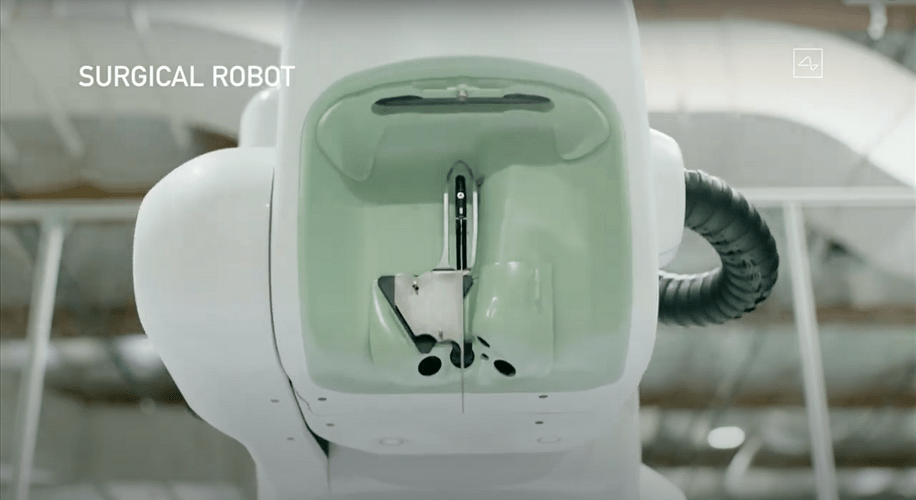
Neuralink Surgical Robot

Elon Musk has revealed progress on Neuralink, a brain-computer interface device. In so doing, he has revealed a commercial version of a technology that has been researched over the course of decades.

The device involves a small implantable chip, about the size of a coin, which is implanted in the top of the skull. Tiny cables just a few microns across (about 1/20 as wide as a human hair) connect the chip to various parts of the brain. The chip itself charges inductively, presumably overnight while the bearer is sleeping, and the chip can wirelessly interface with electronics, including possibly Tesla vehicles.

When it comes to any brain-reading devices, count me out.

While there are many potential applications for this technology, there are many, many drawbacks that simply shouldn’t be overlooked.

For one thing, there is the issue of privacy. Everyone has a right to their own thoughts, and those thoughts to be private, remaining in that person’s head until they speak them with agency. The existence of psychotronic technology, whether with an embedded chip or not, allows for the potential to invade privacy on a whole other frontier.

Without privacy for one’s thoughts, there is virtually nothing that’s off-limits, and a violation of one’s privacy can occur on the deepest, most intimate levels. Imagine that a person obtains a device that can somehow read and interpret a person’s brainwaves. Using this, a person can…

  • Cheat in a game of cards,
  • Determine the passwords that a person uses, such as for their bank account,
  • Be presented with that person’s sexual fantasies (perhaps even visually),
  • Spoil surprises such as parties and anniversary gifts,
  • Sabotage that person’s career plans,
  • Destroy that person’s interpersonal relationships,
  • Know when to burglarize that person’s house,
  • Say just the right thing to distress that person,
  • Gaslight the person into believing they have a mental illness,
  • And there’s more. The list goes on and on.

The way such technology could be abused is disgusting. And such technology does exist!

Another point to worry about when it comes to this technology is that there may come to be a time in which it would be needed to be competitive.

When the internet first emerged, those who had access to it had an enormous advantage. A person with the internet could easily network with other internet users, and they had access to the summation of human knowledge.

Today, the internet is available to almost everyone at nearly all times, from devices that they carry in their pockets. The internet is considered the bare minimum that’s needed to be competitive in the career world, and if anyone does not have it, they stand almost no chance of getting by.

Psychotronic technology such as Neurolink would likely enhance human ability and perception to the point that, if it were allowed to proliferate, only chipped humans could compete. Enhanced vision, immediate interface with devices, radar-like sound, immediate answers to questions through web searches, and instantaneous communication with other chipped humans would be among the benefits that may be available to those chipped. Those who insist on remaining organic may get left behind.

There is another potential problem, and this is a whopper. If the brain interface is a two-way dealie, then brains can receive signals from the chips, which can receive signals wirelessly. This would mean that brains could be hacked.

Chipped humans would therefore have the potential to go Manchurian Candidate and act on rogue code transmitted to that person’s chip. Why dirty your own hands with murder when you can just hack someone else into doing it? Why risk getting caught stealing when someone can be hacked into buying you an expensive gaming rig? Want someone to destroy a business, beat his wife, start a riot, go streaking, or all of the above? There may soon come a day that it would be possible with just the right code.

Obviously, this would be a nightmare for criminal justice and law enforcement.

This may not be Burger King, but we’re serving up a double whopper. Imagine how horrifically this technology would be abused if it would fall into the hands of a dictatorship.

That gasp of horror probably came from you.

China already has a “social credit system” which provides a person with a score based on their behavior. China has already implemented cameras in cities which recognize faces and is linked to their system. With this, they can automatically adjust a person’s score based on their day-to-day behavior. A person with a low enough score is shamed by having their face appear on electronic displays in public!

Considering this (and the recent genocide of Uighurs), it’s hard to put an abuse of psychotronics past the Chinese Communist Party. If such technology were to be implemented on a society-wide basis, the Chinese Communist Party could use it to track thoughts, seeking out unrest, religious tendencies, and just about anything the Chinese Communist Party might take issue with.

Countries governed by religious fundamentalists could abuse psychotronics in their own way, ensuring complete submission to establishment religious practice, swiftly punishing heresy, determining that prayer times are observed, or perhaps even monitoring the contents of prayers!

It might not be fun to be the guy who steps out of line, as such technology could potentially be used to affect someone’s mood, perhaps causing depression, or it could even be used to induce pain, torturing a person directly and in a way that cannot be resisted, at any given moment!

Though it hasn’t been discussed very often until now, there is a certain portion of the American population that has made the claim to being victims of psychotronic harassment. I suspect that many of them actually have a mental illness of some sort. However, it’s interesting that this complaint has exploded in recent years, including with the infamous Navy Yard shooter who made the claim to being influenced by E.L.F. waves. Personally, I suspect that there might actually be something to the complaints that some of these people have.

With the recent reveal of Neuralink, psychotronic technology is going mainstream, and I suspect that more people will come forward with complaints of psychotronic harassment. It’s reasonable to suspect that there would come with this a push to limit the potential for abuse of psychotronic technology.

Such a push is something I might be getting behind in a hurry.

What’s a relevant smartphone feature?

phone.png

I’ve heard it said that we’re at “peak smartphone”, the point of diminishing returns concerning technical specs in smartphones (unless some technological breakthrough were to occur). This being the case, it’s more likely that features will play a factor in smartphone purchases. That got me to thinking about what smartphone feature really matters to me.

I came up with an answer, and that answer is larger screens. This is because with larger screens, you can view larger explosions.

asteroid explosion.jpg

I have tastes that are easy to understand. I like explosions. I like movies that have explosions. The larger and more bombastic the explosions, the better. I know that people get all snotty about Michael Bay movies, but he knows how to write in a way that speaks to me. With explosions.

I heard a song that said something like, “cool guys don’t look at explosions”. But that’s like saying “cool guys don’t eat beef jerky”; that’s a lie, of course we do. Cool guys love looking at explosions, and that’s because explosions rule.

bewm.gifThat’s right, look at it!

Explosions are fun, and Pokemon is fun, too. You know what would really rock? Putting the two together. Someone thought to do that, and the result is Typhlosion. It’s the most popular Johto starter, and that’s no accident. Whoever designed that one did a great job.

johto typhlosion.png

You know what else rocks? Hot sauce. That’s because hot sauce tastes like explosions. You can seriously improve your food by adding the flavor of explosion to it. Cool guys look at explosions, and they taste them, too.

pepper palace the hottest sauce in the universe.pngPepper Palace

Oh yeah, I was writing about smartphone features. Graphene sounds cool, 5G sounds cool, but let’s not deny the fact that large screens still matter, considering their role in expediting the viewing of explosions. Folding phones are a significant advancement in explosion-viewing technology, as they allow us to have it both ways: a large screen with which to view explosions, and a device that can be folded down small so it can fit in one’s pocket.

However, folding phones seem to be in the gouging phase of new technology, wherein something new is priced disproportionately high in an effort to profit well off those content to be on the bleeding edge of technology (while at the same time being the guinea pigs while various flaws are worked out). It might be a little while before folding phones are priced reasonably, but we’d still have access to tablets and larger phones in the meantime.

And when it comes to watching Zacian’s Behemoth Blade in action, those do just fine.

Books Are On the Way Out (But Reading is Thriving)

old books mildew.jpgPictured: Old media collecting mildew

New media is consistently vilified as contributing to the stupidity of users and is presented as a sort of Pied Piper, hypnotically leading children away from books. Currently, the target is cell phones, and in times past they went after television and video games for the same reason.

But let’s take a step back and look at things critically: books are far from ideal as a form of media. When one considers their inefficiency, it’s easy to see just how great it is that they’re on the way out. They’re cumbersome to carry about, especially in quantity. A trip to the library is inconvenient, and the library charges a fee if they don’t get books back on time. A trip to the bookstore can quickly get expensive if you buy books new, and if you go for used books, you risk purchasing a book blighted by mildew which, if it slips your attention, can damage your entire collection. In light of all this, and the existence of alternatives, books have become impractical.

Those who would disagree with me might bemoan how difficult it is to get children interested in reading, imagining the days in which children would happily take a trip to the library. Their main motivation appears to be a quaint rustic feeling that comes with doing anything unsophisticated. But the fact is, cell phones and visual media are the reality of the present time, and it’s better to prepare children for the world that is, rather than some notion of what someone would prefer it to be.

Fast fact: reading is thriving. There is more reading today than there ever has been, and this is because it’s more efficient to get reading to people than at any other point in history. And here is the device instrumental to this reading revolution:

samsung-note10-plus-5g-front-aura-glow.png

That is a cell phone. Say “Hi”. It’s a wunderkind when it comes to reading. How so? Assuming the average size of a Kindle book being 2631 KB (source), 256 GB of storage on one of these can hold 102,027 books. A 1 TB MicroSD card increases that amount to 510,139. This is comparable to the most generous estimates of the size of the Library of Alexandria. And you can fit it into your pocket.

What’s that? Your cell phone doesn’t have that kind of storage? That’s okay, because you still have access to a boundless ether of literature if your cell phone (like most) has a simple program called a “browser”. You can use it to browse the internet and read countless pages filled with news articles, research papers, stories, discussion threads, advice columns, encyclopedia pages, and on and on.

While those desperate to justify their fix of outdated media may turn to public schools as champions of books, that’s not going to help them very much, as schools are increasingly turning to tablets for education. And why not, considering the ubiquitous use of screened devices in the adult world? Again, the idea is to prepare children for the real world, which involves familiarizing them with devices that are actually used in workplaces, both today and in the years to come.

luddites.jpg

The fact is, books, textbooks, and libraries are on the way out. I, for one, welcome tablets as their academic replacement, as I have memories of continually lugging heavy textbooks about at the insistence of teachers and professors, in spite of infrequently needing to actually use them, which I understand to have been a typical college experience. Having to carry a small, glowing display screen that fits in my pocket is an excellent alternative to a bunch of cumbersome, expensive books.

One might ask, “Okay then, what if your phone breaks? Where are your books, then?” The answer is, I still have them. The books on a person’s phone or tablet are associated with the account that purchased them, so if a person loses their tablet or decides to buy a new one, their previous collection is available on their new device. To most of us, this is pretty obvious, but evidently not to the person who had to ask this question, which really goes to show how poor a job that person is doing keeping up. While the rest of us have access to a boundless sea of ethereal literature in our pockets, they’ve been assuming us to be senseless just because they don’t comprehend what we’re doing.

Even when I’m playing games on my cell phone, it’s helping me to be a smarter person. I’ve been playing an RPG that challenges players to work with limited resources over a long period of time, so that getting a single character to the point of being adequate could take as long as months. While playing this game, I’ve planned out my moves months in advance using careful calculations on a spreadsheet. My planning paid off when I barely unlocked a rare character within a strict time limit. This kind of care when it comes to resource management is something that a person can learn from if they’re not that great at managing their finances. Even those farming games that we’ve been making fun of can be played well with some careful planning. It’s too bad it’s much easier to assume that someone on their phone is playing some vapid bird-flinging simulator with all the depth of a puddle of rainwater.

So, to summarize: If you want a book, you have to take a trip to the store or the library for it. After that, you have to carry the cumbersome thing around with you if you want to have it wherever you go. Also, the library will want it back, and will charge you a fee if you don’t return it within a time limit, and in a condition that’s to their liking. However…

You can store hundreds of thousands of books on cell phones, not that that’s even necessary because these same phones have a browser that grants access to boundless information, whether a person is at home, sitting on a park bench, at a supermarket, or on a lunchbreak. Also, you can look at bright, colorful pictures on them, and even set one as your background. And you can ask some of them questions (verbally) and get answers (verbally). Also, movies and games. Also, navigation. Also, photography. Also, a bunch of other features so numerous that I don’t feel like listing them all.

In a sense, it’s like the old choice between beef jerky and celery. Most people would go for the sweet tasty delicious beef, and enjoy every bit of the experience. It’s one of life’s easy choices. However, there are a few who would go for the celery. They’d be more bitter for the experience, and afterwards stew over how much happier the people are who went for the beef jerky. So it is with technology: the people who embrace it get to benefit from how much better it makes their lives, while those who refuse get to savor whatever vacuous platitude that prevents them from being happy.

beef jerky or celery.png

Books have had an important place in history, what with the invention of the printing press expediting the propagation of ideas. However, for the propagation of ideas, books and the printing press have long-since become obsolete. The obsolescence of old media may make people feel like they are being left behind, but the reality of the matter is that they are only doing it to themselves.

This post was published using Firefox for mobile.

Expensive Tech as Fashion

airpods as fashion.jpg

Apple is attempting to market AirPods as fashionable. I get the idea that fashion is supposed to be intrinsically difficult to figure out, because I’m having a hard time comprehending how fashionable it is to look like white plastic solidified while oozing out of someone’s ears. It’s like the earwax of nightmares. Gross.

The audio industry has long been a scary place. To start with, there’s “ordinary” headphones that a person can easily find for something like $20 at places like Target, then there’s the stuff of elites which can set a person back something like $300, which supposedly offer a superior audio experience. When a person is considering dropping all that cash on a single piece of tech, they’d want to be sure they’re getting their money’s worth, so they start doing some research to find which pair of headphones are right for them.

Then they’d find out that there’s many, many different varieties of elite headphones that each cost tons of money, and they’d have to do more research than they thought. They might attempt web searches to narrow things down, and find some blogs making direct comparisons between headphones on the market. Can we trust their opinions? When we see their pages littered with Amazon affiliate links for these products, it becomes apparent that these are for-profit blogs, and their opinions may be largely informed by what brings in the greater ad revenue for them.

The audio industry is intimidating, but lately, it’s gotten worse. The Beats brand of headphones has previously been marketed using endorsements by Dr. Dre as Beats By Dre. Since then, the Beats line has dropped the Dre endorsement, and was purchased by Apple, a company that already had a reputation for producing questionably expensive luxury tech.

That’s not to say that they’re no longer into the idea of celebrity endorsements for Beats, as the Beats brand has been endorsed by a number of celebrities, with even a special edition commemorating an endorsement by Justin Bieber. What sets these headphones apart from other headphones in the Beats line? Their color. That’s pretty much it.

These headphones are pricey, so one would imagine that they are some high-quality headphones. Instead, they are panned by audiophiles everywhere. The high price of these headphones is driven by the force of the demand generated by celebrity endorsements. The audio industry has found yet another way to liberate people from piles and piles of cash: with the words of people that are rich and famous.

And now, people are wearing Beats headphones and even AirPods with the belief that doing so would make them more fashionable. With tech companies standing to profit, I wouldn’t expect them to discourage this, but I’ve been noticing an increasing trend in the audio industry of encouraging style over producing a quality product, which provides another obstacle to avoid having spent hundreds of dollars on an inferior product.

I admit that if I were to spend a lot of money on something, I’d have a desire for it to look appealing. But when someone places undue importance on fashion when purchasing headphones, they just look like a sucker that caved in to marketing.