
Pictured above is the posable Mewtwo plush from the Detective Pikachu line. Don’t you just love how expressive he is?

Pictured above is the posable Mewtwo plush from the Detective Pikachu line. Don’t you just love how expressive he is?
A few prominent Pokemon YouTubers have been accused of preying on minors. As it often goes, it started with one person coming forward, and afterwards, more people came forward claiming to be victimized by prominent members of the Pokemon community.
It’s really nothing new that some people misuse games and social media to attempt to take advantage of other people, but it’s still disappointing when it happens.
When it comes to the nature of the crimes committed, I know that it may not be popular to speak as a voice of reason, but it’s still important, considering that society would quickly break down if accusations (true or false) were allowed to run all over the place without scrutiny.
 “And we can’t have that.”
So, considering what’s at stake, let’s be brave enough to use our heads. There are a few important points to consider as this and any similar drama unfolds.
First, accused does not mean guilty.
I don’t mean to make excuses for these guys in the event that they actually did sexually abuse a minor. If that were the case, I say throw the book at them. I’ve known a couple people who were sexually abused as children, and that’s the kind of thing that can mess a person up for a very long time.
However, people are capable of making stuff up, children included. If it turns out that at least one of the accused is innocent, this whole matter really sucks for them. Worse yet, it can ruin opportunities down the road, as their name will continue to come up in connection to crimes that they didn’t actually commit in web searches for years to come.
When it comes down to it, it’s for a court of law to determine innocence or guilt. We the public may be presented with convincing evidence, but the evidence has a lot of potential to have been doctored or be one-sided. Therefore, let’s not be too hasty to rush to conclusions, considering that we may not have the full story.
Second, if you really were a victim of sexual abuse, you need to take this information to the proper authorities.
By “proper authorities”, I mean “the police”, since law enforcement would have a better chance of stopping the predator and bring the person to justice than your Twitter audience, no matter how big the audience may be.
I know how hard it can be to come forward, considering that sexual predators usually intimidate their victims out of doing so. Making it harder still is that people don’t want to be known as the person who was victimized. Still, it’s very possible that the predator has other victims, no matter how things may seem. Because of this, it’s important to come forward.
To law enforcement, of course. Taking it to law enforcement would allow the victim to maintain their dignity and remain anonymous while an investigation can be conducted, and in the event that guilt is determined, justice may be served. On the other hand, taking it to social media comes off as a grab for attention, and law enforcement still might not get wind of it.
I know it sounds like I’m really laboring the point here, but bringing the matter to social media isn’t as productive as it may seem. People might be outraged and bang their pots and pans together, but the end result is likely the predator remaining free and picking the next victim just shortly afterwards. It’s law enforcement that gets results. Law enforcement.
Third, a few scummy people don’t define an entire community.
While we already know this, the corporate media is very predictable, and there’s a big chance that they will use this to make the case that the Pokemon community, or even gaming communities in particular, are populated by predators. We know that this is not the case, but old media tends to sensationalize things in an effort to get their audience interested.
If they pull this, just remember that they’re old media, and they don’t matter as much as they used to.
Old media makes bank off of mischaracterization, sensationalism, and outright libel. You don’t, so you have no incentive to do the same thing. Don’t be like them.
I know that there are other points to make, but that’s satisfactory for now. I’m interested in seeing how the drama unfolds, and in the outcome in the event that these YouTubers are taken to law enforcement. Come to think of it, have any of the accusers taken the matter to law enforcement? It’s kind of important that they do.

There comes a time when you have to admit that good intentions aren’t what it takes to solve a problem. The UK’s intention was to solve the problem of knife crimes. The solution that they came up with? It was pretty much “We’ll just leave this box here, you put your knives in, and then things will be peachy-keen.”
How do you think that went?
No prize for guessing that criminals stole the knives. That was exactly what happened. If you have to be brought to the finish line, then let’s go over a couple points; go over them as slowly as you need to:
Therefore, the main people who deposited their knives into the boxes were those whose heartstrings were tugged by the good intentions of the deposit boxes, and they put them right where criminals could steal them, which they did. The end result is fewer knives in the hands of people who wouldn’t commit crimes with them, and more in the hands of those who would.
Here in the US, we got it right. We made guns legal for ordinary members of the population to possess, and it was so important to us that we made it the second amendment of our Bill of Rights. Because of this, criminals are terrified to commit crimes. Someone who thinks of threatening a random person on the street with a gun is hesitant on the chance that they might be carrying one, too.
One who has never been to the US might imagine that the US is riddled with gun violence. But, on the contrary, most Americans have never witnessed a shooting. There’s relatively little gun control, and gun violence is scarce. That pretty much demolishes the misconception that gun rights breed gun violence.
Anywhere that gun ownership is restricted, if someone manages to get their hands on a gun, they have an advantage over the rest of the population. Gangsters don’t give a care about a “criminal” moniker, and if there’s a possibility that they may be armed, the unarmed population is terrified to so much as gainsay them, and they can exercise control over entire neighborhoods, effectively becoming a form of underground government.
The obvious solution to knife violence is to give the general population license to fight back, as it has been with gun violence. However, the leftist ideal of weapon control is so dominated by fairyland happy thoughts that they actually believed that a surrender box would work. Again, the only people who would have surrendered their knives to these boxes would have been the ones whose heartstrings were tugged by the good intentions, which sadly would have contributed to a false sense of progress in the event that these boxes filled up.
From my observations, it appears as though a certain ideology is predisposed to encouraging acts of fanaticism with sharp objects. I know that correlation does not equal causation, but it’s interesting that Britain’s recent spike in knife crimes coincides with a recent increase in the ideology described. Wouldn’t it be far more productive to acknowledge and address the ideology that bears primary responsibility for the recent surge in armed crime?

Shortly after I started playing Pokemon Go, I picked the yellow team. The main reasons were that I like Zapdos, and I like Raichu, which is the same type. Knowing that it wasn’t a popular team didn’t discourage me; instead, I felt a certain desire to bring things up for the underdogs.
It’s been about a year-and-a-half, and I made it up to level 37. After all that time of playing the yellow team, I broke down and got a Team Medallion, and used it to change teams to the blue team.
That’s right, blue people. You win.
It’s not so much anything against anyone in any team in particular as it is Niantic’s failure to effectively disincentivize everyone choosing the same team. I got tired of people not wanting to raid with me because I didn’t contribute to the popular team bonus. I also got tired of hammering away at a gym in one place for about ten minutes, then seeing my pokemon get sent right back to me shortly afterwards with only a few PokeCoins as reward. Not only that, I got tired of only having a few Premier Balls to catch a legendary pokemon after a successful raid.
Being on the yellow team was largely a cynic’s quest, where the main reward is to say that you got as far as you did. Now I’m on the blue team, where the main drawback is the angst of watching as your gym defenders actually succeed in holding down a gym for a significant period of time. Now I consistently reach the 50 PokeCoin a day limit.
Sometimes, the key to victory really is to walk the path that’s been beaten so flat that Eratosthenes could have used it to accurately calculate the curvature of the earth.
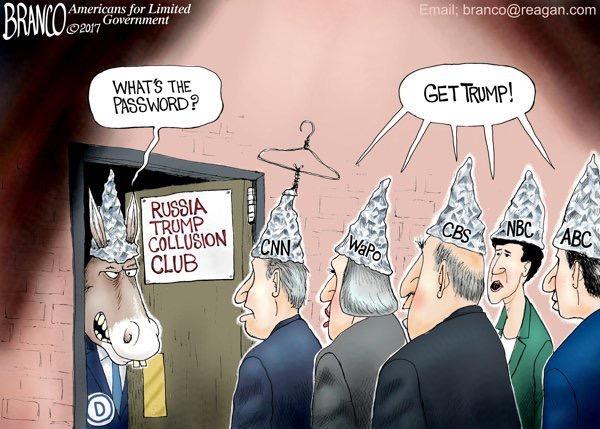 No silly, it’s “password“. Now try again.
To the surprise of absolutely no one, there was no collusion between the Russians and the Trump administration to win Trump the 2016 presidential race. This was the conclusion that Special Counsel Robert Mueller has arrived at after having spent two years and $30 million taxpayer dollars at the insistence of Democrats.
Wow, $30 million dollars? There have been times in the last couple years that I’ve been eating macaroni and cheese to get by, and wouldn’t have minded just a few dollars to go out and buy a hamburger. And all this money was wasted in an effort to give credence to a blasted fantasy?
Now that one conspiracy theory is debunked, a set of fresh new ones are likely to emerge, such as Mueller possibly being paid off. I doubt I was the first to call it, but by now we’re familiar with how the shills think.
We all know that the reason why the Trump-Russia conspiracy theory came to be was because it was the best that the left could come up with after the DNC’s email server was hacked, and oodles of their emails were circulated, including ones showing that they screwed over Bernie Sanders to favor Hillary Clinton, bypassing the will of voters from their own party. So they blamed the Russians, and claimed that they hacked their emails and were in league with the Trump campaign.
To say that the DNC’s emails were hacked is pretty generous. If one could have called it a hack-job, it would have been one of the simplest hack-jobs in history. All that happened was someone guessed their password. That’s it. A grade-schooler could have pulled that off.
password
What you just read in that blockquote was the DNC’s password for their emails. I kid you not. When I say “A grade-schooler could have pulled that off”, I wasn’t kidding. They invented the Trump-Russia conspiracy theory in an attempt to hide just how dim they are with cybersecurity.
I don’t know what the code for Hillary Clinton’s briefcase might be, but I suspect it’s 1-2-3-4-5.
So, what did we learn? For one thing, liars don’t prosper in the long run. Also, don’t set your password as “password”, especially if you’re hiding evidence of a conspiracy to subvert the will of the American electorate.

If an air conditioner makes a ton of noise, we don’t think “power”, we think “inefficiency”. The same goes with washing machines; if a lot of noise comes out of them, that indicates lots of lost energy that, through more careful engineering, could have resulted in clean clothes in shorter time and lower energy bills.
And, to fulfill the imaginary requirement for an arbitrary third example, we don’t associate a noisy computer with more processing power. When a laptop sounds like there’s a jet going overhead, that usually means that it’s time to clean the dust out of its fan.
So then, why does anyone still hold on to the misguided notion that a noisier car means a more powerful, effective vehicle? My guess is that there are still a few people around whose primitive minds are stuck in the early fifties, where a loud revving sound indicated a more powerful automobile.
These are the chimps who drive down residential streets making sure that their cars let out a loud roar, because they want everyone to know that they are fast, and they have the car noisy enough to prove it.
The sad truth is, they’re not really impressing anyone. I can tell you what people around them think when they tear off near elementary schools. It would sound something like this:
How annoying. I want to put a bullet right in his tires. If he had the money, why didn’t he buy a better-sounding car?
A noisy car is the sound of inefficiency. I know what some of you are thinking: “But Raizen, if cars can be made that run quieter, why don’t they make those?” You know those Mustangs that meatheads like so much? They actually can run quietly. That revving sound that you sometimes hear from them? It comes from speakers in the car. The engineers didn’t want to sacrifice performance, but still wanted those meatheads to enjoy the sweet, sweet sound of an ancient and poorly-maintained jalopy, so they faked it. That Mustang effect is actually more like a Bose effect.
Even sadder still is the fact that some people spend tons of money to mod their cars so that they sound inefficient and annoying. Intentionally. They’ve got all this money for modification to their automobile, and the intention of the modification isn’t to substantially increase the performance of their car, it’s to produce a sound to the satisfaction of only themselves.
As frivolous as that is, the modding community does do even worse. Some mod their cars so they can achieve some ridiculous top speeds. Two hundred miles per hour? Give me a break. When is a person going to go 200 MPH, even ignoring the fact that a person would have to break the law to do so? What justifies putting huge piles of money into achieving a benchmark that’s not even legal to attain? In cities and suburbs, one must come to a complete stop too often for achieving a high speed to even be practical. So, no one should care whether your car can go really fast, including you.
To ensure that their cars look like they go fast, they also throw money into aesthetics, such as flame decals, racing stripes, all that stuff that helps them live out that Speed Racer fantasy.

Nothing says “spraypaint” quite like gold hubcaps, right?
The best car is the most dependable one, and that would be the one that doesn’t spontaneously break down when you go out to get groceries. This is most easily achieved by buying something modern and efficient, and not letting a bunch of kids monkey around with it.

Lately, Jordan Peterson has caused quite a stir. This has largely to do with the fact that he’s a Canadian college professor that doesn’t toe the line for the left-wing agenda. He has also written a book that has gotten loads of attention, and has even been banned by a distributor in New Zealand.
Considering the controversy surrounding his book, it caught my curiosity, and I decided to go out and purchase a copy, wanting to know what it says. Because the hard left is making out Peterson to be some radical icon of the far-right, one might expect the 21st century equivalent of Mein Kampf.
The book is titled, 12 Rules for Life: An Antidote to Chaos.
Hmm… With a title like that, Peterson’s book sound more like some kind of self-help or self-improvement book than a political manifesto. However, there’s got to be something about this book that has leftists riled up. What is it about Jordan Peterson’s book that has liberals everywhere going crazy?
Let’s take a look at some excerpts from Peterson’s book, and perhaps we’ll see just what’s got them worked up:
“Rule 1 – Stand Up Straight With Your Shoulders Back”
This would be the title of the first chapter of Peterson’s book, and my impression is that he’s trying to encourage good posture. One can understand why this would be beneficial; it’s not just about maintaining physical structure, but also boosting one’s confidence and presenting a positive self-image. That’s the impression that I get, which seems far different from an admonition to act like an early 20th century German dictator. I suppose that different people can take different things from the same message.
“Rule 3 – Make Friends With People Who Want the Best for You”
I’m kinda picking up a self-help or advice vibe. It’s really hard to argue with the point being made. Sometimes, people really do settle for some duds when it comes to friends, and the result is being seriously dragged down.
You might know someone who acted on a dare because they thought that doing so would result in them being respected. In fact, the person acting on it was being respected less, and was being treated as a toy for someone else’s amusement. It was easy for the one kid to ask the other to act on a dare, because the asker didn’t have to face the potential consequences of what he was asking the other kid to do.
Or perhaps you’ve seen someone who seemed a little disappointed to hear that you succeeded at something. That’s a sign that the person might not be that great of a friend.
So, Peterson is advising readers to seek out people that would make good friends. That doesn’t really sound like “evil monster” material, to me.
“Rule 8 – Tell the Truth – Or, At Least, Don’t Lie”
Here we go, now I’m beginning to see what the problem is. In today’s “post-truth” society where kids are taught that lies are acceptable as long as they further the cause, I can see why an admonition not to lie can cause some ripples.
One thing I’ve noticed while looking at the book’s illustrations is that the protagonist character depicted in them is actually a girl. If Peterson’s position is supposed to be sexist, that seems kind of counterproductive.
“Rule 6 – Set Your House In Perfect Order Before You Criticize the World”
Again, there’s some serious self-improvement vibes, here. In fact, it seems like Peterson’s book is about building character.
Another thing about Peterson’s book and the few of his lectures that I’ve seen is that he seems to embrace theology, Christianity in particular, as being something positive for a person’s mind. That certainly goes against the idea that theology is outdated. Of course, most of humanity has been theologically involved throughout our entire history, even today in the modern age, so one can make the case that it’s something that humans are well-adapted to, and therefore is good for one’s mental health.
There does seem to be something about a theologically-inclined college professor who is a psychological practitioner that challenges perceptions about what those in the field are about. While one can argue about what his beliefs are and how he presents them, there’s something notable about the fact that he presents religion as approachable to those who might not otherwise consider it.
“Rule 12 – Pet a Cat When You Encounter One on the Street”
It’s a bit of a stretch, but the act of petting does involve gesturing your body in a manner that somewhat resembles a stiff-arm salute.
From what I’ve read, it seems like the point of Peterson’s book is “be a better person”. If the book were really intended as some manual on how to usher in a racist age of darkness, Peterson is mind-blowingly clever at hiding it.
Based on what I’ve read that Peterson has written and what I’ve heard him say, he doesn’t seem like he’s the monster he’s made out to be. But then, I actually listened to him speak for himself rather than just go with what some Tumblr snowflake was passing along in a deliberate attempt to make him look bad.
Peterson had twelve chapters in a book enumerating principles on living life, and he made one of them about petting cats. This is the guy that leftists are comparing to Hitler.
Old people seem to wonder why young people don’t seem interested in sports anymore. You probably already know why, it’s because sports are boring. The sports in question would be games like baseball, football, and basketball, rather than the interesting stuff like cycling or rock climbing or MMA.
If you’ve ever wondered why your dad or granddad seemed so interested in sports, it’s because back in their day, it was pretty much all kids had for entertainment. They didn’t have cell phones, so cell phone games weren’t a thing. And video games were the thing of hobbyists, they weren’t mainstream like they are today. When a sports team came to town, it was the main thing people around town talked about for weeks beforehand, and for weeks afterwards. If you got tickets, then you were hot stuff. Anyone who couldn’t go but wanted to know what happened had to turn to those who did.
Did anyone do anything other than sports for entertainment? There were movies, but they were mostly films that kids wouldn’t appreciate. Superhero movies weren’t as mainstream as they are today. Movies were mainly geared towards grownups, so a kid either had to develop grownup tastes, or find something else to do. Oftentimes, it was sports, because that was one thing that was accessible to everyone.
The selection of toys was far more limited, too. If a kid got a Pogo stick, he was considered the coolest kid on the block. Everyone wanted to hang around the kid with the Pogo stick. There wasn’t much expectation that the kid would let anyone else play with it, except his close friends. If he chose you, it felt great, even if you fell off the thing. If another kid on the same block got a Pogo stick, then the kids started taking sides. Because suddenly that cool kid with the Pogo stick got a rival.
By the way, if you’re wondering what a Pogo stick is, here’s a picture of one:

And yes, those things were for real.
If you want evidence of how boring sports are, try attending a sporting event. You’d probably have an uncomfortable seat tightly nestled between other seats like sardines. If you attend a large event, you likely won’t be able to hear the game itself over how noisy the crowd is, and you’ll have just one view of the game, whether it’s ideal or not (almost always not).
It used to be that if you went to a game, you wanted front row seats. Nowadays, you’d want skybox seats. That’s because there’s a party going on up there, with no one really paying much attention to the game.
Simply put, sports are boring. If I had a choice between a sporting event and playing a video game I like, the video game would win, pretty much every single time. But I can’t go to a sporting event any time I wanted, only when one is scheduled, and when one is going on, it’s still immediately competing with anything else I could do for fun, nearly all of it I’d rather do. Even if I were to play a sport, I can think of things I’d rather do.
Not only are there video games, I can watch anime on my phone any time I want, even selecting the episodes I want to watch from among multiple seasons. Or I can do redneck science and blow stuff up for fun. That’s just a few examples of the things that sports has to compete with for my attention. The fact is, sports are boring.
Here’s a thought experiment. Think up a few things you really like doing. Then, imagine yourself at a sporting event, squinting at a game you can barely see, and can’t hear over a screaming crowd. Would you rather be at the sporting event? If so, you’re boring. Otherwise, you now understand how boring sports are. QED.

Twitter is being sued by Devin Nunes over the platform’s anti-conservative bias, and the platform’s failure to moderate content that impersonates his mother, and his cow.
If you were to read this story from traditional media outlets, you’d have to read between the lines of their scathing bias, which wouldn’t be much of anything new if you are among those that still pays attention to them. And, naturally, they’re focusing more on the false accounts that defame him, considering that this gives them opportunity to pass along the tweets that ridicule him, as Daily Mail is doing.
But if you’re up for some old-fashioned media not giving anyone to the right of Karl Marx a chance, check out what Mashable has to say about it. The following quotation in particular caught my eye:
“Sure, maybe his feelings are really hurt, but given the fact that Trump and others have brought up strengthening libel laws multiple times — the old “you can’t take what you dish out” syndrome — it could be setting up more nefarious actions to come.”
Yeah, “nefarious actions” like making sure that the corporate media isn’t getting away with libel, which it committed against the “MAGA kids” who were falsely branded as a hate mob.
I’ve had a number of social media accounts in the past. From what I remember, impersonating someone else and posting defamatory content was against the terms of service of most of them. I know that it’s grounds for a civil case, which leads us to the story being discussed, today.
As for whether there is an anti-conservative bias in social media and the tech industry, there’s pretty much no question that there is. Shadow-banning has been a weapon of choice to ensure that conservative voices aren’t heard. If you haven’t heard of shadow-banning, that’s when a person is allowed to post, but far fewer people see the poster’s content. It’s a way to silence someone without them knowing what’s going on. It’s one of the expressions of the left-wing establishment’s control over social media.
If you’re wondering what it’s like to be a conservative voice in social media, imagine that you’re playing a game of chess against a child. Imagine that in this game of chess, you’re not allowed to move your pieces to the other side of the board. Not only that, you’re not allowed to capture the opponent’s pieces. Worse yet, the child gets to change the rules of the game while the game is in progress. More disturbing still, the child is convinced that you’re a hateful, evil person who deserves to lose for disagreeing with them about anything.
You may have wisdom and know how the game is played, but the child owns the board and can set things up so that you don’t stand a chance.
One point of view on the matter is that Twitter is a private company, and if they wanted to, they could ban conservatives altogether. Whether that’s the case or not, I would expect an American-run company to conduct itself in a manner consistent with American values, including the principles of protecting free expression on a platform conductive to the free and open exchange of ideas.
In any case, I think the rest of us can appreciate that liberals are making this about an attempt to regulate social media, and that they were finally made to admit that regulating something would be a bad idea.

Scyther was one of the coolest pokemon. It was a pokemon that you had to like. If you didn’t like Scyther, you got punched in the hallways. Not only that, it was rare. It was a pokemon that not everyone had.
It was a version exclusive, and you had to have the Red version to catch one. Even then, it was a rare spawn that appeared in the Safari Zone. When one finally showed up, you got excited, even though there was no guarantee of catching it. Because, you know, the Safari Zone, where the capture mechanics were wonky. It was a great pokemon to catch in an area where catching things was a drag.
But if you got one, you were the man. Everyone wanted to trade with you. People would hang out with you, because you were the man with the Scyther. Or something like that. It wasn’t like it was game-breaking or anything. It was a mantid with blades for arms. And part of it’s appeal was that it was so rare.
So, how come Scyther is one of the most common pokemon in Pokemon Go? I’m not kidding, they seem to be about as easy to find as other bugs like Weedle and Wurmple. One day, as I was traveling home from work, I saw something like five of them in about 40 minutes.
It used to be that Scyther was rare, and that was part of what made it so cool. But nowadays, if you have a few Scyther in Pokemon Go, you might have accidentally caught them with the PokeBall Plus, and haven’t gotten around to releasing them yet.
There are a lot of ways to improve Pokemon Go, and one of them would be to restore Scyther’s rarity. Scyther’s rarity was part of what made it appealing, but then Niantic ruined it.

