Author Archives: Raizen

Does this year-old story indicate Joe Biden will be unfair to video games?

There was an article from a year ago on ComicBook.com that may be relevant now, now that Joe Biden is in the President‘s seat.

As you may remember, the controversy surrounding violent video games was another sensationalist story in the nineties concocted by the legacy media in an effort to prey on your parents, who likely didn’t know it wasn’t really a big deal. Since then, we’ve seen oodles and oodles of studies that showed that there was no link between violent behavior and violent video games.

The story quotes Biden as paraphrasing game industry executives with his own personal takeaways, rather than presenting us with what they actually said. How’s that for intellectual honesty?

By the way, the story is titled, Joe Biden Slams Game Developers as “Little Creeps” and “Arrogant”. Does a lot to cultivate the expectations, doesn’t it?

Here is what Biden told the NYT:

“And you may recall, the criticism I got for meeting with the leaders in Silicon Valley, when I was trying to work out an agreement dealing with them protecting intellectual property for artists in the United States of America,”

So, Biden wants to be friends with artists? Not so fast. Pay attention to what he says of these artists:

“And at one point, one of the little creeps sitting around that table, who was a multi- — close to a billionaire — told me he was an artist because he was able to come up with games to teach you how to kill people…”

If someone has already made up his mind that someone is a creep, there is no expectation that they’d be given a fair shot. But also notice the divisive use of a person’s supposed income level in a pejorative sense. Class warfare has long been an eager arrow in leftism’s quiver.

The article points out that Biden “proposed an additional tax on violent media, including violent games.” It’s interesting that Biden perceived that a form of expression was harmful to society, but felt no moral qualms with extracting the wealth it generates.

“And then one of these righteous people said to me that, you know, ‘We are the economic engine of America. We are the ones.’”

It’s apparent that the person that Biden sarcastically called “righteous” was speaking on behalf of workers all over America. Working Americans can be rightly described as the “economic engine of America”.

But notice how eager Biden was to divide him against other industries:

“And fortunately I had done a little homework before I went and I said, you know, I find it fascinating. As I added up the seven outfits, everyone’s there but Microsoft. I said, you have fewer people on your payroll than all the losses that General Motors just faced in the last quarter, of employees.”

That Joe Biden came specifically prepared to argue against that statement with data requires a generous suspension of disbelief. But putting that aside, notice his lack of respect for industries that are smaller in size than one of America’s largest companies?

And, for that matter, notice how he refers to wages as losses? I understand that a person can accidentally pick the wrong word, but it sounds as though it would pain him to admit that General Motors employees deserve their income!

“So don’t lecture me about how you’ve created all this employment.. The point is, there’s an arrogance about it, an overwhelming arrogance that we are, we are the ones. We can do what we want to do. I disagree.”

Joe Biden does not respect the people who create employment, nor does he respect those employed. He does not respect the game industry, nor does he respect those who create content.

If the Joe Biden sitting in the White House is the same Joe Biden from a year ago, if gaming were to thrive in the next few years, it would be in spite of Joe Biden, not because of him.

Gamers, Joe Biden is not your friend.

Photographers are trying to make Joe Biden look saintly, and it’s deeply unsettling.

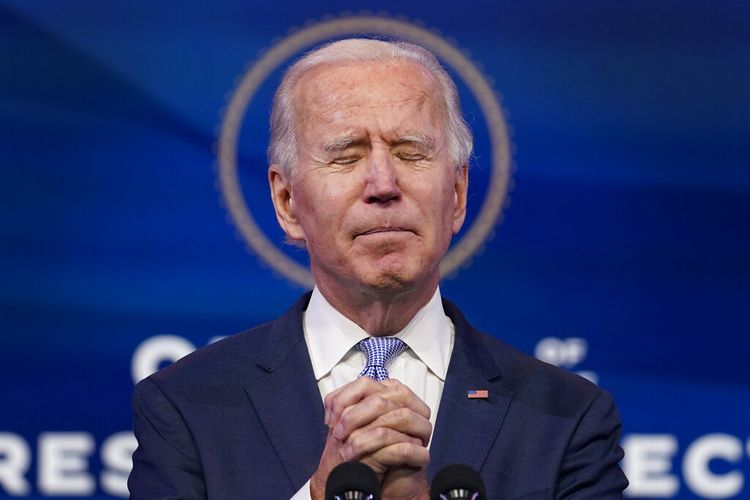
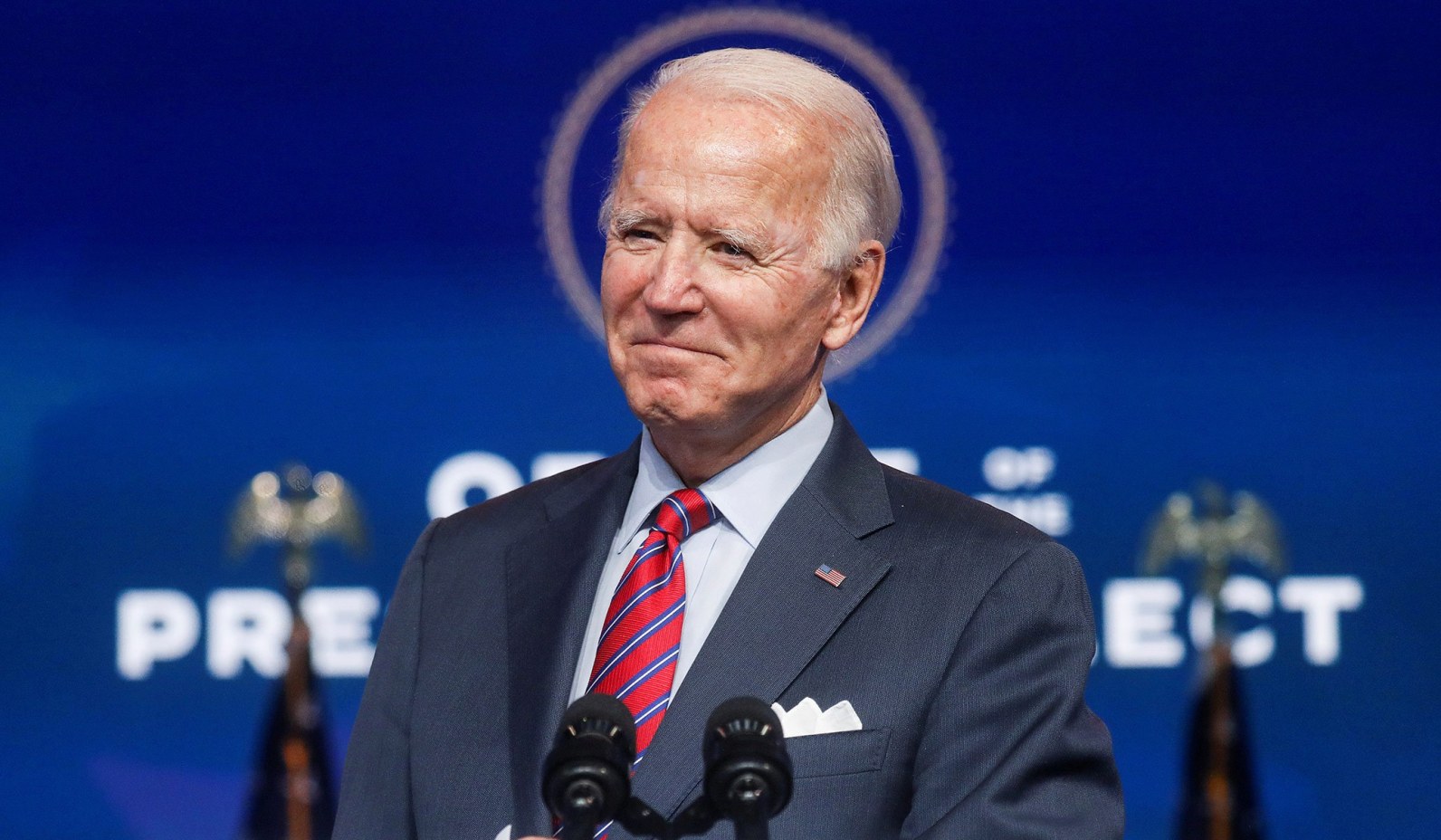
I doubt I’m the only one who noticed this, but there has been a surge of photographs in legacy media that depict Joe Biden as though he has a halo.

It seems deliberate. The picture puts Biden’s head directly within a circle in the background, usually yellow, that’s just a little larger than his head.

In classical art, when an artist wanted to ensure a viewer knew that a person depicted was a saint, a bright yellow circle (a halo) was placed behind their head.

Crafters of religious symbology were excellent early marketers. They understood what patterns and shapes that people responded more favorably to, and used this to get a desired reaction.

Are leftist media outlets conspiring together to get the American public to view Joe Biden with the same reverence and devotion as one would a religious figure? If so, what does this say about their fanaticism, or for that matter, their ability to speak impartially concerning him?

PETA wants to ban animal name insults

PETA is no stranger to taking offense on behalf of animals. Now, they’re taking offense to the use of certain animal names as slangs, and are suggesting alternatives.

Examples include exchanging the slang “chicken” for “coward”, “rat” for “snitch”, and “snake” for “jerk”. PETA’s objection is on the reasoning that they imply that humans are superior.

Humans are superior to animals, and I can make the case for it, easily.

Suppose a race of extraterrestrials wanted to wipe out life on earth because they want an oxygen-rich terran planet on which to build an immense parking lot. Who do you suppose stands the best chance of stopping them?

Cats? No, they’ll be too busy destroying yet another set of drapes, while being too stupid to know why this pisses you off.

Dogs? No, they can’t even perform simple calculus.

Whales? Of course not. What do they even do?

If you answered “humans”, you’d be right. We’d be the most likely ones to detect those invaders the moment they’d enter our solar system, then vaporize them with all the ridiculously awesome weapons that we’ve been developing in the eons we’ve spent fighting each other.

Animals are like those worthless coworkers who have no idea how to do their jobs without making everything worse, so the best they could do would be to just stay out of the way. Except animals can justify their existences by being edible, and if they can prevent a bunch of humans from going hungry, they’ll have done their part in the effort to eventually save life on earth.

As for PETA, if they think humans are so mean, they’re free to go graze in a field, somewhere, and discover just how enlightened animals really are. And if they were to be eaten by some carnivorous or parasitic animals, they’d at least bring up the average number of humans who understand how the world works.

Disney Screwed Up: “Cancel Disney Plus” Now Trending at #1

The Mandalorian Star Gina Carano posted to Twitter comparing the dehumanization of the political right to the dehumanization of Jews in 1940s Germany. As she pointed out, this dehumanization leads to a certain justification for atrocities to be committed.

The legacy media are currently working hard to ensure that Gina’s words are interpreted in the worst way possible, telling you how they want you to interpret them, but not telling you what she actually said. Speaking of, here is what she actually said:

“Jews were beaten in the streets, not by Nazi soldiers but by their neighbors…even by children. Because history is edited, most people today don’t realize that to get to the point where Nazi soldiers could easily round up thousands of Jews, the government first made their own neighbors hate them simply for being Jews.

How is that any different from hating someone for their political views?”

Gina Carano on Twitter

You’re free to tell me how it’s intolerant to point out that Jews were demonized to the point that their own neighbors were attacking them.

The Twitterazis, upon determining that someone had a thought not in lock-step with intersectional leftism, acted as predictably as sunset. But Disney took things much further: by firing Gina Carano.

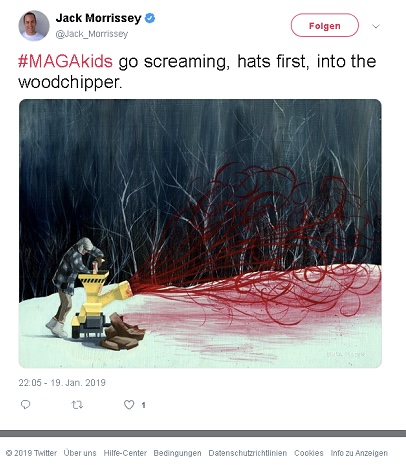
Just to remind you, this same Disney has no problem with keeping a director in their employ who used Twitter to wish a violent and bloody death on children who disagreed with him, via wood chipper:

Jack Morrissey, who, interestingly enough, used the German version of Twitter

Which goes to show that if Gina’s opinion were to incite violent, deadly mayhem and be multiplied in insanity by a factor of 100, she’d still have a job if she had simply taken the other side.

Another cool Disney fact is that they filmed Mulan in the Xinjiang province of China, where the Uighur genocide was (and is) taking place. Disney then thanked the Chinese Communist Party in the movie’s credits!

In spite of, you know, the concentration camps, re-education programs, forced abortions, sterilizations, and torture. That boiling blood sound is probably coming from you.

Disney is now beginning to pay for their indiscretion, as #CancelDisneyPlus is now trending #1.

Come to think of it, why not cancel Disney Plus?

With how bad the sequel trilogy was, it really seems like Star Wars’ finest moments are behind them. Dave Filoni did great with The Mandalorian, but where does the series go, considering how season two ended, and with one of the most talented members of the cast no longer in Disney’s employ?

Then there’s Marvel. The big-bad of the franchise, Thanos, is no longer relevant. Wandavision is interesting, but I don’t have a strong attachment to it. I’ve watched each of the MCU movies that they have up, unless there’s some hid somewhere under Disney Plus’ menus that I’ve missed.

But what else is there? There doesn’t seem to be anything else Disney Plus has to offer that interests me. Does continued access to movies I’ve already watched justify a continuing monthly charge to my Verizon account?

At this point, it seems more appealing to turn to streaming anime. That was an attractive option to begin with, but gets even better when you consider that the Japanese won’t pollute their products with intersectional politics. Japanese animators are more interested in making quality products than activism, and as a result, the products that they produce are actually entertaining.

Is Disney even aware that they don’t have a monopoly on entertainment, and that alternatives exist? Japanese manga is destroying American comics (comucks?) as it is. Disney needs to come to realize just what activism is doing to their brands.

The Collector: Like suicide.
Thanos: So you do understand.

Dialogue from Avengers: Infinity War

The Pokemon Trading Card Game Comes Up Huge

The Pokemon Trading Card Game (Pokemon TCG) is once again making the news, with the cards taking off so hard, that there are now card shortages, and Nintendo is now working hard to print up new cards to keep up with the demand.

Sound familiar? That’s just what was going on in the late 90’s, when the Pokemon TCG was first introduced. Back then, the fervor was so great that kids were actually getting into fights over the cards, and some schools even banned them.

There was also a brief moment around the late 2000s when the Pokemon TCG actually overtook Magic: The Gathering as the most popular Trading Card Game!

Of course, Pokemon has been popular, about as long as it’s been around. Just because you’re not hearing about it on the news doesn’t mean that people aren’t still playing it.

But you know what else is making the news? There are now Pokemon TCG Happy Meals at McDonald’s, and scalpers are buying them up in huge quantities to get at the cards.

One YouTuber has even won the scorn of the Pokemon community by buying as many as 100 Happy Meals just for the cards! I haven’t found his video, so it’s likely he since deleted it, but in any case, he’s now in damage-control mode.

At some locations, it’s possible to buy the cards separate from the meals, a fact that some are likely taking advantage of. But if you just want a few cards, it’s understandable, because then you don’t have the minor inconvenience of throwing out the “food”.

As you are likely aware, calling McDonald’s food “food” is pretty generous, though the problems with them are shared by much of fast food, such as adding excessive sugar to items like bread to make them more addictive. Wendys has ketchup that’s so sweet, it’s just wrong.

When it comes to food, people need to develop more self-respect.

Remember those guys who, in the nineties, tried telling us that Pokémon was fading? They’re still wrong.

A moment enjoyed is not wasted.

Japanese Police Arrest Man Over Illegal Pokémon

A shiny Sobble, image from Serebii.net

They say that it’s legal until you get caught. For an Aichi prefecture man in Japan, it just got more legal than he was counting on.

A 23-year-old man from Nagoya was arrested for running afoul of Japan’s Unfair Competition Prevention Act after using external software to change the ability of a Pokémon (a shiny variant of Messon, called Sobble in English), and sold the Pokémon to a man in Kyoto for 4400 yen (about $42).

Wow, you can get that much money for shiny Pokémon? I’m sitting on some bank, and didn’t even cheat to get it!

The same man reportedly made 1,125,000 yen (about $10,000) in about a year’s time. Assuming the same rate, that comes to about 238 Pokémon sold.

Is anyone else considering selling some Pokémon to supplement their income? Imagine how much it would rock to buy a house with money made by selling Pokémon! Working to pull it off is taking way too long.

Of course, there are some I’d like to hold on to, like Kona, my shiny Alolan Raichu.

Nintendo has previously announced their intention on banning those using hacked data in Pokémon Sword/Shield, as well as Pokémon Home. Because the Pokémon franchise has taken on paid subscription-based elements (features in Pokémon Home, Sword/Shield’s use of Nintendo’s online service), Nintendo now has a more financial incentive to ensure that the Pokémon characters exchanged using their online services maintain their integrity. Otherwise, players wanting legitimate Pokémon may feel cheated, and may possibly discontinue their use of subscription-based services.

There’s also the point that if Nintendo wants the competitive aspects of Pokémon to be taken seriously, they cannot allow cheating. Considering that they live-stream their competitions to an international audience, there’s a lot at stake.

My shiny Lugia is kinda making me feel like a jet-setter.

Is Activision Ditching Activism?

The social justice movement may have just lost an ally in the huge game company, Activision. The company has announced that it will be ending a program in its hiring process that considers at least one person from a group traditionally considered oppressed for each position posted.

Diversity is something that usually naturally occurs when one doesn’t consider race, class, gender, or what-have-you as part of the hiring process, but instead focus on merit.

However, there are businesses that certain groups generally find more appealing. As Kotaku points out in their article (linked to above), the game industry has long been dominated by white men. There is plenty of potential in that observation for the assumption that discrimination plays a huge role in their representation, but that would overlook the possibility that there are fewer qualified women and minorities that are interested in making games. There are many nuanced reasons for this, but people with different ethnic backgrounds tend to appreciate different trades differently. What’s more, women don’t seem as interested in game design, generally speaking, even though their interest in games is comparable to that of men.

While companies have long virtue-signaled on social justice issues, Activision was among the few to implement a policy to expedite diverse hiring. But now, they’ve decided to end the policy on the reasoning that it limits their ability to run their business.

Another point to consider is that the coronavirus lockdowns are making it far more difficult to run a business. Because of this, there’s far more at stake to hire strictly based on merit, to the likely expense of diversity hires. And if a person actually is an underqualified diversity hire, they’re likely sweating bullets now, knowing that their department may be downsizing, and they might actually be the least qualified among their peers!

Considering how bad the lockdowns are for diversity hires, the left might want to rethink their passion for lockdowns. Assuming, of course, that they actually gave a care for minorities.

When it comes down to it, diversity-hiring is an expensive form of virtue-signaling which appeals to the premise that diversity is properly expressed by a room of people who look different. An overemphasis on diversity-hires is symptomatic of a certain toxicity in corporate culture that assumes bad intentions in the event that certain diversity quotas are not met.

Most companies in the western world don’t really care what race or sex you are, but mainly consider whether you’re the best fit for the job. The reason for the diversity hires is because those companies are being put under a lot of pressure. Mainly by people who don’t actually know how a business is run, or understand that few people who run a business are wealthy.

Having said all this, it’s hard to ignore that there is an under-representation of blacks in game development. I know of blacks that are highly interested in games, and have a high degree of creative ability. I’d like to see more of them get into game development, because I’m interested in seeing what they come up with.

You can now “fight against disinformation” on Twitter with an app that blocks New York Times

Remember when using the internet meant curating your own content, and not having it done for you by a tech monolith that’s so rich, they could afford to buy the rights to colors, and are making no effort to conceal their agenda?

If you do, I just found something that might get the comments buzzing on your Xanga or LiveJournal: an app developer has just produced an app that blocks New York Times on Twitter!

The app, called Block The New York Times, works by blocking 800 NYT contributors, and it’s activated with just one click.

As you are likely already aware, corporate information media like Twitter and Facebook have acted on concerns over “misinformation”, such as asking the wrong questions about the 2020 election, making the wrong observations about the coronavirus apocalypse, or otherwise engaging in wrongthink.

But for some reason, the media oligarchs are being lax about the greater concern over corporate misinformation. In light of this oversight, it’s great that an app developer has risen to the challenge of taking on corporate misinformation that social media outlets have actively promoted, perhaps accidentally.

Thanks to Block The New York Times, each of us can now do a bit more to bring the internet back to its golden age of individual self-curation.

Terraria Developer Blocked From Stadia, Withdraws From Platform

The developer of Terraria, Andrew Spinks, has been banned from the Stadia platform and from other Google services. The developer retaliated by declaring the bridge burned by Google themselves, and decided to no longer develop for the platform.

If you’re wondering what Stadia is, it’s like a streaming service for video games. There’s no need to download the games, they are just streamed, and you play them on your device. I can justify digital download games, and that’s primarily what I’ve been doing on Nintendo Switch. But the dealie where you don’t even store the game digitally comes off as some creepy Great Reset mushugganah where you’re expected to own nothing and somehow be happy.

The news of Spinks’ decision to withdraw from the platform (after apparently being unfairly banned from it) comes days after Google decided to pull the plug on its own internal game development studio.

I’ve never had to interact directly with Google personally, but from what I’ve heard, it’s just about impossible to get a human being at Google to actually see your complaint. Therefore, it’s a challenge to get an account reinstated if it got a strike, or worse, a ban.

This is ironic considering that Google is enormous, and rich enough to easily buy their own country, if they so wished. Certainly, they could afford to pay the wages of a few more staffers who would interact with customers. You know, customer service? But as companies get bigger, they can upset more of their own customers, and not see much in the way of backlash. It’s a way large companies become too “big-picture” for their own good.

Here is what Andrew Spinks has to say about the matter on Twitter:

This wasn’t just a simple banning, thousands of dollars in content associated with the account has been lost, and his associated material linked with Google (Gmail, YouTube, Google Drive) has been lost. And, to make it all worse, Spinks hasn’t even gotten an explanation.

What I’d be pointing out here may be obvious, but perhaps his business should not have leaned so heavily on Google, or any external company, for that matter. While having a YouTube account is understandable, even small businesses have gotten custom email accounts. Then there’s the decision to store sensitive company information on the cloud; why would a person do that? If you have your own personal data storage, why wouldn’t you use it? To go to Best Buy and get an external hard drive would be trivial, and it would certainly be far more secure than storing files on the cloud.

But now, Google messed with the wrong guy. Terraria is one of those games that’s ubiquitous, available to play on smartphones, game consoles, PCs, and even graphing calculators.

But now, not through Stadia. Stadia has become one of the few platforms that the developer of Terraria won’t support.

It’s a matter of personal philosophy, but I suspect that Google could use this idea to solve their own problems: When making a product or offering a service, you make sure that the customer is getting a quality product or service. You don’t take the risk of upsetting the customer, whether it’s someone big, or an apparent nobody. While this may rub some people the wrong way, efforts to offer a quality product is of greater priority than most company policy. Managers usually have this understanding when resolving customer disputes.

If you take risks where it becomes more likely that you lose the customer, you don’t just risk losing the sale, you also risk losing future business. Not just from that customer, but from potential or current customers that that customer may interact with.

Your company policy is not more important than your customers, or the quality of the product that you offer. Google is likely to learn this lesson the hard way, soon.

“Those who sit up high have the farthest to fall.”
-Egyptian proverb

In the Early 2000s, Microsoft Tried Buying Nintendo

When Microsoft’s Xbox brand was first getting started, things weren’t looking so great. There was relatively little third-party support, for a long while after launch the number of triple-A titles on it could be counted on one finger, the company had a poor corporate image, and cracking the Japanese market was a difficult hurtle.

Microsoft decided to do something about it, and they decided to shop around for second-party support. And it so happened that Nintendo was one of the companies up for consideration. So Microsoft sent some reps and approached the old Japanese company, and it went about as well as you’d expect.

Nintendo pretty much laughed at the offer. Hard.

Steve Ballmer, former Microsoft president, explained it this way: “Like, imagine an hour of somebody just laughing at you.”

Because, of course they did. While explaining as much may only benefit the random boomer whose gaming outlet is strictly PC, Nintendo is not merely some random game development studio, they are one of Japan’s oldest, richest companies.

While PC gamers may chalk it up to it being Nintendo wanting to do things their way, there’s more to it than that. The fact is, Microsoft has nothing Nintendo would want. Nintendo has already been a massively-successful company, for a long time. Not only that, Nintendo has so much money that they can fund their own projects, and not have to turn to external financing. If you can imagine a person being so rich that they can just buy a car outright, or purchase their entire college education up-front, it’s like that, but on a much larger scale.

One can imagine the confusion of Microsoft execs who, after having thrown their money on the table with the full expectation of compliance with their wishes, were instead met with laughter.

When American companies meet Japanese companies, the difference in cultures becomes apparent. As I’ve pointed out before, the Japanese are more strongly characterized by a desire to produce a superior product. While Americans tend to view profitability as justification for a company’s existence, the Japanese tend to be more altruistic in philosophy. Japanese companies usually justify their existence in their belief that society is a better place for the services and products that they provide, and Japanese workers are generally sincere in their desire to excel at what they do, whatever they do. Exceptions to the generalities exist on both sides of the ocean, of course.

When Microsoft initially tried winning over SquareEnix, they ran into some hurtles at first. Mostly because the Microsoft reps sent over to Japan to SquareEnix treated their meeting like an American business meeting. You know the kind: where a bunch of overpaid suits loudly boast about being “in the money”. The Japanese weren’t as fond of that, and the SquareEnix employees distanced themselves from them, resulting in a huge setback between the two companies.

After the meeting, a SquareEnix rep met with a Microsoft rep, and asked him, “What is your philosophy” when it comes to game-making. If you understand Japanese corporate culture, you’d understand such a question for the blow that it is.

Considering all this, it becomes clear why a company like Nintendo would not allow a company like Microsoft to purchase them, though one wouldn’t expect an ethically-challenged American conglomerate to admit as much: For the owner of a Japanese company to sell his company to a company like Microsoft would be like betraying all the people in his employ who count on him to maintain the company’s cultural identity.

On a related note, Sony Computer Entertainment became headquartered in California, USA. Now, you see the game company tending more towards western notions of woke culture, alienating the company’s initial Japanese culture, and the Japanese (and gamers in general) are turning more towards Nintendo for games.

Oh hey, I’ve got an excuse to use this piccie, again:

As the situation with SCE develops, it’s likely to become yet another case study in what happens when a company compromises with its culture.

The fact is, corporate culture does matter, and there are people out there that wouldn’t give up their company’s identity, even if presented with a huge mound of money. I don’t know how many of America’s wealthiest people would understand that, but I suspect that it might not be very many.