Author Archives: Raizen

Angry Fast Food Employee Exposes Panera’s Mac and Cheese

panera bread mac and cheese lol.png

An employee at Panera Bread recently posted a video on TikTok exposing how Panera Bread prepares their Mac and Cheese on site. After the video spread to the point of being featured on the evening news old media, the employee was afterwards fired.

The video, only seconds long, shows a packet of mac and cheese being dropped into boiling water, then a prepared pouch is pulled out, opened with a pair of scissors, then emptied onto a bowl on a tray. This is set to an audio of a man reacting with laughter. Here’s a link to see for yourself, because why not after just having it described to you?

The video exposes Panera Bread as being fast food with a somewhat fancy dining area and high prices. It certainly busts the illusion of partaking in princely dining with convenience.

Out of irony, I gained an interest in trying Panera Bread’s mac and cheese, but I changed my mind upon arriving at the ordering kiosk and discovering that they want over $8 for it. Eight dollars!? It’s macaroni and cheese; it’s not exactly the stuff of luxury, and it seemed all the more a rip-off after knowing that it’s boiled in a pouch.

I’ve been thinking this for a while, and this provides an opportunity to bring it up: fast food employees are some of the most disgruntled people. It stands to reason considering that fast food work is the butt of numerous class-oriented jokes, but what exacerbates things for them is that a lot of those jokes have some truth to them. Food service workers usually make minimum wage (or less, if they’re tipped), and their work history is stained by virtue of the fact that they’ve spent a significant amount of time working in it. Management is aware of this, and sometimes use the fact that the work is low-qualification to point out that employees can be easily replaced.

If fast food employees could get away with it, they’d stick it to the companies that they work for, as the Panera employee did. But they usually can’t, so they take it out on the next people who wander into their sights: the customers. Customers place orders and make fast food employees do a job that they’d rather not do. It’s true that it’s a job that they applied to, interviewed for, and after being extended an offer, accepted it, and make a decision to return to each day that they’re scheduled, but once a person is in it, it can be very hard for them to get out of, and once they’re in it for a while, they can really come to resent it. And once that resentment comes to a certain level, the customers can become a target for providing business to an establishment that the employee has come to be disgusted with.

In and near cities, visiting a fast food establishment often feels like taking a side in class warfare. But that’s not really intended, people just want something to eat, and fast food dining is usually a compromise with the quality of one’s food in order to have something convenient. In Panera Bread’s case, the quality is lower than what many diners had initially realized.

But now more of us know what’s really going on, thanks to a certain employee that looks more like a whistle-blower than some mere grumbler. What people should be doing when something is wrong is making some noise. Otherwise, any abuse that is occurring is likely to continue. The Panera employee came forward, and while she paid with her job, it may be better for her in the long run.

To paraphrase a point I shared previously: It’s better to be fired by a bad employer than to work for one.


Kellogg’s Uses Breakfast Cereal to Virtue Signal

Kellogg's gross cereal.jpg

Kellogg’s has made a new breakfast cereal as a vehicle for publicity, called Kellogg’s All Together Cereal. The pretext is that Kellogg’s wants to express through one of their products that they are inclusive of the LGBT movement, but when it comes to corporate entities like Kellogg’s, the intention is usually self-serving.

Normally, a breakfast cereal doesn’t look like crap until it’s been processed by the digestive system. Mixing several boxes of breakfast cereals sounds like an idea that a child would think up, and it wouldn’t occur to them why it wouldn’t be appetizing until after they had already ruined a cupboard full of what was intended to be the whole family’s breakfast for an entire week.

In a prolonged, awkward moment of inhibited clarity, a higher-up at Kellogg’s decided to go through with such a cereal, and tack on a message about aberrant sexual identity. As is often the case when it comes to things like this, anyone at Kellogg’s who saw this for the insanity that it is was afraid to speak up.

Always tell your boss the truth, even if you think he wouldn’t take it well. It’s better to be fired by a moron than to work for one.

Companies like Kellogg’s love to virtue signal, but when it comes to living up to any message of inclusiveness, they usually fail miserably. Companies like Kellogg’s run production facilities that operate 24-hours-a-day, nearly every day in the year. One person I know attempted to work at such a plant, but requested accommodation for a weekly Biblical observance. Even though people that request accommodation in such a manner are protected under the Civil Rights Act of 1964, the company proceeded to pressure the employee into using their time off until they ran out, then wrote up the employee when he didn’t come in on days that they had long advance notification of. This continued in spite of the fact that the employee presented them with legally-binding notification that he did belong to a Church that held a weekly observance. Eventually, facing termination and a permanent mark on his employment history, the employee gave in to pressure and quit.

Interestingly, the same plant had material posted on a bulletin board about Purim, an annual Jewish observance that celebrates the deliverance of the Jewish people from a Persian maniac who sought to wipe them out. Companies like Kellogg’s say that they’re about inclusion and diversity, but the moment it becomes slightly inconvenient for them, they proceed to undermine the civil rights legislation that they pretend to champion.

But as for making a breakfast cereal that virtue signals acceptance of the LGBT movement, that’s something they can really get behind because it involves producing something that people can spend money on.

The Pokemon anime spoiler that’s difficult to avoid (Alola league results)

ash league win.png

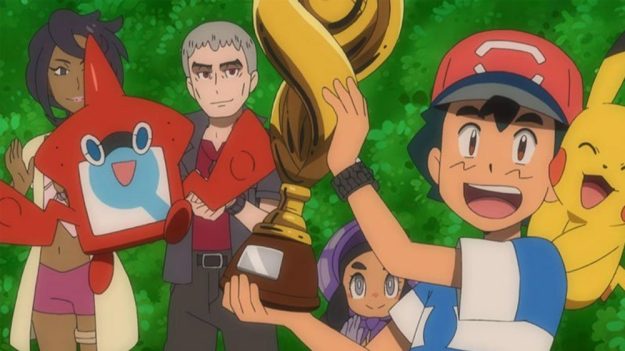
Ash has won a Pokemon League tournament in the Pokemon anime. Yes, that actually happened. The anime has been running for over two decades, with each generation of Pokemon typically concluding with a Pokemon League tournament where the winner would be declared the champion.

To be fair, Ash has won two similar victories in the past, those being the Orange Island League and the Battle Frontier challenge, but neither of those were leagues in the same sense as the Alola League, which held a tournament as other traditional Leagues do.

There have been those who have insisted that Ash should have won other league tournaments in which he participated, but I prefer to be more realistic about it. Most league tournaments in the Pokemon anime are single-elimination tournaments, wherein contestants are eliminated as soon as they’ve lost, after just one round. These tournaments can be pretty brutal, especially if there is a large number of participants, which would necessitate more rounds. While Ash may be the main character of his story, he’s every bit a person as everyone else who entered the competition, and those other people have had experiences just as valid as his. Because a large crowd participates in Pokemon’s league competitions, the odds of any particular contestant winning are very slim, but can significantly improve if a person is of a higher skill level. Because tournaments typically attract highly-skilled participants, the odds of an average-level participant taking top honors is very slim.

Ash’s league victory comes just after we’ve gotten a strong hint that the next generation of Pokemon anime will take place across all regions featured in the main Pokemon games, with the possibility that Ash may no longer be featured as the main character. If this turns out to be the case, granting Ash a league victory would give the character, and fans all over the world, closure that they’ve collectively been waiting a long time for.

Well done, kid.

ash champion trophy.jpg

The Under Armour fad is cringey.

under armour punisher edgy underwear.png

It’s nothing new that people like to wear some clothing company’s logo. America today is a marketer’s wonderland when people happily accept wearing a corporate identity where any expression of individuality could have been. Worse yet, they’re paying the marketers to advertise the brand instead of the marketers paying them. But this, too, is nothing new.

If I were to wear a company’s logo, it would be because I liked the brand that the logo belonged to. If I were to project that same sensibility, I’d guess that a lot of people really like a certain kind of underwear, because I’m seeing the Under Armour logo popping up on people like an inoperable super-cancer that’s contagious. But the benefit of the doubt doesn’t apply very well to fads, so it’s more likely that a bunch of impressionable mouth-breathers saw someone else wear the logo, and instead of recognizing it as stupid, they saw yet another logo to wear.

What’s especially cringey about the Under Armour fad is that it’s about underwear. When I see someone wearing an underwear logo openly, I have a mental image of some lanky aspiring jock saying, “Hey baby, this is the brand of underwear that I wear. Wanna see?” and then a disinterested woman must cope with the trivial social inconvenience of rejecting a subtle sexual proposition from an omega male.

Underwear as we know it today was a very recent invention, and was previously only worn by women during their period to ease the effects of menstruation. Women in ancient times didn’t advertise that they were wearing panties, because not everyone had to know that they were menstruating.

Underwear is marketed as heavily as it is today because marketers want you to spend more money on it than you otherwise would, and if the logo on that underwear becomes trendy, that means more people spending more money. The fact is, humanity has done just fine without underwear for nearly the entirety of its history. It does nothing for modesty, because the clothing that one would otherwise wear would have sufficed. No, people didn’t go without underwear while wearing a kilt because of some tradition, it’s because underwear was a rarity a few centuries ago. And yes, this means that just about everyone pictured in old paintings weren’t wearing underwear.

1200px-Mona_Lisa,_by_Leonardo_da_Vinci,_from_C2RMF_retouched.jpgThe meaning behind the Mona Lisa’s mysterious smile has finally been decoded: she loves the breeze when going commando. Either that, or she’s happy about something. Get a life.

People in the past certainly didn’t have Under Armour, and for that matter, wearing corporate logos wasn’t considered trendy, either. That’s one of those things that goes to show that people in the past weren’t as stupid as they’re sometimes assumed to be.

When people wear an underwear logo on their shirt, they have no idea how much the rest of us are laughing at them for it, regardless of how self-important the underwear company is. Under Armour is an underwear company; stop taking them so seriously.

Pokemon Masters: First Impressions

Pokemon Masters.jpgCool, but you can’t obtain most of those characters in the game, yet.

Pokemon Masters has been out for a few days, plenty of time to get some first impressions and make some observations. Here are some of mine:

  • I’m liking that the focus is on the trainers in this game. In times past, it seems like they got ignored in favor of the Pokemon themselves.
  • If you plan on playing this game for more than a few minutes at a time, get ready for your phone to get hot. Also, it chews through the battery like a beast.
  • This game is a gacha. The player is guaranteed certain characters as they progress through the main story, but there are also random characters that can be purchased with in-game currency.
  • The paid currency is a supplement to the in-game currency, and functions the same way. Players that pay can get more attempts sooner, without having to be patient.
  • This game is similar to other character-based RPGs, such as Star Wars: Galaxy of Heroes, in that the players collect and rank up characters.
  • It’s harder to come across the currency used to purchase chances at characters as the game progresses. No surprise there, as many FTP games use a similar approach.
  • Progress in games similar to this is usually limited by a resource like “stamina” or “energy” which replenishes with time. However, in Pokemon Masters, you can play as much as you care to at a time. There are already players that are complaining about running out of things to do, but they would be the ones that already rushed through the available content.
  • Rosa is a broken character, and she’s available from the outset. She remains an indispensable character from the beginning and well into the postgame. I wonder how intentional this was on the part of the developers.
  • Evolution Crystals become immensely more expensive after the first batch. I regret using my first ones to get Empoleon, because now it takes a huge amount of grinding to get Serperior.
  • I’m not kidding. This game is ridiculously tight-fisted with Evolution Crystals. I know that most FTP games include a resource that is difficult to amass in quantity, but the coin cost for just one Evolution Crystal is crazy.
  • The idea of smuggling things in afros actually came up:

Iris hair storageBy the way, she actually does this in the show.

  • Spending 100 Skill Capsules on a single Gym Leader Notes seems like a bad deal at first, but considering how many you’ll rack up while grinding for the other items needed to achieve max levels, it’s actually a sweet convenience.
  • Raichu (with Hau) is one of the best characters in the game, and I’m okay with that.
  • I’m one of the few who managed to get Karen within the first few days of the game’s release. It’s too bad that she was outclassed days later with the inclusion of Blue.
  • I’m liking the animations, especially for the trainers. Their personalities are on full display, and some of them were characterized very well. I especially appreciated Agatha’s backstory, which provided a lot of insight into her history with Professor Oak that we didn’t previously have access to.
  • I can understand withholding the rest of the story until a future date, but did they have to leave us on a cliffhanger? It’s almost as bad as the ending for Halo 2.
  • I’m so thankful that DeNA decided to include Auto and Fast-Forward buttons for battles, which makes grinding demand a lot less attention. I know that those are standard features for games like this, but still.
  • If Barry has Piplup, what pokemon is Dawn going to have at the point she’s introduced into the game? Buneary?
  • It seems like the real challenge of the post-game is in the scheduled Supercourses, particularly the Very Hard ones. Even at maxed levels, they’re not a guaranteed win when autoing.
  • Speaking of Auto, it’s probably no surprise that Auto is no substitution for using strategy, and the computer often uses some very dumb moves, such as failing to use Potion when needed, or waiting to use a higher-energy move when the battle can be won with a move that’s already available.
  • For some reason, the 5∗ Power-Up has an expiration date. I suspect that this was an oversight, as it would make more sense if it applied instead to the event ticket used to purchase it. It’s hard to think of a reason to limit a player’s ability to stock up on this resource.

Pokemon Masters is brimming with style, and it has a battle system that’s far superior to that of Pokemon Go (though that’s not a hard hurtle to clear). It wouldn’t be surprising to see some quality-of-life updates down the road, and some content additions designed to keep players coming back. The Pokemon lore has gotten extensive over the decades, so there’s a lot of potential for expansion.

So far, I’m liking it.

Books Are On the Way Out (But Reading is Thriving)

old books mildew.jpgPictured: Old media collecting mildew

New media is consistently vilified as contributing to the stupidity of users and is presented as a sort of Pied Piper, hypnotically leading children away from books. Currently, the target is cell phones, and in times past they went after television and video games for the same reason.

But let’s take a step back and look at things critically: books are far from ideal as a form of media. When one considers their inefficiency, it’s easy to see just how great it is that they’re on the way out. They’re cumbersome to carry about, especially in quantity. A trip to the library is inconvenient, and the library charges a fee if they don’t get books back on time. A trip to the bookstore can quickly get expensive if you buy books new, and if you go for used books, you risk purchasing a book blighted by mildew which, if it slips your attention, can damage your entire collection. In light of all this, and the existence of alternatives, books have become impractical.

Those who would disagree with me might bemoan how difficult it is to get children interested in reading, imagining the days in which children would happily take a trip to the library. Their main motivation appears to be a quaint rustic feeling that comes with doing anything unsophisticated. But the fact is, cell phones and visual media are the reality of the present time, and it’s better to prepare children for the world that is, rather than some notion of what someone would prefer it to be.

Fast fact: reading is thriving. There is more reading today than there ever has been, and this is because it’s more efficient to get reading to people than at any other point in history. And here is the device instrumental to this reading revolution:

samsung-note10-plus-5g-front-aura-glow.png

That is a cell phone. Say “Hi”. It’s a wunderkind when it comes to reading. How so? Assuming the average size of a Kindle book being 2631 KB (source), 256 GB of storage on one of these can hold 102,027 books. A 1 TB MicroSD card increases that amount to 510,139. This is comparable to the most generous estimates of the size of the Library of Alexandria. And you can fit it into your pocket.

What’s that? Your cell phone doesn’t have that kind of storage? That’s okay, because you still have access to a boundless ether of literature if your cell phone (like most) has a simple program called a “browser”. You can use it to browse the internet and read countless pages filled with news articles, research papers, stories, discussion threads, advice columns, encyclopedia pages, and on and on.

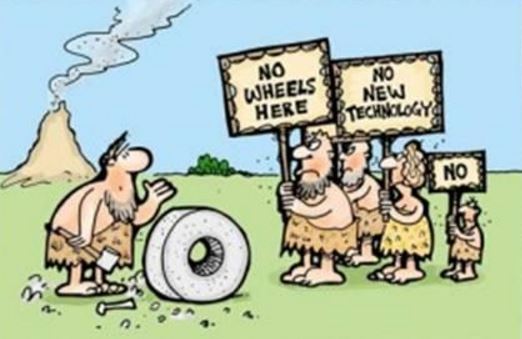
While those desperate to justify their fix of outdated media may turn to public schools as champions of books, that’s not going to help them very much, as schools are increasingly turning to tablets for education. And why not, considering the ubiquitous use of screened devices in the adult world? Again, the idea is to prepare children for the real world, which involves familiarizing them with devices that are actually used in workplaces, both today and in the years to come.

luddites.jpg

The fact is, books, textbooks, and libraries are on the way out. I, for one, welcome tablets as their academic replacement, as I have memories of continually lugging heavy textbooks about at the insistence of teachers and professors, in spite of infrequently needing to actually use them, which I understand to have been a typical college experience. Having to carry a small, glowing display screen that fits in my pocket is an excellent alternative to a bunch of cumbersome, expensive books.

One might ask, “Okay then, what if your phone breaks? Where are your books, then?” The answer is, I still have them. The books on a person’s phone or tablet are associated with the account that purchased them, so if a person loses their tablet or decides to buy a new one, their previous collection is available on their new device. To most of us, this is pretty obvious, but evidently not to the person who had to ask this question, which really goes to show how poor a job that person is doing keeping up. While the rest of us have access to a boundless sea of ethereal literature in our pockets, they’ve been assuming us to be senseless just because they don’t comprehend what we’re doing.

Even when I’m playing games on my cell phone, it’s helping me to be a smarter person. I’ve been playing an RPG that challenges players to work with limited resources over a long period of time, so that getting a single character to the point of being adequate could take as long as months. While playing this game, I’ve planned out my moves months in advance using careful calculations on a spreadsheet. My planning paid off when I barely unlocked a rare character within a strict time limit. This kind of care when it comes to resource management is something that a person can learn from if they’re not that great at managing their finances. Even those farming games that we’ve been making fun of can be played well with some careful planning. It’s too bad it’s much easier to assume that someone on their phone is playing some vapid bird-flinging simulator with all the depth of a puddle of rainwater.

So, to summarize: If you want a book, you have to take a trip to the store or the library for it. After that, you have to carry the cumbersome thing around with you if you want to have it wherever you go. Also, the library will want it back, and will charge you a fee if you don’t return it within a time limit, and in a condition that’s to their liking. However…

You can store hundreds of thousands of books on cell phones, not that that’s even necessary because these same phones have a browser that grants access to boundless information, whether a person is at home, sitting on a park bench, at a supermarket, or on a lunchbreak. Also, you can look at bright, colorful pictures on them, and even set one as your background. And you can ask some of them questions (verbally) and get answers (verbally). Also, movies and games. Also, navigation. Also, photography. Also, a bunch of other features so numerous that I don’t feel like listing them all.

In a sense, it’s like the old choice between beef jerky and celery. Most people would go for the sweet tasty delicious beef, and enjoy every bit of the experience. It’s one of life’s easy choices. However, there are a few who would go for the celery. They’d be more bitter for the experience, and afterwards stew over how much happier the people are who went for the beef jerky. So it is with technology: the people who embrace it get to benefit from how much better it makes their lives, while those who refuse get to savor whatever vacuous platitude that prevents them from being happy.

beef jerky or celery.png

Books have had an important place in history, what with the invention of the printing press expediting the propagation of ideas. However, for the propagation of ideas, books and the printing press have long-since become obsolete. The obsolescence of old media may make people feel like they are being left behind, but the reality of the matter is that they are only doing it to themselves.

This post was published using Firefox for mobile.

Why Meat-Eaters are More In-Touch With Reality

ccapp-theoutbackerburger-2x.pngSource: The Outback Steakhouse menu

While the rest of us live happy, healthy lifestyles, vegans go to-the-hilt trying to convince us that we aren’t really happy or healthy, and they attempt to make the meat-eating diet out to be the cause of our woes.

Their motives are not hard to understand. It’s obvious that their problem is with meat-eating, and they work hard to ensure that the choice that they’ve made for themselves is also the choice that they make for the rest of us.

To this end, they attempt to characterize meat eaters as callous and indifferent. As vegans see it, meat-eaters are low-IQ knuckle-draggers who couldn’t care whether our actions today burn the world to the ground tomorrow.

What vegans don’t comprehend is that meat-eaters are happier and healthier for some very good reasons. Among these reasons is that we understand our impact on the world, and the nature of the world that we live in, and these facts are something that we’ve come to peace with.

Among the fallacies common to vegans and to those obsessed with nature is the idea that nature is a personal entity concerned with balance and order. Such thinking is a clear projection of one’s own values onto a theoretical personal entity.

The fact is, nature is not a person. Nature is not a goddess, nor is it anyone’s mother. Because nature is not a personal entity, it is not concerned with regulation or with maintaining a balance. Nature is simply a broad term used to refer to the physical world around us. Nature puts no forward effort into replenishing what is excessively used, nor does it make a conscious effort to cull what has become too successful. Nature is a thing, and it’s a thing that we decide how to live in. When humanity makes a choice that impacts the natural world, that impact is weighed against the benefit to us, and we make the choice we deem to be more beneficial to us.

Most of us have come to peace with the reality of the world that we live in, and have accepted it. That acceptance is what enables us to live happily. As this happens, among the least happy among us are the outliers who stand in opposition to the choices agreed upon by the collective.

Another fact that we’ve come to peace with is the understanding that suffering is an intrinsic part of life. Livestock winces the moment it’s killed as it’s nerves send pain signals to its brain. Plants initiate defense mechanisms when we harvest from them. You feel upset when a motorist taunts you for deciding not to drive. The fact is, suffering is everywhere.

The way we experience the world can be positive or negative. A work of art can induce a positive emotion. To be spurned by a potential suitor can induce a negative reaction. A boxer receiving a left hook experiences a very obvious kind of suffering. To live is to experience, and that includes suffering.

While vegans are obsessed with limiting suffering any way they can, the rest of us have come to peace with the fact that living means sometimes experiencing suffering. While vegans worry themselves awake over the possibility that something they did caused a mouse they never saw to feel pain, the rest of us are aware of suffering as a part of life, and sleep well for having come to peace with that.

Our parents and grandparents have experienced suffering in one form or another, we’ve suffered, and our children will suffer after us.

A vegan might respond to this by asking whether you’d be okay with suffering if you or someone you care about is hit with a brick, this would lead pretty well to the next point: Meat-eaters are healthier and more mentally sound because they’re primarily concerned with the state of human lives, rather than animal lives.

Humans stick with human kind. Humans respond more sympathetically to the pains of our fellow human beings. Humans are inclined to dine with fellow humans. Humans seek sexual relations with other human beings. Humans socialize with human beings.

Animals are much the same way, with animals of one kind usually preferring the company of their own kind. When a wolf dines, they are likely to do so in the company of other wolves. A cat does not concern itself with whether it’s treating a fish humanely before it eats it. A rabbit that desires to copulate seeks out another rabbit as a partner.

While a vegan might seek out a rare outlier in an attempt to defeat this point, the fact is, it’s impossible to deny the tendency of most animals to stick to their own kind, and the efforts of the vegan would stand out as an obvious attempt to deny the reality of the natural world.

The fact is, meat-eaters understand the reality of the world we live in, and have come to peace with it. This makes meat-eaters happier and more sound-minded, as we’ve embraced reality for what it is, rather than what we prefer it to be.

If veganism were nothing more than a choice that one made for one’s self, I wouldn’t have any concern about it except for the nutritional deficiencies intrinsic to a meat-free diet. But because vegans are out to make veganism everyone else’s diet, and they’re willing to employ all manner of misinformation and deception to bring such an outcome about, there is a bit more urgency to respond to it.

Obviously, the belligerence with which vegans seek to change the world doesn’t lend itself the qualities of a peaceful mind that is better in touch with the world around it. It does just the opposite. At their best, these vegans maintain a veneer of serenity, even if only because they understand the value of maintaining such an image.

But the reality is, it’s meat-eaters that understand how things are, and as vegans have been climbing the mountain seeking wisdom, they’ll be surprised when they finally find meat-eaters waiting for them at the summit.

Book Review: Men’s Society: a Guide

men's society a guide and also a bad book.png

When you think of a self-improvement guide on how to be more manly, what do you think of? You’d probably think it would include, among other things, a few useful how-tos on tasks like jump-starting a car. Maybe you’d think to find an outline on an exercise regimen. You might even expect something philosophical to get you to consider what you stand for and how strongly.

If you’re expecting anything as useful from Men’s Society: a Guide, then you’re already set up for disappointment. Like it or not, there is a new kind of manliness in town; a kind that is obsessed with image and with defining your identity with what you buy, rather than your character.

Men’s Society: a Guide comes to us from menssociety.com, and it largely reads as an advertisement for items featured on their online store. I mean, their website, because their online store is their top page. The commercial agenda screams “ethics” as loudly as some energy scam kiosk right inside the doors of a grocery chain.

Let’s keep it real here: real manliness came to be because the traits associated with it were what was necessary for men to get by in times when resources were limited. Real men are strong, smart, skilled, nimble, adaptive, and strong of character. The new form of manliness that’s obsessed with an outward show of old-timey rusticness is nothing more than a sham that was crafted to get people to spend money on things.

Where does Men’s Society fit in the scheme of things? To find out, let’s look at the topics discussed in this book, one at a time:

  • Grooming – a few fundamentals and a list of grooming supplies for you to buy
  • Drinking – a list of alcoholic beverages for you to buy
  • Style – a few staples of outward appearance for you to buy
  • Culture – a list of books, films, and other media for you to buy
  • Travel – a few pointers about getting from one place to another, so you can continue buying things somewhere else
  • Manners – the part of the book that was rushed because it’s not intrinsically conductive to you buying things

Whether it’s consumption of media or consumption of products, the main point of this book, again and again, is consume, consume, consume. The commercialization of manliness weakens manliness in the same way that the commercialization of Christmas led to the weakening of the Christian identity. Commercialization is nothing more than a means to an end, that being to line the pocketbooks of a few with leafy greens at the expense of the rest of us. To the entrepreneur enriched by this endeavor, any identity weakened in the process is considered an acceptable expense.

The authors of Men’s Society are British, so the perspective of this book is from that of a British man. There are a few points in this book that indicates that real manliness in the UK is in serious trouble.

For one thing, there is a section in this book on how to survive a flight. Fast fact: surviving a flight is easy. Flight is considered the safest way to travel, and it’s no mistake that nearly everyone who attempts flight survives the experience. All there is to surviving a flight is to sit down and not make too much noise. Do it right, and none of the other passengers will have much reason to throw you out a window.

There is a paragraph that discourages manspreading. Non-ironically. It opens with this gem:

MANSPREADING

This is a derogatory term that you don’t want used to describe you.

Sorry, Men’s Society, “manspreading” is a verb, not a noun. You have failed.

And it gets worse, as three pages later, the book includes a similar section on mainsplaining. Again, non-ironically. The term “mansplaining” was obviously invented in a cynical effort to shut down productive conversation because feminists can’t stand being proven wrong. A willingness to hold water for the intersectional agenda is a sign of weakness and isn’t a trait of one qualified to teach manliness.

When the advice isn’t bad or geared towards marketing, it’s usually lazy. One can imagine that a book packed with advice on men’s style would include at least a few informative pages about hats. Instead, there’s a short paragraph at the end of a chapter which says little more than that it’s acceptable to wear baseball hats and “street-style go-tos” (whatever those are), and that if you were to wear any other style of hat, “you’re a bold man.”

Really? That’s all that Men’s Society has to say about hats? What a cheap cop-out. There’s a lot more to say about hats, but I suspect that the brevity to this section is owed to the fact that I found no hats in their online store (but two pages of shaving products and three pages of haircare products). I imagine that they’d have more to say about the style of a derby or the protection of a bucket hat if those were products in their online store.

This is a bit of an aside, but Men’s Society has an obvious obsession with mint tin kits. I get it, pocket-sized kits are awesome. But here’s the thing: you don’t need to buy them. Mint tin kits are packed with cheap items that would usually set a person back just a few dollars altogether if one would construct them themselves.

Men’s Society understands the profit behind giving some trial-size products their own label then selling them for 25 British pounds (about $30), and here’s an example of one from their website:

men's society beard removal kit.png

Yes, a beard removal kit. They think so little of your ability to accomplish the task with the items you have on-hand that they put together a kit designed to assist you toward that end.

Speaking of shaving, people can stop patting themselves on the back for using a razor to shave, as though that were any kind of accomplishment. Technology should be embraced as an expression of how adaptive and nimble men are, not shunned for that smug glow of superiority that comes with refusing to keep up. I use electricity to shave because I’m not a luddite.

You don’t have to pay piles of money for mint tin kits. You can make one of your own. Assembling one for yourself shows ingenuity and is rewarding when you finish one up. It’s so simple, I can give you a short guide right here:

  1. Procure a mint tin. An Altoid’s tin would work.
  2. Throw out those suspiciously non-Kosher Altoids mints and wash the mint smell from the tin. (Is there pork in them, or something?)
  3. Put what you want in them, whatever would reasonably fit. Fishing hooks, band-aids, twine, it’s up to you.
  4. That’s it. You now have a mint tin kit, and didn’t pay someone $30 to do it for you.

While we’re at it, here’s an article on how to make mint tin kits on Art of Manliness, a much better page on manliness than Men’s Society.

Part of the book that I found myself sometimes liking was the “Don’t Be That Guy” sections, which added a little bit of humor to an otherwise commercial experience. A couple of my favorites include “Don’t Be That Guy: You know, the guy with longer hair who thinks he’s Kurt Cobain?” and “You know, the guy who leaves the top four buttons of his shirt unbuttoned?” However, these are short blurbs in what is otherwise a paid advertisement (one that the reader paid for, not the marketer).

As it is, Men’s Society: a Guide could be more appropriately called, “Men’s Society: A Buyer’s Guide”. It’s written with the expectation that if you’d pay for a book to tell you how to be manly, then it can suggest a bunch of other things for you to buy, leading you down a deep rabbit hole of continual spending in a vain attempt to find identity. And that’s assuming that you’d want a bunch of posh blokes telling you how to be manly. Men’s Society brings to mind the words of an Asian proverb:

“The superior man understands what is right; the inferior man understands what will sell.”
-Confucius

The time has come to give this book it’s score. Men’s Society: a Guide gets a score of Don’t Be That Guy out of ten.

don't be that guy out of ten.png

Because the Don’t Be That Guy sections make up around 1% of this book, that comes to 0.1 out of 10.


Theft of the Wild

genshin impact not botw.jpg

Genshin Impact, recently announced as coming to the Playstation 4, is causing quite a stir due to certain creative decisions. To get right into it, it bears more than a passing resemblance to the Nintendo Switch title, The Legend of Zelda: Breath of the Wild.

That’s not an understatement, as Genshin Impact looks almost identical to the hit Switch game. For example, the picture above is not a BotW mod with anime characters, that’s an actual screen of Genshin Impact.

Gamers have taken note of this, and they are not taking it well. At ChinaJoy, where a trailer was shown of Genshin Impact, gamers responded by taking a picture of the trailer, including in the frame their copy of Breath of the Wild and one of their own hands flipping Genshin Impact the bird.

kenshin impact the bird.png

That seems like a careful expression of polite indignation compared to how much further another fan has taken it: by actually destroying his PS4.

kenshin impact PS4 impacted.pngSource: Daniel Ahmad on Twitter

While such brazen imitation can be interpreted as disrespectful to the source material, it need not be. Breath of the Wild was an award-winning game, and is therefore a natural choice for imitation. Having said that, there is a certain expectation that someone involved in creative media actually exercise this thing called creativity. While creative works are emulated in media all the time, it’s not usually so blatant.

kenshin impact not botw 2.jpg

On the bright side, it was a feat that the atmosphere of Breath of the Wild could be so faithfully recreated short of copying the assets directly. Also, among the choices that game maker Mihoyo made for imitation, they made a pretty solid choice. It’s also a game starring cute anime women, and it’s hard to object to that.

What is it that they call the sincerest form of flattery?

The Pokedex Meltdown from My Perspective

ash angry.jpg

A few weeks ago, during E3, the staff of GameFreak has revealed that not every pokemon from previous Pokemon games will be making it into the upcoming Pokemon Sword and Shield. Considering how entitled that people are becoming, it’s not hard to imagine that some of them would throw a fit when faced with the prospect of not getting everything they want.

What I didn’t anticipate was just how important it is to certain fans to collect over 800 of something, most of which won’t have any meaning to them outside of the act of collecting them. The sheer unreasonability of these interesting persons is exemplified pretty well in a reply that I got to an observation that I’ve made on this matter:

unreasonable reply.png

This self-professed overlord of lunatics is taking the news so poorly that he’s willing to destroy the game company that gave them the game that he enjoyed to begin with. If there are any geese out there that lay golden eggs, this news might just put them on edge.

Now that the temper tantrums are dying down and the mouths emitting them are finally tiring out, we can finally start hearing voices of reason on this matter.

When I heard that not every pokemon from previous games would be making it to Sword and Shield, it really didn’t bother me much at all. This has to do with my previous experience with Pokemon, and with similar games.

When I first got into Pokemon, it was when I watched the first episode of the anime in 1998, when it debuted in the States. Since then, I also played the video games and the trading card game.

The Pokemon Trading Card Game (Pokemon TCG) was and is similar to other trading card games in that a few new sets are released every year, and that it didn’t take long before the multitude of different available cards made it difficult for new players to emerge onto the competitive scene, and making it challenging for the game makers to maintain a balanced game that’s fun to play.

To cope with this, the game makers introduced the concept of a standard competitive format which saw older cards rotated out, usually on a yearly basis. Seasoned players had to adapt to a continually changing competitive game, but that wasn’t much of an issue for them, because they remained interested in the game enough to continue buying new cards, and new players had an easier time getting into the game without having to concern themselves with hundreds (possibly thousands) of old cards that were no longer competitively relevant.

It’s because of this concept of rotation that the idea of leaving some less-relevant or meta-breaking pokemon out of a new Pokemon game makes intuitive sense to me. I’ve been playing games long enough to see the same principle applied to numerous other games, including the Pokemon TCG.

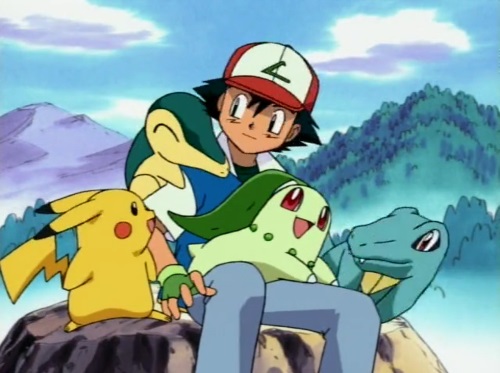
What’s more, we saw a similar practice in the Pokemon anime. Ash and Pikachu have been recurring characters, but eventually Ash got in the habit of leaving his old pokemon with the professor and focusing on new pokemon as he traveled to different regions. Even human traveling companions such as Brock and Misty have long-since gone their separate ways, and Ash’s core circle of friends have changed with time.

1484032488-3214bb8e28a979d1e3e0fe9b6cab30f5Not pictured: Bulbasaur, Charmander, or Squirtle.

It’s a simple fact of life that as time goes on, the resources available to a person changes, and these changes can result in a different life experience. If a person leaves one job and finds a different one, they’re no longer doing what they previously did for a living, and they might be making a much different amount of money. Their last job is no longer a factor in their living. If a person moves to a different area, they may have a different climate to become accustomed to, what’s convenient to them might change, and they’ll have a different set of neighbors.

One of the challenges of playing games like Pokemon is that they test a person to make better judgements over the course of the game, even as the amount of resources available to the player during gameplay changes, usually increasing, but in some cases decreasing.

Another matter relating to this to consider is that sometimes a game maker faces challenges while making games alongside Nintendo. This is due to a long-held practice Nintendo has had where, when they notice that a game is stalling in development, they’ll throw out all the assets and restart development from scratch, with only the ideas behind the game to go on. Game makers have come to refer to this practice as “flipping the table”, and it conjures an image of an abusive Japanese father getting upset and flipping a table over, allowing everything on it to fall onto the floor.

While this sounds extreme, Nintendo is usually justified in doing it. Sometimes, during the course of development, a game gets to be bogged down with features and other elements that weigh down the experience, or don’t significantly contribute to it. Development on a game can seriously slow as game makers struggle to decide which elements they can justify keeping, and a lot of time can be wasted on endeavors that turn out to be counter-productive. Sometimes, flipping the table is just what it takes to get development more focused, and the prospect of it happening may be daunting enough to get game developers focused on their projects to begin with!

With this in mind, let’s consider a few things we know about Pokemon Sword and Shield:

  • Mega evolutions aren’t going to be included in the game.
  • Neither are Z-moves.
  • Some character models, such as Wingull, aren’t animated very well.
  • There are poor textures on certain models, such as the trees.
  • Not every pokemon from previous games will be present.
  • All this in spite of the fact that a Pokemon game for Switch has been hyped for a long time.

When you consider all this, it becomes evident that Pokemon Sword and Shield have been stalling in development as the game makers have been struggling to incorporate gameplay elements from previous installments while at the same time trying to maintain a balanced game with a competitive element.

To those who don’t know Nintendo very well, the Sword and Shield gameplay demo, along with the news that certain pokemon and features won’t make it into the game, is considered evidence of GameFreak being lazy. But to those of us more familiar with Nintendo, it appears more likely that GameFreak has been struggling to include characters and features from previous games while still making a balanced and coherent gameplay experience that is to Nintendo’s liking.

While it’s easy to blame Nintendo for (possibly) obstructing progress on Sword and Shield, Nintendo usually only steps in to flip the table when progress stalls. When it comes to games that Nintendo licenses, their reputation is on the line, so there’s something in it for them to ensure that a quality product is released in a reasonable amount of time.

While there’s more that can be said, I think that perspective provides plenty to consider when it comes to the Pokedex Meltdown, or the National Dex Fiasco, or Dexit, or whatever you call it. Obviously, not everyone is taking the news well. If you happen to be in the Barboach fan club, it might be a tough time for you.