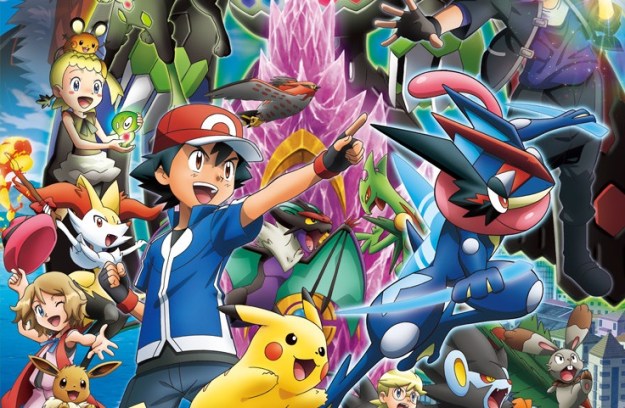
Author Archives: Raizen

Raichu takes Worlds by storm!

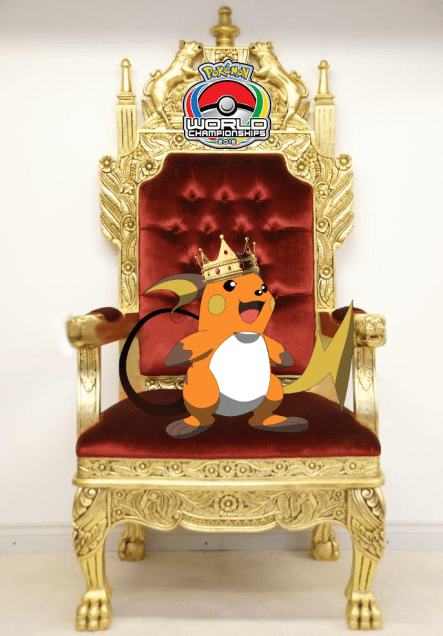
Raichu throne

Another Pokemon World Championships has come and gone, and we get to look at another batch of winning teams. I saw the VGC Masters Division finals match live, which was a treat. But it was one pokemon in finalist Wolfe Glick’s team that had me watching with particular interest: Raichu!

Because I like Raichu, was was interested in seeing Glick take the title (also, I didn’t like the attitude of his opponent much). And I was not disappointed. After years of living in the mascot pokemon’s shadow, Raichu actually made the champion’s team, and as a key member!

It almost never happened. One of the Raichu’s key moves was Endeavor, a move a Pikachu can only have if it were a special gift Pikachu given to participants of a special tournament that only permitted Electric type pokemon, and that Pikachu would only have been awarded as a prize if Pikachu were used enough in the competition. (I participated in this competition, by the way.) The Pikachu was made available, and it’s evolved form, Raichu, made it into the champion’s team!

Here’s the breakdown of Raichu’s moveset, as made available on the official Worlds website:

Raichu
Timid Nature
Ability: Lightning Rod
Item: Assault Vest
– Fake Out
– Volt Switch
– Endeavor
– Nuzzle
HP 36 / Def 204 / SpAtk 20 / SpDef 68 / Speed 180

Glick switched Raichu in when he predicted that his Primal Kyogre would take a Thunder attack, which activated Raichu’s Lightning Rod ability, which draws Electric type attacks to itself, nullifies them, and gives Raichu a Special Attack boost for its trouble. Fake Out wouldn’t do much damage, as evidenced by the Attack-reducing Timid nature. It’s apparently there to disrupt the opponent’s plays, such as preventing Primal Groudon from attacking. High Speed gives Raichu a faster Fake Out, which can land before many opponent’s priority moves. Volt Switch can then get Raichu out of there while simultaneously attacking, so Raichu can get another Fake Out in later, and disrupt future Thunder attacks. The surprise for me is the presence of the Assault Vest item, which gives Raichu plenty of Special Defense. This Raichu can take an Origin Pulse attack, and then come back with an Endeavor to make the opponents easier to clean up for its opponents. Nuzzle gives Raichu a means outside of Thunder Wave to paralyze opponents, and isn’t restricted by the Assault Vest item.

Raichu’s EV spread is pretty specific, but it’s designed with some specific circumstances in mind. For example, one of the most popular pokemon in Worlds is Mega Kangaskhan, which also has the move Fake Out. Between dueling Fake Outs, the fastest one wins out. This EV distribution allows Raichu to outspeed Mega Kangaskhan by one point. This spread also enables Raichu to survive attacks to allow it to get some nice Endeavor damage.

Glick was apparently one of three participants in the top 8 with the same strategy, so it seems like the idea to use Raichu in this way has been going around. Being someone who likes Raichu, I think it’s great to see Raichu finally get some love. And not just in the form of a Worlds victory, but also with a new form in the upcoming games, Pokemon Sun and Moon.

raichu new form

Was I talking about this new form? Yeah, I was talking about this new form. I was talking about it for days. This new Raichu uses its tail like a hoverboard. Not one of those has-wheels-and-touches-the-ground-but-we’ll-call-it-a-hoverboard-anyway kind of hoverboard that exists as a concession between our dreams and what we can currently produce, but this Raichu actually floats in place standing on its tail. So there.

This Raichu even gets a neat new ability, which doubles its Speed when electric terrain is active. Considering that Raichu is already very fast, this probably isn’t necessary, but it’s still cool. The one thing that might hold it back, however, is its new secondary Psychic typing, which isn’t a very good type competitively speaking. It’s weak to Knock Off, which is one of the most common moves on the competitive scene. There’s also Pursuit to watch out for, which would effectively trap Raichu in certain circumstances. Assuming its base stats remain the same, Raichu’s normally low Defense wouldn’t help much.

But, who knows? Some genius might figure out a way to get this Raichu on a Worlds winning team.

Nintendo goes after AM2R? What?

planetroid_full-1280x800

Nintendo is going about taking down AM2R.

Okay, I get it. Nintendo has a right to defend their intellectual properties. In the case of AM2R (Another Metroid 2 Remake), it’s debatable as to whether the game was sufficiently transformative to fall into fair use, seeing that it’s not a straight-up ROM of Metroid 2. But it does use Nintendo’s characters and it uses a scenario for an existing Nintendo game. It’s Nintendo’s IP, and it’s understandable that they’d want to protect it.

What strikes me as odd is the timing of the takedown of AM2R, which was just days after its release. It stinks of something spiteful.

AM2R wasn’t some fly-by-night operation happening in a dark alley somewhere; its development was highly publicized, to the point that there were frequent public updates from the developer. Not only that, early versions of the game were released as demos. Why didn’t Nintendo start issuing takedowns for those? Was Nintendo okay with the demos?

What this indicates is an extraordinary level of spite from Nintendo. They could have issued a takedown request at any point during the game’s years-long development process. But no, they waited to issue the request until the project was finished, and the passionate Metroid fan that had worked on it had invested hours upon hours of his time.

Nintendo can’t pretend ignorance, because a member of Retro Studios had expressed that he was aware of AM2R’s existence. It’s not like Nintendo wasn’t aware of what was going on.

AM2R was coming to us just as Metroid was celebrating it’s 30th anniversary. Okay, it’s not really much of a celebration. I don’t know if Nintendo is even acknowledging Metroid’s 30th anniversary, other than maybe a blurb about it in marketing Metroid Prime Soccer… *ahem*, I mean, Metroid Prime Federation Force, a game which angered many of Metroid’s core fans.

Again, I know that Nintendo has a right to defend its intellectual properties. But going after someone who made a fan game (not even a ROM, but a transformative reskinning)? And not doing anything about it until days after the years-long development process came to its conclusion (in spite of repeated release of demos of the same game)?

I doubt that Nintendo is thinking much about making it up to the person who made AM2R, but I think that Nintendo would benefit from hiring him. It’s obvious that the guy knows quite a few things about how to make a video game. At least they’ll have scored some real talent for their team, and not come away with a total loss from the bad press that they’ll get from taking down AM2R.

Going after a Metroid fan like this wouldn’t likely put Nintendo in a positive light. I know that Nintendo wants us to give Federation Force a chance, but in light of how Nintendo treated AM2R, which was an expression of just how much fans want a real Metroid experience, that’s not very easy to do.

Pokemon vs. Digimon: more proof that Pokemon came first

Pocket_Monsters_volume_1_coverBefore this.

A while back, I wrote an article that explored the question of whether Pokemon or Digimon came first. What I didn’t expect was for the article to be the big hit that it was. As of this writing, it’s easily the single most viewed article I’ve written for this blog.

From what I’ve seen, the article struck a nerve among Digimon fans, who didn’t like me saying that Pokemon came first. However, I likely wouldn’t have typed up the article if they didn’t keep insisting that Digimon came first.

In fact, to this day, Digimon fans continue to insist that their game came first, saying that Pokemon took inspiration for its concept from them. Some of them even continue to insist this after reading my article!

They might not have a strong history of accepting facts, but that doesn’t mean that I won’t continue presenting them.

As we are well aware at this point, the first copyright for Digimon was made by Akiyoshi Hongo, and it was dated 1997. Meanwhile, the first copyright for Pokemon was made in 1995 by Game Freak, even though the first commercially available Pokemon product wasn’t released until February 1996.

But what if it could be demonstrated that Game Freak, the owners of Pokemon, copyrighted creative elements that would be implemented into Pokemon years before Pokemon was officially released?

Behold:

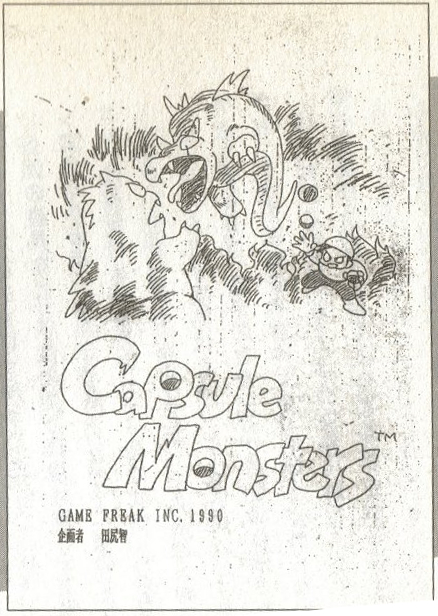
Capsule_Monsters_Cover

Pictured above is a concept sketch for Capsule Monsters. If you’ve never heard of Capsule Monsters before, it’s the original concept for Pokemon. The picture above depicts a boy releasing a monster from a ball to fight another monster. Notice that Game Freak placed their name on this cover. Also, notice the copyright date: 1990.

If that weren’t enough, check out the following:

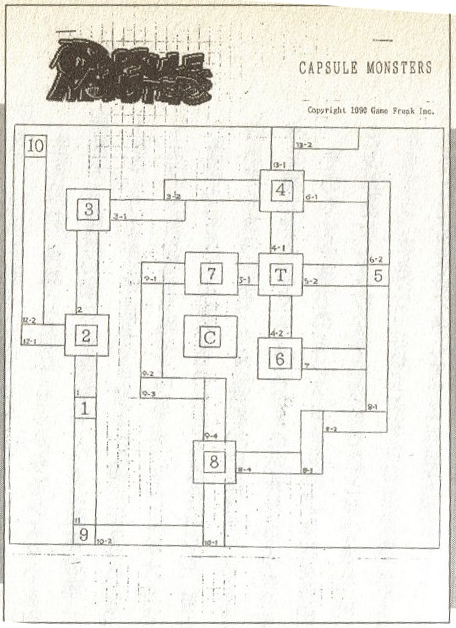
Capsule_Monsters_map

That’s instantly recognizable as the map of the Kanto region from the first generation of Pokemon games. The copyright date is a little hard to make out, but it does look like 1990, and the copyright holder is Game Freak Inc.

So, what does this mean? It means that basic elements of the Pokemon franchise, such as using monsters to battle other monsters, pokeballs, and even the map of the Kanto region, have existed in concept sketches and have been copyrighted years before someone decided to make something similar and call it “Digimon”.

There are more images like these that can be found on Bulbapedia, but I’ve selected these ones because they display the copyright dates. Other Capsule Monsters images shows early concept art for what would become pokeballs, pokemarts, and interaction between trainers on a route. It’s clear that these are concepts that would be implemented into Pokemon.

So, does the date of 1990 precede 1997? Yeah, it sure does. Does this mean that Pokemon came before Digimon? Yep. And it was being developed much earlier than many people originally thought. As of now, there’s no evidence of Digimon existing in any form prior to 1997.

So, that’s it. This proves that Game Freak didn’t steal from anybody with the Pokemon concept. Not that there was any reason for anyone to think that they did, but there are Digimon fans out there that think otherwise, for some reason.

Now, can we accept the facts and move on?

Webcomic Review: Classes

classes webcomic 1.png

I did not alter this.

Today, I did something painful. I’ve read through another bad webcomic. This one is called, “Classes”. It’s a name that’s strangely fitting, because it’s one thing I can recommend to its author.

Classes is easily the whitest webcomic I’ve ever seen. Don’t believe me? Read any page of the webcomic for yourself. Such as this one, which happened to be the most recent one as of this posting. Then do your eyes a favor and return to this page, quick.

I can assume that the reason why this webcomic is so white is because the author is trying to make it stylistic. Most pages don’t use panels; the comic reads from top to bottom with sequential drawings. It’s an interesting idea, but the result is a webcomic that hurts my eyes. Personally, I wouldn’t have minded narrowing the many super-wide margins, because as it is, Classes is like staring into an LED flashlight.

classes webcomic 2

He’s not alone.

If you’re a non-Japanese artist and you want to draw in the manga style, go right ahead. I don’t mind it. I’m not one of those super-snooty weeaboo freaks that think that only the Japanese can do the style right. But be aware that not everyone who attempts to draw in the manga style is good at it. In fact, there are people out there that draw in the manga style for the wrong reasons.

When some people see the manga style, what they see is something stylistic and visually appealing that they’d enjoy drawing and that their audience might enjoy seeing. They would be the people drawing manga for the right reasons. When other people see the manga style, they see a formulaic and easily-replicable art form that they could use as the visual vessel for their poorly-written stories with minimal effort, which they can sell by saying that they’re being stylistic. They would be the ones that decide on the manga style for the wrong reasons.

Yes, I know that there are high-quality manga out there. Some of the best ones have a simplistic and messy style, such as those drawn by Ueda Hajime, while others pay heavy attention to anatomy and composition. Those manga aren’t a problem. What’s problematic is when the manga style is used as an excuse to put less effort forward.

A novice artist might discover the manga style, then start drawing his characters with rounder faces that look flatter when viewed head-on, and drawing pointed chins that often disappear when a character’s profile is viewed. Part of the style. But then you notice that they’re drawing each of their characters in the chibi (simplified and child-like) style, and you suspect that they’re cutting corners, as Japanese artists typically only use the chibi style in certain circumstances. Even that can probably be sold as being stylistic (not that Teen Titans Go is off the hook).

But look closer, and you’ll see the mistakes. Okay, you probably don’t have to look close. The art has a rushed look to it, like manga is going out of style, and someone is in a hurry to make a quick buck off of it, even if they don’t know how.

One of the biggest mistakes that novice manga artists make is drawing the eyes as blank and shallow. Unless the character you’re drawing is in some catatonic state, the eyes should always look deep and expressive, even when it’s clear that everything else about your character is heavily chibified. Consider this example:

Umaru eyes

To make your manga characters really pop, you get the eyes right, even if you get nothing else right. There’s a reason for this: when people look at other people, their gaze is naturally drawn to the eyes. When looking at a person’s eyes, it’s easy to determine their mood and sometimes even their intentions. Because of this tendency, manga style is easy viewing because the eyes are larger and easier for viewers to find.

How does Classes do eyes? See for yourself:

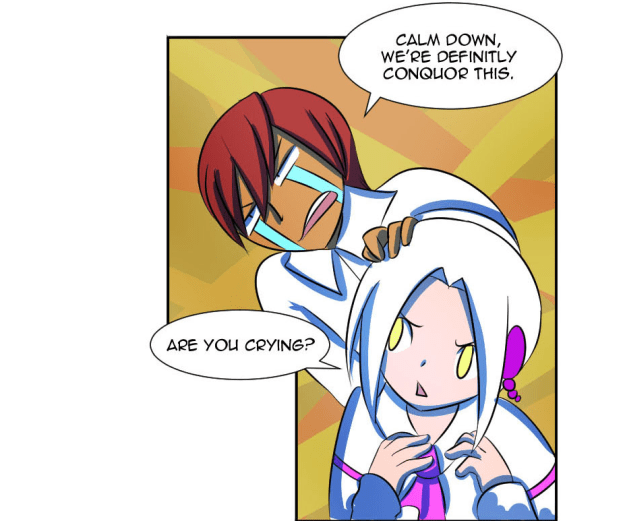
classes webcomic 3.png

If you’re curious, that’s how the eyes for characters in Classes look by default.

I’ll give the author of Classes this much: she does choose her colors very well, and the shading is okay. Still, it’s pretty obvious when an artist chooses a semi-chibi manga style to hide the fact that the artist has a difficult time drawing things such as clothing. Yes, I know it’s challenging to keep track of things such as pressure points and how they would affect how a fabric wrinkles. But if a person doesn’t bother with that, the clothing can look like it’s skin-tight, or even floating in place.

As for the story, Classes is about a group of children who join a military academy that uses elemental magic. It’s about as cliche as it sounds, but because it’s in the anime style, there’s bound to be an extremely dangerous and competitive shounen-style field examination led by a severely disinterested proctor. Is that in there? Yep.

And while we’re discussing worn-out conventions, this thing where the characters are color-coded by the elemental magic types that they use is beyond stale. Sometimes, I suspect that writers do this to keep things straight for themselves. Is it too much to ask that writers express the creativity necessary for their characters to deviate at least slightly from the standard archetypes? Even the personalities of the characters seem to follow the color-coded conventions. For example, one character uses the ice element and has blue hair. No prize for guessing that she’s aloof and distant, that would be too easy. Once you’ve figured that out, it’s not much of a leap to imagine that she’s an overpowered child. It’s almost as though Classes was optimized for TV Tropes.

The main character is Kiwi, a young girl who is unrelatably irresponsible. If you thought Giga from Boss Rush Society was bad, Kiwi will make you wonder how even a fictional universe can host a creature so prone to bad decision-making.

I know that giving your characters flaws can make them more relatable, but going too far with the flaws can have the opposite effect. To give you an idea of what we’re dealing with here, Kiwi missed her own graduation just to goof off, and ended up missing out on gaining magical powers. She was allowed to graduate anyway, and was allowed to take the field exam without them, which goes to show that some people wanted her to die. She was also responsible in part for a huge disaster during the exam, wherein she was provided with just the substance needed to do so by chance.

Also, to give you a heads up, the narrative is sometimes broken without warning by non-canon sequences featuring the dog doing things like gender-swapping experiments. It’s tricky enough guessing the genders of some of the characters already, so these sequences didn’t help. They add nothing to the comic except to pad it out, which can really hurt if you just want to get it over with so you can get to writing a review about it.

I think it’s about time I got around to giving this webcomic its score. I’m a little surprised that I went out on it as much as I did, but Classes made some mistakes that brought to mind some problems that I’ve been noticing in creative communities, so I took an opportunity to vent a little bit. I know what some of you may be thinking: “But Raizen, webcomics like this are free. You get what you pay for, right?”

You know what else is free? Malware. And malware does take something away from people: their time. Time is something that a person only has so much of, and once they spend it, they don’t get it back. If someone doesn’t enjoy something, they feel like their time is wasted. A moment enjoyed is not wasted. Based on this criteria, I can give webcomics like Classes a score that reflects how I feel about the time I’ve spent with them. And on that note, here’s the score for the webcomic: Angry out of ten.

angry manga out of ten

Which, if you prefer numbers, would be a 3.2.


Does Nintendo have a case against certain churches?

nintendo versus defamation

In a previous entry, I discussed whether or not the Pokemon franchise encourages witchcraft. It doesn’t, of course. But that’s not stopping various churches from taking the opportunity to win media attention for themselves by accusing it falsely.

While such churches may experience some short-term monetary gain from their false accusations, I believe that there’s too much potential in their actions for them to backfire.

There are two major reasons why I think this, and this entry examines them.

For one thing, waging a false accusation is what is referred to in the legal community as defamation. I know that there are plenty of people out there that believe heavily in the freedom of expression. I’m one of them. However, I know well that not every form of expression is protected under the law. Defamation is not a legally-protected form of expression.

To be specific, putting something false and injurious into publication is a form of defamation that is referred to as blasphemous libel.

Before I go much further, I think it’s a good idea to point out that the intent of this article is not to provide legal advice, and that I may be mistaken on some points. A lawyer would be a much more dependable source of information of this kind. I am not a lawyer, even if in some regards I may think like one.

In civil tort law, a person who believes that they’ve been victimized by libel can sue the person that they believe libeled them for compensation for damages. To succeed in doing this, the plaintiff must be able to demonstrate that the defendant is the one that disseminated the lie. In this case, it would be easy, as it would mean providing documentation that the company in question posted the defamatory content to their web space. In the age of screen captures, this is not at all hard to do.

Also, the libelous claim must be false. In this case, the libelous claims are that the Pokemon franchise is demonic and encourages witchcraft. None of the Pokemon games contain even a trace of demonism or witchcraft.

Not only that, it must be demonstrated that the claims would have caused damage. Pokemon is a huge intellectual property with tens of millions of fans, possibly hundreds of millions. Because of how widespread the libelous claims have become, it’s easy to imagine that Nintendo lost millions of dollars in revenue as a result.

Defamation cases usually involve demonstrating that the defendant had the intention of causing harm. However, there are cases where the nature of the lie is so inflammatory that it does not need to be demonstrated how it could cause harm to someone, and that if it could be demonstrated that someone made the statement, their intent to harm is assumed. That is what is referred to as defamation per se. To falsely accuse a game company of promoting witchcraft would very likely fall under defamation per se.

If it seems extraordinary to you that someone can get in trouble for insulting a game company, you may find it interesting that the Anti-Defamation League went after Saudi Arabia for claiming that Pokemon was part of a Zionist plot to undermine Islam.

The second major reason is a scriptural one. The Bible certainly does have something to say about defamation. It soundly condemns it.

For one thing, one of the Ten Commandments is against it. The ninth commandment is as follows:

“You shall not bear false witness against your neighbor.”
Exodus 20:16

While the act described is specific, Bible scholars generally have an understanding that the commandment applies to all forms of defamation, even going as far as saying that it applies to all forms of dishonesty. The following relates to it:

“You shall not circulate a false report. Do not put your hand with the wicked to be an unrighteous witness. You shall not follow a crowd to do evil; nor shall you testify in a dispute so as to turn aside after many to pervert justice.”
Exodus 23:1-2

Furthermore:

These six things the Lord hates,
Yes, seven are an abomination to Him:
A proud look,
A lying tongue,
Hands that shed innocent blood,
A heart that devises wicked plans,
Feet that are swift in running to evil,
A false witness who speaks lies,
And one who sows discord among brethren.
Proverbs 6:16-19

The Psalms speak of slander in more than one place, but this stands out in particular:

He who secretly slanders his neighbor,
Him I will destroy;
The one who has a haughty look and a proud heart,
Him I will not endure.
Psalm 101:5

This Psalm was written by king David. Interestingly, he actually did have a man executed who spread a false report. 2nd Samuel chapter 1 tells us about how an Amalekite attempted to take credit for the death of king Saul. Whether David believed the Amalekite or not makes little difference, since he was either confessing to murder, or telling a lie about the king.

If these churches had spent more time reading the Bible, they’d probably have thought twice before slandering a game company for profit. Having said this, I do recognize that there are plenty more reasons to suspect that these churches don’t actually take the Bible seriously enough to allow it to have an effect on the way that they live or conduct their businesses.

Defamation is a serious offense. If you belong to any church that actively engages in it, you should probably find a different one, fast.

Does Pokemon encourage witchcraft? No, it doesn’t.

pokemon who me

Pokemon has been a popular game, but it’s been quite some time since Pokemon made the news the way it has lately with the release of Pokemon Go.

For many of us today, Pokemon Go doesn’t need much explanation due to its popularity. In summary, it’s a cell phone app in which players move about in real life using their phone to physically travel to different locations to find creatures called “pokemon” that can be battled and added to the player’s collection.

It’s certainly a novel idea, so it’s no surprise that it’s been taking off as well as it has. It’s perhaps also no surprise that there are news stories about people behaving carelessly with the app, considering that the app encourages physically travelling from one location to another.

Pokemon has gotten to be so popular that there are some who are asking whether there is any spiritual danger to playing Pokemon. So, what about that? Is there any spiritual danger to playing Pokemon? Does Pokemon encourage witchcraft?

The answer to both of these questions is, “No, why would you think that?”

The reason why many people think that is because some popular religious figure made a case that was convincing enough for them, and they decided to look no further into it.

As cynical as it may sound, many religious leaders out there treat religion as a business. It is a business that is facilitated by media attention, and because of this, it is conductive to their business to pick on whatever happens to be popular at the time. And at this time, what happens to be the biggest dog in the yard is Pokemon.

There is nothing intrinsically harmful about Pokemon, so accusing it of encouraging witchcraft is a needlessly divisive move. However, its popularity makes it a convenient target for attention getters.

So, is there any harm in waging a baseless accusation if one’s intention is to further the gospel?

The answer to this question is “Yes, and that should be obvious to you.”

This is because you cannot promote the message of the Bible with an act that the Bible condemns. And charging someone with a false accusation is something that the Bible soundly condemns.

Let’s get real, here. Pokemon is a game that was made by a group of people who thought that their ideas would make a great game. It’s their life’s work. It’s something that makes people happy, which is good for people who enjoy the game, and it helps the game makers pay the bills, which is good for them. The game makers should not be accused of promoting witchcraft or any similar accusation, because that was not their intention when making the game. Taking cheap shots against honest people who produce a harmless product is not an action that should be taken to further the gospel.

What’s more, children are not stupid. Telling a child that Pokemon promotes witchcraft is like telling a child that Santa is real. Eventually, the child is going to learn what’s really going on, and they’ll end up trusting the judgement of their parents less.

Santa mask

Waging a false accusation is not a Christian act, and making a children’s game the target of the accusation doesn’t make the act any less harmless.

As of this writing, I haven’t played Pokemon Go. It would probably be a little while before I do. As for false accusations, I’ve been targeted with that kind of thing before, so I don’t have very much patience for it. It’s especially disappointing when religious leaders do it, and it’s petty when they decide to pick on a cell phone game, of all things.

Pokemon vs. Digimon: Why Pokemon wins

pokemon xyz poster

Pokemon is hugely popular. Even today, two decades after its debut, Pokemon continues to be a phenomenon. Even at its lowest point, Pokemon had a fan base tens of millions strong.

Something that popular is bound to see different takes on it, and in Pokemon’s case, there were many. How many people out there remember Monster Rancher? Or Magi-Nation? Or Fighting Foodons? Out of the many Pokemon me-toos, the most popular was Digimon.

When you mention Pokemon and Digimon in the same breath among gamers, you’ll see many of them take sides. Usually, they’ll side with Pokemon. No surprise there, Pokemon is much more popular. But if you ask any of them why they like Pokemon more, you’ll see many of them throw their hands up and say “we just do.” It would seem as though few people truly understand why Pokemon is more popular, as though Digimon were somehow a superior product in every sense, but people have come to a consensus to like Pokemon instead, just because.

However, people don’t like things without reason. Pokemon turned out to be far more popular, even if people don’t know how that came to be. This article explores the reasons why, even though Digimon superficially offers a more interesting experience, Pokemon has won the hearts of many millions more.

One thing that Digimon fans point out is that Digimon offers the better anime.

And in a sense, this is true. Digimon focuses on telling epic stories of adventure and character development. While Pokemon does something similar, Digimon is different in that it tells one or two season long story arcs centered around a cast of characters who are out to defeat some foe that threatens the well being of a world or two.

On the other hand, Pokemon is about Ash and Pikachu, and how they travel from town to town collecting gym badges. After a while, Ash does collect all the gym badges in a region, then participates in some competition before moving on to another region where he collects another set of gym badges. It’s formulaic.

So why? Why does the Pokemon anime consistently get better ratings?

The answer is, because of that formula. It’s a long-term strategy. Sometimes, a person who watches will take a break from it. When they return to it, they expect some familiar concepts and/or characters to have remained in place.

When people think of the Digimon anime, they think about the starring characters, such as Tai, Matt, Agumon, and those other familiar faces. When they take a break from it, they expect those familiar faces to still be there when they come back, because those are the faces that they associate with Digimon. However, if the fan has been away for a long time, they may come back to discover that Tai and Agumon are no longer anywhere to be seen, even though they were once the main characters! As a result, older fans that expected certain characters to remain are alienated.
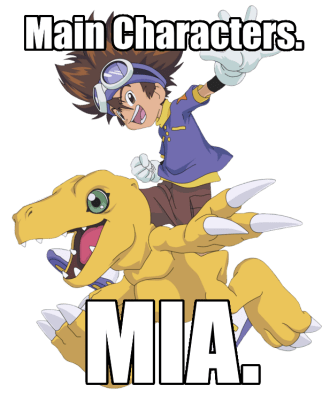
Tai Agumon missing

When people think of the Pokemon anime, they think of Ash and Pikachu. While characters have left Ash’s group and new characters have been introduced, Ash is still there, and so is Pikachu.

This has been spoken of as though it were some weakness of the Pokemon anime. But in reality, it’s been its strength. Again, sometimes, fans go, but later come back again. Pokemon makes it easier for them, because the two main characters that fans expect to find upon return are still there. Meanwhile fans of Digimon that attempt to return to the show but don’t find the old main characters have to readjust to a new cast, and they may not be up for that kind of emotional reinvestment, especially when faced with the prospect that the new cast may not still be there in a season or two.

So, while the Digimon anime may have better writing, the Pokemon anime wins out in the long run, because it remains consistently Pokemon, whether you like Ash or not.

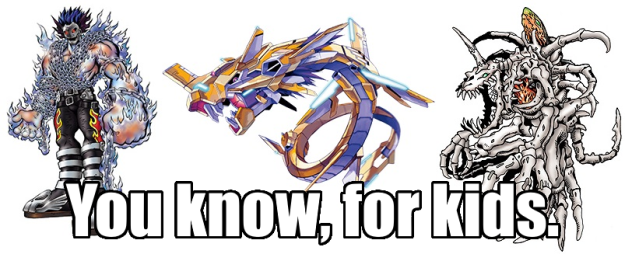
On to the second point, Digimon fans like to point out that Digimon designs are better. What do they mean by “better”? Apparently, that Digimon are gritty and heavily-detailed.

For a few examples of Digimon designs, check out the following:
digimon trying too hard

Wow. Any one of those guys look like they could kick Mewtwo’s butt. Just how edgy can you get?

But here’s the thing: We don’t really care for that as much as one might think. In fact, the Digimon designs look like someone has been trying way too hard to impress us. That’s something we can see right through, or at least notice on a subliminal level.

While Digimon may try really, really hard to impress us with their terribly edgy designs, they aren’t the only ones that have an edgy appeal to offer. For one thing, gamers adore Castlevania, even though the edginess factor isn’t nearly as blunt. In gaming, it’s not hard to find something that’s been overdesigned to stain our undergarments yellow. In fact, that stuff’s everywhere.

Pokemon’s simpler designs are welcome because they have a wider appeal. A girl can adore a Pikachu because it’s cute, and a boy may find Pikachu interesting because its electrical potential has a connotation of danger. That’s the kind of thing that Digimon doesn’t manage to pull off quite right. That’s especially glaring considering that Digimon originated as a Tamagotchi game. And in any case, the appeal of a wild, edgy character isn’t really as wide as one might think.

One can point out that Pokemon places a lot of emphasis on cuteness. Which it does. That doesn’t hurt it that much, because the cuteness of one pokemon usually doesn’t distract much from its other qualities, such as the strength it has in spite of that cuteness.

Besides, cuteness really isn’t a bad thing. In fact, it’s great that Pokemon has that aesthetic appeal. Pokemon scratches an itch that most other games out there don’t even bother reaching for.

The third point, and perhaps the most obvious is that the Pokemon video games are plainly superior.

There aren’t very many people who argue against this one. That doesn’t mean that Digimon games are bad. There are some good ones.

The main problem is Digimon games usually vary significantly from one installment to the next. While the Digimon World games are RPGs, the original Digimon game for the Sega Saturn was a Tamagotchi simulator. There are those who consider Digimon World to be the gold standard for the Digimon experience, while others favor the Tamagotchis. As a result, there is fragmentation among the fanbase as to what one may expect from a Digimon video game. (Digimon isn’t the only game to do this. The Yu-Gi-Oh video games are very inconsistent as to whether to follow the rules of the trading card games.)

Pokemon games are so similar from one installment to the next, that the pokemon themselves can be transferred from one version to another, allowing players to keep playing with the individual pokemon that they’ve grown attached to as the series progresses.

One can point out that the main series Pokemon RPGs are formulaic, varying little from one installment to the next. A similar point could be made about the Pokemon anime, but if you remember that same point above, you’ll know that that didn’t hurt the Pokemon anime very much at all. As stated above, that kind of consistency can be a real strength.

People who play a certain game usually take a break from it after a while. When they return, they expect those familiar core mechanics to remain intact. This is what makes Pokemon such a friendly game for casual players: it doesn’t alienate players with changes to the experience. In fact, that’s reasonable to expect. The things that make Pokemon distinct have remained.

In light of this, one can understand that Digimon’s dissimilarities from one installment to another is a liability. For a long time, things have been thrown out there to see what sticks. It takes strength to stick to one’s strategy.

For the fourth point, Pokemon is more original. No surprise there, because Pokemon came first, and Digimon was an attempt to copy someone else’s popularity.

Not everyone wants to accept that Pokemon came first. I’ve already written an article proving that to be the case, laying the issue to rest, so I don’t have to get too much into that here.

Still, it’s pretty obvious that Digimon was born in a marketing meeting in an attempt to make some quick cash off of Pokemon’s popularity. While we don’t talk about that very often, enough of us do see right through that, and we don’t like the idea of supporting such a blatant lack of creativity.

To take something and say “Look, we can make it better by making it edgier and more X-treme!” doesn’t earn a lot of respect.

The fifth point is that Pokemon is generally a far more positive experience. And, believe it or not, there’s a lot of demand for that kind of thing.

Think about how many games are out there in which the main character is out to save the world. Some of the sharper readers out there would point out that that’s nearly all of them. It’s a recurring theme in video games: the relatable main character sets out on a quest to save the world from some bad guy or personified evil or abstract concept, gathering items and/or abilities along the way.

Done. So. Many. Times.

The Digimon games are yet another installment about unrealistically-heroic pre-teens saving the world from some evil that threatens to end it in some creatively dreadful way. And to be sure that that point gets across, it beats you over the head with some of the same edgy, overdesigned monstrosities that were previously discussed.

While Pokemon games usually also star kids who save the world, what’s noteworthy is that the tone of the adventures is far different. This is apparent in the settings of the games. The upcoming installments, Pokemon Sun and Moon, have settings based on Hawaii. The setting of Pokemon X and Y was inspired by France. Very nice settings that are very conductive to a positive and uplifting tone (even if France is a tad overrated).

Pokemon games have such an energy and enthusiasm about them, it’s almost as though each game were some large festival that players participate in each time they play the game. They even made some games based on New York City and managed to convey the same positivity. Think about the kind of creativity that would take.

If the idea of your game is to have a main character go on a long journey to save the world, you know how many games you’d be directly competing with that have the same theme? Just about every single one.
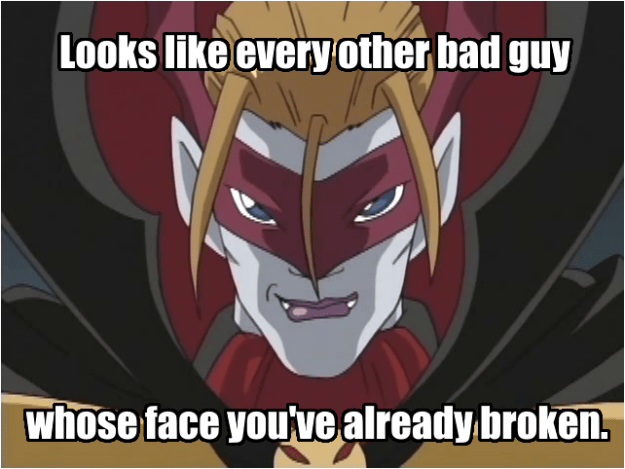
Myotismon

That’s what makes it so great that Pokemon at least tries to be different in tone. Pokemon games star kids who want to be champions. Not because anyone is counting on them, but because they want to be good at something. Pretty good idea for a game, right there.

The sixth point is that Pokemon has a far more developed competitive game. This has much to do with the fan base, but it is due in large part to the intrinsic elements of the game, so I think it does deserve a mention.

Pokemon has a much larger, far more developed competitive game. This is interesting considering that, when Pokemon was first made, it wasn’t originally intended to have much of a competitive aspect outside of link battling. While many may be loathe to admit it, the existence of fan communities such as Smogon may have played a large part in the development of Pokemon’s competitive game.

Love it or hate it, Smogon is huge. At first, it provided an online simulator, with simple rules to balance the game more than link cable battles. Mewtwo and Mew were deemed uber, so Smogon didn’t allow them. Over time, things got more complicated, but Nintendo began hosting official Pokemon tournaments with rules very similar to Smogon’s. Perhaps one was inspired by the other, though it’s likely that Nintendo recognized on their own that similar rules were better for the game.

The very fact that competitive communities such as Smogon exist and are as large as they are makes the case that there has been a huge demand for competitive Pokemon.

On the other hand, Digimon hasn’t been doing very much competitively. That’s not to say that they’ve been doing nothing. There have been Digimon tournaments, but they’ve been rare.

When it comes to a competitive Pokemon event, it’s usually either a video game or trading card game event. That’s seldom a problem for someone, because Pokemon fans typically play one game or the other (or both).

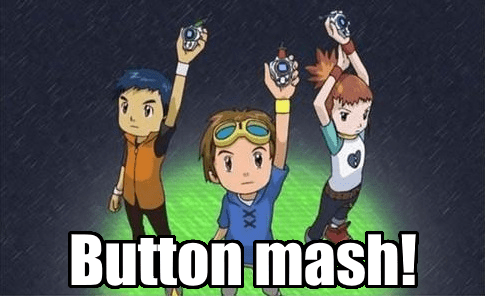
On the rare occasion that a Digimon event is held, it might be a button-mashing fest with the Digivice, which not many people own. Or it might be a trading card game event. But which trading card game? Digimon has tried more than one.
digivice button mash

After a while, Nintendo has put more effort into making the Pokemon RPGs more competitively balanced, which has resulted in a better game. That was pretty good news for the many players who wanted Pokemon to have a stronger competitive aspect.

Those are the reasons that are apparent to me why, between Pokemon and Digimon, Pokemon has succeeded in having a much wider appeal. This is not an article on how Digimon is stupid and why people should not play it. If you enjoy a game, that’s a pretty good reason to play it. I wrote this article because it’s not very obvious to many people why Pokemon turned out to be the far more popular game.

Is there a reason that I missed or a counterpoint that you’d like to bring up? Comments section.

Is Call from Mighty No. 9 secretly a Powerpuff Girl?

Call_Artwork

Pictured above is Call, a character from the recently-released Mighty No. 9 (released in 2016).

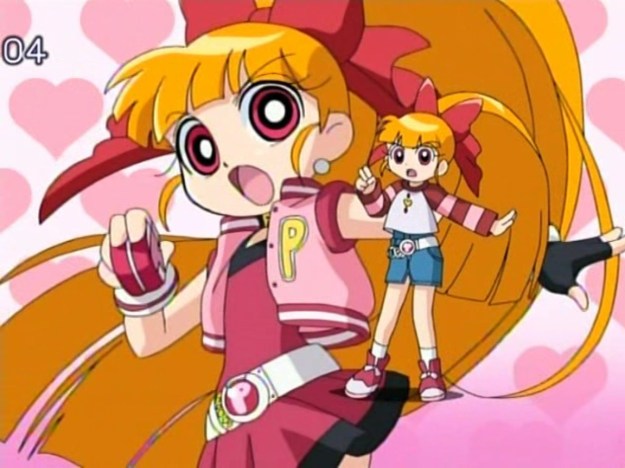
While many people are aware of a Cartoon Network cartoon known as The Powerpuff Girls, what isn’t so widely known is that there was a short-lived anime adaptation of the show called “Demashitta! Powerpuff Girls Z” (released in 2006, and yes, that’s what it was called). The show lasted for two seasons with 52 episodes, and was criticized for (among other things) that the adaptation was too far a departure from the original show. The show incorporated Majou Shoujo genre elements including transformation, though the theme of the show was science, not magic.

The following is a screen capture from the show, showing one of the three main characters (both the people shown are the same character). Shown in front is Momoko Akatsutsumi, and in the background is her alternate persona, Hyper Blossom.

Akatsutsumi.Momoko.full.427928

Notice any similarities?

A flag for abortion activists.

Abortion activists are celebrating in the streets after the Supreme Court struck down a Texas law. They certainly seemed to find it a great day to be alive. However, there doesn’t seem to be an official flag to represent abortion activists. If they had such a flag, they could wave it around each time they reach a milestone.

And, appropriately enough, the abortion movement is reaching a very special milestone. As of 2012, the number of abortions performed in the United States is estimated to be over 51 million.¹ This is closing in on 56 million, the lower end of Dyadkin’s estimate of the number of people killed by the Soviet Union.²

Therefore, it seemed appropriate that the abortion movement’s flag be modeled on the Soviet flag, with a slight modification to reflect their intrinsic values:

abortion flag

Instead of a hammer and a sickle, this new flag has a scalpel and a suction tube. Doesn’t that just say it all?

Citations:
1) https://en.wikipedia.org/wiki/Abortion_statistics_in_the_United_States (Yes, it’s Wikipedia. Turn your nose up, if you must.)
2) http://www.ibtimes.com/how-many-people-did-joseph-stalin-kill-1111789

EDIT: While doing research for this article, I visited a page for International Business Times. The following screen capture shows the video that automatically loaded with it, with the title of the article just above it:

appropriately enough, this was the video that loaded

Appropriate, isn’t it?

To Zoe Quinn: Why does everything have to be about you?

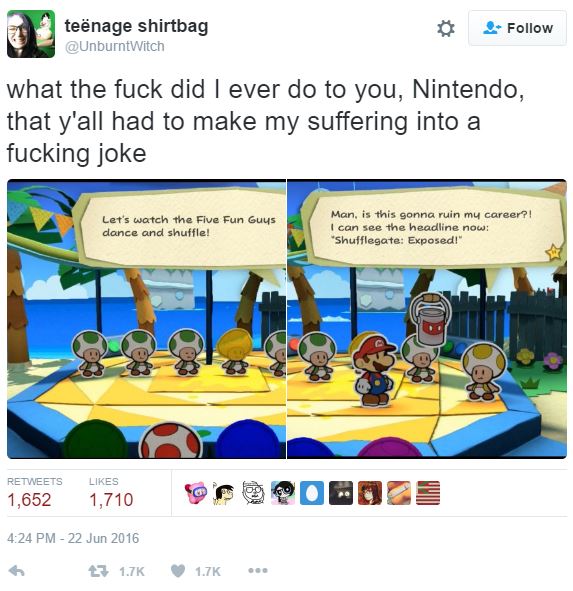
At E3, Nintendo showed off one of their new software titles, Paper Mario: Color Splash. There was an in-game event which depicted five mushroom men who were called the “Five Fun Guys”, and another character chimed in with the punchline, “Shufflegate: Exposed!”

Zoe Quinn took notice, and believed it to reference Five Guys Burgers and Fries and the Gamergate movement that she herself inadvertently set into motion, and she posted the following to her Twitter feed:

Zoe Quinn shufflegate

To be fair, she did eventually recognize it as a coincidence, and stated so in a Twitter post in an attempt to defuse the situation (short of apologizing to Nintendo, her Twitter followers, and of course Gamergate). However, it was her eagerness to be triggered by this “coincidence” that’s problematic.

Here’s the thing: it wasn’t a coincidence. The routine did reference a real-life event. It’s called the “Watergate” scandal. In the events surrounding the scandal, five men were implicated on suspicion of burglary. Because it was so prominent as a scandal, the “-gate” suffix appends the names of many scandals.

Zoe Quinn and many people who identify as feminists have an apparent inability to recognize an actual coincidence. They actually believe that there is some huge, concerted conspiracy to keep them down. It’s gotten to the point that some of them have criticized the Voyager 1 plaque for depicting the woman as standing behind the man, while the man’s hand is raised in a show of strength. As opposed to, say, offering a friendly greeting?

Pioneer 1 plaque man and woman.png

From here, it looks more like the woman is standing side by side with the man. If anything, the only disservice done to the woman is a refusal to draw her vulva. If aliens find the thing, they’re going to wonder how we reproduce. It’s not like drawing a vertical line on a woman’s groin is going to cause extraterrestrials to dismiss the plaque as pornographic. Notice how the woman’s left toes reach slightly lower than the mans? From the front-on perspective, that would indicate that she’s standing slightly in front of him.

Zoe Quinn, like many feminists, has a reduced ability to recognize something as a coincidence, or at least as a reference to someone or something besides her. Neo-feminists get angry over things because they want to be angry, and they like being angry, because they want to feel justifiably indignant over anything that they can. They may get indignant, but they don’t get to enjoy legitimate justification, because they seldom know what’s actually going on. When they make knee-jerk reactions over every perceived slight, they make themselves look silly. They look silly because they think everything is about them. And yet, they don’t ask why. And that’s a question that neo-feminists need to hear:

Why does everything have to be about you?

And while we’re asking questions, here’s another one: Why not use your head? If there were a random chance that you’d have been born as any organism, you’d have been far more likely to have been born as an ant, because there are approximately one million ants for every human being alive today. There are far more animals besides them. My point is, think about what a privilege it is to be a human being, which has the most capable brain out of any animal we know about. We possess the magnificent potential to do things like send plaques depicting naked people into space, and in spite of this, we have knuckle-draggers treating stupid behavior as an indulgence and delegating their thinking to advertisers. You have the potential to do better, so why don’t you?

At one point, Zoe Quinn wanted to be known as a game developer. That’s a pretty meaningful thing to do for a living. However, she gave up any respect she would have gotten for her endeavors when she turned her back on her fellow gamers and turned the already-corrupt trade of games journalism against the very people they were supposed to inform. That comes with a lot of guilt for just one person to deal with, but Zoe Quinn brought it upon herself, and she made matters worse for her refusal to confront it.

That’s really how the Gamergate movement got started to begin with. Zoe Quinn so insisted on playing the victim, that she betrayed the very people she so strongly wanted to be accepted by. Having to deal with that can drive a person crazy, and when it gets to that point, a person can easily mistake a joke in a Mario game as being directed against them.