It’s pink Himalayan sea salt. You know, sea salt. Right from the shorelines of the Himalayas:
If marketers can sell burnt ash as “activated charcoal” to impressionable people as though there’s some mysterious benefit to it, why would it be a stretch to get the same people to buy sea salt that came from a mountain range that’s pink for some reason?
If you’ve been compared to Adolf Hitler or called a Nazi at some point, you’re pretty far from alone. The first time I was compared to Hitler, it wasn’t while discussing politics in an online forum, it was in an IRL chat about video games.
People seem eager to compare those that they disagree with to either Hitler or the Nazi party, especially the closer they are to losing an argument. But do these people really know what Adolf Hitler or the Nazis were really about?
It seems like all that most people really know about them was that they didn’t like Jews. But that in itself doesn’t make for a political ideology or philosophy, especially considering the Jews’ relative lack of influence. That’s like someone asking you what your religion is, and you answering “I’m not Zoroastrian”. There has to be more to what you believe in than you just saying that you’re not a member of a minority group.
The general consensus is that Hitler was right-wing. Those on the right usually answer that by saying that Hitler supported gun control, which isn’t a very right-wing stance to take.
But what was Hitler and his Nazi party really about?
People talk about Nazis all the time, but the topic of the Volkish party rarely comes up, even though the ideology of the Volkish was Nazism in its embryonic form. The Volkish were a folkish movement (Volkish literally means “folkish”) characterized by a rejection of urbanization and an embrace of rural and natural living. They were heavily conservationist and rejected industrialization. They were largely naturalistic in their thinking, and some of them embraced naturism, with not a few of them being nudists. Many of them were vegetarians; Hitler’s professed vegetarianism was a consequence of him belonging to the movement, though as vegans point out, Hitler didn’t really stay true to his vegetarian diet.
So yeah, the Volkish that Hitler belonged to were largely hippies. They were the most hellish hippies in history. Their beef with the Jews largely stems from the fact that Jews embraced technology, urbanization, and were meat-eaters. It also didn’t help that many of the conspiracy theories about the Jews that persist to this day were around back then, too.
The Volkish switched gears once they seized significant political control of Germany and became rebranded as the Nazi party. At that point, they seized control of the military-industrial complex and turned Germany into a socialist state.
Don’t believe me? “Nazi” is shorthand for “National Socialist German Worker’s Party”.
Next time you try to malign someone by comparing them to a maniacal dictator, check to make sure that you yourself do not ideologically align with the very same dictator.
The smiling kid who may very well take down a corrupt media.
In one of the more refreshing recent news developments, one of the “MAGA kids” students is suing CNN for defamation after CNN had carelessly portrayed them as a hate mob.
As you may recall, back in January, the corporate news outlets have covered a story about a group of kids in a confrontation with a native American group, portraying them as hatefully throwing taunts at an elderly man. Since then, mainstream news outlets have backpedaled after full video of the confrontation had been posted online, which shows that the only hateful rhetoric thrown out came from “another organization”, which the corporate media seems to be too terrified to acknowledge by name.
The Black Hebrew Israelites.
As a result of CNN’s careless coverage, the Covington students that pretty much did nothing but stand there smiling have been repeatedly threatened by those naive enough to take the corporate media at face value. Therefore, the student at the center of the controversy has decided to sue CNN for $275 million for defamation.
There’s a lesson that the corporate mainstream information media needs to learn, and that’s that there are repercussions for carelessly handling information, even if you feel justified in how you’re portraying someone by reason of the narrative that you prefer to peddle. If people like the MAGA kids who have been victimized by the corporate media’s irresponsibility with their informational positions make it expensive for them to libel, that just may be what it takes for them to feel discouraged from doing so.
While we’re on the topic, there’s something that has had me concerned, and this is an opportunity to bring it up. It seems as though tech companies have an interest in making sure that the corporate media’s biggest mistakes don’t receive too much attention.
The reason why I bring this up is because I voiced my opinion on the MAGA kids incident back in January. Since posting my article, I’ve noticed a suspicious trend in the traffic to this site:
What’s pictured is this site’s traffic. As you could see, prior to the posting of the article, the traffic to this page was widely varied, and there have been days when the traffic was substantially higher than usual. But in the days after it was published, the traffic to this site was steady, and traffic seemed to approach a sort of “cap”.
Noticing this, I decided to perform an experiment by taking the article off this site by reverting it to draft. Afterwards, the traffic to this site returned.
Something seems suspicious.
It’s not news that tech companies have long had a left-wing bias, but I suspect that search engines are now silently throttling traffic to pages that refuse to toe the line for the left wing narrative. This has apparently been going on for a long time. Back in 2017, I made an article criticizing the SJW movement for comparing itself to the Resistance from the Star Wars films.
As noted in an edit to the article itself, I performed searches for the article to try to find it on Google, but had difficulty in finding it. A Bing search showed the article as the first result of my first attempt at finding it. Today, a DuckDuckGo search similarly brought the page right up as the first result of my first attempt at finding it.
It would seem like something suspicious is going on with Google.
Today, the librarians of the digital age don’t have to go as far as to burn books, all it takes to silence someone is to omit them from search results. Now that Google has been caught with their hand in the cookie jar, why trust them for informational purposes? It’s prime time to consider setting an alternative search engine as your default.
I’m interested in seeing whether mainstream news outlets change the way they handle information in the face of a public willing to fight back by making it expensive for them to commit libel. Perhaps the best way to stop the tide of defamation from news outlets is to ensure that they can’t afford it.
As for what we the public can do about tech companies that are making apparent attempts to censor us, perhaps the best thing we can do for the time being is use the services of their competitors.
A team of Boston University scientists have discovered a material that blocks nearly all sound from passing through it. This material, dubbed by scientists as “acoustic meta-material”, can block 94% of sound, making even a loudspeaker inaudible to the human ear.
Leave it to scientists to discover something awesome but still fail to give it an awesome-sounding name. I think a great name for this stuff would be “shutupium”.
One cool thing about this material is that it can be 3D-printed, so if you have a 3D printer, you can produce this stuff at home. Also, air can pass through it, but not sound.
I don’t know about you, but my head is racing from the possibilities of a material that can block sound. Obviously, there will be a new way to implement noise-cancellation technology in headphones. Better yet, it can also allow the rest of us to enjoy peaceful, quiet neighborhoods in spite of the annoying snots that drive around and listen to rap with their windows down just to annoy those of us who actually pay to live where we do. It would also be great for blocking out the barking from dogs whose owners moved into the city with them, not considering that everyone else would find them annoying.
And imagine what this can do to block noise at work. Those who work in noisy industrial environments might enjoy earplugs made from these things. But what’s really got me excited is that I could work and have no problem tuning out coworkers that continually fire off their BS cannons about stuff nobody cares about.
It would also be nice to have the windows open to let in some fresh air without hearing people hollering down the street. Come on guys, you can afford cell phones. As few as $20 might be all it takes to start you off with a phone and a simple plan.
Great work, scientists. While we’re hard at work making people less annoying, it would be great if they could invent something that could repel the smell of perfume or cigarette smoke. Or a pair of glasses that can make anyone look like a supermodel.
I recently set out to add another installment to my series on The Right Way to Play Pokemon, this time focusing on Pokemon Black and White. It had been a few years since I’ve picked up and played either game. But from what I remember, this game was pretty big, and the selection of pokemon was immense, so I carefully researched recommended team members and even went as far as doing damage calculations to ensure that these team choices would work well. Then, I set out to test my findings on a copy of Pokemon Black.
I have fond memories of Pokemon Black and White. In spite of this, the fifth generation of Pokemon receives a disproportionate amount of hate from certain segments of the community. If they were to be believed, gen 5 was the worst generation of Pokemon, and a person would be better off spending their money on something different.
Hearing all these complaints, it sounded as though they were talking about a different game than I remembered. But then again, it had been years since I’ve played the games, so maybe I remembered them wrong. But as I did my research for to prepare my article, the complaints didn’t match what I was actually seeing.
These games seemed fantastic.
For starters, the selection of Pokemon just for the playthrough was huge. Not only that, the game was intentionally designed so that only new pokemon were available for the player to capture prior to the post-game, making players come out of their comfort zones and try something new.
Because, you know, Pokemon. That game series that’s known for its themes of science, technology, exploration, and making new discoveries? These versions in particular even went as far as to ensure that the games didn’t just boil down to the typical old experience of picking Charmander, catching Pikachu, then playing through the game with the same-ol’-same-ol’.
Video games are about challenge, after all. It’s not much of a game if what you’re playing is the same comfortable experience every time. We decide we want something new eventually, so the Pokemon series is only going to get so far by repeatedly pandering to a sense of nostalgia. Life isn’t just about looking back, it’s more about looking forward.
Not only that, the experience was very balanced. Just from researching team selections, one would get the idea that GameFreak saw to it. These games were packed with pokemon that would have made excellent team choices. The starter pokemon, as well as many pokemon you can catch, were varying degrees of great. Lillipup? That’s a great pokemon, available at the outset. Drilbur? Great pokemon. Sigilyph? Scraggy? Joltick? Archen? Petilil? There are so many pokemon that would make great team choices, that narrowing down the selection to just a few was a challenging task.
To make things more interesting, GameFreak redid the exp. formula so that low-leveled pokemon gained more, while pokemon that were higher-leveled gained less. This meant that freshly-caught pokemon could easily catch up with the rest of your team, making it harder to dismiss certain pokemon by reason of not already being a member of a team for a long time. It also made it less likely that pokemon that haven’t been performing as well would fall behind. Better yet, it also helped to keep your team from becoming overly centralized around just a couple battlers that would otherwise continually get high amounts of exp. because they’d win every battle. And to make it easy for lower-level pokemon to catch up, it’s easy to gain levels from wild Audino, which frequently appear.
Then there are the themes. To start with, the game opens up with a coronation:
I don’t know about you, but that intro really makes me want to play the game. Who is the guy in the freakish robe? Who are the sage-looking guys who look on? Who are those two women who also seem well-designed enough to be of significance? Who is the green-haired kid, and why is he being declared king? What is going on? If you want to find out, keep playing the game!
Pokemon Black and White actually have a story. I’m usually pretty cynical about stories in video games, as they usually amount to hack fiction that serves as little more than a pretext to continue playing the game, as though the game mechanics didn’t do a good enough job. Pokemon games usually don’t have much in the way of story outside of “you’re a boy in a red hat who beats up an evil team on the way to becoming champion”, so it’s a change of pace to see a Pokemon game that has a story, and a surprisingly well-developed one.
The source of conflict is a man who runs an organization that sets out to free pokemon from humans. He sets up someone else as leader so he’ll have someone to hide behind and act through as the man behind the scenes. His organization also challenges what players have been doing in Pokemon games for years, making them think about what they’ve been doing all this time. It’s more complex than just a case of “bad guy wants to take over the world”.
Also of note is the story involving the character of Bianca:
As cheerful as Bianca looks, her story isn’t as cheerful. While most characters in Pokemon have the support of their parents, Bianca set out on her Pokemon journey against the wishes of her dad. While it’s easy to write him off as a stodgy curmudgeon, he is actually very protective of her, and considering that she projects vulnerability all over the place, it’s easy to see why.
If you’re used to chasing dreams because of so many games and movies that encourage you to do so, the conclusion of Bianca’s story hits like a dose of reality. Bianca finds out that she’s not well-suited to her goals, and that her endeavors were almost certain to end in failure, however enthusiastically she may have tried. For how cheerful the Pokemon games usually are, that’s a difficult lesson to have to contemplate. Oftentimes, people learn the hard way that they’re not well-suited to their career choices, and a person might not end up doing what they want to do, however much they may have wanted to do so.
Adding to the replay value is the fact that the seasons in Pokemon Black and White change depending on the month you’re playing the games. This can change the accessibility of certain areas and items depending on when you’re playing, and can make things slightly more or less convenient. A player can actually stand on a snow bank that otherwise wouldn’t be there if it weren’t winter in-game! Not only that, there’s a different tileset for most overworld locations depending on when you’re playing.
That’s well beyond what’s necessary for a game that’s already huge, and adds yet more replay value to a game that was already gushing with it.
Conveniently, there’s a battery indicator on the HUD on the bottom screen. As in, an indicator of the battery level of the system you’re playing on. That’s such a great convenience, that I wonder why more games didn’t implement it, and why more games don’t do it now. And not only that, it tells the time. And the strength of your wireless connection.
Come to think of it, why do these games get dumped on so heavily? When was it that these games came out? What does the Wikipedia article say?
Oh. That explains it. Pokemon Black and White were released when the hipster movement was in full-swing, and it was considered trendy to dump on anything mainstream, regardless of how high-quality the products may have been.
But hey hipsters, you got to dress in trashy clothes and bash on stuff that was actually great. That’s what you were going for, right? If so, mission accomplished, you missed out on some excellent games just so you can be a snot.
Stop hating on things just because a bunch of other people have arbitrarily decided with one accord to bash on it. You have a brain, use it.
So far, this article has only considered the first Black and White games. After these games were released, there would be direct sequels. While Ultra Sun and Ultra Moon were basically re-tiles of Sun and Moon, and GameFreak is famous for releasing Kanto remakes, with Black 2 and White 2, new areas have been woven into the setting, which made the games feel like a new experience, even though the setting was the same as in the previous games. What’s more, the pokemon selection has been amped up by integrating older pokemon before getting into the post-game. Lucario fans, rejoice.
While most Pokemon games start you off in a small town without a pokecenter or gym, but with a convenient professor’s lab, BW2 starts you off in a decent-size town with it’s own gym and pokemon center, and the professor’s lab is located somewhere far off. That’s right, Pokemon actually tried something different. Not only that, the main character’s mom is a retired pokemon center nurse, so there’s an explanation for why she’s able to heal your pokemon that goes beyond mere game mechanic convenience.
Also, Challenge Mode. The sequels give you the option to play a harder game. That’s great for players like me who wanted an additional challenge. The only complaint would be that it’s only available in one of the two versions, and not before the post game, but the sharing of unlock information can make this available to players with the other version regardless of whether they’ve made it to post-game.
That’s right, there’s a feature that enables the sharing of version-exclusive features with someone who has the other version. That’s another feature that hasn’t been implemented into a Pokemon game since the fifth generation, probably because a lot of petty naysayers dumped on its many attempts at innovation, resulting in the GameFreak that we see today that seems hesitant to try anything new.
There’s also Pokemon Dream Radar, which allowed players of BW2 to have tons of items, pokemon with hidden abilities, and legendary pokemon, right at the game’s outset if they so choose.
So many exciting features, and such well-made games that are packed with content. Why does anyone pick on the fifth generation of Pokemon?
Oh yeah, the hipster movement. That’s another one of those fads that I’m glad is over.
If you’ve made the choice to actually play Pokemon Black or White, you have chosen well, and you’ve done well to resist the discouragement that comes with all the undeserved hate that these games get. If you’ve yet to give them a try, you’ll find that they are true gems in the 3DS library.
A model is attempting to redefine beauty standards with a comically huge unibrow.
Because that sentence alone sets the stage for a long rant, I’ll just link to an article covering this story and accept that as the launchpad for the rant to follow, because it’s sufficient.
Believe it or not, beauty standards were not invented by Chick-fil-A and the patriarchy to try to be mean to women. Throughout the entirety of human history and the class Mammalia, beauty standards have been informed by biological viability. Putting bizarre trends aside, what has held up historically as being “beautiful” was considered a sign that a person was in sufficient health and capability to procreate. As far as this goes, biology and the continuity of humanity don’t really concern themselves with anyone’s objections, and all that usually happens when a person attempts to go against the flow in this regard is that a person makes it far less likely that they’ll be further contributing to humanity’s gene pool. I know that’s hard to ponder for those weaned on the notion of attraction to cartoon ponies, but a lot of things are.
When bringing up this topic, there’s usually someone who will bring up the myth that Renaissance artists depicted obesity as a reflection of cultural standards of beauty existing in their time. That’s not true. The reason why Renaissance artists painted fat women was because that was what many wealthy and affluent women looked like. Their physical condition was what one would expect when a person doesn’t have to work to get by, and has plenty to eat.
The fact is, Renaissance artists viewed lean women as having ideal beauty in the same way most people do today. When a person is attracted to something that is outside that norm, they are considered an outlier, and are usually viewed as a fetishist, like the people who are attracted to feet.
The fact is, the beauty standards that we have today and have had throughout human history exist for a reason, and it’s a very compelling reason. When a person attempts to eschew these standards, the expected outcome is akin to a boxer attempting to defeat the bodybuilding standards of his sport by allowing his muscles to atrophy; he may get some time in the Tumblr limelight, but we know that when he steps into the ring for a professional match, it’s light-out for him.
When a model intentionally takes on an unfavorable characteristic in an attempt to challenge beauty standards, they may get their praise from the usual blue checkmarks on Twitter, but we know that women all over the world are thinking, “Thank you for making yourself easier to compete against.”
Another irony that I want to point out is that the Glamour article dismisses as “trolls” those who criticized Sophia’s new look as ugly. When someone calls someone online a troll for saying something that they don’t like, they’re showing that they have no idea what trolling really is. Online trolling is really about influencing a person, usually to try to get them to do or say something that’s inadvisable. It can take on forms that are really quite subtle, and even someone who has been using social media for a long time might have a hard time recognizing trolling when it’s in front of them.
The irony is, the people encouraging Sophia to continue with the unibrow look are the real trolls, and they are laughing themselves silly at her ridiculous behavior, while those who call her new look ugly are expressing their sincerely-held opinions.
Putting aside the possibility that Sophia may be the victim of trolling, it’s very likely that she is pulling a publicity stunt. The idea would be to do something ridiculous in an effort to bring attention to herself. If that’s the case, then Sophia would actually be trolling people like me who blogged about her.
If that’s what Sophie was going for, then congrats, Sophie, you look ridiculous and got people to laugh at you because of it. But if Sophie really wanted to make a beauty statement, she could try something actually beneficial, like refusing to wear lipstick. Lipstick looks dreadful, and women everywhere would look much better for not wearing it. The reason why I doubt that models like Sophie would attempt to make such a statement is because doing so would mean fewer people buying lipstick, and a model’s job is to encourage more people to buy more things.
But for what it is on the surface, which is an attempt to redefine beauty standards, Sophia’s unibrow stunt pretty much accomplishes nothing.
I know what it’s like to have a horrible job that goes nowhere and feel like your potential is being squandered doing it. I know that I’m not the only one out there that had a job like that, and that there are many people out there that are in that kind of position now.
But here’s the thing: If you really want anyone to believe that your potential is going to waste at your lousy, dead-end job, you must do the job that you have now as though you have potential.
While I’ve been thinking about it for a while, I bring it up now because I’ve noticed an increase in the number of disinterested young people who obviously don’t want the jobs that they have, and many of them seem to have the idea that the way to get back at the society that did them wrong by “giving them that job” is to take it out on their customers by being passive-aggressive with them and intentionally performing poorly.
About that “giving them that job” quip: No, society didn’t conspire to decide that your job was the job that you had to have. You chose your job, and decided to apply for it and attend an interview for it. If “the government” or Google or whoever exercised some sort of mind control to get you to seek a job and then follow through with it by making you go to work day-to-day, society would have far worse problems than whether you’re brewing coffee at Dunkin’ Donuts.
You chose your job, and if you didn’t want it, maybe you shouldn’t have applied to it to begin with. If you no longer want it, find a different one, and let someone have your old job who wants it. Life is too short to spend most of your waking hours doing something you can’t stand.
Until you can find that job that you would prefer to do, the best way to convince anyone that your potential is going to waste is to demonstrate that potential by doing excellently at the job that you already have.
About a decade back, I had a job that I hated working, which was at a register in a supermarket. After a while, I got fed up with it, and decided that a better bet for a brighter future would be to get a college education. I did some research, and did some studying. But in the time until I was to start attending classes, I still had a job to do.
So I did a great job at it. The store displayed the stats for how fast cashiers were, and I was consistently on top. My prize for doing so well? Pretty much just to say I did. Not even a pat on the back.
I worked in nearly every other department in the store, and did a great job at those, too. There were days in which I was the only person working in two departments; everyone in the department had off on the same day, including the managers. I carried two departments by myself on the same day.
My way of demonstrating that my potential was going to waste at my terrible job was to get really good at it. I left no doubt that I could do better, and eventually I did.
Now, what is a person supposed to think when someone does a poor job and continually makes mistakes at an easy job where the stakes are low? When you clearly ask for dine-in at a fast food joint and are then handed your meal in a bag, one would get the idea that the cashier isn’t very dependable. When you ask for a hot coffee and get an iced coffee instead, you might feel inclined to think “there’s a D-student”.
Among the reasons why many jobs don’t pay well is because fewer people are counting on the staff, and the repercussions for a mistake are usually much lower. If you work at a fast-food joint and make mistakes with people’s orders, you might just be in the right place. You wouldn’t be convincing very many people that you’d make a great doctor.
People aren’t really perfect at their jobs, but they can at least try to do well at the ones that they have, even if they’d rather be doing something different. That way, when you finally start doing something you’d rather do, at least you’ll be convinced that it wasn’t a mistake that you got there. Doing a great job at stuff really pays out in the long run, but intentionally doing a terrible job just to spite your employer has obvious ways of backfiring very quickly.
If you’re smarter than your job, that’s great! But at least put some effort into proving it, you know?
Over a year ago, a Facebook user by the name of 50 Shades of Heliolisk got Pokemon communities talking by unleashing concept art for the starters of the generation 8 games. His art, done with the help of a friend that knew Japanese, was really convincing, and he did come forward and admit that he made them, and they were fakes.
But just how much did he really know? How accurate that his fakes turned out to be really gets one thinking.
Let’s look at them, one at a time:
One of the fake starters that was revealed was a Grass-type monkey that stores berries on the tip of its tail. What GameFreak themselves did was also a Grass-type monkey, this one storing a twig as part of its hairpiece:
Next, we see that one of the fakemon was a Fire-type rabbit:
And I was so disappointed a year back to discover that it wasn’t real, not knowing that a year later, GameFreak themselves would do a Fire-type starter rabbit:
I could gush over how much I like it, but let’s stay on topic and move on.
The fakes also included a Water-type platypus:
We got a water lizard instead.
Hold on, is Sobble doing a crotch chop? That’s a straight up dis! This little guy has some nerve.
So, the fakes got two out of three right, and two out of three ain’t bad. One can wonder whether 50 Shades of Heliolisk actually had some inside information all along. While we’re talking speculation, there’s an idea going around that “fake leaks” we’ve been seeing are attempts on the part of media companies to gauge public reaction. Or maybe GameFreak themselves saw the fakes, liked them, and decided to implement the ones they liked.
Hanlon’s Razor goes that the correct explanation tends to be the one that makes the fewest assumptions, and it would seem like that would be that it was just a coincidence. Coincidences do happen, and with surprising frequency.
We got a first look at the new generation of Pokemon games in a trailer that was released today:
Here are my first impressions of the starters that have been revealed.
First up is the Grass-type, Grookey:
I still don’t know what this guy is supposed to be. At first, he seemed to be some kind of bug, but right now, he’s looking more like a monkey. He’s kinda growing on me, but I’d probably like him more if he evolves into something cool.
This guy is named Sobble. I’m thinking Mudkip when I see him. He seemed really funny to me at first, but I’m starting to like this guy. I like how he did the invisible-in-water thing in the trailer.
Now for the third one:
I’ll take this guy, please and thank you. I’ve wanted a fire rabbit starter since I’ve seen this fan fake, which you may remember from a while back:
Now they actually have done a fire bunny starter! I really liked the fan concept, and I think it looks really convincing, but now I like the real one more. By the way, the new fire rabbit is called Scorbunny. Score, indeed. He’s well on his way to becoming my second favorite pokemon.
Now for the setting. Here’s a smaller version of the map that can be found on Serebii.net:
The setting, named Galar, is apparently based on the UK. I think that’s great, because I’ve wanted to see a Pokemon game set in the UK for quite a while. I wonder whether the region is going to be very rainy?
As indicated by the logos above, the new games will be called Pokemon Sword and Pokemon Shield. This implies an emphasis on attack and defense, so it’s possible that version exclusives will be either more offensive or defensive, depending on the version. I suspect that Steel types will get plenty of attention, and maybe Aegislash will be a significant pokemon in Galar.
What we’ve seen of the Galar region and its pokemon so far is quite appealing. I suspect that we will see more soon, because the timeframe for release for the games is late 2019. If they stay on track, we’re months away from it’s release.
Its orbit far above earth’s surface is maintained by a pre-calculated velocity parallel to the tangent along earth’s surface. This creates free-fall conditions that simulate zero gravity, and allows the researchers on board to study the effects of zero gravity in physics and biology.
This is a web server:
It is designed to handle client requests from devices located as far away as the other side of the globe via a connection to an information infrastructure that shares data between devices used by businesses and consumers of all ages. Odds are, one played a key role in you reading this.
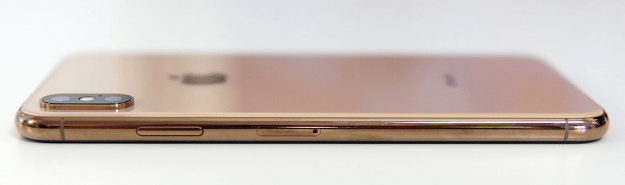
This is a smart phone:
It’s one of many devices like it on the market. It’s connected wirelessly to a cellular network that enables one to talk with people all over the world. It can also be used to browse the web, download and play games, purchase, download, and listen to music in surprisingly high-quality, watch movies on a display so fine that the naked eye couldn’t discern individual pixels, has a high-end camera built in, and can be used to make purchases by storing your credit and debit information. And there’s more. Lots more.
The model pictured has an octo-core processor, holds hundreds of gigabytes of data, is airtight to the point of being waterproof, and can recharge wirelessly.
Also, you can easily fit it in your pocket.
Finally, here is a printer. The thing about printers is…
Oh, hold on. That’s not a printer. That’s flaming garbage. My mistake.
Here’s what a printer looks like:
It runs using one of the most expensive liquids in the world, with a set of replacement cartridges in all four colors costing about $50. They only cost pennies to manufacture. The printer itself fails to operate properly within mere months of use, and in some cases, will actively lie to its user about its own ink status in an effort to encourage the consumer to buy even more expensive ink.
Think that’s a joke? I went to print an important document that I was to mail to the state government, but the print faded out on page two. So I checked the ink levels, which were kinda low, but there was still enough to finish the job. I tried printing the same documents as before. Page one printed just fine, but page two faded out in exactly the same manner as before.
I got desperate, as the documents were very important and time sensitive. So, seeing that page one printed just fine in both cases, I decided to print out page two by itself. The page faded out in exactly the same manner as before. My printer arbitrarily decided that it was going to fail on that page, and it was not going to allow any attempt to circumvent its planned failure.
I started searching my printer and its software for an option to make composite black using the color cartridges, knowing that some printers allowed this. Not finding it, I decided to keep trying. The documents were important. But the fading still occurred on page two, in the exact same way.
In case you’re wondering, the printer in question was an Epson Expression XP-446 (pictured above). Now you know not to buy Epson products.
The first page was printed enough times that the printer could have easily printed the entire document multiple times. Eventually, when the black ink was just about exhausted, I got a notification for an option to create composite black ink from the color cartridges (even though I couldn’t find that option before). I went for it, the document finally printed out in a kinda gross-looking brownish black, and I hurried and rushed the paperwork to the state government.
Shouldn’t it be illegal for printers to lie to us to try to get us to buy more ink?
For a while after that, the same printer didn’t give me problems. Not until just yesterday, when I tried doing my federal and state taxes. That’s when my printer decided to stop printing black ink, even though there was plenty left. The printer had no problem with wasting paper and color ink as I attempted in vain to get it to produce some important print-outs.
How come a printer that has no problem printing pictures of anime women wearing bikinis suddenly runs into issues when it comes to printing up important paperwork to send to the federal government of the United States?
Priorities.
If we can suspend a huge piece of metal in the sky and make it habitable for research purposes, harness the power of electromagnetic waves for instantaneous communication with people all over the world, and make multimedia supercomputers that fit in one’s pocket, why is it so hard to make a printer that works dependably?
And if such a printer exists, please let me know where I can find it.


 The smiling kid who may very well take down a corrupt media.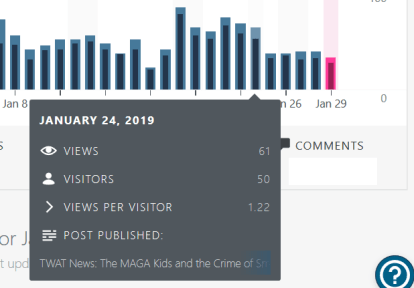




 Sophia Hadjipanteli (edited for sanity)




 One magnum opus, to go. Hold on… Make that two.




 Priorities.
 Magnetricity